Solid Cherry Wood Dining Chairs: What to Know Before You Buy
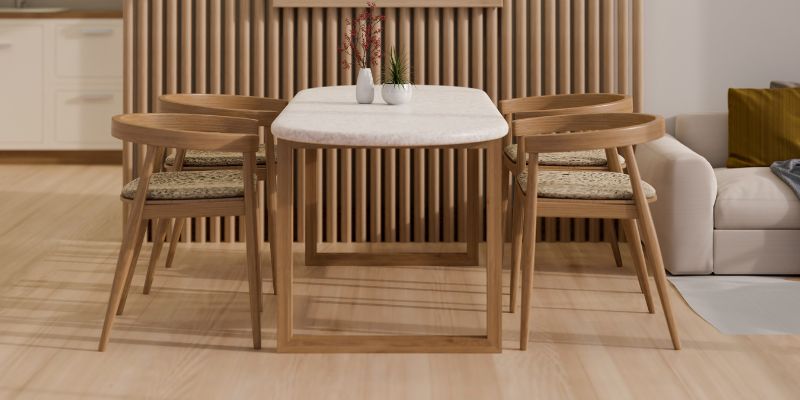
Short answer: solid cherry wood dining chairs are a mid-hardness hardwood option (Janka hardness around 950 lbf) known for a color that deepens from light pinkish-brown to a rich reddish-brown over its first year or two of use. They typically cost more than mass-produced veneer chairs but less than the most expensive hardwoods like walnut, and the joinery – specifically whether it’s mortise-and-tenon or just glued dowels – matters more for long-term durability than the price tag alone.
What Makes Cherry a Good Dining Chair Wood
Best Wood Polish for Cherry Furniture
 |
Howard Feed-N-Wax Wood Polish & Conditioner – $5.99 A beeswax and orange oil polish that feeds the wood instead of just coating it – a good monthly routine for solid wood chairs that see daily use.
|
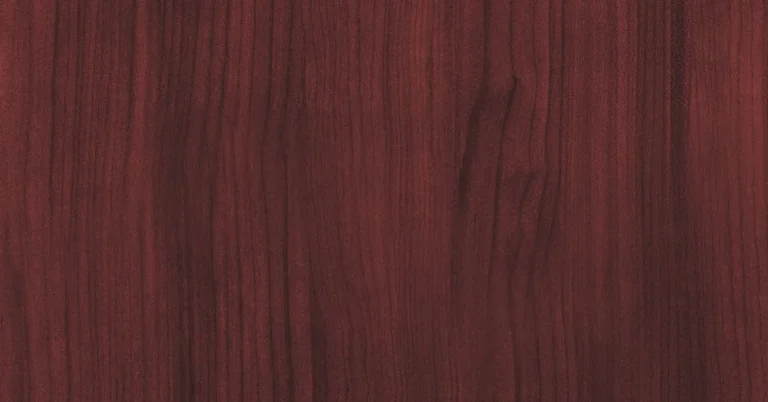
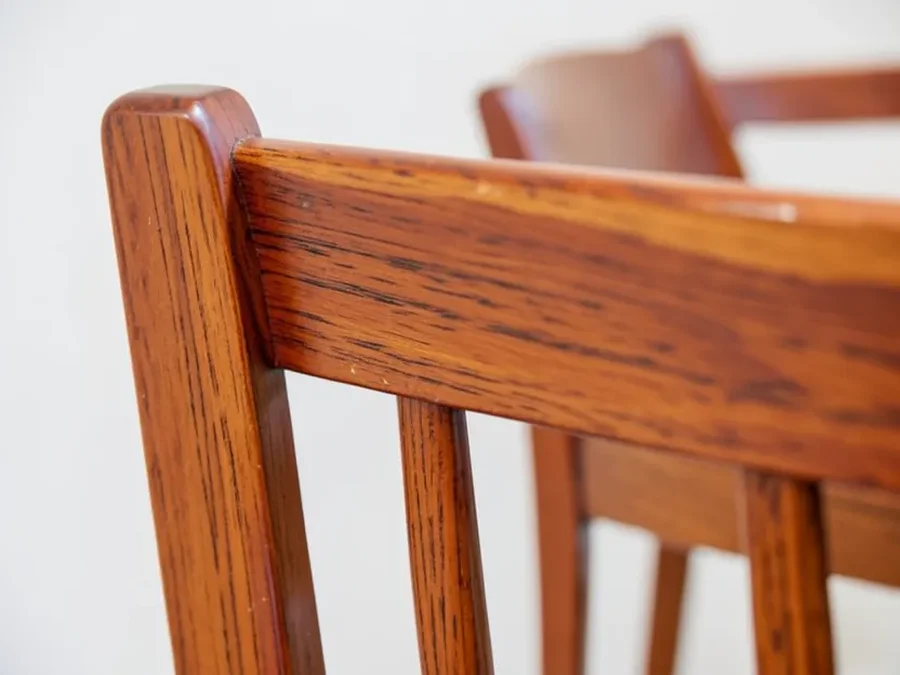
Cherry is a hardwood with a fine, straight grain and a Janka hardness rating of about 950 lbf – enough to hold up to daily use, chair-scooting, and the occasional knock, though it’s not as hard as oak (around 1,290 lbf) or walnut (around 1,010 lbf). What sets cherry apart visually is its color behavior: freshly milled cherry is a light pinkish-tan, and it darkens through ordinary light exposure into the deep reddish-brown most people associate with the name. That darkening is a real chemical process (photo-oxidation), not a stain effect, which is why two cherry chairs in different light exposure (one by a sunny window, one in a shaded corner) can end up visibly different shades over time – it’s expected, not a defect, and it evens out with more uniform light exposure over subsequent months.
Joinery: What Actually Makes a Chair Last
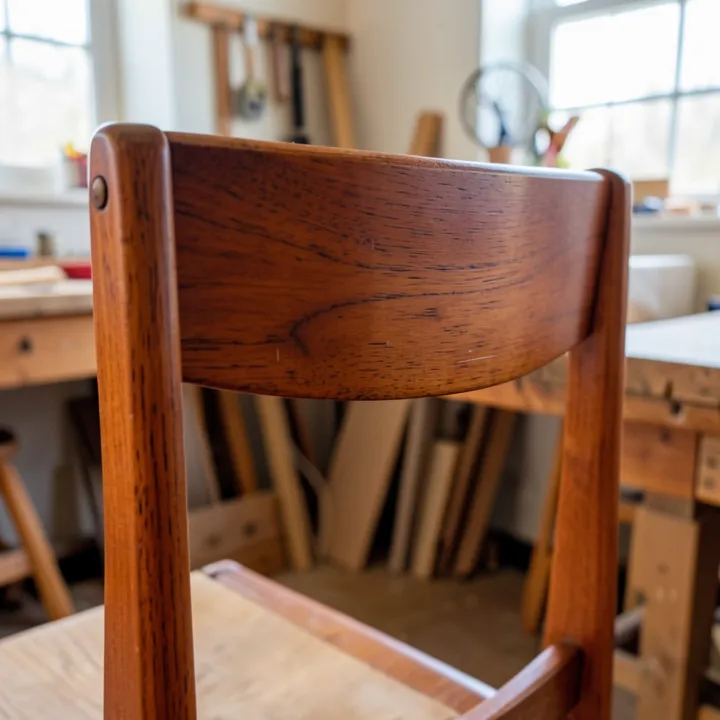
A dining chair takes more repeated stress than almost any other piece of furniture in a home – it gets sat on, scooted, and leaned back on constantly. The single biggest factor in whether a chair stays solid for decades or starts wobbling within a year isn’t the wood species, it’s the joinery. Look specifically for mortise-and-tenon joints at the leg-to-seat and stretcher connections; this traditional joint interlocks the pieces mechanically rather than relying on glue and a dowel alone, and it’s the standard construction method used by furniture makers who build for longevity, including most Amish and other solid-wood furniture shops.
A chair assembled with just glued dowels or metal corner brackets can still be sturdy when new, but those joints are more prone to loosening under the repeated racking stress a dining chair takes, especially once the wood goes through a few humidity cycles.
Common Styles
Cherry dining chairs show up across most furniture styles because its warm tone works with both traditional and contemporary rooms:
- Shaker: simple, clean lines with minimal ornamentation – a common choice for a traditional or minimalist dining room.
- Mission/Craftsman: straight lines and slatted backs, generally a sturdy, simple construction.
- Queen Anne: curved cabriole legs and a more ornate backrest, aimed at a formal dining room.
- Mid-Century Modern: angular lines, often with an upholstered seat pad rather than a full wood seat.
- Farmhouse: plank-style or slightly distressed seats, meant to look more casual and lived-in.
What Cherry Dining Chairs Typically Cost
Pricing varies by construction quality more than almost anything else:
- Mass-produced, often cherry veneer over a secondary wood or MDF core: roughly $100–$300 per chair.
- Solid cherry with decent joinery from a mid-range furniture retailer: roughly $300–$600 per chair.
- Handcrafted solid cherry, mortise-and-tenon construction, from a specialty or Amish furniture maker: roughly $600–$1,200+ per chair.
If solid wood matters to you, check the product description or ask the retailer directly whether the chair is solid cherry or a cherry veneer – veneer over a cheaper substrate can look identical in photos but won’t take refinishing the same way and is more prone to peeling at the edges over time.
Caring for Cherry Dining Chairs
- Dust with a soft, lint-free cloth rather than a feather duster, which can scatter grit that scratches the finish.
- Use coasters, placemats, or a tablecloth to catch spills before they reach the finish, especially on chair arms where hands and glasses rest.
- Keep light exposure roughly even across a full set if you want the color to darken uniformly – rotating chairs occasionally helps if one gets noticeably more direct sun than the others.
- Clean with a barely damp cloth and mild soap only, drying immediately – avoid ammonia-based or abrasive cleaners, which can dull or damage most wood finishes.
- Re-condition the wood every few months with a wax/oil polish rather than a silicone-based spray polish, which can build up a film over time.
Frequently Asked Questions
Are solid cherry wood dining chairs worth the price?
For most buyers, yes, provided the joinery is solid (mortise-and-tenon, not just glued dowels). The wood is durable, ages into a richer color over time, and holds up well to daily use, which is why well-made cherry chairs are commonly passed down as family furniture.
How do I maintain cherry wood dining chairs?
Dust weekly with a soft cloth, use coasters/placemats to catch spills, avoid harsh or ammonia-based cleaners, and apply a wax or oil-based furniture polish every few months to keep the wood conditioned.
Can cherry wood chairs fit a modern dining room?
Yes. Mid-Century Modern and other streamlined cherry chair designs pair well with glass or metal tables, and the wood’s warm tone provides contrast against cooler, more minimal materials.
Do cherry wood chairs scratch easily?
They’re a mid-hardness hardwood (around 950 lbf on the Janka scale), so they resist everyday wear reasonably well but aren’t scratch-proof. A quality varnish or finish adds real protection, and minor surface scratches can often be buffed out with polish.
Conclusion
Solid cherry dining chairs are a durable, mid-hardness hardwood option whose color is genuinely part of the appeal – the wood keeps developing a richer reddish tone for the first year or two of ownership. When comparing options, prioritize mortise-and-tenon joinery and confirm the chair is solid wood rather than a cherry veneer, since that distinction matters more for how long the chair actually lasts than the price alone.
Sponsored / affiliate links. As an Amazon Associate I earn from qualifying purchases. I may earn additional commission from eligible campaigns.