Ash Vs Beech: The Best Wood Choice
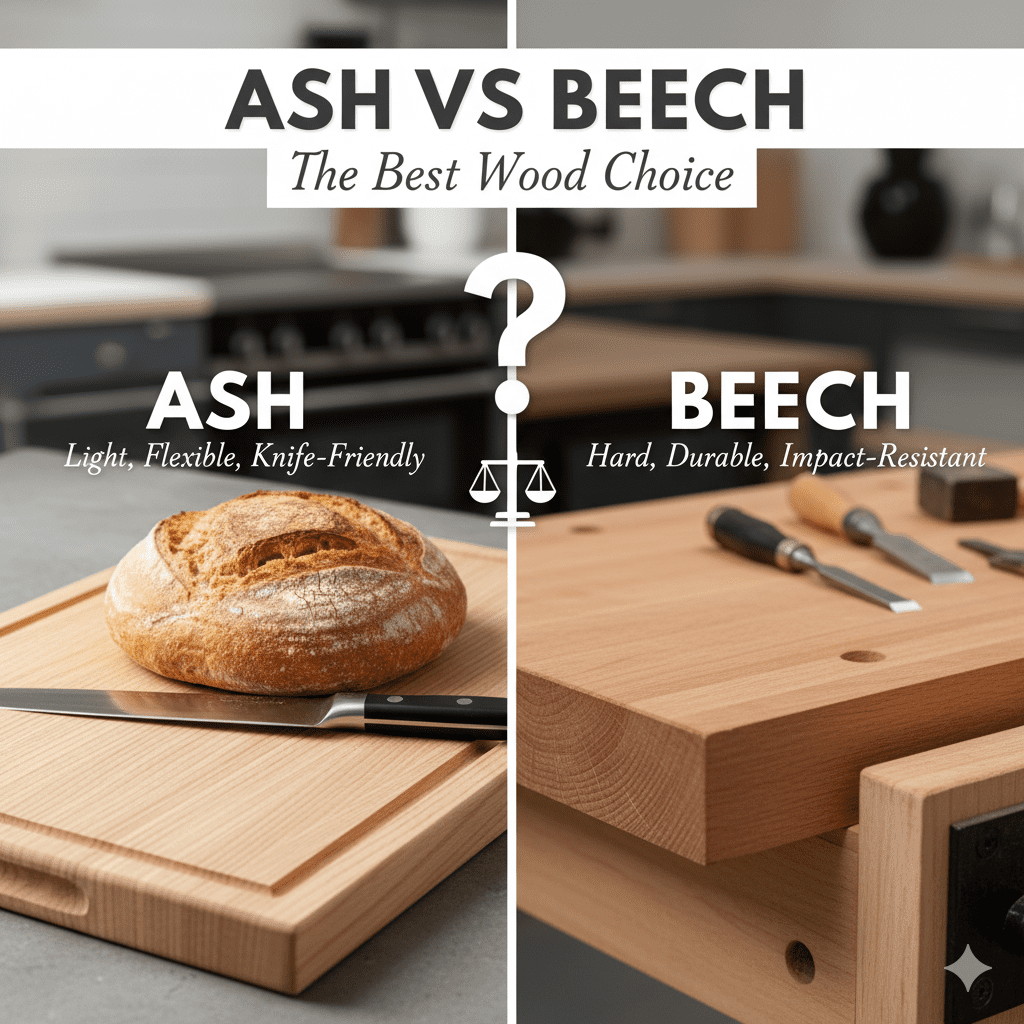
Choosing between Ash and Beech wood? For furniture and DIY projects, Ash offers a brighter look and excellent shock resistance, making it great for tool handles and sports equipment. Beech provides a dense, fine grain perfect for sturdy, smooth finishes, ideal for cutting boards and cabinetry. Both are fantastic, but your project’s needs will guide the best pick!
Hey there, fellow woodworkers! Md Meraj here, ready to help you navigate the wonderful world of wood. Picking the right lumber can feel like a puzzle, especially when you’re just starting out. Two popular choices that often pop up are Ash and Beech. They both look good and work well, but they have their own quirks. You might be wondering, “Which one is better for the project I have in mind?” Don’t worry! We’ve all been there, staring at planks, trying to guess which one will give us that beautiful, durable finish we’re dreaming of. This guide is all about breaking down Ash and Beech, making it super simple to choose the perfect wood for your next DIY adventure. Get ready to feel confident in your choice!
Ash vs Beech: A Beginner’s Guide to Wood Selection
As you dive into woodworking, you’ll discover that different woods have unique personalities. They affect how your project looks, how easy it is to work with, and how long it lasts. Ash and Beech are two hardwoods that are often compared. They’re both strong and readily available, which makes them attractive to beginners. But they aren’t exactly the same. Understanding their differences will help you make a smart decision, whether you’re building a bookshelf, crafting some kitchen essentials, or sprucing up your home.
Think of it like choosing the right paint – you pick based on the wall, the light, and the mood you want to create. Wood is similar! Let’s break down Ash and Beech so you can pick the winner for your specific needs.
What is Ash Wood?
Ash is a hardwood known for its strength, flexibility, and distinctive grain pattern. It’s often compared to oak but typically has a lighter color and a straighter grain. Ash trees are common in North America and Europe, which makes the wood relatively accessible and affordable for many woodworking projects. Its natural properties make it a favorite for many applications, from furniture to sporting goods.
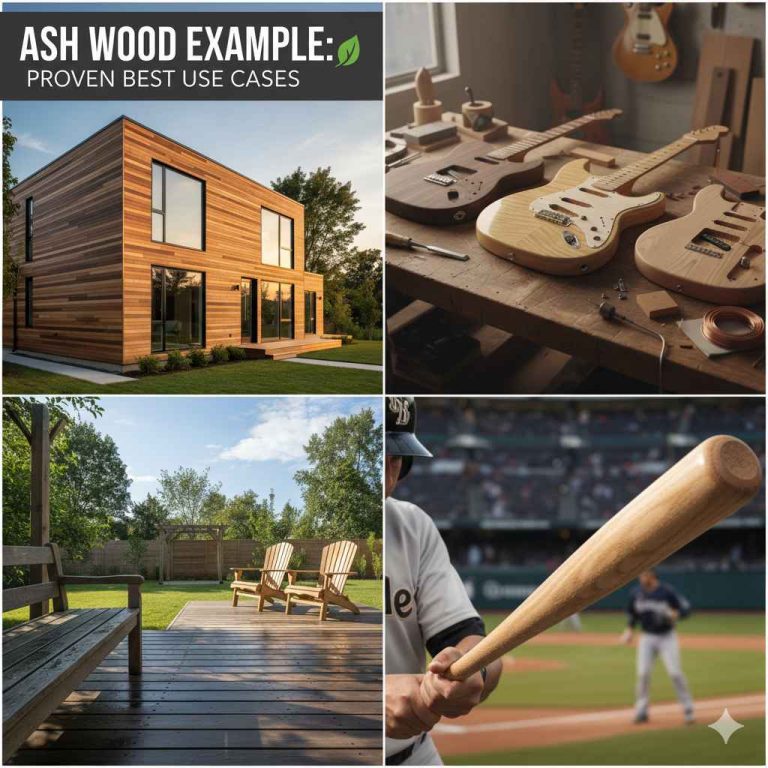
One of the most praised qualities of Ash is its excellent shock resistance. This means it can absorb impact without breaking easily. This characteristic is why you’ll often find Ash used for things like baseball bats, tool handles, and even bowling pins.
Characteristics of Ash Wood:
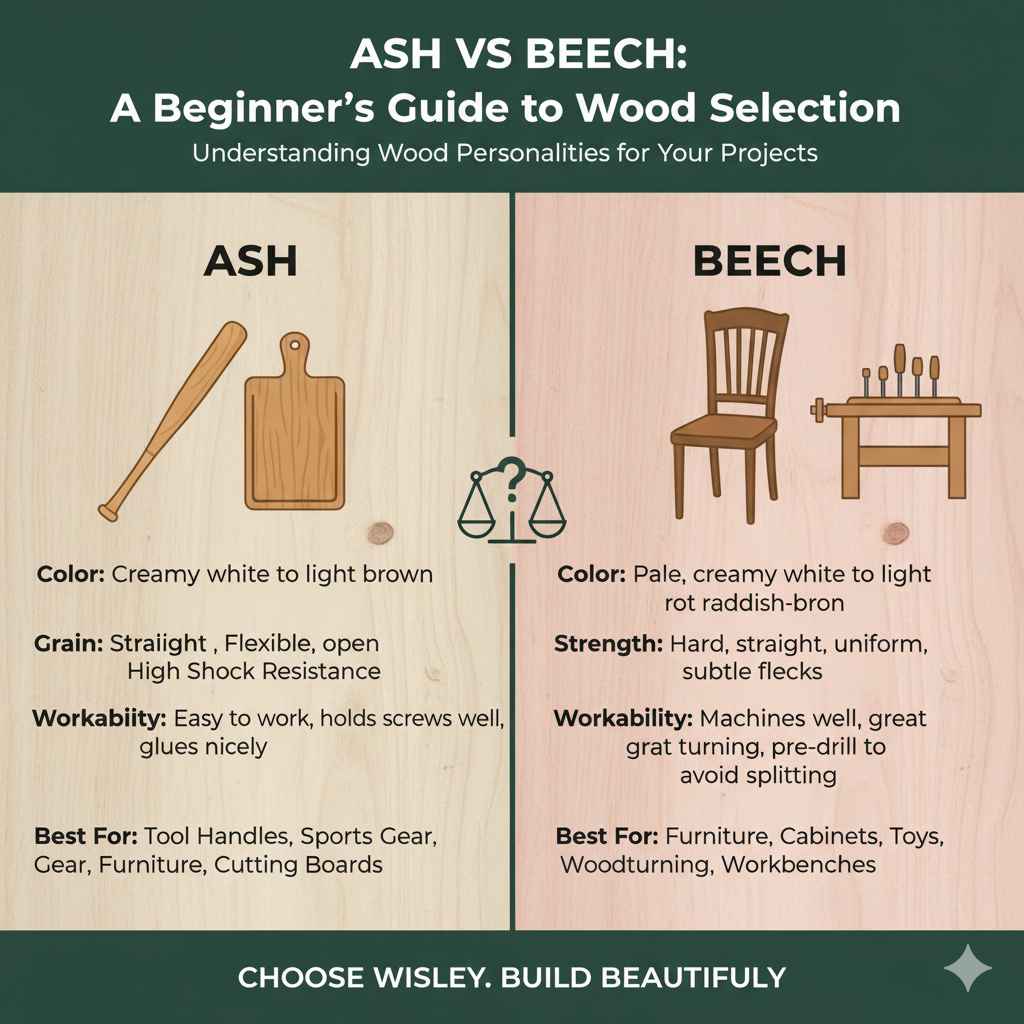
- Color: Ash typically has a creamy white to light brown color. The heartwood can be a bit darker, with reddish-brown tones.
- Grain: It usually features a fairly straight, prominent grain pattern, often with a coarse, open texture. This grain can create beautiful natural patterns, especially when quartersawn.
- Strength: Ash is known for its toughness and good bending qualities. It’s strong and shock-resistant.
- Workability: Generally, Ash is easy to work with both hand and machine tools. It holds screws and nails well, and it glues nicely. Sanding can sometimes be a bit of a challenge due to its open grain, but with the right techniques, you can achieve a smooth finish.
- Finishing: Ash takes stains and finishes beautifully. Its prominent grain really pops when finished, especially with a clear coat or a medium-toned stain.
- Durability: It’s moderately resistant to decay and insect attack, but it’s not considered ideal for extensive outdoor use without proper sealing and maintenance.
Pros of Using Ash:
- Excellent shock resistance – great for items that get a lot of use.
- Strong and durable.
- Aesthetically pleasing, bright color and distinct grain.
- Relatively easy to work with hand and power tools.
- Holds finishes and stains well.
- Good bending properties for steam bending projects.
Cons of Using Ash:
- Can be prone to insect damage if not treated, especially the emerald ash borer, which has been a significant issue for ash trees in North America. For more on this, you can check out resources from government forestry services like the USDA Forest Service.
- Its open grain can sometimes require extra attention during sanding to achieve a perfectly smooth surface.
- Not the best choice for projects that will be constantly exposed to moisture without significant protective finishes.
What is Beech Wood?
Beech is another strong hardwood, closely related to oak and maple. It’s prized for its density, fine, linear grain, and pale, uniform color. Often described as having a subtle elegance, Beech is a workhorse wood that’s fantastic for applications requiring a smooth surface and robust structure. Like Ash, it’s popular in furniture making, but it also shines in specific niches.
One of Beech’s standout features is its exceptionally fine, even texture. This makes it incredibly smooth to the touch and ideal for projects where a slick, clean surface is important. It’s also known for its hardness and strength, making it a durable choice for everyday items.
Characteristics of Beech Wood:
- Color: Beech wood is typically pale, ranging from creamy white to a light pinkish or reddish brown. The color is quite uniform.
- Grain: It has a very fine, straight, and even grain pattern. It usually doesn’t have the prominent figuring you might see in Ash or Oak. It can have small, subtle flecks.
- Strength: Beech is hard, dense, and strong. It’s considered tougher and often harder than Ash, although less shock-resistant.
- Workability: Beech machines very well and can be shaped, turned, and carved with ease. It takes glue well and holds fasteners securely. However, it can be prone to splitting if not pre-drilled, especially near the ends.
- Finishing: Its fine, even grain takes stains and finishes very smoothly, often resulting in a sleek, refined look. It’s also excellent for natural finishes that highlight its pale color.
- Durability: Beech is not naturally resistant to decay or insects, making it unsuitable for outdoor projects unless heavily protected.
Pros of Using Beech:
- Very smooth, fine-grained surface.
- Hard, dense, and strong.
- Machines and finishes exceptionally well.
- Pale, uniform color is versatile for many design styles.
- Cost-effective for its quality and availability.
- Excellent for steam bending.
Cons of Using Beech:
- Low decay resistance, not suitable for outdoor use.
- Can be prone to splitting if fasteners are driven without pre-drilling.
- Less shock resistant than Ash.
- The uniform grain might be considered less visually exciting by some compared to Ash.
Ash vs Beech: A Side-by-Side Comparison
To make things even clearer, let’s put Ash and Beech head-to-head in a table. This will help you quickly see where each wood excels and where it might fall short for your project.
| Feature | Ash Wood | Beech Wood |
|---|---|---|
| Color: | Creamy white to light brown, possibly with reddish tones. More variation. | Pale, creamy white to light pinkish or reddish brown. Very uniform. |
| Grain Pattern: | Straight, prominent, sometimes coarse and open. Can have attractive figuring. | Straight, fine, very even, and subtle. Less prominent. |
| Hardness/Density: | Hard and strong, but generally less dense than Beech. | Very hard, dense, and strong. Often harder than Ash. |
| Shock Resistance: | Excellent. Ideal for impact applications. | Good, but not as high as Ash. |
| Workability: | Easy to work with hand/machine tools. Glues and finishes well. Open grain might need extra sanding. | Machines and carves very well. Takes glue well. Can split if not pre-drilled. |
| Finishing: | Takes stains and finishes beautifully, grain pops nicely. | Takes finishes extremely smoothly, creating a sleek surface. |
| Durability/Decay Resistance: | Moderately resistant. Not for constant outdoor exposure. | Low decay resistance. Strictly for indoor use or heavily protected outdoor use. |
| Typical Uses: | Furniture, cabinetry, tool handles, sports equipment (baseball bats, oars, hockey sticks), flooring. | Furniture (especially chairs and tables), cabinetry, flooring, workbenches, cutting boards, toys, tool handles (less common than Ash for high shock). |
| Cost/Availability: | Generally affordable and widely available. Demand can sometimes fluctuate due to forest health issues (like EAB). | Often very affordable and widely available, especially in Europe. |
When to Choose Ash
You should lean towards Ash when your project demands resilience and a touch of visual flair. Its superior shock resistance is a massive advantage for anything that will take a beating.
Top reasons to choose Ash:
- For Tools and Equipment: If you’re making tool handles, baseball bats, axe handles, or anything that needs to absorb impact without failing, Ash is your go-to. Its toughness is legendary here.
- For Sturdy Furniture with Character: If you like a more pronounced wood grain and a brighter, lighter look for your furniture, Ash delivers. It works wonderfully for tables, chairs, and cabinets where you want the wood’s natural beauty to be a focal point. Think Scandinavian or Shaker style furniture – Ash fits right in.
- For Flooring: Ash is a durable choice for high-traffic areas in your home. Its hardness can withstand wear and tear, and its lighter color can make rooms feel more spacious. For more on wood flooring durability, you might find resources from organizations like the Wood Floor Business incredibly helpful.
- When Steam Bending is Needed: Ash has excellent bending properties, especially when steamed. If your design involves curved elements, Ash is a forgiving and reliable wood to work with for this technique.
When to Choose Beech
Beech is the champion when you need a smooth, solid, and uniform surface. It’s a workhorse that provides excellent durability for everyday items and a refined look for more delicate pieces.
Top reasons to choose Beech:
- For Smooth Kitchen Items: Beech is fantastic for cutting boards, wooden spoons, and rolling pins. Its dense, fine grain means it’s less likely to absorb liquids, easier to clean, and provides a super smooth surface that’s kind to knives.
- For Refined Cabinetry and Furniture: If you’re aiming for a clean, modern, or minimalist look, Beech’s uniform color and fine grain are perfect. It takes paint, stains, and clear finishes beautifully, giving you a sleek, sophisticated result. It’s often used in high-end European furniture.
- For Toys and Children’s Furniture: Its hardness, smooth finish, and non-splintering nature (when finished properly) make Beech a safe and durable choice for children’s items.
- For High-Wear Surfaces: Beech’s density makes it very resistant to dents and scratches, so it’s a great choice for tabletops, workbenches, or any surface that needs to be tough and resilient.
- When a Fine, Even Finish is Paramount: If you want a surface that feels incredibly smooth to the touch and takes finishes with minimal fuss for grain filling, Beech is your winner.
Working with Ash and Beech: Tips for Beginners
Both Ash and Beech are forgiving woods to work with, even for beginners. You’ll find that they respond well to standard woodworking tools and techniques. However, a few tips can help you achieve the best results and avoid common pitfalls.
Tips for Working with Ash:
- Sanding for Smoothness: Ash has an open grain. To get a super smooth finish, consider using a grain filler before your final sanding, especially if you want that glass-like feel. Alternatively, sand with progressively finer grits (up to 220 or 320) and use a tack cloth to remove dust between stages.
- Pre-Drilling is Still Good Practice: While it holds fasteners well, pre-drilling pilot holes, especially near the edges, will prevent any risk of splitting and make driving screws much easier.
- Finishing the Grain: Ash’s prominent grain looks great with most finishes. A clear polyurethane or varnish will highlight its natural beauty. If you want a darker look, Ash takes stains well, but test on a scrap piece first to see how the open grain absorbs the stain.
- Steam Bending: If you plan to bend Ash, ensure you have a good steaming setup and patience. It’s a rewarding process for creating curved designs.
Tips for Working with Beech:
- Watch for Splitting: Beech is hard and dense. Always pre-drill pilot holes for screws and nails, especially in thinner pieces or near the ends, to prevent the wood from splitting.
- Achieving a Smooth Surface: Beech’s fine grain usually sands easily. Sand in progressive grits, and use a good quality dust mask. For an ultra-smooth finish that feels amazing, a final sanding with 320 or 400 grit paper is recommended.
- Finishing for Durability: For kitchen items like cutting boards, use food-safe finishes like mineral oil or beeswax. For furniture, polyurethane or a good quality varnish will protect its pale beauty and enhance its smoothness.
- Avoid Outdoor Exposure: Remember, Beech is an indoor wood. Even exterior paint won’t fully protect it from decay if exposed to moisture regularly.
Ash vs Beech: Which is More Budget-Friendly?
When you’re starting out, budget is often a big consideration. Both Ash and Beech are generally considered mid-range hardwoods. They are more affordable than exotic woods or some premium domestic species like birdseye maple, but they are typically more expensive than softwoods like pine or poplar.
Historically, Beech has often been slightly more affordable and consistently available, especially in European markets. Ash prices can sometimes be more variable, partly due to concerns about the emerald ash borer beetle impacting tree populations in North America, which can affect supply and demand. However, both are usually readily available at most lumber yards.
For a beginner project, you can often find good quality Ash and Beech at similar price points. It’s always a good idea to check with your local lumber supplier for the most current pricing and availability in your area. Sometimes, one might be on sale, or a particular cut might be more economical.
FAQ: Your Top Questions About Ash and Beech
Is Ash or Beech better for furniture?
Both are excellent for furniture! Choose Ash if you want a brighter look with a more noticeable grain, good strength, and excellent shock resistance. Choose Beech if you prefer a very uniform, pale wood with an exceptionally smooth finish, perfect for modern or minimalist designs.
Which wood is harder, Ash or Beech?
Generally, Beech is considered slightly harder and denser than Ash. This means Beech might be more resistant to dents and scratches in very high-traffic areas.
Can I use Ash or Beech for outdoor projects?
Neither Ash nor Beech is naturally suited for prolonged outdoor exposure. Both have low resistance to rot and insect attack. For outdoor projects, woods like Cedar, Redwood, or treated Pine are much better choices. If you must use Ash or Beech outdoors, they require extensive sealing and regular maintenance with protective finishes.
Which wood is easier to cut and shape?
Both are relatively easy to work with. Ash can have a coarser grain, so you might see a bit more tear-out with certain cuts. Beech, with its fine grain, machines very cleanly and smoothly, but can be more prone to splitting if you don’t pre-drill for fasteners.
Which wood takes stain better?
Both take stain well, but in different ways. Ash’s prominent grain will really show through and be enhanced by stain, giving it a strong, natural look. Beech’s fine, even grain will accept stain uniformly, creating a very smooth, even color that can look painted or solid. Test on scrap pieces to see which effect you prefer.
Is Ash or Beech better for a workbench top?
For a workbench top, Beech might have a slight edge due to its extreme hardness and density, making it more resistant to dents and gouges from heavy tools. However, Ash is also very strong, durable, and shock-resistant, making it a perfectly capable choice as well. The key for either is a good, robust construction and a durable finish.