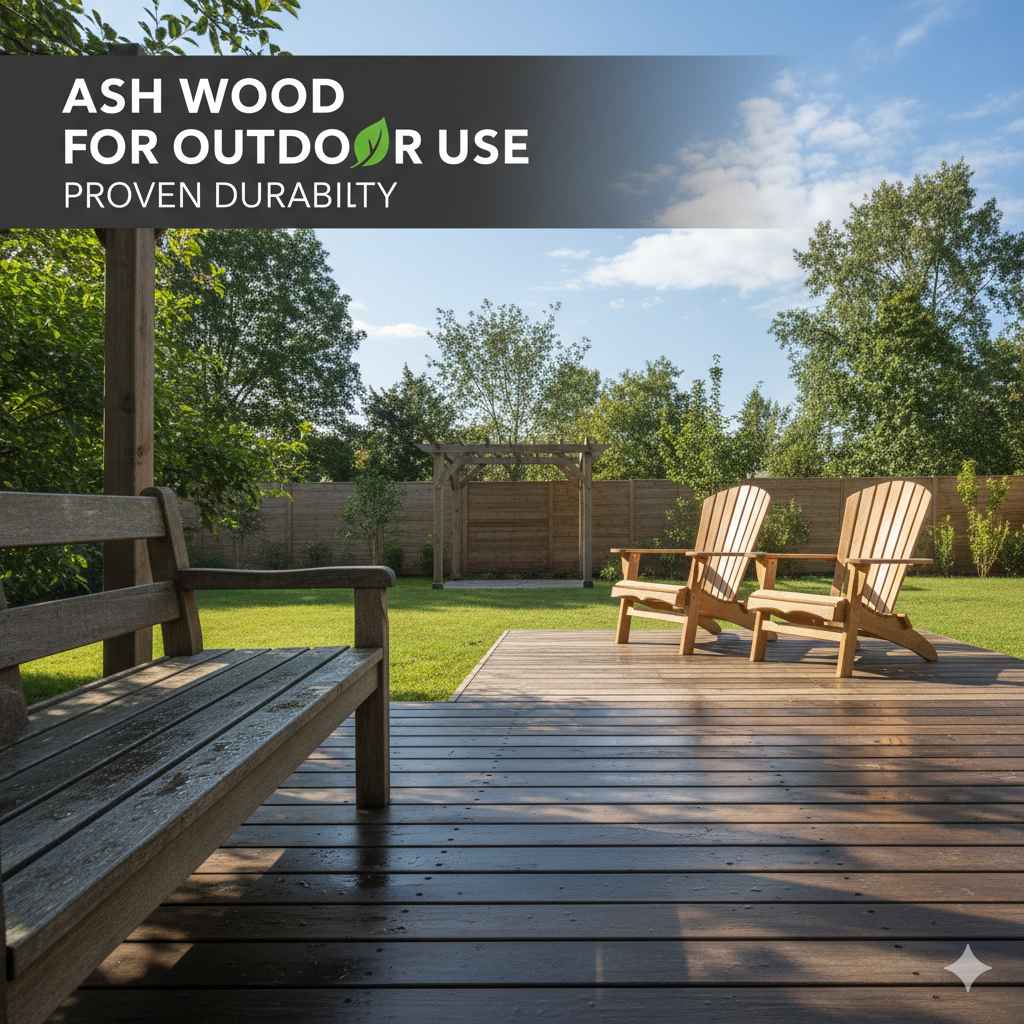
Ash Wood For Outdoor Use: Proven Durability
Yes, ash wood is a great choice for outdoor use due to its proven durability, strength, and resistance to decay when properly finished and maintained. It offers excellent value for DIY projects like furniture, decking, and fencing.
Building awesome things for your yard is super rewarding. But, you want them to last, right? Picking the right wood is key. Sometimes, wood choices can feel overwhelming, especially for outdoor projects where weather is a big concern. You might wonder if a beautiful wood like ash can stand up to rain, sun, and bugs. Don’t worry! I’m here to show you that ash wood is a fantastic, often overlooked, option for your outdoor creations. We’ll explore why it’s so tough and how to make it last even longer. Get ready to build with confidence!
Why Ash Wood Shines Outdoors: A Beginner’s Look at Durability
When we talk about wood for outdoor use, we’re looking for a few key things: strength, resistance to rot and insects, and how well it holds up to the elements. Ash wood checks a lot of these boxes! It’s a hardwood, meaning it’s dense and strong, which is a great starting point for anything that needs to be tough.
Think about your current outdoor furniture or deck. What makes it look good and stay sturdy? It’s often the wood’s natural ability to resist the things that try to break it down. Ash wood has good natural properties that make it a solid contender for these jobs.
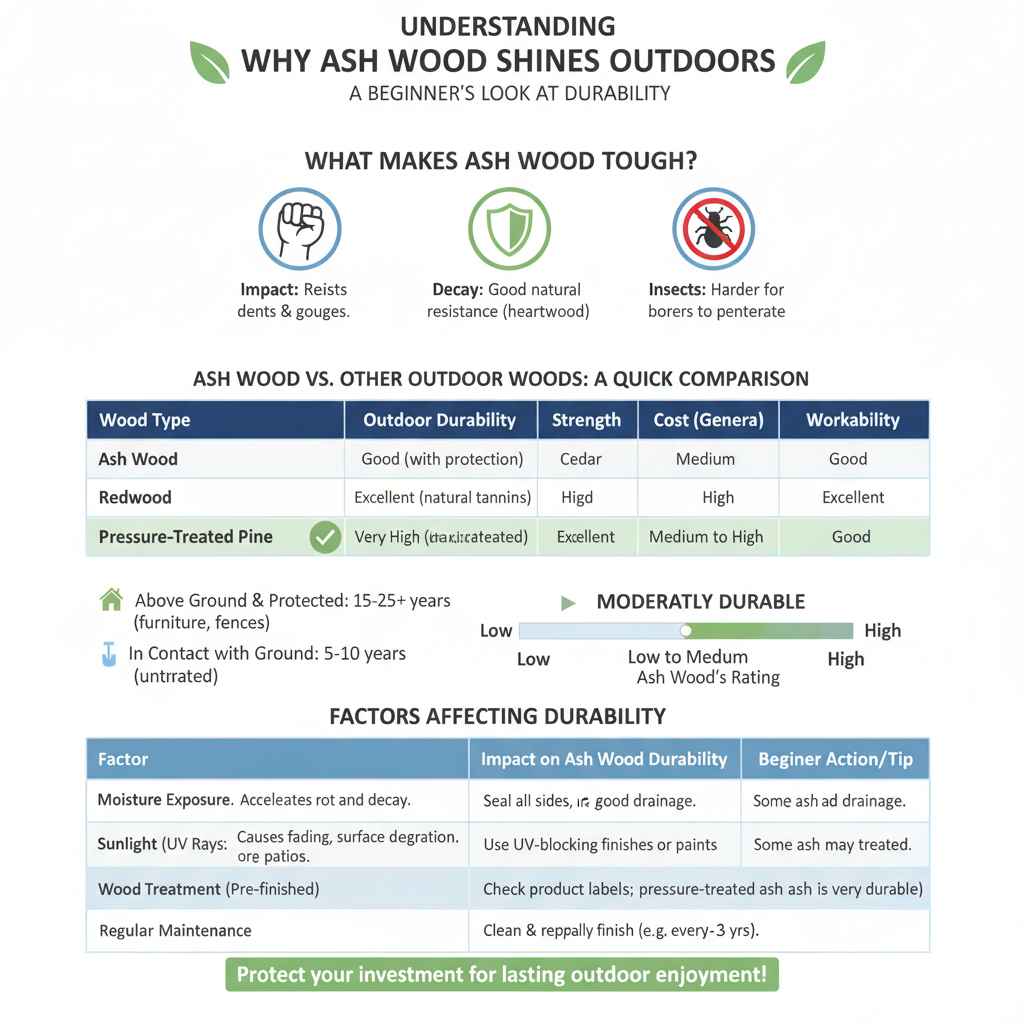
What Makes Ash Wood Tough?
Ash wood’s strength comes from its cellular structure. It’s a relatively dense wood with a good hard grain. This density helps it resist:
Impact: It’s less likely to dent or get gouged by falling objects or general wear and tear.
Decay: While no wood is completely rot-proof, ash has a decent natural resistance, especially its heartwood.
Insects: Its hardness makes it less appealing and harder for common wood-boring insects to get into.
This natural toughness means that with the right care, ash wood can provide years of enjoyment for your outdoor projects.
Ash Wood vs. Other Outdoor Woods: A Quick Comparison
It’s helpful to see how ash stacks up against other popular choices. While woods like cedar and redwood are known for their exceptional natural rot resistance, they can also be more expensive and softer, meaning they might dent more easily. Pine, a more budget-friendly option, requires significant treatment and maintenance to last outdoors.
Ash, particularly species like White Ash (Fraxinus americana), offers a great balance of strength, workability, and durability at a competitive price point.
Here’s a simple table to help visualize:
| Wood Type | Outdoor Durability | Strength | Cost (General) | Workability |
|---|---|---|---|---|
| Ash Wood | Good (with protection) | Excellent | Medium | Good |
| Cedar | Excellent (natural oils) | Good | High | Excellent |
| Redwood | Excellent (natural tannins) | Good | Very High | Excellent |
| Pressure-Treated Pine | Very Good (chemically treated) | Good | Low to Medium | Okay (can split) |
| Oak (White) | Good to Very Good | Excellent | Medium to High | Good |
As you can see, ash offers a compelling middle ground. It’s not as naturally resistant as cedar or redwood, but it’s much stronger and more durable than untreated pine. With proper sealing, it becomes a fantastic option.
Common Outdoor Projects Perfect for Ash Wood
Because of its strength and good looks, ash wood is fantastic for projects that see a lot of use and exposure to the elements.
1. Outdoor Furniture: Sturdy and Stylish
Imagine a beautiful ash wood patio table or chairs. Its strength means they won’t wobble or easily break. The grain of ash can also be quite attractive, giving your furniture a premium look.
Benefits for Furniture:
Resists dents from chairs scraping the ground.
Holds screws and joints firmly.
Takes finishes beautifully for a polished look.
2. Decking and Porches: Building to Last
While less common than pine or composite materials, ash can be used for decking and porch floors. Its hardness makes it resistant to foot traffic and wear. Proper sealing is especially important here to prevent water absorption.
Considerations for Decking:
Needs regular sealing and occasional re-coating.
Ensure good drainage and air circulation around the boards.
3. Fencing and Gates: Strength in Every Post
For property boundaries and garden gates, ash offers excellent stability. A well-built ash fence or gate will withstand wind and weather without sagging or warping significantly.
Why Ash Works for Fencing:
Posts stay upright and strong.
Gates maintain their shape and don’t sag over time.
4. Planter Boxes and Raised Beds: Attractive and Durable Containers
Building eye-catching planter boxes or sturdy raised garden beds from ash is a great idea. It looks much nicer than plastic or basic treated pine, and its durability ensures your plants have a solid home for seasons to come.
Tips for Planters:
Use a good waterproof sealant on the inside to protect from constant moisture.
Ensure good drainage holes.
Getting Started with Ash Wood: What Beginners Need to Know
Ash wood is usually available in lumberyards and home improvement stores. It’s sold in thicknesses and widths similar to other hardwoods like oak. When choosing ash, look for pieces that are relatively straight and free from large, gaping knots or signs of insect damage.
Is Ash Wood Easy to Work With?
For beginners, ash is generally considered a pleasure to work with. It’s not as hard or prone to splintering as some other very dense hardwoods.
Cutting: It cuts cleanly with both hand saws and power saws. You might need slightly sharper blades than for softer woods.
Drilling: Drills easily, creating clean holes.
Sanding: Sands smoothly, preparing a great surface for finishing.
Fastening: Screws and nails hold well, but it’s a good idea to pre-drill pilot holes, especially near the ends, to prevent splitting, just like with any hardwood.
For expert advice on wood selection and handling, resources like the Woodworking Network’s wood identification guides can be incredibly helpful.
Tools You Might Need
You don’t need a professional workshop! Here’s a basic list of tools that will help you work with ash for outdoor projects:
Measuring Tape and Pencil: For accurate marking.
Saw: A hand saw for small cuts, or a circular saw or miter saw for straighter, faster cuts.
Drill: For pre-drilling holes and driving screws.
Screwdrivers or Drill Bits: To match your screws.
Sandpaper: Various grits (e.g., 80, 120, 220) for smoothing.
Clamps: To hold pieces together while glue dries or when fastening.
Safety Gear: Safety glasses are a MUST, and gloves can be helpful.
The Most Important Step: Protecting Ash Wood Outdoors
This is where ash truly shines for outdoor use – with proper protection! Even the toughest wood needs a good shield against the elements. Think of it like putting a raincoat on your wood.
Why Protection Matters
Moisture Resistance: Wood absorbs water, which can lead to swelling, warping, cracking, and eventually rot.
UV Protection: Sunlight can fade wood color and break down its surface fibers.
Insect Defense: While ash is resistant, a good finish adds an extra barrier.
Finishing Options for Outdoor Ash
You have several great choices for finishing your ash wood projects:
1. Exterior Wood Sealants and Stains
These are often oil-based or water-based products designed specifically for outdoor wood. They soak into the wood, providing a barrier against moisture and UV rays. Many also contain mildewcides.
Pros: Easy to apply, available in many colors, good protection.
Cons: Requires reapplication, typically every 1-3 years depending on exposure.
Application: Usually brushed or rolled on. Follow the product instructions carefully. For ash, a semi-transparent stain can highlight the beautiful grain while providing color and protection.
2. Exterior Varnishes and Polyurethanes
These create a protective film on the surface of the wood. They offer excellent durability and a smooth, often glossy, finish.
Pros: Very durable, can provide a beautiful, clear finish, good UV protection.
Cons: Can be more prone to peeling or cracking than penetrating finishes if not applied and maintained correctly. Requires good surface preparation.
Application: Multiple thin coats are usually recommended. Sanding lightly between coats helps ensure good adhesion.
3. Exterior Paints
For a completely different look or for maximum protection against the elements, exterior paint is an option. It completely covers the wood grain but offers a robust barrier.
Pros: Maximum protection, wide color variety, can hide imperfections.
Cons: Hides the natural beauty of the ash grain. Can chip or peel over time if not properly prepped and applied.
Application: Requires priming and multiple coats of high-quality exterior paint.
The Importance of Sealing ALL Sides
Whatever finish you choose, it’s crucial to seal all surfaces of the wood, including the ends and undersides. This prevents moisture from entering unevenly, which is a major cause of warping and cracking. For a planter box, this means sealing the inside and bottom as well as the outside.
Maintenance Tips for Longevity
Regular Cleaning: Sweep or wash your ash wood projects periodically to remove dirt and debris, which can trap moisture.
Inspect Annually: Check for any signs of wear, cracking, or peeling in the finish.
Reapply Finish: As needed, reapply your chosen sealant, stain, or varnish. This is the single best way to ensure your ash wood projects last for many years. A simple touch-up can prevent larger problems down the line.
Understanding Ash Wood Durability Ratings
Wood durability is often discussed in terms of its resistance to decay and insect attack. While ash isn’t in the top tier like old-growth redwood or teak, it performs admirably, especially under cover or with good finishing practices.
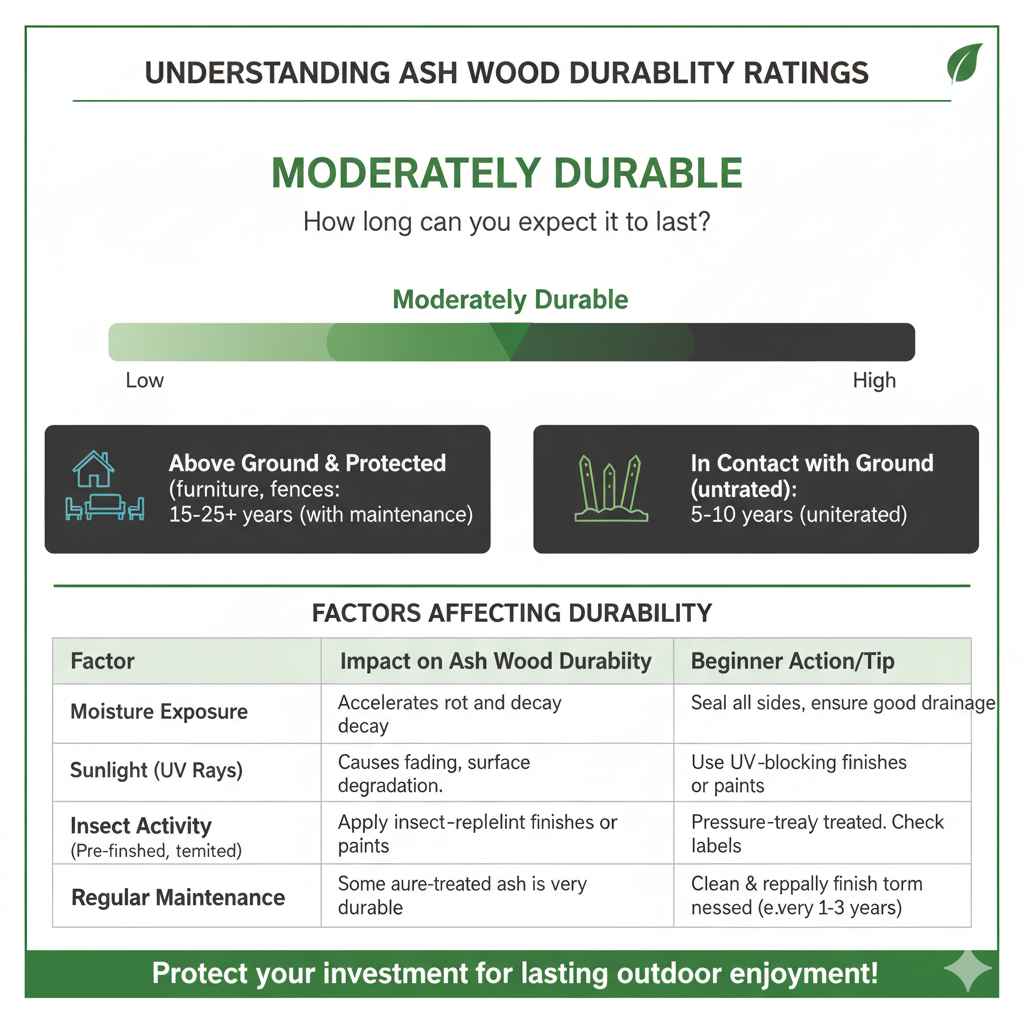
The Forest Products Laboratory (part of the U.S. Forest Service) has extensive data on wood properties. You can find charts that rate various wood species for their natural durability. Generally, ash is rated as moderately durable. This means:
In contact with the ground: It will have a shorter lifespan (perhaps 5-10 years without significant treatment).
Above ground and protected: It can last much longer, often 15-25 years or more with regular maintenance and a good finish.
This “above ground” rating is what matters most for most DIY projects like furniture, fences, and railings. It means the wood is sturdy enough to be structurally sound for a long time when it’s not constantly wet or buried.
Factors Affecting Durability
Here are a few things that can impact how long your ash wood lasts outdoors:
Climate: Areas with high humidity, heavy rainfall, or extreme temperature fluctuations can be harder on wood.
Exposure: Direct sunlight, constant rain, or being fully exposed without any cover will reduce lifespan compared to a sheltered porch.
Wood Species: Different ash species can have slight variations in density and durability. White Ash is reliably strong.
Heartwood vs. Sapwood: The heartwood (inner part of the tree) is generally more resistant to decay than the sapwood (outer part).
By understanding these factors and taking steps to protect your ash, you can confidently use it for a wide range of outdoor applications.
| Factor | Impact on Ash Wood Durability | Beginner Action/Tip |
|---|---|---|
| Moisture Exposure | Accelerates rot and decay. | Seal all sides, ensure good drainage. |
| Sunlight (UV Rays) | Causes fading, surface degradation. | Use UV-blocking finishes or paints. |
| Insect Activity | Wood borers, termites. | Apply insect-repellent finishes or paints. |
| Wood Treatment (Pre-finished) | Some ash may be treated. | Check product labels; pressure-treated ash is very durable. |
| Regular Maintenance | Crucial for long-term performance. | Clean and reapply finish as needed (e.g., every 1-3 years). |
Frequently Asked Questions About Ash Wood for Outdoor Use
Here are some common questions beginners have about using ash wood outside:
Q1: Is ash wood prone to rotting outdoors?
A1: Ash wood is considered moderately durable. While it’s not as naturally rot-resistant as woods like cedar or redwood, its denser hardwood structure provides good resistance, especially the heartwood. With proper sealing and maintenance, it holds up very well outdoors above ground.
Q2: Can I use ash for a deck?
A2: Yes, you can use ash for decking, but it requires diligent finishing and maintenance. Ensure all sides of the deck boards are sealed, and plan for regular cleaning and reapplication of your protective finish every few years to prevent water damage and extend its life.
Q3: How should I finish ash wood for outdoor use?
A3: For outdoor use, ash needs protection from moisture and UV rays. Exterior-grade sealants, stains, or durable exterior paints are excellent choices. Always ensure you seal all surfaces, including the ends, to prevent moisture absorption.
Q4: Is ash wood more expensive than pine for outdoor projects?
A4: Typically, ash is more expensive than standard untreated pine, but it is generally more affordable than premium outdoor woods like cedar or redwood. It offers a good balance of cost, strength, and durability for many DIY projects.
Q5: How often do I need to reapply the finish to ash wood used outdoors?
A5: This depends on your climate and the type of finish you use, but generally, plan to reapply protective finishes every 1 to 3 years. Inspect your project annually for signs of wear, and reapply the finish before any significant damage occurs.
Q6: Will ash wood warp or crack easily outdoors?
A6: All wood can warp or crack if not properly protected and acclimated. Ash’s strength and density make it less prone to extreme warping than some softer woods. Sealing all sides and ensuring consistent moisture levels will significantly minimize these issues.
Q7: Where can I find reliable information on wood species and their properties?
A7: Reputable sources for wood information include government forestry services like the Forest Products Laboratory, university extension offices, and established woodworking publications or websites. These resources provide science-based data on wood durability, properties, and best practices.
Conclusion: Build with Confidence Using Ash Wood
So, there you have it! Ash wood is a wonderfully versatile and durable hardwood that can absolutely be a star player in your outdoor projects. Its impressive strength, good workability, and attractive grain make it a fantastic alternative to more expensive or less sturdy options.
Remember the golden rule: proper finishing and regular maintenance are key. By taking the time to seal and protect your ash wood, you’re not just building something for today; you’re crafting a lasting piece that will bring beauty and function to your outdoor space for years to come. Whether it’s a cozy bench, a sturdy planter box, or a robust garden gate, ash wood is ready to help you bring your DIY dreams to life. Don’t be afraid to give it a try – you’ll be impressed by the results and the confidence boost you get from building something so strong and beautiful! Happy woodworking!