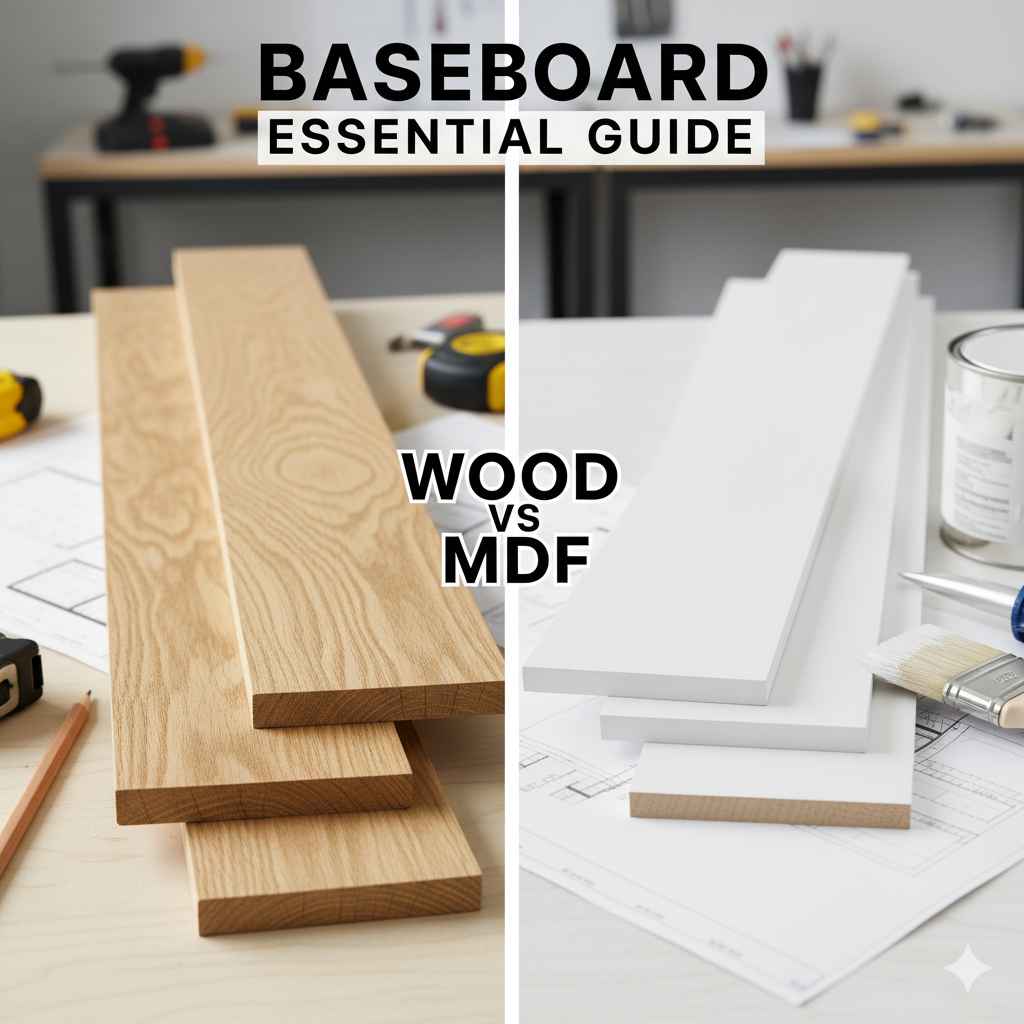
Baseboard Wood vs MDF: Essential Guide
Choosing between baseboard wood and MDF depends on your budget, desired look, and installation location. Solid wood offers superior durability and a premium feel, ideal for high-traffic areas and custom finishes. MDF is more budget-friendly and easier to work with for beginners, creating a smooth surface for painting but is less resistant to moisture and impact.
Hey DIYers and home renovators! Ever stood in the remodeling aisle, scratching your head, wondering which baseboard material is the right pick for your home? It’s a common puzzle, and honestly, the choices can feel a bit overwhelming. You want something that looks great, lasts a long time, and doesn’t break the bank, right? Well, you’ve come to the right place! I’m Md Meraj, and I’m here to demystify this decision for you. We’ll break down the good, the not-so-good, and everything in between for both classic wood and versatile MDF. Get ready to feel confident about choosing the perfect baseboards for your next project!
Baseboard Wood vs MDF: Your Essential Guide to Choosing
When it comes to finishing the look of a room, baseboards play a surprisingly big role. They’re the subtle frame for your walls, adding polish and protecting your drywall from scuffs and bumps. But faced with two popular options – traditional wood and engineered MDF – making the right choice can leave even experienced DIYers pondering. Each has its own strengths and weaknesses, impacting everything from cost and appearance to ease of installation and long-term durability.
I’ve spent countless hours in the workshop and on job sites, working with both materials. My goal today is to share that experience with you, breaking down the essential differences between baseboard wood and MDF in a way that’s easy to understand. We’ll cover what they are, how they perform, and where each material shines. By the end of this guide, you’ll have a clear picture of which baseboard is the best fit for your specific needs and project goals. Let’s get started and find the perfect foundation for your walls!
What Exactly Are We Talking About?
Before we dive into the comparisons, let’s quickly define our contenders.
Solid Wood Baseboards
When we talk about solid wood baseboards, we mean they are made entirely from natural timber. Common choices include pine, oak, poplar, and maple. These woods are harvested, cut, and shaped into the decorative molding you see at the bottom of your walls. Each piece of solid wood has a unique grain pattern, offering a natural beauty and a distinct character that’s hard to replicate.
The quality of solid wood can vary, influencing its appearance and how it behaves. Hardwoods like oak and maple are dense, durable, and can withstand dents and scratches better than softer woods like pine. Softwoods are generally more affordable and easier to cut. The beauty of solid wood is its authenticity; it’s a natural material with inherent visual appeal.
MDF (Medium-Density Fiberboard) Baseboards
MDF, on the other hand, is an engineered wood product. It’s made from wood fibers that are broken down and reformed using wax and a resin binder. These components are then pressed together under high temperature and pressure to create dense, stable sheets. These sheets are then cut and shaped into baseboard profiles.
MDF is known for its smooth, uniform surface. It doesn’t have a natural grain pattern like solid wood. This makes it an excellent candidate for painting, as it provides an incredibly smooth canvas. Because it’s manufactured, MDF is very consistent from piece to piece, with no knots or imperfections that you might find in natural wood.
Understanding the Key Differences: A Direct Comparison
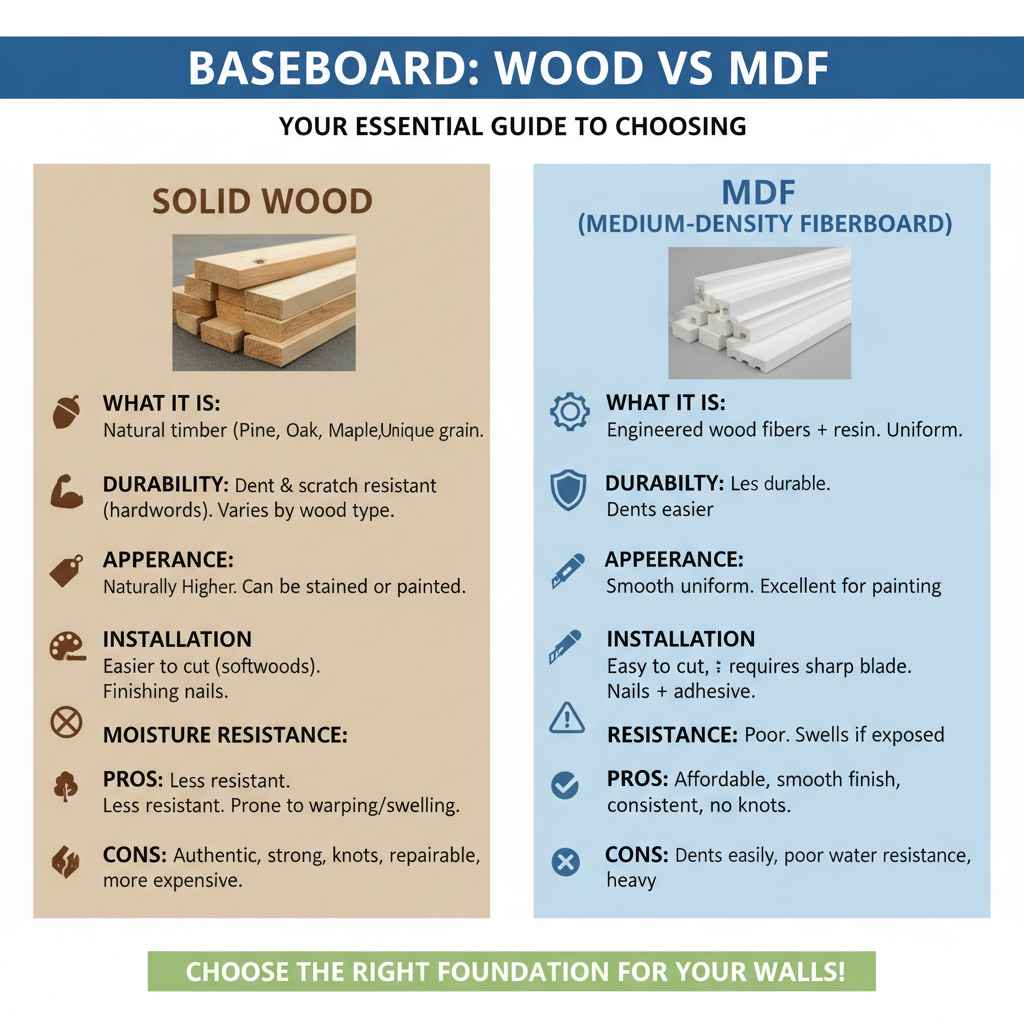
Now that we know what each material is, let’s get down to brass tacks and see how they stack up against each other in the real world. This is where you’ll find the crucial points for making your decision.
Durability and Resistance
This is often a top concern for homeowners. How well will your baseboards hold up to everyday life?
- Solid Wood: Generally, solid wood is quite durable. Hardwoods are particularly resistant to dents and scratches. However, wood is a natural material and can be affected by changes in humidity and temperature. It can expand and contract, potentially leading to gaps or warping over time if not properly installed or in very humid environments. Wood is also susceptible to moisture damage; prolonged exposure can cause it to swell, rot, or attract pests.
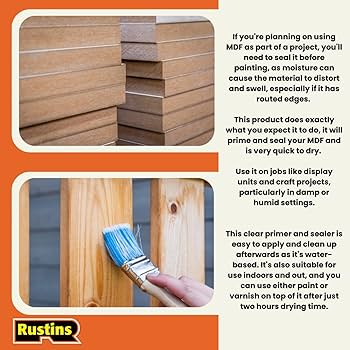
- MDF: MDF is very dense and rigid, which can make it seem durable. However, its weakness lies in its reaction to moisture. If MDF gets wet, it can swell and disintegrate, and it doesn’t easily return to its original shape. It can also be more prone to chipping or denting from sharp impacts compared to hardwoods. For areas prone to moisture, such as bathrooms or kitchens, MDF is generally not recommended unless it’s specifically treated or sealed thoroughly. A great resource for understanding material properties and their best uses can be found at the Forest Products Laboratory Wood Handbook.
Appearance and Finishing
What you see and how you can customize the look is a huge part of the appeal.
- Solid Wood: The primary appeal of solid wood is its natural grain. This grain can be beautiful and add warmth to a room. It can be stained to enhance its natural look, creating a rich, premium finish. Many people prefer the authentic, organic look of real wood. When painting, wood grain can sometimes show through, which some people like, but it can also cause texture inconsistencies if not properly primed.
- MDF: MDF offers a perfectly smooth, uniform surface. This makes it exceptionally well-suited for painting. It’s like a blank canvas that accepts paint beautifully, creating a flawless finish without the texture of wood grain. This is a significant advantage if you’re aiming for a perfectly smooth, factory-finished painted look. However, MDF cannot be stained to achieve a natural wood look; its appeal is primarily in its paintability.
Cost
For many DIY projects, budget is a major deciding factor.
- Solid Wood: The cost of solid wood baseboards can vary widely depending on the type of wood. Pine, being a softer wood, is generally one of the most affordable options for solid wood. Premium hardwoods like oak, maple, or cherry will be significantly more expensive. Solid wood generally sits at a higher price point than MDF.
- MDF: MDF is typically more affordable than solid wood, especially when compared to hardwoods. It’s a budget-friendly option that allows you to achieve a sophisticated look at a lower cost, particularly if you plan to paint. This makes it a very attractive choice for large projects or for those on a tighter budget.
Installation and Workability
How easy is it to get these materials up on your walls?
- Solid Wood: Solid wood can be cut and shaped with standard woodworking tools. However, its density can make some hardwoods a bit more challenging to cut cleanly, and you might need sharper blades or more powerful tools to avoid tear-out. Nailing solid wood can sometimes lead to splitting if not done carefully, though pre-drilling can help. It’s generally considered more forgiving for repairs later on.
- MDF: MDF is very easy to cut and shape. It’s predictable and doesn’t have knots that can chip or split. It nails and screws well, and its uniformity makes it simple to work with for beginners. However, it is heavier than many types of wood and can be more brittle, meaning it can chip or crumble if mishandled. Another consideration for installation is that cutting MDF creates very fine dust that can be a respiratory irritant, so wearing appropriate dust masks and ensuring good ventilation is crucial. The Occupational Safety and Health Administration (OSHA) provides important guidance on controlling dust exposure during woodworking.
Repair and Touch-Ups
Accidents happen! How easy is it to fix minor damage?
- Solid Wood: Minor dents or scratches on solid wood can often be sanded down and refinished or repainted. If a section is severely damaged, it’s usually possible to replace a single piece or even repair it with wood filler discreetly.
- MDF: Repairing MDF can be trickier. Smaller chips can be filled with wood filler, but deep gouges can be hard to make invisible. If MDF gets wet and swells, it’s often beyond repair. Painting over repairs is necessary for a seamless look, but the density and absorption of MDF can sometimes make touch-ups visible.
When to Choose Wood Baseboards
So, when is solid wood your best bet? Consider wood if:
- You want a natural, high-end look that can be stained to reveal beautiful wood grain.
- You are finishing a room with hardwood floors, and you want your baseboards to complement them.
- Durability and resistance to impact are paramount, especially in high-traffic areas.
- You plan on a custom paint color but might want to reveal the wood grain later or prefer a slightly textured painted finish.
- You want the flexibility to repair or refinish minor damage over the years.
- Your budget allows for it, and you see it as an investment in your home’s aesthetic and value.
When to Choose MDF Baseboards
MDF is often the go-to choice when:
- You are on a tighter budget and need a cost-effective solution.
- You are planning to paint your baseboards a solid color and want a perfectly smooth, uniform finish.
- You are installing baseboards in a low-moisture area, away from potential spills or steam (e.g., living rooms, bedrooms, hallways).
- You are a beginner DIYer looking for a material that’s very easy to cut, sand, and install.
- You want a consistent look across all your baseboard pieces without worrying about natural variations.
A Quick Comparison Table
Here’s a handy table to visualize the main differences:
| Feature | Solid Wood Baseboards | MDF Baseboards |
|---|---|---|
| Material Type | Natural timber (pine, oak, poplar, etc.) | Engineered wood fibers with resin |
| Appearance | Natural wood grain, unique patterns | Smooth, uniform, no grain |
| Finishing Options | Stainable, paintable | Primarily paintable for smooth finish |
| Durability | Good to excellent (hardwoods) | Dense but susceptible to moisture & sharp impacts |
| Moisture Resistance | Moderate (can swell/warp) | Poor (swells permanently) |
| Cost | Moderate to High | Low to Moderate |
| Ease of Installation | Moderate (can split/tear out) | Very Easy (cuts easily, uniform) |
| Repairability | Good (sand, refinish, replace) | Fair (difficult for deep damage/moisture) |
| Best For | High-end looks, stain finishes, durability needs, areas with stable humidity | Budget projects, smooth painted finishes, low-moisture areas, beginner ease |
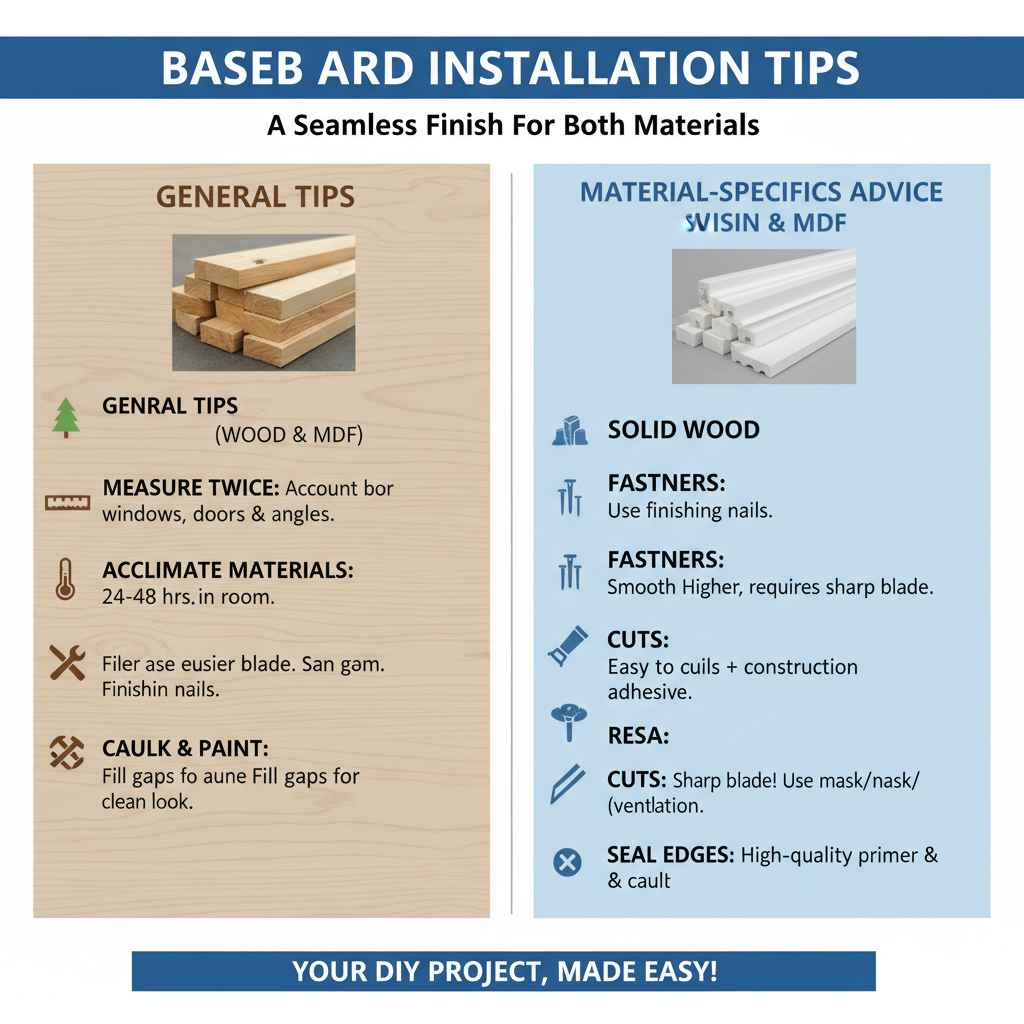
Installation Tips for Both Materials
Regardless of your choice, proper installation is key to how your baseboards will look and perform. Here are some general tips:
- Measure Twice, Cut Once: Always measure your walls carefully before buying materials. Account for windows, doors, and any odd angles.
- Acclimate Materials: Allow both wood and MDF baseboards to acclimate to the room’s temperature and humidity for at least 24-48 hours before installation. This helps prevent warping.
- Use the Right Fasteners: For wood, use finishing nails. For MDF, consider using construction adhesive along with nails for a more secure hold, as MDF can be a bit more prone to pulling away if just nailed.
- Cut with Confidence:
- Wood: Use a fine-tooth blade on your saw for clean cuts. If you get tear-out, light sanding will smooth it.
- MDF: A sharp blade is essential for MDF to prevent chipping. Remember to use your dust mask and good ventilation!
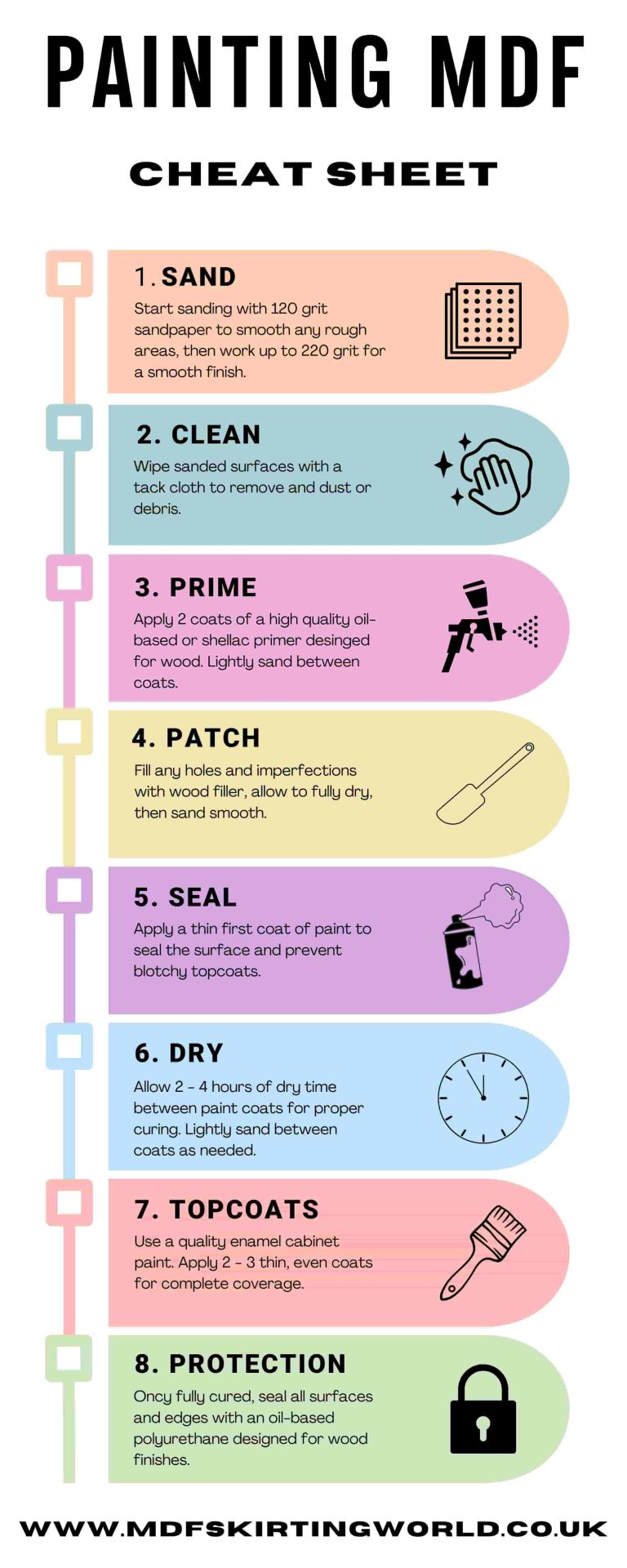
- Seal Edges (for MDF): If you’re painting MDF, consider using a high-quality primer and a good sealing caulk along the edges where it meets the floor and wall for a truly seamless finish.
- Don’t Forget Caulking: After installation, use paintable caulk to fill any small gaps between the baseboard and the wall or floor. This creates a clean, finished look.
Frequently Asked Questions (FAQ)
Let’s tackle some common questions homeowners have about baseboard wood versus MDF.
Can I use MDF baseboards in a bathroom?
It’s generally not recommended. MDF’s biggest weakness is its susceptibility to moisture. Bathrooms have high humidity and are prone to splashes. If MDF gets wet, it will swell and likely disintegrate, ruining the molding. If you absolutely must use MDF in a bathroom, ensure it is extremely well-sealed with multiple coats of a moisture-resistant primer and paint, and be prepared for potential issues down the line.
Is solid wood baseboard more expensive than MDF?
Yes, typically solid wood baseboards are more expensive than MDF baseboards, especially when comparing hardwoods like oak or maple to standard MDF. Pine wood can be a more budget-friendly wood option, but often MDF still comes in at a lower price point, offering a significant cost saving, especially for large areas.
Which is better for a smooth painted finish: wood or MDF?
For a perfectly smooth, almost furniture-like painted finish, MDF is generally better. Its uniform density and lack of wood grain mean it accepts paint flawlessly. While wood can be painted smoothly, you might still see subtle grain textures, and achieving MDF-level smoothness sometimes requires more priming and sanding.
Can wood baseboards warp or crack?
Yes, solid wood can warp, expand, or contract due to changes in humidity and temperature. This can sometimes lead to gaps forming along the top or bottom edges over time. Cracking is less common unless the wood is dry, brittle, or subjected to impact. Proper acclimation and installation in a stable environment help minimize these issues.
Is MDF harder to cut than wood?
MDF is generally easier to cut than most solid woods because it’s uniform and contains no knots. It cuts very cleanly with a sharp blade. However, MDF dust is very fine and can be an irritant, so proper safety equipment like a dust mask is essential. Some very soft woods might be easier to cut, but hardwoods can be more challenging than MDF.
Which material is more eco-friendly?
This can be a nuanced question. Solid wood, when sourced from sustainably managed forests, is a renewable resource. However, the harvesting and processing of timber can have environmental impacts. MDF is made from recycled wood fibers, which is a positive environmental aspect. However, the resins and glues used in its manufacturing can sometimes raise concerns about formaldehyde emissions, though many modern MDF products meet strict emissions standards. Both have environmental considerations depending on their sourcing and manufacturing processes.
Which baseboard will last longer?
In terms of raw durability against impacts and wear in dry, stable environments, a dense hardwood baseboard will generally outlast MDF. However, MDF is quite rigid and can look good for a long time if kept dry and protected. The lifespan of both materials heavily depends on the environment, the quality of installation, and the level of protection from damage or moisture.
Conclusion: Making Your Final Decision
Choosing between baseboard wood and MDF doesn’t have to be a stressful decision. As we’ve explored, both materials have their unique strengths and weaknesses that make them ideal for different situations and preferences. Solid wood offers timeless natural beauty and resilience, perfect for those seeking a premium look or needing to withstand the rigors of busy households. MDF, with its smooth surface and budget-friendly nature, is an excellent choice for achieving a flawless painted finish in low-moisture areas, especially for DIYers looking for an easy and affordable upgrade.
Think about your priorities: Is it the richness of natural grain, the effortless smoothness of a painted finish, the cost-effectiveness, or the ability to withstand humidity? By considering these factors and the information we’ve covered, you can confidently select the material that best suits your project, your style, and your home. Remember to always prioritize safety during installation, wear your protective gear, and take your time to ensure a beautiful, lasting result. Happy building