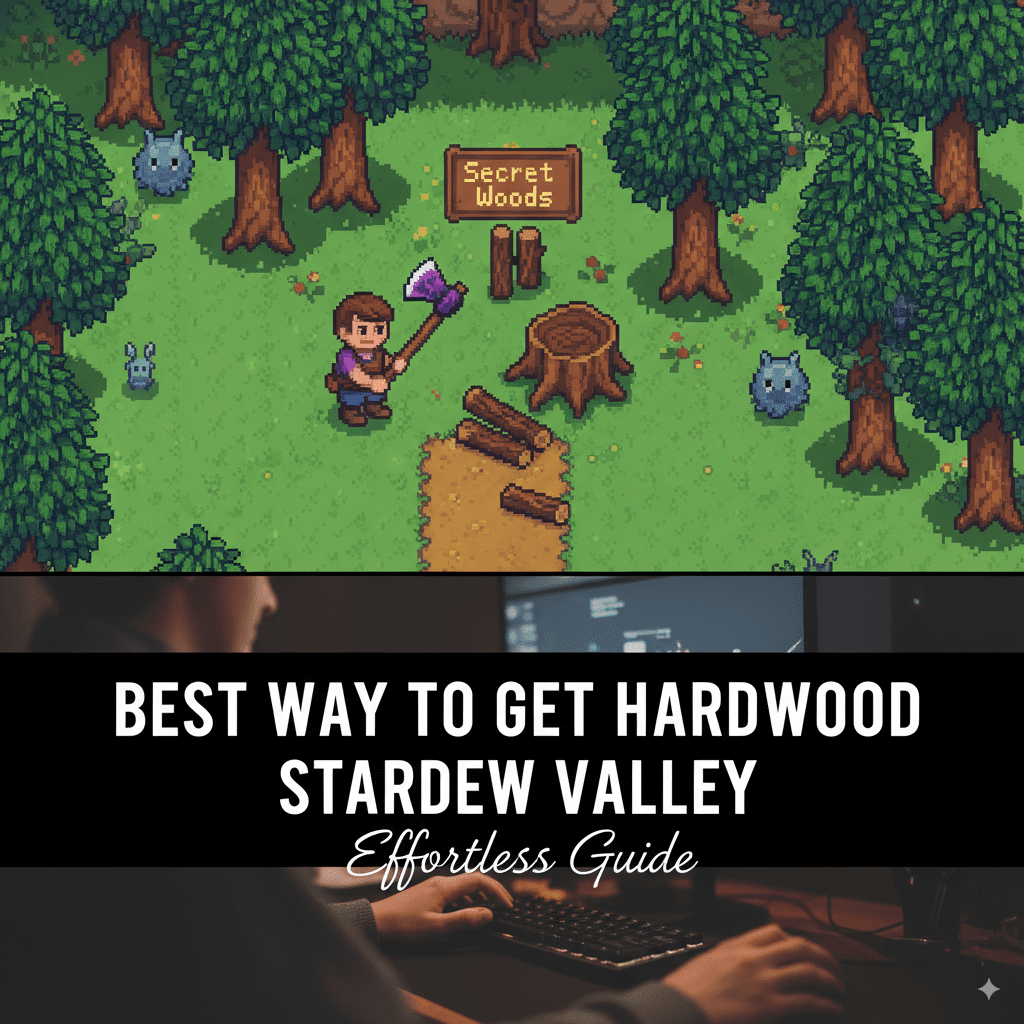
Best Way To Get Hardwood Stardew Valley: Effortless Guide
Get the most hardwood in Stardew Valley efficiently with these simple, proven methods. Learn where to find it, the best tools to use, and easy strategies to boost your supply for all your crafting and building needs.
Are you finding yourself short on hardwood in Stardew Valley? It feels like you need it for everything, from upgrading your farmhouse to crafting essential items for your farm and even completing certain quests. It can be frustrating to constantly search for this vital resource. But don’t worry, fellow farmer! Getting a steady supply of hardwood is easier than you think. This guide will show you the most effective ways to gather it, making sure you’ll have plenty for all your projects.
We’ll cover everything from the best places to look to the tools that will speed up your work. By the end of this guide, you’ll be a hardwood-gathering pro, ready to tackle any building or crafting challenge that comes your way in Stardew Valley!
Understanding Hardwood in Stardew Valley
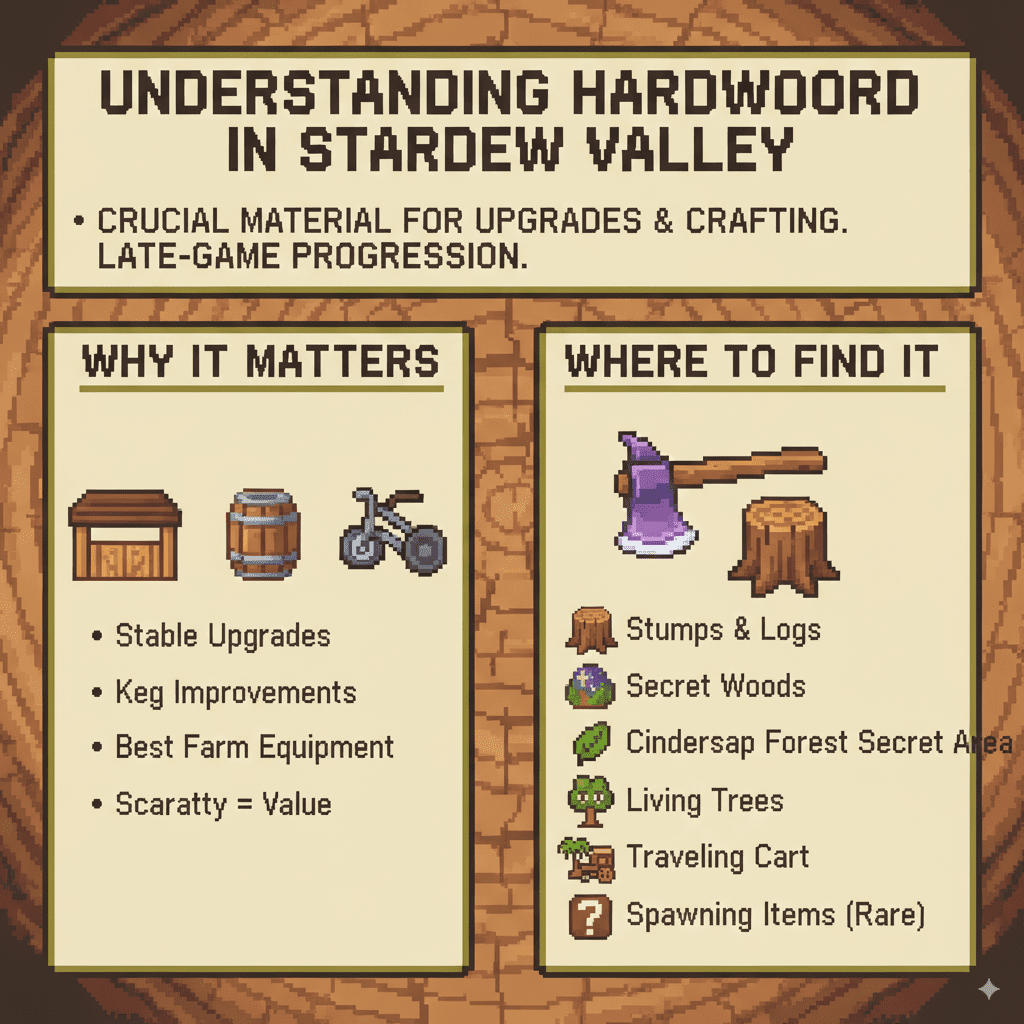
Hardwood is a crucial material in Stardew Valley, more so than regular wood. It’s used for significant upgrades, unique crafting recipes, and is a highly sought-after item for late-game progression. Unlike basic wood, which you can chop from almost any tree, hardwood comes from specific sources and requires more effort (and often better tools) to obtain.
Its value lies in its strength and the quality of items it’s used to create. Things like Stable upgrades, Keg improvements, and even some of the best farm equipment rely on a good stash of hardwood. This scarcity is intentional, making early to mid-game players focus on resource management and exploration to secure their supply.
Where Does Hardwood Come From?
There are a few primary ways to get your hands on this valuable resource:
- Stumps and Logs: These are the most reliable and common sources.
- Secret Woods: A special area where hardwood stumps respawn daily.
- Cindersap Forest Secret Area: Another location with a chance for hardwood.
- Living Trees: When chopped, they yield hardwood.
- Ginger Island: Several sources on the island.
- Traveling Cart: A rare, but possible, purchase.
- Spawning Items: Occasionally, you might find it in geodes or monster drops, but these are very unreliable.
The Best Way to Get Hardwood: An Effortless Guide
Let’s dive into the most effective and beginner-friendly strategies for consistently gathering hardwood. We’ll start with the absolute easiest methods and work our way up.
1. Maximize Your Daily Secret Woods Trips
The Secret Woods is your golden ticket for a daily, predictable supply of hardwood. This area is located in the northwest corner of Cindersap Forest (south of your farm). To access it, you’ll need to break the log blocking the path with at least an Iron Axe. This is a one-time requirement, so focus on upgrading your axe as soon as you can!
Once inside, you’ll find several hardwood stumps scattered throughout the area. These stumps respawn every day, offering a guaranteed amount of hardwood. Here’s how to make the most of it:
- Daily Routine: Make visiting the Secret Woods a part of your daily farm routine, especially before your Farming and Energy stats are fully optimized.
- Tool Requirement: Remember, you need a full-energy or well-rested character and, ideally, an axe that can break the stumps (Steel Axe or better).
- Stump Count: There are typically 6 hardwood stumps in the Secret Woods that respawn daily. Each stump yields 8 hardwood. That’s a guaranteed 48 hardwood every single day!
- Clearing the Path: While you’re there, chop down any regular trees you encounter. They provide valuable regular wood, which you’ll also need.
2. The Power of the Axe: Upgrades and Efficiency
Your axe is your primary tool for hardwood gathering. The type of axe you use significantly impacts how quickly and efficiently you can chop.
Axe Tiers and Their Benefits
There are five tiers of axes in Stardew Valley:
| Axe Tier | Forging Cost | Energy Cost Per Chop | Chop Radius | Notes |
|---|---|---|---|---|
| Copper Axe | 5 Copper Bars | 8 | 1 | Can chop small branches. Basic chopping. |
| Steel Axe | 5 Copper Bars, 5 Iron Bars | 7 | 1 | Can chop larger branches and logs blocking paths (like the Secret Woods). |
| Gold Axe | 5 Iron Bars, 5 Gold Bars | 6 | 1 | Faster chopping, still single-tile radius. |
| Iridium Axe | 5 Gold Bars, 5 Iridium Bars | 5 | 1 | Fastest chopping, best for large areas. Still single-tile radius for impact. |
While the axe tier affects chop speed and energy cost, the most crucial aspect for hardwood is the ability to break the large stumps and Fallen Logs. The Steel Axe is your entry point for accessing the Secret Woods. After that, upgrading to the Iridium Axe will make chopping any wood faster and less energy-intensive.
Pro Tip: Always keep your axe upgraded. Visiting the Blacksmith and donating artifacts to Gunther to unlock the Skull Cavern (where Iridium Ore is found) is a priority for this.
3. Strategic Tree Farming: Cultivating Your Own Hardwood
While not as immediate as the Secret Woods, strategic tree farming on your farm or in less-used areas can provide a sustainable source of hardwood. This involves planting and harvesting Mahogany Trees.
The Mahogany Tree Advantage
Mahogany trees are special because they drop Mahogany Seeds when chopped, which can be replanted to grow more Mahogany trees. Mature Mahogany trees, when chopped, yield 10 regular wood and 2 to 4 hardwood. This makes them an excellent long-term investment for your hardwood needs.
Here’s how to cultivate them:
- Acquiring Seeds: Mahogany Seeds can be found throughout Stardew Valley. Look for them in artifact troves, given as gifts by certain NPCs, or traded for with the Island Trader on Ginger Island. You can also find them occasionally in the Secret Woods.
- Planting: Plant Mahogany Seeds on tilled soil. They require space to grow, so plant them at least 1 tile apart from other trees and structures. They can be planted directly on the ground outdoors.
- Growth Time: Mahogany trees take approximately 12-14 days to mature. You can speed up their growth with Tree Fertilizer, but it’s often not necessary if you plan ahead.
- Harvesting: Once mature, chop them down with your axe.
- Regular Wood: Each mature Mahogany tree yields 10 pieces of regular wood.
- Hardwood: This is where the magic happens – each mature Mahogany tree drops 2 to 4 pieces of hardwood. This means a single tree can give you up to 16 hardwood (4 trees * 4 hardwood/tree) if you get lucky with drops!
- Replanting: Immediately replant the seeds you obtain to ensure a continuous supply. You can also use Mahogany Seeds to craft more if you have enough.
Where to Plant: Consider planting Mahogany trees in less accessible areas of your farm, or even on the small patches of land outside your main farming area. They don’t need to be watered and will grow regardless of season (except winter, where they won’t grow but won’t die).
For more detailed information on maximizing tree growth, check out the Stardew Valley Wiki’s Farming page.
4. Exploring Ginger Island: A Risky but Rewarding Venture
Once you gain access to Ginger Island, several new opportunities for hardwood emerge. However, these often come with tougher challenges.
- The Island Secret Woods: Similar to the mainland Secret Woods, there’s a small, hidden area on Ginger Island that contains a few hardwood stumps. Accessing it requires clearing debris with your watering can or pickaxe.
- The Island Field Office: You can get Mahogany Seeds from the Island Trader in exchange for specific items.
- Fallen Logs: The tropical environment of Ginger Island is littered with large fallen logs that can be chopped with an upgraded axe (Steel Axe or better) to yield hardwood.
- Regular Trees: Like on the mainland, chopping down any regular trees on Ginger Island has a small chance of dropping hardwood.
Note: Ginger Island content unlocks later in the game. Focus on the mainland methods first until you’re ready to brave the tropical island.
5. Other Less Reliable Sources
While the methods above are your main focus, keep an eye out for these occasional hardwood pickups:
- Living Trees: These large, mossy trees can be found randomly throughout the game world, especially in the Mountains and Secret Woods. Chopping them down yields a good chunk of hardwood.
- Traveling Cart: The Traveling Cart, which appears west of your farm every Friday and Sunday, sometimes sells hardwood. This is a gamble, as stock is random and often expensive, but it can be a quick way to grab a few pieces if you’re desperate.
- Geodes and Monster Drops: Very rarely, you might find a piece of hardwood from opening a Geode at the Blacksmith or as a drop from certain monsters. These are not reliable methods and should not be depended upon.
Tools and Preparations for Efficient Hardwood Harvesting
To maximize your hardwood gathering, it’s essential to be prepared. This means having the right tools and managing your energy.
Essential Tools
- Axe: As discussed, upgrade your axe as soon as possible. A Steel Axe is the minimum for accessing reliable sources like the Secret Woods. An Iridium Axe is ideal for speed and energy efficiency.
- Pickaxe: Useful for breaking rocks and clearing debris, which can sometimes reveal more trees or paths.
- Hoe: Needed for tilling soil if you plan to farm Mahogany trees.
- Watering Can: For planting Mahogany seeds, though they don’t require watering to grow.
- Food/Buffs: Stockpile energy-restoring food or buffs. Dishes like ‘Cheese,’ ‘Salad,’ ‘Omelet,’ or ‘Spaghetti’ are great for restoring energy and giving you a temporary boost. Look for recipes that also provide buffs like ‘Max Energy’ or ‘Energy Regen.’
Energy Management Tips
Chopping down multiple trees and stumps consumes a significant amount of energy. To avoid running out prematurely:
- Upgrade to Better Tools: Higher-tier axes use less energy per chop.
- Eat Food: Carry energy-restoring food with you at all times. This is crucial for longer chopping sessions.
- Rest: If you’re low on energy, consider going to bed early or using a full energy refill item like a ‘Void Egg’ or ‘Coffee.’
- The Farm Totems/Return Scepter: These items allow you to instantly return to your farm, saving travel time and energy. They are especially useful when adventuring far from home.
- The Minecart System: Once repaired, the Minecart system provides fast travel around the valley. Make sure to use it to get to the Secret Woods and other locations quickly. You can repair the Minecart system by collecting 20 Iron Bars and 30 Wood at the Carpenter’s Shop.
Here’s a quick comparison of how much energy different actions cost:
| Action | Energy Cost (Base) |
|---|---|
| Chop Small Branch | 2 |
| Chop Regular Tree | 8 |
| Chop Hardwood Stump | 10 |
| Break Large Log | 10 |
As you can see, hardwood stumps and logs are the most energy-intensive. Efficient chopping and energy management are key!
Frequently Asked Questions About Hardwood
Q1: What is the absolute fastest way to get hardwood?
The fastest, most consistent daily method is to visit the Secret Woods every morning and chop all the respawned hardwood stumps. This provides a reliable 48 hardwood per day.
Q2: When can I start getting hardwood easily?
You can begin harvesting hardwood from the Secret Woods as soon as you obtain a Steel Axe. This requires reaching Foraging Level 1 and crafting it with 5 Iron Bars.
Q3: Do Mahogany trees grow in winter?
Mahogany trees will not grow during winter, but they will not die either. You can plant them in fall and they will continue to grow in spring. They will produce hardwood regardless of the season once mature.
Q4: Can I get hardwood from regular trees?
Yes, chopping down regular trees sometimes yields hardwood, especially larger trees. However, it’s a much lower chance than getting it from dedicated hardwood stumps or Mahogany trees, making it an unreliable primary source.
Q5: Is it worth buying hardwood from the Traveling Cart?
It depends on your game progression and how desperate you are. The Traveling Cart often sells hardwood for a high price (around 500-1000g per piece). If you have excess gold and need a quick boost, it can be an option, but it’s generally more efficient to gather it yourself.
Q6: How much hardwood do I need for major farm upgrades?
Major upgrades like the House upgrades require significant amounts of hardwood. For example, upgrading your House a second time to a Deluxe House costs 100 Hardwood, 500 Stone, and 10,000g. The Stable also requires 100 Hardwood.
Q7: What’s the deal with Living Trees?
Living Trees are rare, ancient-looking trees found in certain areas. Chop them down with a good axe, and they’ll yield 10x Hardwood, making them a very valuable find when you encounter them!
Conclusion: Your Path to Hardwood Abundance
Gathering hardwood in Stardew Valley might seem challenging at first, but by understanding the best methods and preparing yourself, it becomes a manageable and even rewarding part of your farming routine. The Secret Woods is your daily bread and butter, offering a guaranteed and substantial amount of this valuable resource.
Don’t underestimate the long-term benefit of planting and harvesting Mahogany Trees on your farm. While it takes time, it creates a self-sustaining supply that will serve you well throughout your Stardew Valley adventures. Remember to keep your axe upgraded for efficiency and to always have some energy-restoring food on hand.
With these strategies in your toolkit, you’ll be well on your way to accumulating all the hardwood you need for those essential farm upgrades, intricate crafting projects, and whatever else the valley throws your way. Happy chopping, farmer!