Exercise Equipment Mats for Hardwood Floors: What Thickness Protects Best?
High-density PVC or rubber mats between 4mm and 6mm thick protect hardwood floors from most home-gym equipment — but treadmills and power racks need 3/8 to 1/2 inch for real shock absorption. Foam or yoga mats compress under sustained weight and still let indentations reach the wood. This guide covers the right thickness for your machine, which materials are safe for finished hardwood, and our top mat pick.
Why Exercise Equipment Damages Hardwood Floors
Best Exercise Mat Pick
 |
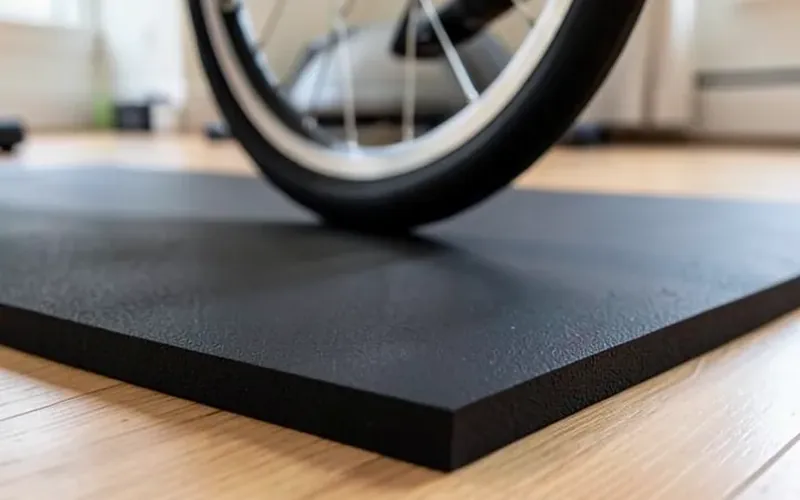
BalanceFrom High-Density Gym Equipment Floor Mat, 1/4-Inch PVC – $62.99 At 1/4 inch (6mm) high-density PVC and 6×4 feet, this mat covers a full treadmill or bike footprint — matching the mid-range thickness this guide recommends for cardio machines on hardwood.
|
As an Amazon Associate we earn from qualifying purchases.
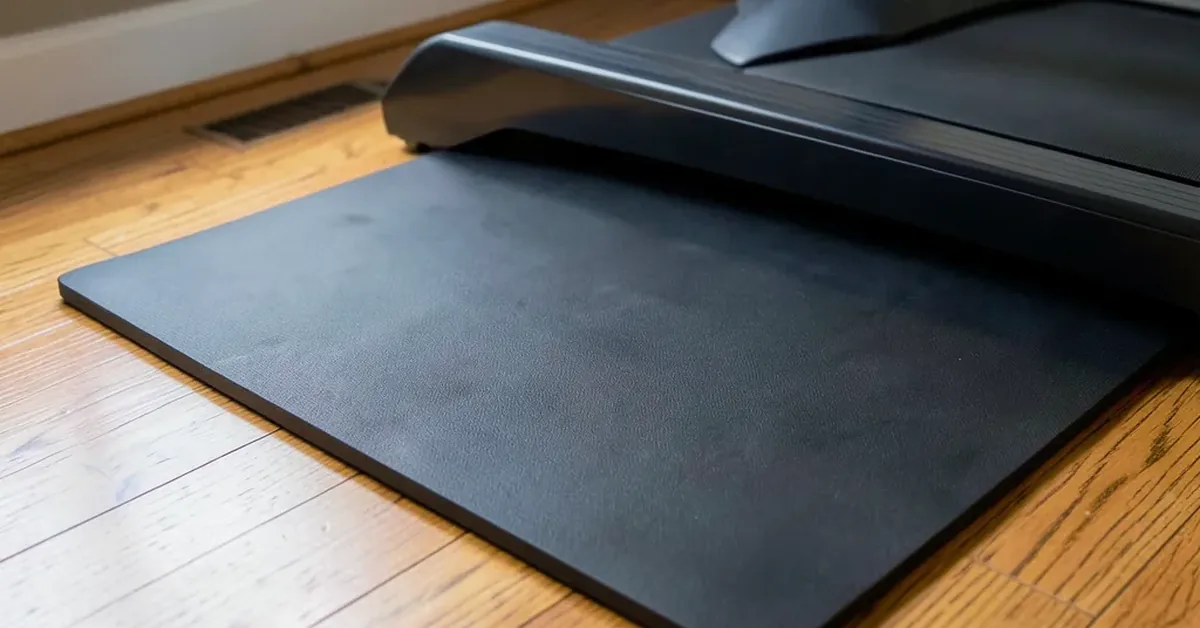
Hardwood floors are a real investment, and exercise equipment is one of the fastest ways to dent, scratch, or discolor them. A machine’s weight concentrates on a few small feet or wheels, sweat and moisture seep into open grain, and repeated vibration can loosen finish over time.
Risks of Exercise Equipment on Hardwood
Weight machines and cardio equipment cause scratches, dents, and scuff marks where feet or wheels contact the floor. Sweat and moisture from intense workouts can seep into the wood grain, leading to warping and discoloration months later — damage that often shows up long after the workout that caused it.
How a Mat Prevents That Damage
A mat rated for the equipment’s weight spreads the load across a larger surface instead of four small points, absorbs vibration before it reaches the finish, and blocks sweat from ever touching the wood. The mat needs to be thick enough for the job, though — see the thickness table below.
What Thickness Mat Do You Actually Need?
Mat thickness is the single spec that matters most and the one most buying guides skip. Aim for 4-6mm of high-density material for light-to-moderate equipment, and 10-12mm (3/8 to 1/2 inch) for anything that drops weight or vibrates heavily, like treadmills and power racks.
| Equipment Type | Recommended Thickness | Best Material |
|---|---|---|
| Yoga, bodyweight, light stretching | 1/4″ (6mm) | Foam or thin PVC |
| Exercise bike, elliptical | 1/4″–3/8″ (6–10mm) | High-density PVC |
| Treadmill | 3/8″ (10mm) | High-density PVC or rubber |
| Power rack, free weights | 1/2″ (12mm) | Heavy-duty rubber |
📊 Soft foam mats compress under sustained equipment weight and stop protecting the floor once they lose their spring — high-density PVC or rubber holds its shape instead. Source: Greatmats Home Gym Flooring Guide, 2026
Types of Exercise Equipment Mats
Each material trades off differently between protection, cost, and feel underfoot. Match the type to your equipment rather than picking on price alone.
Rubber Mats
Rubber holds its shape under sustained weight and absorbs the most vibration, making it the right call for treadmills, weight benches, and power racks. It also muffles more sound than PVC, which matters if a home gym sits above a living space.
High-Density PVC Mats
High-density PVC is thinner than rubber at the same protection level, stays inert against wood finishes, and wipes clean of sweat instantly. It’s the best match for treadmills, bikes, and ellipticals where floor space and stability both matter.
Foam Mats
Foam is lightweight, rolls up for storage, and suits yoga, bodyweight, or stretching routines. It compresses under a machine’s weight faster than rubber or PVC, so it isn’t the right choice under anything with wheels or a motor.
Choosing the Right Mat for Your Equipment
Measure your equipment’s full footprint first, then add a few inches of margin on every side — a mat that only covers the feet still lets moving parts overhang bare wood. Match thickness to the table above, and for plastic-vinyl mats specifically, keep them out of direct sun since PVC softens and can transfer color onto hardwood floors if left in place for months without moving it.
Installation Tips
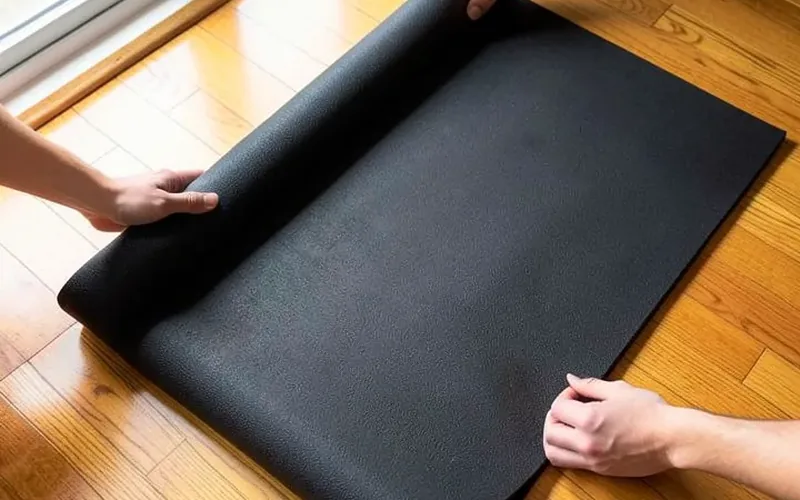
Clean and dry the floor before laying any mat — trapped dust under a mat scratches the finish the same way sand under a rug does. Unroll the mat and let it lie flat for a few hours before placing equipment on it, since mats shipped rolled tight can retain a curl that leaves gaps under the machine’s edges.
- Measure equipment dimensions and choose a mat 4-6 inches larger on each side
- Place on a level section of floor to avoid equipment wobble
- Let the mat lie flat for a few hours before use to release shipping curl
- Check the underside texture — some mats have a smoother top and a grippier bottom
Maintenance and Care
Wipe mats down with mild soap and water regularly to clear sweat and dust before it works into the material. Dry mats fully before returning them to the floor — trapped moisture between mat and wood is what actually damages a finish, not the mat material itself.
- Rotate mat placement occasionally so wear doesn’t concentrate in one spot
- Avoid dragging heavy equipment across the mat surface
- Inspect for compression or tearing every few months and replace once a mat stops springing back
Frequently Asked Questions
Can you put exercise equipment on hardwood floors?
Yes, but use a mat rated for the equipment’s weight. Light gear like yoga mats or resistance bands need no mat, cardio machines need 1/4 to 3/8 inch of high-density PVC, and power racks or free weights need 1/2-inch rubber to stop indentations.
What thickness mat do I need for a treadmill on hardwood floors?
Most treadmills need a 3/8-inch (10mm) high-density PVC or rubber mat. Thinner 1/4-inch mats work for lighter folding treadmills, but full-size cardio machines compress thin foam until it stops protecting the floor.
Are rubber mats safe for hardwood floors?
Yes. Rubber mats are chemically inert against most hardwood finishes and provide a stable, non-slip protective barrier. Wipe up any moisture that collects underneath during long workouts, since trapped humidity — not the rubber itself — is what can dull a finish over time.
How do I keep an exercise mat from slipping on a hardwood floor?
Clean the floor first to remove dust that reduces grip, then choose a mat with a textured or ribbed underside rather than a smooth one. Double-sided carpet tape at the corners adds security for mats under rowing machines or anything with lateral movement.
Conclusion
Match mat thickness to your heaviest piece of equipment, not the lightest — 6mm PVC handles a bike or elliptical, but treadmills and power racks need 10-12mm of rubber or high-density PVC to actually stop indentations. Get the thickness right and the mat protects your hardwood floors for years instead of needing replacement after one season.
Sponsored / affiliate links. As an Amazon Associate I earn from qualifying purchases. I may earn additional commission from eligible campaigns.