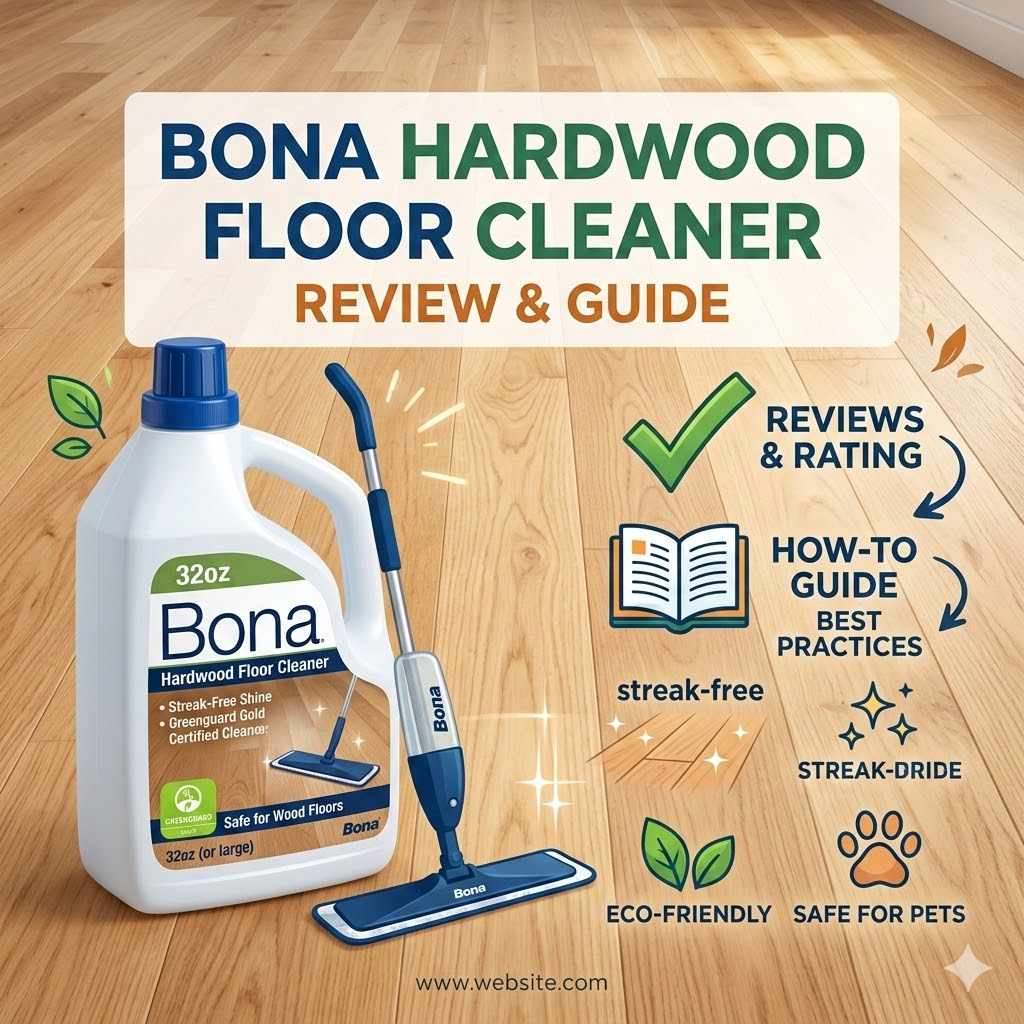
Bona Hardwood Floor Cleaner Review & Guide
Getting started with cleaning hardwood floors can seem tricky, especially when you see terms like “Bona Hardwood Floor Cleaner Review & Guide.” It might feel like there’s a lot to learn. Don’t worry, though. We’ll break it all down into simple steps.
This guide will help you clean your beautiful floors with ease and confidence. Let’s explore how to make your hardwood shine.
Choosing the Right Bona Cleaner
When you’re looking to keep your hardwood floors looking their best, picking the right cleaning product is the first big step. Bona offers a few different cleaners, and knowing which one suits your needs makes a difference. This section helps you understand the options and select the perfect Bona cleaner for your home’s floors.
We’ll look at what makes each cleaner unique and how they work on different types of finishes.
Bona Hardwood Floor Cleaner Types
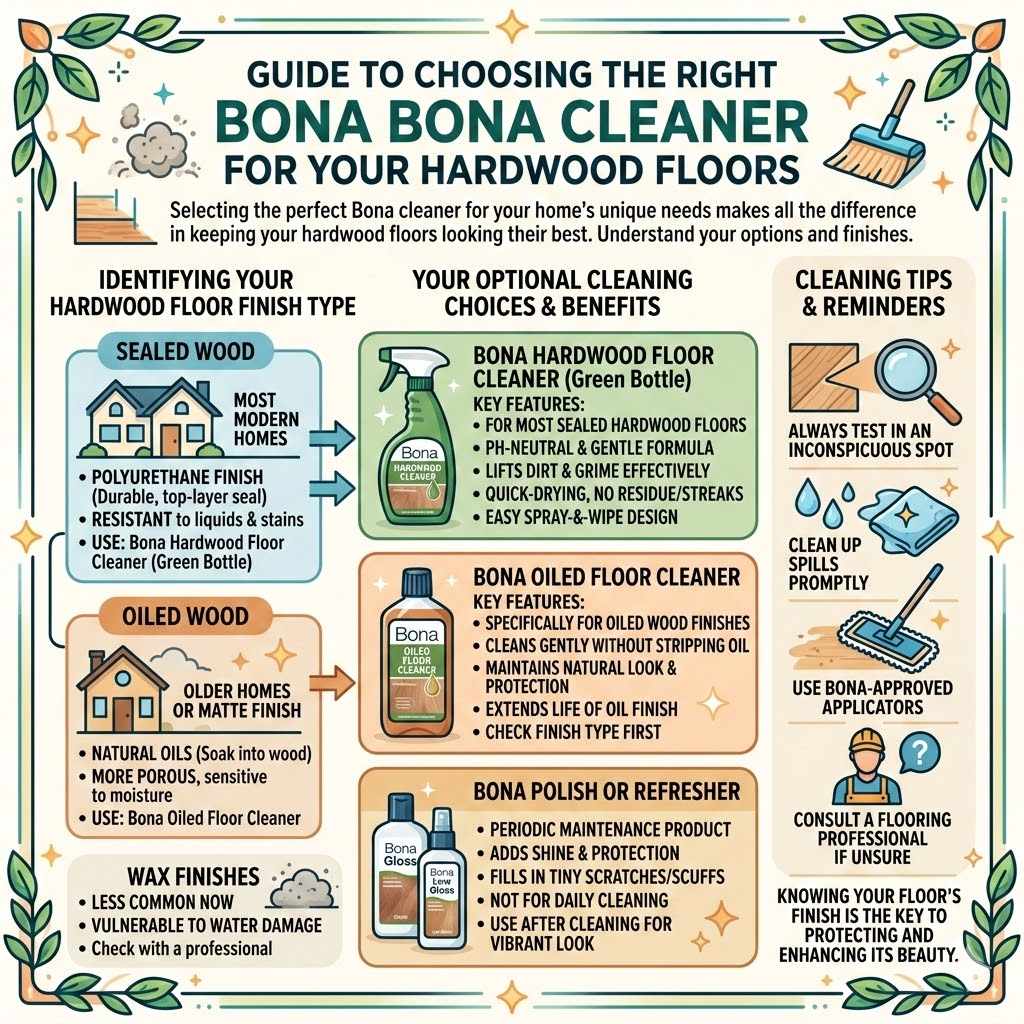
Bona has a main cleaner that works on most sealed hardwood floors. It’s great because it doesn’t leave a dulling residue behind. This is important because many other cleaners can make your floors look cloudy after a while.
Bona’s formula is made to lift dirt and grime effectively. It’s also designed to dry fast, so you won’t have to wait long before walking on your floors again. This cleaner is usually safe for most modern hardwood floor finishes.
There’s also a Bona cleaner for oiled floors. Oiled floors are a bit different and need special care. They aren’t sealed in the same way as polyurethane-finished floors.
Using the wrong cleaner can strip the oil and damage the wood. The Bona cleaner for oiled floors is made to clean gently while also helping to maintain the oil layer. This keeps the wood looking natural and protected.
Another product is the Bona Refresher. This isn’t a cleaner in the same sense. It’s more of a maintenance product.
It helps to add a bit of shine and protection back to floors that are starting to look a little worn. It can fill in tiny scratches and make your floor look newer. You use this after cleaning, not as a replacement for it.
- Bona Hardwood Floor Cleaner (Green Bottle)
- This is the go-to product for most homes with sealed hardwood floors. It’s pH-neutral, meaning it’s not too acidic or too alkaline, which is gentle on finishes. The spray bottle design makes it easy to use.
- You just spray it on and wipe. It’s formulated to dry quickly and not leave streaks. Many users find it effective for everyday spills and dirt.
- Bona Oiled Floor Cleaner
- If your hardwood floors have an oil finish, this is the cleaner you need. It’s specifically designed to work with oiled wood without removing the protective oil. It cleans effectively while helping to preserve the natural look and feel of oiled wood.
- Using this regularly can help extend the life of the oil finish. Always check your floor’s finish type before choosing a cleaner.
- Bona Polish or Refresher
- These products are for enhancing the look of your floors over time. They add a protective layer and can fill in minor scuffs. They are not for daily cleaning but for periodic maintenance to keep floors looking vibrant.
Think of it as a conditioner for your hardwood. It adds a layer of protection and can bring back some shine.
Understanding Floor Finishes
Hardwood floors have different types of finishes, and this is super important for cleaning. The most common finish you’ll find is polyurethane. This is a durable, protective layer applied to the top of the wood.
Polyurethane finishes are sealed, meaning they don’t absorb liquids easily. This makes them resistant to stains and easy to clean. Bona Hardwood Floor Cleaner (the one in the green bottle) is generally safe for these floors.
Some older homes or certain design choices might feature oiled wood floors. Oiled floors are treated with natural oils that soak into the wood. This gives them a more natural, matte look.
However, these floors are more porous and can be damaged by harsh cleaners. They need specialized cleaners like Bona Oiled Floor Cleaner to avoid drying out or absorbing stains.
Another type is wax finishes. These are less common now but were popular in the past. Wax finishes give a warm glow but are also very susceptible to water damage and can become slippery with the wrong cleaners.
If you’re unsure what kind of finish you have, it’s best to check with a flooring professional or test a cleaner in an inconspicuous spot.
How to Use Bona Hardwood Floor Cleaner Effectively
Using Bona Hardwood Floor Cleaner is designed to be simple. However, doing it the right way ensures you get the best results. This means avoiding common mistakes and using the right tools.
We’ll walk through the steps to get your floors sparkling clean without any hassle. Following these tips will help your floors look great and last longer.
Step-by-Step Cleaning Process
First, you need to prepare the floor. Sweep or vacuum the floor thoroughly. This removes any loose dirt, dust, and debris that could scratch the wood during cleaning.
Using a vacuum with a soft brush attachment is best for hardwood. You don’t want to use a vacuum with a beater bar, as this can damage the finish.
Next, get your Bona Hardwood Floor Cleaner ready. If you’re using the spray bottle, just make sure it’s full. If you’re using a larger refill bottle, you might be pouring it into a spray bottle or using it with a Bona mop system.
Make sure you’re using the correct cleaner for your floor type. For most sealed floors, the Bona Hardwood Floor Cleaner in the green bottle is perfect.
Now, it’s time to spray and wipe. Spray a light mist of the cleaner onto a small section of the floor. Don’t soak the wood.
You want the floor to be damp, not wet. Then, using a clean microfiber mop pad, wipe the sprayed area. Work in a back-and-forth motion or follow the direction of the wood grain.
This method prevents the cleaner from sitting on the wood for too long.
As you clean, the microfiber mop pad will pick up dirt. You may need to rinse or change your mop pad if it becomes too dirty. This ensures you are actually cleaning the floor and not just spreading dirt around.
Once a section is clean, move on to the next. Your floors should dry relatively quickly after being wiped down.
For stubborn spots, you might need to spray a little more cleaner directly onto the spot and let it sit for a minute before wiping. Avoid using too much pressure. Let the cleaner and the microfiber pad do the work.
Once you’ve cleaned the entire floor, you can let it air dry completely or walk on it once it feels dry to the touch. You’ll notice a clean scent and a clear shine.
- Preparation is Key
- Before you start mopping, it’s essential to remove all loose dirt and dust. Use a soft-bristle broom or a vacuum cleaner with a hardwood floor attachment. This step prevents scratching your floors during the cleaning process.
- Think of it like washing your hands before touching something clean; you want a clean surface to start with.
- Apply Cleaner Sparingly
- Spray the Bona Hardwood Floor Cleaner lightly onto a small section of the floor. The goal is a damp surface, not a wet one. Excess water can seep into the wood and cause damage over time, leading to warping or other issues.
- A fine mist is usually all you need.
- Wipe with a Microfiber Mop
- Use a clean, dry microfiber mop pad to wipe the sprayed area. Microfiber is excellent for trapping dirt and dust without scratching. Move the mop in the direction of the wood grain for the best results.
- This technique helps to avoid streaks and ensures an even clean.
- Address Stubborn Stains
- For tougher spots, you can spray a bit more cleaner directly on the stain and let it sit for a minute or two. Gentle scrubbing with the mop or a soft cloth might be needed. Avoid harsh scrubbing, which can damage the floor’s finish.
- Patience is often key with tough spots.
- Allow for Drying
- Bona cleaners are designed to dry quickly. Let the floor air dry completely before walking on it. This usually takes only a few minutes.
A well-cleaned floor should look shiny and feel smooth underfoot without any sticky residue.
Tips for Best Results
Always use a clean microfiber mop pad. As you clean, dirt and grime will transfer to the pad. Once the pad is visibly dirty, swap it out for a fresh one.
This ensures you’re cleaning your floors, not just moving dirt around. Having a couple of spare pads makes this process much smoother.
Don’t over-wet the floor. This is a common mistake that can harm hardwood. Bona cleaners are formulated to work best with a light mist.
If your floor looks too wet, you’re using too much product or applying it too heavily. Always aim for damp, not soaked. This keeps your wood healthy.
Work in small sections. This ensures that the cleaner doesn’t dry before you get a chance to wipe it. By cleaning a small area at a time, you can manage the process better and avoid streaks.
It also helps you see the clean result as you go.
Regular maintenance is key. Cleaning your hardwood floors regularly, even if it’s just a quick sweep, prevents dirt buildup. Using Bona Hardwood Floor Cleaner as needed will keep your floors looking their best.
For example, cleaning up spills immediately is crucial. This prevents them from soaking into the wood.
Consider using a Bona mop system. Bona makes mops specifically designed for their cleaners. These systems often have a spray function built in and attach to their microfiber pads.
This can make the cleaning process even easier and more efficient. It’s a small investment that can improve your cleaning routine significantly.
Maintaining Your Hardwood Floors
Keeping your hardwood floors looking beautiful isn’t just about cleaning. It’s also about how you treat them day-to-day. This section will cover ways to protect your floors from damage and keep them looking new for years.
Simple habits can make a big difference in the longevity and appearance of your wood.
Preventing Scratches and Damage
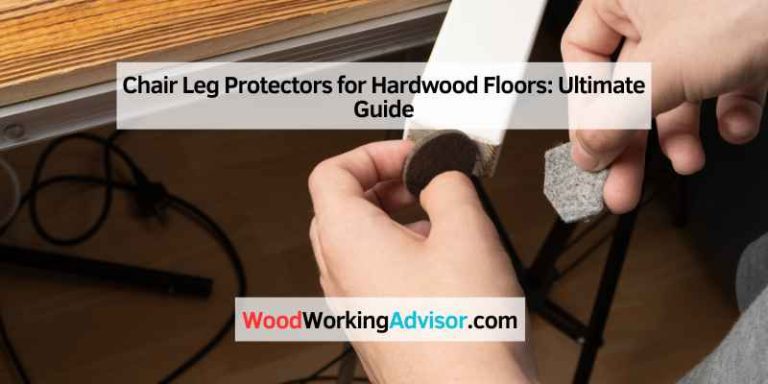
One of the best ways to prevent scratches is to use felt pads on the bottom of furniture legs. This includes chairs, tables, and even sofas. When furniture is moved, the felt pads act like little sliders, preventing the hard furniture legs from digging into or scratching the wood finish.
Replaced these pads when they become worn or dirty.
Use doormats at all entrances. Place sturdy mats both inside and outside your doors. These mats trap dirt, sand, and moisture that can be tracked onto your floors.
Sand and grit are like tiny pieces of sandpaper that can cause micro-scratches over time, dulling the finish. Mats are a simple but very effective first line of defense.
Avoid wearing high heels or cleats on your hardwood floors. The hard soles and pointed heels can create dents and deep scratches. Encourage family members and guests to wear soft-soled shoes or go barefoot indoors.
This small change can significantly reduce wear and tear on your floors.
Trim your pets’ nails regularly. Sharp nails can easily scratch hardwood floors, especially during play. Keep your pets’ nails trimmed to a smooth, rounded edge.
If your pet slides on the floor often, consider getting them booties or protective socks.
Clean up spills immediately. Water, pet accidents, and food spills can stain or damage the wood finish if left for too long. Wipe up any liquid spills right away with a soft, absorbent cloth.
For sticky messes, use a slightly damp cloth followed by a dry one.
- Furniture Protection
- Attach felt protectors to the bottom of all furniture legs. This is crucial for preventing deep scratches when furniture is moved. Regularly check these pads to ensure they are clean and firmly attached.
- Worn-out pads can accumulate grit, which defeats their purpose.
- Entrance Mats
- Place mats at every entryway to trap dirt and moisture. Outdoor mats scrape off larger debris, while indoor mats catch finer particles. This simple barrier stops a significant amount of grit from reaching your floors.
- Keep these mats clean by shaking them out or washing them regularly.
- Appropriate Footwear
- Advise everyone in the household to wear soft-soled shoes indoors. High heels, stilettos, or hard-soled shoes can cause dents and scratches. Encourage a “shoes off” policy at the door to protect your investment in beautiful hardwood.
- Pet Care
- Keep your pets’ nails trimmed and smooth. Overgrown or sharp nails can easily scuff or scratch the floor surface. For pets that tend to slide a lot, consider using pet socks or booties designed for hardwood floors.
- Prompt Spill Cleanup
- Address any liquid spills immediately. Don’t let them sit and potentially soak into the wood or damage the finish. Blot up liquids with a soft cloth, and follow up with a dry cloth to ensure the area is completely dry.
Reviving Old Floors
Sometimes, hardwood floors can start to look dull or have minor scuffs even with regular cleaning. This is where products like the Bona Polish or Refresher come in handy. These are not for deep cleaning but for adding a protective, revitalizing layer back to your floor’s finish.
First, ensure your floor is clean and completely dry. Any dirt or debris left on the floor will get sealed into the new layer, which is not what you want. Use your Bona Hardwood Floor Cleaner and a clean mop pad to give the floor a thorough cleaning.
Let it dry fully, as mentioned before.
Then, apply the Bona Polish or Refresher according to the product’s instructions. Typically, you’ll apply a thin, even coat using a microfiber applicator or mop. Work in a consistent direction, following the wood grain.
Avoid puddling or applying too much product at once. You might need to buff the floor after application, depending on the specific product.
These products can fill in tiny scratches and minor scuffs, making the floor look more uniform and shiny. They also add an extra layer of protection against future wear and tear. However, it’s important to remember that these are maintenance products.
They won’t fix deep scratches or damaged finishes. For significant damage, professional refinishing might be necessary.
The frequency of using a refresher depends on foot traffic and how much wear your floors show. It could be every few months or once a year. Always test a small, inconspicuous area first to see how it looks and performs on your specific floor.
This ensures you are happy with the result before applying it to the whole floor.
Here is a sample scenario for using a refresher:
- Your living room floor looks a bit dull after a year of heavy use.
- You clean the floor thoroughly with Bona Hardwood Floor Cleaner and let it dry completely.
- You apply a thin, even coat of Bona Polish with a microfiber applicator, working with the wood grain.
- After the polish dries, you notice that minor scuffs are less visible, and the floor has a renewed subtle shine.
- The floor feels smoother, and light scratches are no longer as noticeable.
Common Issues and Solutions
Even with the best products and practices, you might encounter some common issues with your hardwood floors. Understanding these problems and how to fix them can save you a lot of worry. This section aims to provide clear solutions for typical challenges.
Dealing with Streaks and Haze
Streaks or a hazy film on your hardwood floors after cleaning can be frustrating. This often happens when too much cleaner is used, or the wrong type of cleaner is applied. Another common cause is using a dirty mop pad that is spreading residue rather than picking it up.
If you notice streaks, the first step is to check the cleaner you used. Are you sure it’s designed for hardwood floors and is residue-free? Using too much product is a frequent culprit.
Try using less cleaner next time and applying it in a lighter mist.
A dirty mop pad is another prime suspect. Make sure you’re using clean microfiber pads and rinsing or changing them frequently during cleaning. If the haze is already there, you might need to do an extra cleaning with just water and a clean mop to remove any residue.
Sometimes, a dedicated residue remover for hardwood floors can help clear up a persistent haze.
For example, if you used a cleaner not meant for hardwood or a solution with added waxes or silicones, it can leave a buildup. This buildup catches light differently, causing the hazy appearance. You might need to use a specific hardwood floor cleaner designed to strip away old residues.
Always read the labels and ensure your cleaner is appropriate.
To prevent streaks, ensure you are working with a clean mop and not over-applying the cleaner. A light mist and consistent wiping motion, following the wood grain, are key. This ensures the cleaner evaporates without leaving a visible line or film.
- Excessive Cleaner Use
- Using too much cleaning solution is a major cause of streaks. Hardwood floors don’t need a lot of liquid to get clean. A light mist is usually sufficient.
- If you see standing liquid or a very wet appearance, you’re likely using too much.
- Dirty Mop Pad
- A mop pad saturated with dirt and grime will just spread that dirt around, leaving streaks and dullness. Always use a clean microfiber pad, and swap it out as soon as it becomes visibly soiled. Rinse it well if you can during the cleaning process.
- Residue-Building Cleaners
- Some cleaners, especially those not specifically designed for sealed hardwood, can leave a sticky or waxy residue. This residue can build up over time, creating a haze. Bona Hardwood Floor Cleaner is formulated to be residue-free, making it a good choice to avoid this issue.
- Improper Drying Technique
- If the floor isn’t dried properly or if the cleaner dries too slowly, it can leave streaks. Ensure you are wiping down the floor promptly after spraying. Adequate ventilation can also help the floor dry faster.
- Addressing Dullness and Fading
Dullness on hardwood floors can happen for several reasons. Over time, the protective top layer, or finish, can wear down from regular foot traffic and friction. Dirt and grime that isn’t fully removed can also dull the shine.
If the dullness is due to wear on the finish, a product like Bona Polish or Refresher can help. As discussed earlier, these products add a new, clear layer that can restore shine and mask minor imperfections. It’s like giving your floors a new top coat without needing to sand and refinish.
Fading can be caused by excessive exposure to sunlight. UV rays from the sun can break down the wood’s natural color and the finish over time. To prevent this, use curtains or blinds to block direct sunlight during the sunniest parts of the day.
Area rugs can also protect high-traffic or sunny spots.
If the dullness is from embedded dirt, a deep clean might be needed. Sometimes, regular cleaning isn’t enough to lift all the grime. In such cases, a more intensive cleaning product or technique might be required, but always ensure it’s safe for your floor’s finish.
A thorough clean with a high-quality hardwood floor cleaner should be your first step.
A practical tip for fading is to rotate your rugs and furniture periodically. This helps to ensure that wear and sun exposure are more even across the entire floor, preventing some areas from becoming noticeably duller or faded than others.
Here are some statistics on fading and wear:
| Factor | Impact | Notes |
|---|---|---|
| UV Light Exposure | Can cause significant fading over time. | Direct sunlight is the main cause. |
| Foot Traffic | Wears down the finish, leading to dullness. | High-traffic areas show wear faster. |
| Improper Cleaning | Can leave residue or damage finish. | Leads to dullness and can prevent shine. |
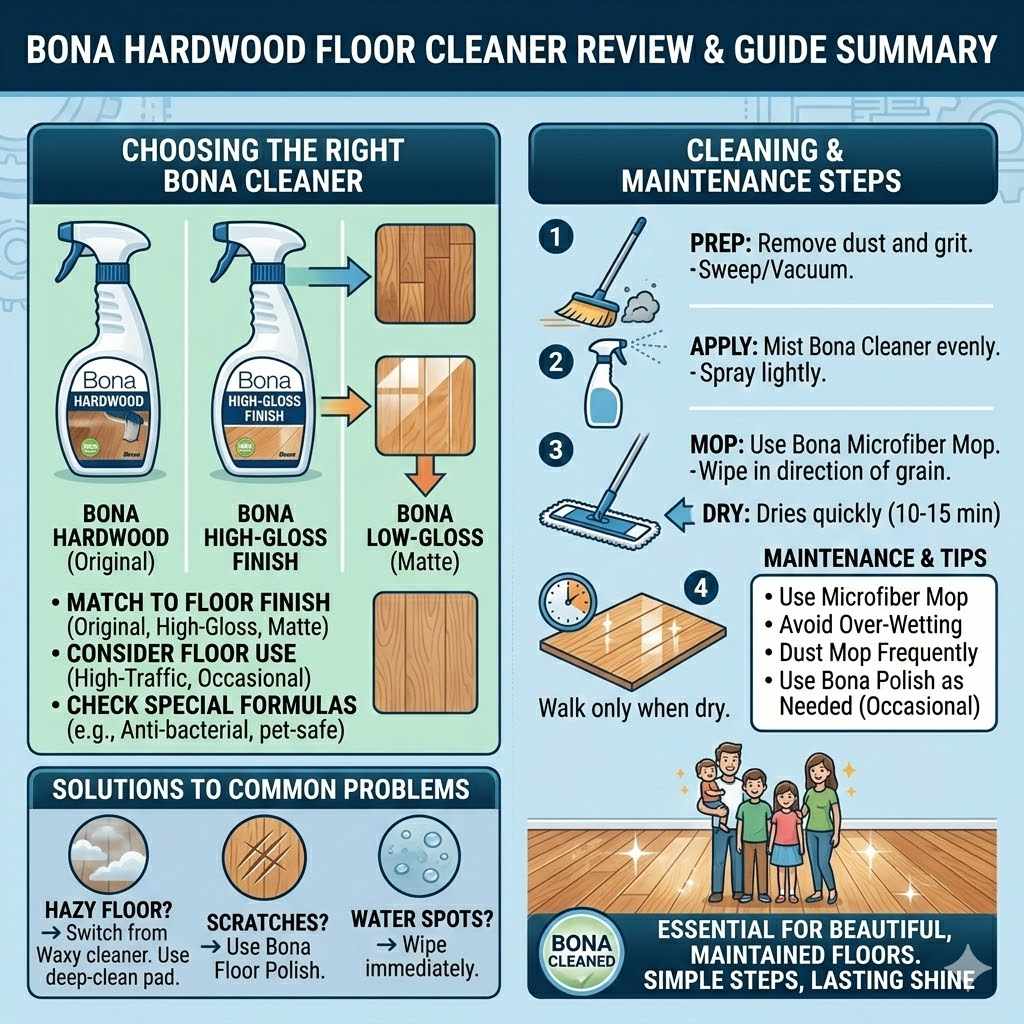
Bona Hardwood Floor Cleaner Review & Guide Summary
This guide covered how to choose the right Bona cleaner for your floors, step-by-step cleaning instructions, maintenance tips, and solutions to common problems. You learned that Bona Hardwood Floor Cleaner Review & Guide is essential for keeping your floors beautiful. By following these simple steps and tips, you can easily maintain clean, shiny hardwood floors.
Frequently Asked Questions
Question: Can I use Bona Hardwood Floor Cleaner on laminate or vinyl floors?
Answer: Bona Hardwood Floor Cleaner is specifically formulated for sealed hardwood floors. While it might not damage laminate or vinyl, it may not clean them optimally and could potentially leave residue. Bona makes separate cleaners for laminate and vinyl floors, which are a better choice.
Question: How often should I clean my hardwood floors with Bona?
Answer: For daily maintenance, sweeping or vacuuming every few days is good. For wet cleaning with Bona Hardwood Floor Cleaner, it depends on traffic. Typically, once a week or every two weeks is sufficient for most homes to keep them looking fresh.
Question: Will Bona Hardwood Floor Cleaner remove pet stains?
Answer: Bona Hardwood Floor Cleaner is designed for general cleaning and daily grime. It may help with fresh, minor pet messes if wiped up quickly. However, for set-in or stubborn pet stains, you might need a specialized pet stain remover designed for hardwood floors, followed by cleaning with Bona.
Question: Do I need a special mop for Bona Hardwood Floor Cleaner?
Answer: While Bona makes their own mop systems, you don’t strictly need one. Any clean microfiber mop with a good absorbency and a flat head will work well with Bona Hardwood Floor Cleaner. The key is using a microfiber pad that traps dirt effectively.
Question: Can Bona Hardwood Floor Cleaner damage my floor’s finish?
Answer: Bona Hardwood Floor Cleaner is pH-neutral and specifically designed to be safe for most sealed hardwood floor finishes, like polyurethane. It is formulated to not dull or damage the finish when used as directed. Always check your floor’s finish type if you are unsure.
Conclusion
You now have a clear path to keeping your hardwood floors pristine. Understanding the right Bona cleaner, using simple step-by-step methods, and practicing preventative care will make a big difference. Enjoy your beautifully cleaned and maintained hardwood floors.