Best Thing to Clean Hardwood Floors: 4 Methods Compared (2026)
The best thing to clean hardwood floors isn’t one product — it’s the right method for the job. Vacuum first on a bare-floor setting (the only method the National Wood Flooring Association outright recommends), then use a spray-and-wipe cleaner like Bona Hardwood Floor Cleaner ($19.97) for everyday grime. Skip steam mops and traditional wet mopping — the NWFA’s own maintenance guidance says both “will damage the finish and the wood over long periods of time.”
4 Hardwood Floor Cleaning Methods Compared
Before picking a product, pick a method. The table below normalizes the four ways people actually clean hardwood floors — plus the traditional wet mop most households already own — by how much moisture touches the wood, how long prep takes, and what the flooring industry’s own trade association says about each one.
| Cleaning Method | Moisture Per Pass | Prep / Heat-Up Time | NWFA Hardwood Safety Rating | Startup Cost | Best For |
|---|---|---|---|---|---|
| Dry vacuum (bare-floor setting) | None — dry suction only | 0 sec. — plug in and go | Recommended — NWFA-endorsed | $149.99 startup, ~$0/yr (bagless, washable filter) | Dust, grit, pet hair — the first pass before anything wet |
| Spray + microfiber wipe | Light mist, wiped up immediately | 0 sec. — ready-to-use | Caution — beyond NWFA’s strictest guidance, lowest-moisture wet method | $19.97 per 128 oz refill (reusable mop pad) | Daily/weekly grime and light sticky spots on sealed floors |
| Electric spin mop | 28 oz tank, controlled spray-and-spin | 0 sec. — fill tank and go | Caution — more moisture than spray+wipe, still far below steam/traditional | $119.99 startup, ~$0/yr (washable pads) | Larger sealed or engineered floors with real grime film |
| Steam mop | 450 ml (15 oz) tank, forced as heated vapor | ~30 sec. heat-up | Avoid — NWFA: “will damage the finish and the wood” | $79.99 startup, ~$0/yr (washable pads) | Sanitizing — only on floors confirmed sealed and warranty-safe |
| Traditional wet mop & bucket | Saturating — water pooled in a bucket, wrung by hand | ~1-2 min. fill/wring cycle | Avoid — NWFA names it explicitly alongside steam mops | ~$10-15 (mop + bucket), no ongoing cost | Nothing on hardwood — this is the method NWFA’s guidance is written against |
Best Hardwood Floor Cleaning Products, by Method
Each pick below is tied to one of the methods above. If you already know you want a dedicated electric mop or a wet-vacuum instead, our deeper dives on the best electric mops for hardwood floors and the best wet vacuums for hardwood floors go deeper on those two categories specifically than this page does.
1. Bona Hardwood Floor Cleaner Refill (128 fl oz, Cedar Wood) — #1 Best Overall
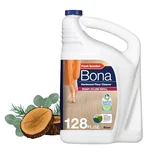
Method: Spray + wipe cleaner | Price: $19.97 | Check current price on Amazon
Specs
- 128 fl oz refill bottle
- Ready-to-use, no dilution required
- pH-neutral, residue-free formula
- Pairs with a reusable microfiber flat mop
Advantages
- Cited as the top pick across multiple 2026 expert roundups (Yahoo Shopping, others)
- No dilution math to get wrong
- Streak-free on sealed finishes, no rinsing needed
Main Drawback
- Not for unsealed, waxed, or oiled hardwood — check your finish first
- Refill-only bottle; you need your own spray head or mop reservoir
Who it’s for: Bona lands the top spot because it’s the one product that shows up as a recommendation across nearly every 2026 expert cleaning guide we cross-checked, not just affiliate roundups — and because a ready-to-use, pH-neutral formula removes the two most common ways homeowners damage a finish: over-diluting a concentrate incorrectly, or using something too acidic (see the vinegar FAQ below). It’s the safest default for anyone who isn’t sure what to buy. If you want a deeper dive across more chemical-cleaner brands specifically, our full hardwood floor cleaner roundup and our Aunt Fannie’s review both go further into that one category than this page does.
What it’s actually bad at: It’s a cleaner, not a scrubber. Baked-on grime, dried spills, or a film that’s built up over months of infrequent cleaning won’t come off with a light spray-and-wipe pass — that’s a job for the electric spin mop pick below, or manual scrubbing with a soft cloth.
Bottom line: The default answer to “what’s the best thing to clean hardwood floors” for anyone with a sealed polyurethane finish and no interest in special equipment.
2. Rejuvenate All Floors Cleaner (32 oz) — Best Budget Cleaner
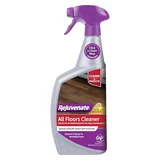
Method: Spray + wipe cleaner | Price: $8.55 | Check current price on Amazon
Specs
- 32 oz spray bottle
- Multi-surface: sealed hardwood, tile, vinyl, laminate
- Trigger-spray application
Advantages
- Lowest cost-per-bottle of any pick here
- One bottle works across mixed flooring, not just wood
- Widely stocked in grocery and hardware stores
Main Drawback
- Multi-surface formulas are a compromise, not a specialist tool — a dedicated wood cleaner like Bona edges it out on sealed hardwood specifically
- Trigger spray covers less ground per pump than a flat-mop reservoir
Who it’s for: Anyone who wants a single bottle for the whole downstairs instead of a separate cleaner per flooring type, and doesn’t want to spend more than $10 finding out if they even like the spray-and-wipe method before committing to a specialist product. It’s also the practical choice for homes with a vinyl-to-hardwood transition in a kitchen or entryway, since one bottle safely handles both sides of the seam.
What it’s actually bad at: Because it’s formulated to be safe across tile, vinyl, and laminate as well as sealed hardwood, it’s not optimized specifically for wood the way Bona is — expect it to do a competent job, not the best possible job, on hardwood specifically.
Bottom line: Right pick if your house has hardwood plus tile or vinyl and you’d rather buy one bottle than three.
3. Swiffer WetJet Hardwood and Floor Spray Mop Starter Kit — Best Spray Mop System for Daily Cleaning
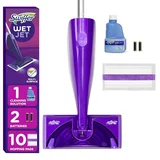
Method: Spray + wipe cleaner | Price: $31.99 | Check current price on Amazon
Specs
- Battery-powered trigger sprays solution ahead of the pad
- 10 disposable pads included
- Includes cleaning solution + batteries
Advantages
- Fastest daily routine — spray and glide in one motion, no bucket
- No wringing, no separate spray bottle to carry
Main Drawback
- Disposable pads are an ongoing cost competitors with washable pads don’t have
- Solution refills run out faster than a concentrate you dilute yourself
Who it’s for: Households that clean daily or near-daily and value speed over cost-per-use — grab it from the closet, pull the trigger, glide, done. No bucket, no separate spray bottle, no wringing.
What it’s actually bad at: The ongoing pad and solution cost adds up faster than any other pick here over a year of daily use, and disposable pads are simply more waste than a washable system. If you’re cleaning more than once a day, the math starts favoring a refillable spray bottle and a washable microfiber pad instead.
Bottom line: Best for a quick daily pass on light dust and grime when you want zero setup time.
4. BISSELL SpinWave Hard Floor Expert Corded Spin Mop, 20393 — Best Electric Spin Mop
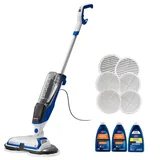
Method: Electric spin mop | Price: $119.99 | Check current price on Amazon
Specs
- 28 oz clean-water tank (Bissell user manual)
- Corded, 22 ft cord (Bissell user manual)
- 14-inch cleaning path, dual spinning pads
- 9.5 lbs
Advantages
- Scrubs light film and residue a flat mop just glides over
- Washable, reusable pads — no per-cleaning pad cost
- Wide 14-inch path covers a room faster than a hand mop
Main Drawback
- $119.99 is the second-most expensive pick here
- Corded — you’re tethered to an outlet with a 22-ft radius
- Applies more water per pass than a spray-and-wipe cleaner; see the moisture note below before using it on solid hardwood
Who it’s for: Larger sealed-hardwood or engineered-wood floors with visible grime film that a spray-and-wipe pass isn’t fully lifting — the spinning pads add real mechanical scrubbing a flat mop can’t. Bissell markets the 20393 specifically for sealed hard floors, which lines up with how we’d actually recommend using it.
What it’s actually bad at: This is the one pick on this page we’d flag for a genuine moisture tradeoff even though the manufacturer markets it as hardwood-safe: a 28 oz tank spinning liquid onto the floor is meaningfully wetter than a misted spray-and-wipe pass. Use it for occasional deep cleaning on confirmed sealed floors, not as a daily routine on solid hardwood.
Bottom line: Best for larger sealed-hardwood or engineered-wood areas with real grime, not a light-dust daily routine.
5. Quick Shine Hardwood Floor Care System (Cleaner + Luster, 2-pack) — Best 2-in-1 Clean and Polish
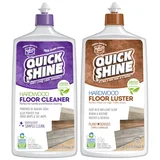
Method: Spray + wipe cleaner / polish combo | Price: $21.89 | Check current price on Amazon
Specs
- 27 oz cleaner + 27 oz luster/polish, sold together
- Plant-based carnauba in the polish formula
- Safer Choice / pH-neutral cleaner
Advantages
- One purchase covers both the weekly clean and the periodic shine step
- Carnauba-based polish, not a synthetic acrylic coating that can build up
Main Drawback
- Two different bottles to keep straight — using the polish where you meant the cleaner leaves a slick residue
- Polish step isn’t for every week; overuse builds a film
Who it’s for: Buyers who’d rather not think about which category of product they need — the combo pack removes the guesswork of matching a cleaner brand to a polish brand, and the carnauba-based formula avoids the synthetic-acrylic buildup some polishes cause over repeated use.
What it’s actually bad at: Buying both halves of a combo pack means paying for polish you might only need every few months, alongside the cleaner you’ll use weekly. If you already know you only want a cleaner, Bona or Rejuvenate above is the more targeted purchase.
Bottom line: Best if you want the weekly-clean and the occasional shine-restore step from a single family of products instead of shopping two categories.
6. Weiman Wood Floor Polish and Restorer, 32 oz (3-Piece Bundle) — Best for Restoring Shine on Dull Floors
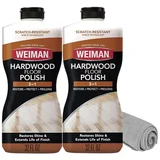
Method: Polish / restorer | Price: $34.98 | Check current price on Amazon
Specs
- 32 oz per bottle, 3-bottle bundle
- Scratch-resistant formula
- Marketed to remove light scratches and restore shine, not a daily cleaner
Advantages
- Visibly restores shine on floors that look dull after months of regular cleaning
- 3-bottle bundle covers a full-size home for a year of periodic touch-ups
Main Drawback
- This is a restorer, not a cleaner — use it after cleaning, not instead of it
- Like any acrylic-style polish, buildup over many applications can eventually need a professional strip
Who it’s for: Homes with older, well-worn sealed hardwood that’s developed light scratches and a dull, flat look despite regular cleaning — this is the product that addresses appearance, not dirt. The 3-bottle bundle is sized for covering a full-size home across a year of periodic touch-ups rather than one room.
What it’s actually bad at: It won’t touch actual dirt or grime — apply it to a clean floor, not a dirty one, or you’re sealing debris under a polish layer. And like every acrylic-style restorer, applying it too often builds a film that eventually needs a professional strip to remove.
Bottom line: Not a replacement for any pick above — add it every few months when regularly-cleaned floors start looking flat instead of glossy.
7. Shark Rocket Pet Plus Corded Stick Vacuum, HV322 — Best Dry Vacuum for Hardwood Floors
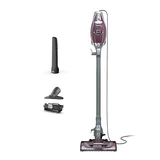
Method: Dry vacuum | Price: $149.99 | Check current price on Amazon
Specs
- Corded (no battery runtime limit)
- Converts to handheld
- XL dust cup
- Swivel steering
Advantages
- The only method on this page the National Wood Flooring Association names as an outright recommendation, when run on the bare-floor setting
- Zero moisture, zero drying time, zero risk to the finish
- Corded means full suction the entire session, not a battery taper
Main Drawback
- Doesn’t touch sticky spills or grime film — it’s a dry-debris tool, pair it with a wipe-down method
- Corded means you’re managing a cord around furniture
Who it’s for: Every hardwood household, full stop, regardless of finish type — this is the one method that’s safe on sealed, unsealed, waxed, and oiled hardwood alike, because it never introduces moisture. It should be step one of every cleaning routine on this page, not an optional add-on.
What it’s actually bad at: A vacuum alone won’t remove a spilled drink, a scuff mark, or a grime film that’s built up over weeks — it manages dry debris only. Pair it with one wet method from this page for a complete routine; it was never meant to work alone.
Bottom line: This is the pick NWFA’s own maintenance guidance points to first: vacuum with a bare-floor setting before anything wet touches the floor.
8. Shark Steam Pocket Mop with 2 Washable Pads, S3501 — Best Steam Mop — Use With Caution
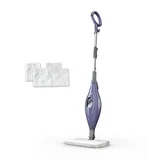
Method: Steam mop | Price: $79.99 | Check current price on Amazon
Specs
- 450 ml (15 oz) water tank (Shark/SharkNinja support documentation)
- ~30-second heat-up time (SharkNinja support documentation)
- 2 washable, double-sided microfiber pads included
- Marketed for sealed hard floors
Advantages
- Sanitizes with heat, no chemical residue
- Fast heat-up — ready in about 30 seconds
- Washable pads, no disposable cost
Main Drawback
- The National Wood Flooring Association’s own maintenance guidance says explicitly: “Don’t use wet mops or steam mops, which will damage the finish and the wood over long periods of time” — steam forces moisture into seams and between boards
- Manufacturer markets it for “sealed hard floors,” but that’s a narrower claim than “safe for all hardwood” — it excludes unsealed, waxed, oiled, and many engineered floors
Who it’s for: We’re including a steam mop pick because plenty of readers will buy one regardless of what this page says, and if that’s you, the S3501’s fast heat-up and washable pads make it a reasonable pick among steam mops specifically. It’s genuinely well-suited to sealed tile and vinyl, where the moisture concern below doesn’t apply.
What it’s actually bad at: On hardwood specifically, this is the pick we’d steer most readers away from. The NWFA quote above isn’t a marketing claim we’re citing selectively — it’s the flooring trade association’s general maintenance guidance, and it names steam mops directly. If you have any doubt about your finish, use the vacuum-plus-spray-cleaner routine instead.
Bottom line: Include this only if your floor is a well-sealed finish in good condition, you use it sparingly, and you’ve confirmed with your flooring manufacturer that steam won’t void the warranty. For most hardwood, the NWFA guidance above is the more conservative and more defensible call.
What a Complete Hardwood Cleaning Kit Actually Costs
Every price below is this page’s own live-verified Amazon price (pulled Aug 2, 2026), not a category average — the formula is simple addition, and you can check every input against the pick cards above.
- Budget route (you already own a vacuum): Rejuvenate All Floors Cleaner ($8.55) + a reusable microfiber cloth you likely already have = $8.55 to start a safe, NWFA-aligned wet-cleaning routine.
- No-compromise route (starting from zero): Shark Rocket HV322 vacuum ($149.99) + Bona Hardwood Floor Cleaner Refill ($19.97) + Weiman Wood Floor Polish 3-pack for periodic shine ($34.98) = $204.94 for a complete kit covering daily dry debris, weekly wet cleaning, and quarterly polish — with zero disposable-pad costs going forward.
Notice what’s absent from both routes: a steam mop or a traditional bucket-and-mop. That’s not an oversight — it’s the direct result of the NWFA safety rating in the dataset table above. You can add either later for specific situations, but neither belongs in a default starter kit for hardwood. If a bucket-and-mop system is still what you want, our these seven manual mops ranks them by how well each one actually wrings dry.
How We Picked These
We haven’t physically run all eight of these products side by side in one shootout, so we’re not going to claim we did. What we did do: compiled every method’s real specs from manufacturer support documentation (SharkNinja, Bissell), cross-checked hardwood-safety claims against the National Wood Flooring Association’s published maintenance guidance rather than product marketing copy, and live-verified every price and listing through Amazon’s Creators API on August 2, 2026. Where a product’s own marketing (“hardwood safe”) and the trade association’s stricter guidance disagree, we say so explicitly in that pick’s drawbacks — see the Bissell SpinWave and Shark Steam Mop entries above.
What to Consider When Choosing How to Clean Hardwood Floors
Your Floor’s Finish
Sealed polyurethane, sealed engineered wood, and unsealed/oiled/waxed hardwood tolerate moisture very differently. Every spray cleaner and mop pick on this page is formulated for a sealed finish. If your floor is unsealed, waxed, or oiled, skip liquid cleaners entirely and stick to dry methods plus a finish-specific product your flooring installer recommends.
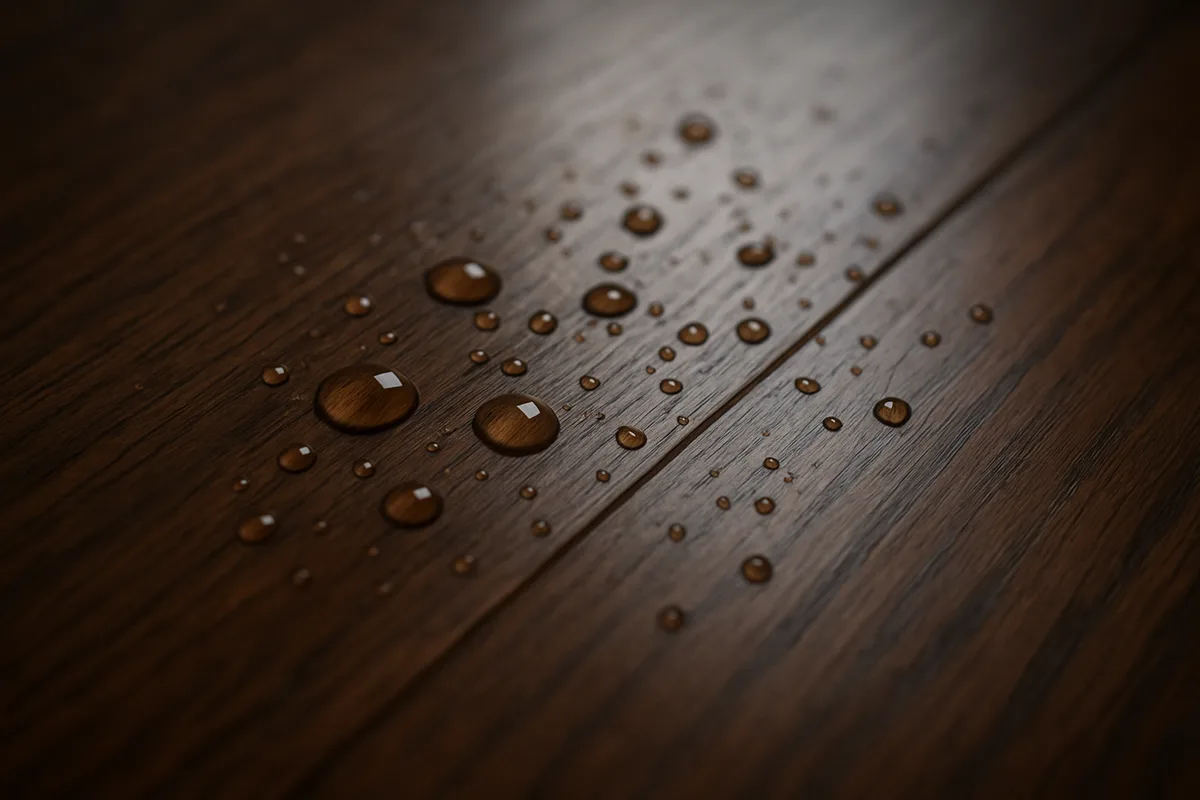
If you’re not sure what finish you have: run a water-drop test in an inconspicuous corner. Water that beads up and sits on the surface for a minute or more means a sealed finish. Water that darkens the wood or absorbs within seconds means it’s unsealed, oiled, or waxed — treat it as the more fragile category and stay dry.
Moisture Risk
This is the single biggest factor and the one most buying guides skip. Water that sits on hardwood — or gets forced into the seams by heat and pressure, as steam does — swells the wood fibers. That swelling is what causes cupping, warping, and finish breakdown. The dataset table above ranks every method by exactly this risk.
The practical takeaway isn’t “never use any moisture” — it’s “match the moisture to the job.” A light mist wiped up in seconds and a saturated mop head left to air-dry for minutes are not the same exposure, even though both technically count as “wet mopping.” That’s why the dataset separates spray-and-wipe from traditional bucket-and-mop instead of lumping every wet method into one row.
Daily Dust vs. Deep Grime
Dry debris (dust, grit, pet hair) needs a vacuum or dry microfiber mop — nothing wet. Sticky spills and grime film need a wet method. Most households need both, in that order: vacuum, then wipe.
Skipping the vacuum step and going straight to a wet mop is one of the most common ways people scratch a hardwood finish without realizing why — a wet mop pad drags grit across the surface instead of lifting it, and wet grit acts like light sandpaper under mop pressure.
Time Per Session
A spray-and-wipe cleaner and a corded vacuum are both ready with zero prep. A steam mop needs about 30 seconds to heat (Shark S3501 spec). A traditional bucket-and-mop routine adds a fill-and-wring cycle every few passes — the slowest method here, and per the NWFA, one of the two to avoid anyway.
None of these differences are dramatic on their own, but they compound. A household doing a wet pass three times a week saves real time over a year with a zero-prep spray cleaner versus a steam mop’s heat-up cycle repeated dozens of times.
Startup Cost vs. Ongoing Cost
Startup cost ranges from about $8.55 (Rejuvenate) to $149.99 (the Shark vacuum) across these picks. Ongoing cost matters more over a year: disposable-pad systems like the Swiffer WetJet keep costing money every refill, while washable-pad tools (Bissell, Shark steam mop) and a vacuum with a washable filter cost close to nothing after the initial purchase.
See the full cost-to-start breakdown above for two complete routes — one assuming you already own a vacuum, one building a kit from zero — using only this page’s own live-verified prices.
Corded vs. Battery
Every corded pick on this page (the Shark vacuum, the Bissell SpinWave, the Shark steam mop) runs at full power for the entire session — no battery taper partway through a big room. The tradeoff is managing a cord around furniture and doorways.
If your home is large enough that cord length becomes a real obstacle, a cordless stick vacuum is a reasonable substitute for the dry-vacuum step specifically — our dedicated guide to cordless vacuums for hardwood floors covers battery runtime tradeoffs this page doesn’t.
Pets and Kids
Vacuuming first captures pet hair and dander before a wet pass just smears it. If you’re specifically dealing with pet accidents on hardwood, our guide on pet-safe hardwood floor cleaners covers enzyme cleaners this page doesn’t. Cat owners specifically should also check that the vacuum itself won’t scratch the floor or scatter fine litter dust — our comparison of vacuums for cat litter on hardwood floors breaks down brush-roll safety and filtration grade across seven current models.
Kids and pets both raise the practical argument for a corded stick vacuum with a bare-floor setting over a robot vacuum on hardwood specifically — robot vacuums can miss corners and baseboards where pet hair and crumbs actually accumulate.
Warranty Language
Check your flooring manufacturer’s own warranty before using anything beyond a dry vacuum or a manufacturer-approved spray cleaner. Steam mopping in particular voids the warranty on many engineered and prefinished hardwood products — the manufacturer’s fine print, not just the NWFA, is worth reading.
This matters most in the first few years of ownership, when a warranty claim is actually worth something. A single steam-mop session that’s difficult to prove caused damage can still be enough for a manufacturer to point to a violated maintenance clause.
How to Clean Hardwood Floors: The Recommended Routine
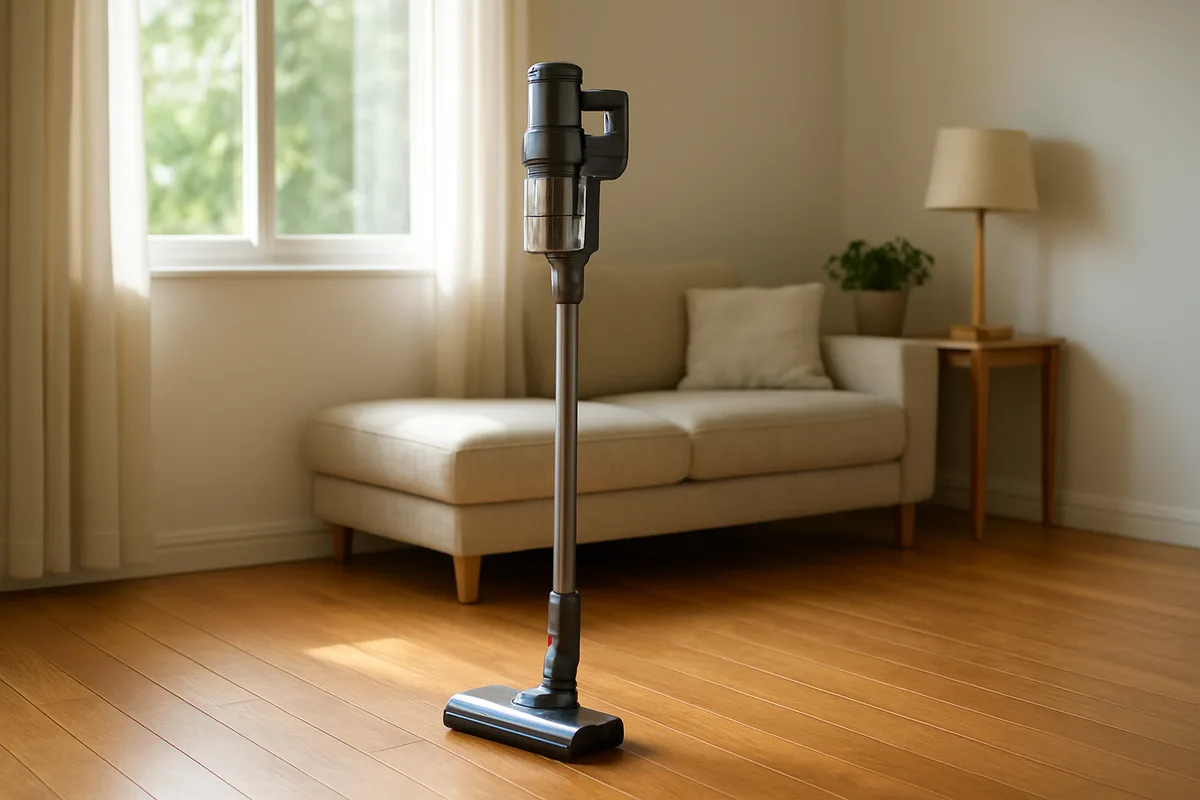
- Vacuum first, bare-floor setting. Removes dry grit that would otherwise get ground into the finish by a mop.
- Spot-clean spills immediately with a dry or slightly damp cloth — the NWFA’s own recommended method for anything wet touching the floor.
- Spray a sealed-finish cleaner directly on the pad, not the floor, and wipe with the grain in the direction of the wood planks.
- Let it air-dry before walking on it — a properly light application should be dry within a minute or two.
- Reserve steam or a deep wet-mop pass for rare, specific situations — and only after confirming your finish and warranty allow it.
- Polish or restore shine every few months, not every cleaning — overuse of any acrylic polish builds a film that eventually needs professional stripping.
Frequently Asked Questions
What is the best thing to clean hardwood floors?
For most sealed hardwood, a vacuum pass on the bare-floor setting followed by a pH-neutral spray-and-wipe cleaner like Bona Hardwood Floor Cleaner covers routine maintenance safely. Add a dedicated polish only every few months, and skip steam mops and traditional wet mopping per NWFA guidance.
How often should I clean my hardwood floors?
Vacuum or dry-mop every 2-3 days in high-traffic homes, weekly in lower-traffic ones. A wet spray-and-wipe clean once a week is typical; save polish/restorer for every 2-4 months.
Can I use vinegar to clean hardwood floors?
Most flooring manufacturers and finish experts advise against it — vinegar’s acidity can dull polyurethane finishes and break down wax over repeated use. A pH-neutral cleaner formulated for hardwood is the safer choice. If you want the full case for and against it, we cover the dilution ratios people actually use in our dedicated vinegar guide, and safer DIY alternatives in our homemade hardwood cleaner recipes.
Is it safe to use a steam mop on hardwood floors?
The National Wood Flooring Association’s own maintenance guidance says no: “Don’t use wet mops or steam mops, which will damage the finish and the wood over long periods of time.” Steam forces moisture into the seams between boards, not just the surface. If you use one anyway, confirm your specific finish and warranty allow it first.
Should I vacuum or mop hardwood floors first?
Vacuum first, always. It clears dry grit and dust that would otherwise get dragged across the finish by a wet mop, which can scratch the surface. The NWFA specifically recommends vacuuming with a bare-floor setting as the first step.
What’s the safest cleaning method for hardwood floors?
Dry vacuuming carries essentially zero moisture risk and is the one method the NWFA names as an outright recommendation. A light spray-and-wipe cleaner is the safest wet option, applying far less moisture than an electric spin mop, a steam mop, or a traditional bucket-and-mop.
Do electric spin mops damage hardwood floors?
They apply more water than a spray-and-wipe cleaner but far less than a saturating traditional mop or steam. Manufacturers like Bissell market the SpinWave for sealed hard floors, but it still exceeds the NWFA’s strictest guidance of a dry or slightly damp cloth — reasonable for occasional deep cleaning, not a daily routine on solid hardwood.
What’s the best mop for hardwood floors specifically?
A flat microfiber spray mop is the safest mop-format choice, since it applies a light mist wiped up immediately rather than a saturated pad. Our full breakdown of mop styles — flat spray, electric spin, and steam — is in our best mop for wood floors guide.
Is Bissell safe for hardwood floors?
Bissell’s SpinWave and similar corded spin mops are marketed for sealed hard floors and use a controlled, reusable-pad system rather than a saturating mop head. We break down which specific Bissell models are the better fit for hardwood in our Bissell-for-hardwood-floors guide.
Related Hardwood Floor Cleaning Guides
This page compares cleaning methods. If you already know which method you want and are ready to compare more products within that one category, these guides go deeper than this page does:
- Best Mop for Wood Floors — every mop format compared, not just the electric and spray picks above.
- Best Electric Mops for Hardwood Floors — a full roundup of spin-mop and electric-mop models.
- Best Bissell for Hardwood Floors — every Bissell model worth considering, ranked.
- Best Wet Vacuum for Hardwood Floors — for wet-dry vacuums, a different category than the dry stick vacuum above.
- Best Floor Cleaner for Hardwood Floors — a deeper roundup of chemical cleaners specifically.
- Best Cleaning Supplies for Wood Floors — the full supply list beyond just the cleaner itself.
- Best Hardwood Floor Steamer — if you’ve read the caution above and still want a steam mop, this ranks the safer options within that category.
- Are Steam Mops Good for Hardwood Floors? — the full moisture-risk breakdown behind the caution on this page.
- Best Bamboo Floor Cleaner — bamboo needs the same finish-safe rules as hardwood, but a handful of products are manufacturer-named and warranty-relevant specifically for bamboo.
- Best Brooms for Hardwood Floors — the driest possible method: which bristle material and stiffness actually keep a broom from scratching your finish.
Why This Page Doesn’t Rank 6 Vacuums or 6 Mops
This page picks one representative product per cleaning method, then links out to the deeper category pages linked above for readers who want a full shootout within one format. That’s a deliberate choice, not a shortcut: a page trying to be the definitive vacuum roundup, mop roundup, and cleaner roundup all at once ends up being none of them well. If you already know you want an electric mop specifically, the dedicated electric mop page will compare more models than the single Bissell pick above ever could.
Final Thoughts
There’s no single best product for every hardwood floor — there’s a best method, and it changes with what you’re cleaning up. For routine care, vacuum on the bare-floor setting, then wipe with a pH-neutral spray cleaner like the Bona refill above. The one thing every source we checked agrees on, from the NWFA to every manufacturer spec sheet: whatever you choose, less moisture is always safer for the wood than more.
Sponsored / affiliate links. As an Amazon Associate I earn from qualifying purchases. I may earn additional commission from eligible campaigns.