How to Use Bona Hardwood Floor Polish: Steps, Dry Time & Coverage
Bona Hardwood Floor Polish goes on as one thin coat over a clean, fully dry, unwaxed, polyurethane-finished floor. It is not a cleaner, and it will not bond to wax or oil. A 32 oz bottle covers about 500 sq ft, socks are fine after 1 to 2 hours, and furniture waits 24 hours. This guide covers prep, application, drying times, how many bottles you need, and the fix when it goes cloudy.
What You Need Before You Start
Best Low Gloss Bona Polish Pick
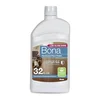 | Bona Hardwood Floor Polish, Low Gloss, 32 oz, $20.98 The low gloss version is the one we point most lived-in homes toward, because it shows fewer footprints and dust than high gloss, which is the gloss choice covered further down this guide.
|
As an Amazon Associate we earn from qualifying purchases.
Gather everything first, because polish starts to set while you hunt for a missing pad. The short list:
- Bona Hardwood Floor Polish in Low Gloss or High Gloss (24, 32 and 36 oz bottles exist).
- A microfiber pad made for polish. Bona’s own listing says to use the Bona Microfiber Cleaning Pad dedicated to polish application, so do not reuse the pad you cleaned with.
- A pH-neutral hardwood cleaner such as Bona Hardwood Floor Cleaner, because the polish itself carries a plain warning on the label: "This product is not a floor cleaner." (Source: Bona product listing.)
- A dust mop or vacuum with a hard-floor setting.
- A free afternoon. The coat takes under an hour for most rooms, but the room is off-limits for the next 1 to 2 hours.
Will Bona Polish Work on Your Floor?
Bona designs this polish for "unwaxed, unoiled, polyurethane finished wood floors." That sentence is the whole compatibility test, and most failed polish jobs come from ignoring one word in it. Here is how common floors line up:
| Your floor | Use Bona Hardwood Floor Polish? | Why |
|---|---|---|
| Site-finished or prefinished with polyurethane | Yes | This is exactly the surface the label describes. |
| Engineered wood with a polyurethane top finish | Yes, if the finish is polyurethane | The finish matters, not the wood layers underneath. Check the maker’s care sheet first. |
| Waxed floor | No | Polish will not bond over wax. Strip the wax first, see best wax removers for wood floors. |
| Oil or hardwax-oil finish | No | These need their own oil-based maintenance products. |
| Unfinished or worn-through wood | No | There is no film for the polish to sit on, so it soaks in unevenly. |
| Laminate, vinyl, tile, stone | Not this product | Bona sells a separate Hard-Surface Polish for those. |
If you are not sure what finish you have, read what a sealed hardwood floor is and how to tell before you buy anything. A quick hidden-corner check also helps: if a drop of water soaks in and darkens the wood within a few minutes instead of beading, the finish is worn there, and no polish will fix that. That is a general flooring rule of thumb, not a Bona test.
How to Apply Bona Hardwood Floor Polish, Step by Step
Bona’s guidance and the common-sense extras from flooring pros agree on the basics: clean, dry, thin, with the grain.
- Clear the room of furniture and rugs, and close windows and turn off ceiling fans so airborne dust does not land in wet polish. A room between about 50 and 80 degrees F is the usual recommendation.
- Dry-mop or vacuum the whole floor. Grit trapped under polish stays visible as a rough patch for months.
- Clean with a pH-neutral cleaner on a barely damp microfiber mop, then let the floor dry completely. Water left in seams is the usual cause of cloudy spots, so be patient here.
- Shake the bottle by rocking it back and forth for 30 seconds to a minute.
- Pour the polish onto the floor in a loose S pattern, or in thin lines, in front of you. Start in the corner farthest from the exit.
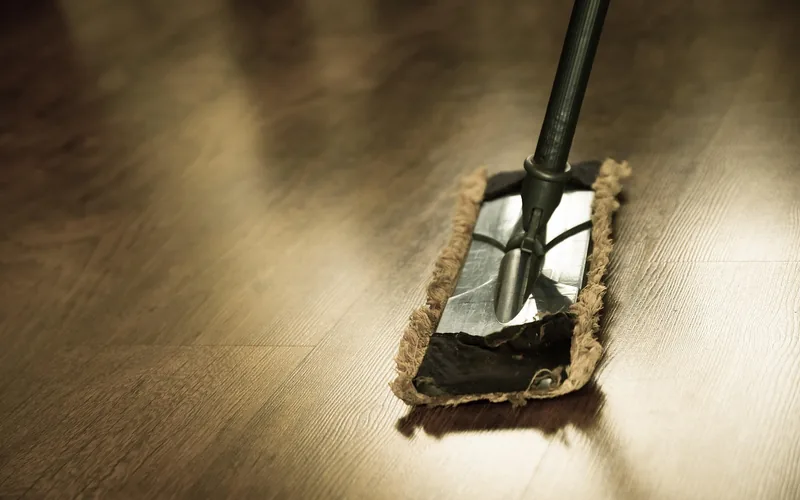
- Spread it with the grain using the polish pad, in sections about 4 ft x 4 ft, overlapping each section slightly. Keep the strokes smooth and do not go back over a patch that has started to dry.
- Work backward toward the exit so you never step on wet polish, then leave the room.
- Stay off the floor for the drying times in the next sections, and keep pets and kids out too.
One thin coat is the standard. If you want a second coat for more sheen, wait until the first is completely dry, which is hours, not minutes. More coats do not add protection, they add the buildup problem covered below.
How Much Bona Polish Do You Need? (Coverage Math)
Bona lists three bottle sizes with three coverage rates. Dividing them out gives a number that is useful on the floor itself: roughly one fluid ounce per 4 ft x 4 ft section.
| Bottle | Listed coverage | Product per 16 sq ft section | Listing price (Oct 7, 2026) | Cost per sq ft, one coat |
|---|---|---|---|---|
| 24 oz | 350 sq ft | about 1.1 oz | Not checked | Not checked |
| 32 oz, High Gloss | 500 sq ft | about 1.0 oz | $14.39 | about 2.9 cents |
| 32 oz, Low Gloss | 500 sq ft | about 1.0 oz | $20.98 | about 4.2 cents |
| 36 oz | 550 sq ft | about 1.05 oz | Not checked | Not checked |
Bona lists 350, 500 and 550 sq ft of coverage for its 24, 32 and 36 oz polish bottles. Source: Bona hardwood floor polish product line, and the Amazon listings for the 32 oz bottles.
Here is what that means for three typical rooms, using the 500 sq ft per 32 oz rate:
- 12 ft x 12 ft bedroom (144 sq ft): about 9 oz, so one 32 oz bottle covers the room three times over.
- 15 ft x 20 ft living room (300 sq ft): about 19 oz, one bottle with roughly 13 oz left for the hallway.
- 800 sq ft main floor: about 51 oz, so two 32 oz bottles, or one 24 oz plus one 36 oz if you want less leftover.
Measure the floor area you will actually coat, not the whole room, since the space under cabinets and rugs does not count. Most guides skip this math, and it is why people either run out halfway across the room or pour on a heavy coat to "use it up", which is exactly how buildup starts.
Bona Polish Drying Time: Why Sources Disagree
If you have searched this, you have probably seen "30 minutes" in some places and "3 to 4 hours" in others. They cannot both be right, so here is what is solid. Bona’s guidance, as summarized in the search results for its Polish Guide, is that you can walk on the floor in socks after 1 to 2 hours depending on humidity, and that cure time is 24 hours, after which furniture, heavy traffic and pets are fine. Some retailer and blog pages quote 3 to 4 hours for normal shoe traffic.
| Milestone | Wait | Notes |
|---|---|---|
| Walk in socks | 1 to 2 hours | Longer in humid weather or a cool room |
| Shoes | Wait until the next day if you can | Grit is what scuffs fresh polish; Bona’s cure time is 24 hours |
| Furniture, rugs, heavy traffic, pets | 24 hours | Use felt pads under legs when furniture goes back |
| Second coat (optional) | Until the first coat is fully dry | Hours, not minutes |
The 30-minute figure is not what Bona’s own guidance says, so do not plan around it. When in doubt, the label on your bottle is the final word, and a floor that still feels cool or tacky to a bare fingertip in a hidden corner is not ready.
High Gloss vs Low Gloss: Which Bona Polish to Choose
Bona sells both. Its description says High Gloss reflects a lot of light and suits exotic hardwoods and formal settings, but that high-gloss surfaces need more daily upkeep because they show dust, scratches and footprints. Low Gloss adds a durable low-gloss shine.
- Choose Low Gloss for kitchens, entryways, homes with pets or kids, and any floor that was originally satin or matte. It hides daily dust and prints better.
- Choose High Gloss for a formal dining or living room that gets little foot traffic, where you want the wet-look reflection. It was also the cheaper 32 oz bottle on the day we checked, but you pay for that in cleaning effort.
- Our judgment, not Bona’s: a high-gloss coat over a floor that was factory satin can look patchy where wear is uneven, so test a hidden corner first.
Does Bona Polish Make Floors Slippery or Cloudy?
Done right, it should not. Done wrong, both happen, and they trace back to a short list of mistakes:
- Polish over a damp or dirty floor. Moisture and grit get sealed under the film and show as haze.
- Too much product. Thick coats dry sticky, then slick. Stay near 1 oz per 16 sq ft.
- Re-mopping a drying section. It drags and leaves streaks that will not level.
- Stacking coats every few weeks. Layers build into a dull or yellowish film.
- Using it on the wrong floor. Wax and oil finishes will not hold polish.
On slipperiness: no Bona document we found rates the dry slip resistance of polished floors, so treat any glossy floor as slicker in socks than a matte one, and keep wet polish strictly off-limits until the times above pass. If an old coat now feels tacky or sticks to feet, stop adding polish. Bona sells a Floor Polish Remover (the 32 oz listing says it covers 200 sq ft), and our guide on removing hardwood floor polish walks through stripping buildup.
One cost point most guides miss: because the remover covers only 200 sq ft per 32 oz bottle at $14.16 on the listing we checked, stripping buildup costs about 7 cents per sq ft, roughly 1.7 to 2.5 times what a coat of polish costs. Over-applying to save a trip is a false economy.
How Often to Reapply Bona Polish
Bona suggests every 2 to 6 months depending on foot traffic. In practice, a kitchen and entry route sits at the short end and a seldom-used guest room at the long end. Do not run on a calendar alone. Use the floor itself as the signal:
- The floor looks dull right after a proper cleaning.
- Low-angle light shows fine scratches or worn patches in the traffic path.
- Water beads less than it used to on the walkway but still beads (if it soaks in, the finish itself is worn and polish is the wrong tool).
Polish is maintenance, not repair. It fills micro-scratches and evens the sheen, but it will not hide gouges or a finish worn through to bare wood. For deeper wear, see safe ways to remove scuffs, fixing peeling polyurethane, or how many times a floor can be refinished. When the finish is truly gone, a recoat or full sand and refinish is the real answer, and you can compare finish types in our hardwood floor finish guide.
Keeping the Shine Between Coats
- Sweep or dust-mop often; grit underfoot wears the film faster than anything else.
- Clean with a pH-neutral cleaner and a barely damp mop, and read whether you can clean hardwood floors with water for how little moisture is safe.
- Skip steam mops, wax products and heavy oil soaps on a floor you plan to polish.
- Put felt pads under furniture and mats at exterior doors. Our wood floor care guide covers the daily routine, and engineered floor care covers veneer-specific limits.
Frequently Asked Questions
How long after Bona polish can I walk on the floor?
Bona’s guidance is socks after 1 to 2 hours depending on humidity, and 24 hours before furniture, heavy traffic and pets. Some sources quote 3 to 4 hours for shoes. Staying off until the next day is the safe plan if the room can spare it.
Is Bona hardwood floor polish a cleaner?
No. The label says it is not a floor cleaner. Clean and fully dry the floor with a pH-neutral hardwood cleaner first, then apply the polish in one thin coat.
Can I put Bona polish over old polish?
Yes, reapplying over existing polish after a proper cleaning is how it is meant to be used, every 2 to 6 months. If the floor looks hazy, yellowed or tacky, strip the buildup with Bona Floor Polish Remover first instead of adding more.
Can I use Bona polish on engineered hardwood?
Only if the top finish is polyurethane and unwaxed, because the label is about the finish, not the wood layers. Check the manufacturer’s care instructions before polishing an engineered floor.
How much Bona polish do I need for a room?
Plan on about 1 oz per 16 sq ft. A 32 oz bottle is listed at 500 sq ft, so a 300 sq ft living room needs about 19 oz.
Conclusion
Bona Hardwood Floor Polish rewards patience more than technique: confirm the floor is unwaxed polyurethane, clean and dry it completely, spread about an ounce per 16 sq ft with the grain, and then stay off it. Pick Low Gloss unless you have a formal, low-traffic room, measure the floor so you buy the right bottle, and let the floor tell you when it is time to reapply. We have not run side-by-side tests of our own here, so the figures above come from Bona’s listings and guides, with our judgment calls flagged as such.
Sponsored / affiliate links. As an Amazon Associate I earn from qualifying purchases. I may earn additional commission from eligible campaigns.