Boxwood And Hydrangea Ideas: Stunning And Essential Designs
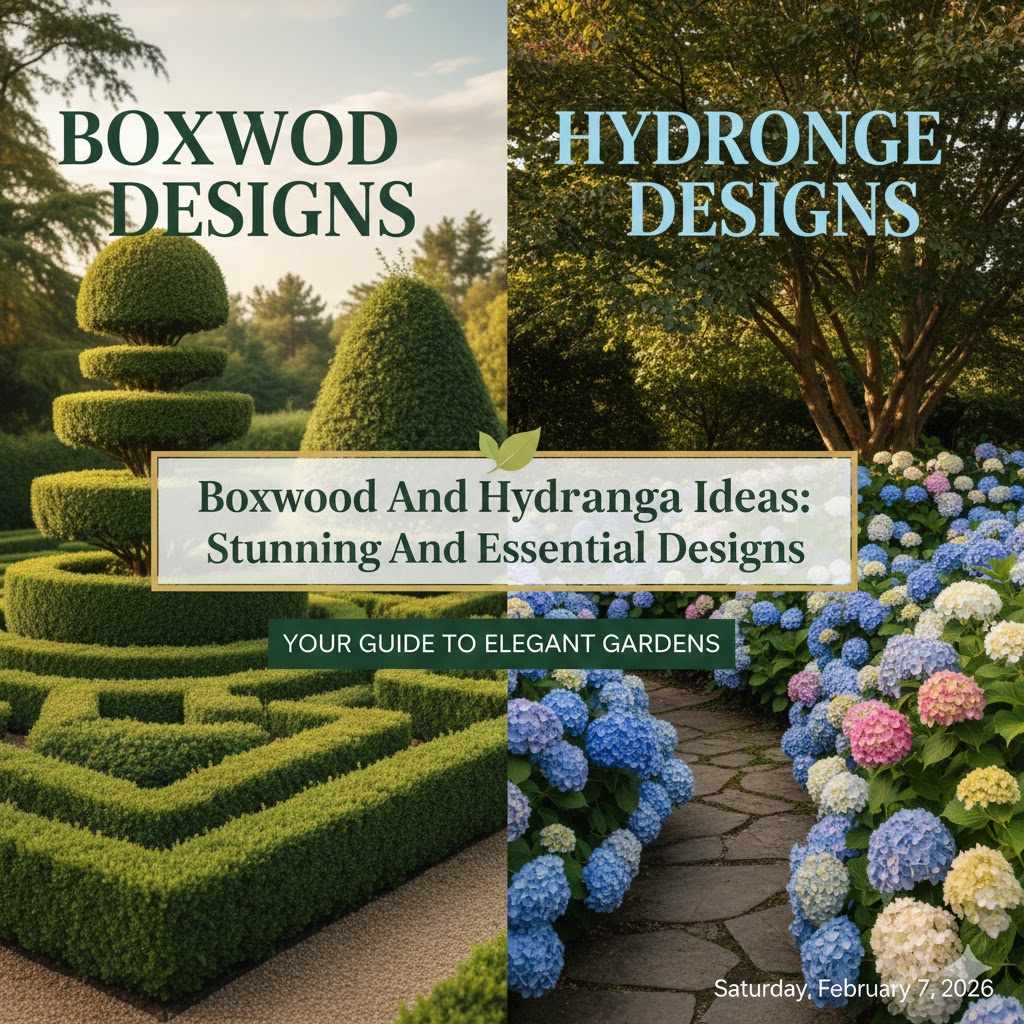
Pairing structured, evergreen boxwoods with big, beautiful hydrangea blooms creates timeless and elegant landscape designs. Use boxwoods for borders, pathways, and foundation plantings to provide year-round green structure, then layer in hydrangeas behind or among them for a stunning pop of seasonal color and soft texture. This classic combination works beautifully in any garden style.
Hello there! I’m Md Meraj. While you might know me from the workshop, today we’re stepping outside. Building a beautiful home doesn’t stop at the walls. Your garden is another room to design and enjoy. One of the most common questions I get is how to create a landscape that looks good all year long without being too complicated. The answer is often simpler than you think.
Many homeowners struggle to create a garden that has both structure and beauty. They might have lovely flowers in the summer, but the yard looks bare in the winter. That’s where the perfect partnership of boxwood and hydrangea comes in. These two plants are like the foundation and the finishing touches of a great project. In this guide, I’ll walk you through simple, stunning ideas to bring them together. Let’s build a garden you can be proud of.
Why Boxwoods and Hydrangeas Are a Perfect Match
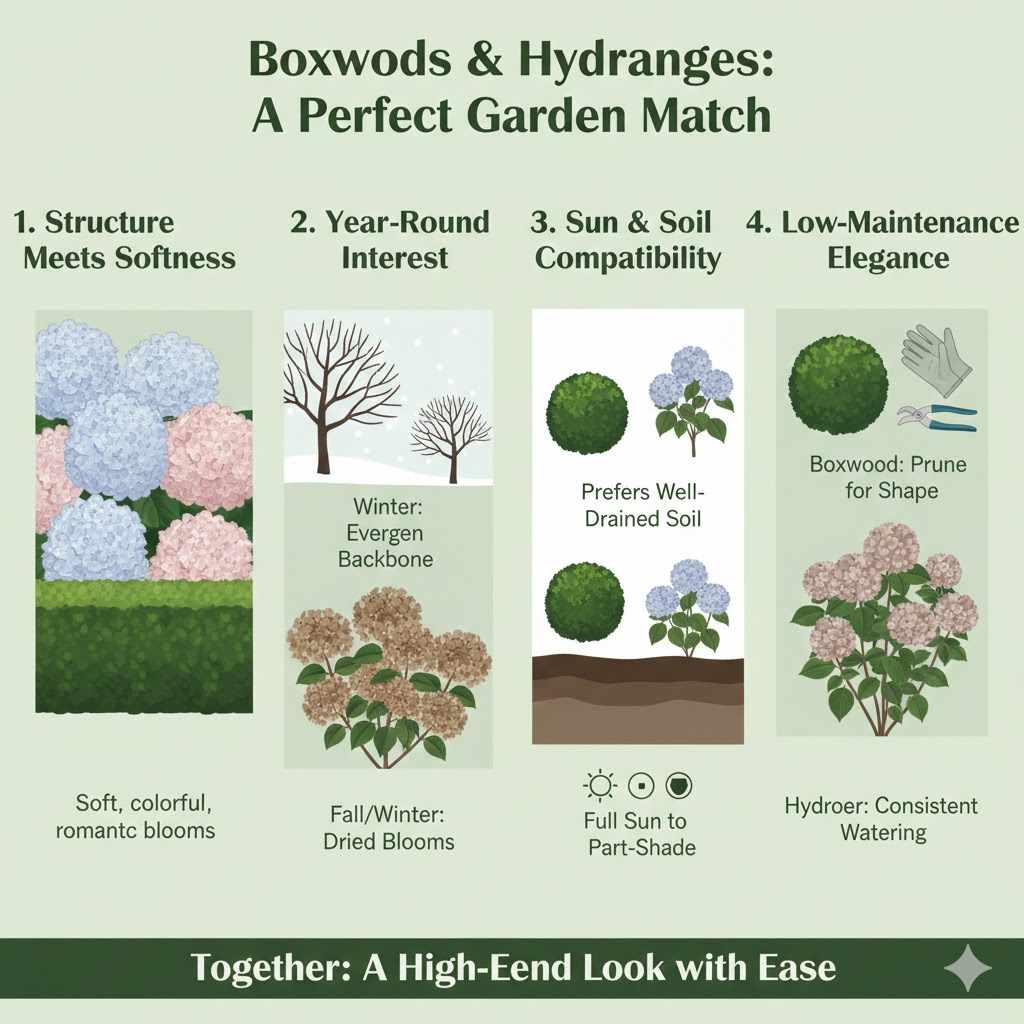
Think of this pairing like building a sturdy piece of furniture. The boxwood is your solid wood frame—strong, reliable, and good-looking all on its own. The hydrangea is the beautiful upholstery—soft, colorful, and bringing a touch of comfort and flair. Together, they create something truly special. Here’s why this duo works so well:
- Structure Meets Softness: Boxwoods are known for their dense, evergreen leaves and can be shaped into neat hedges, borders, or spheres. They provide a green, formal structure that looks great even in the middle of winter. Hydrangeas, with their large, cloud-like blooms, offer a soft, romantic contrast.
- Year-Round Interest: Boxwoods are evergreen, meaning they keep their leaves and color all year. This is your garden’s backbone. Hydrangeas provide spectacular blooms from summer through fall. Even their dried flower heads can add interest to the winter landscape.
- Sun and Soil Compatibility: Many common varieties of boxwood and hydrangea thrive in similar conditions. They both generally prefer well-drained soil and can handle a range of sun exposures, from full sun to partial shade, making them easy to plant together.
- Low Maintenance Elegance: Once established, both plants are relatively easy to care for. A bit of pruning for the boxwoods to keep their shape and proper watering for the hydrangeas is all it takes to maintain a beautiful, high-end look.
Essential Design Principles for Your Garden
Before you start digging, let’s talk about a few simple design rules. Just like in woodworking, a little planning goes a long way. You don’t need to be a professional landscaper to use these ideas. They are simple guides to help you create a balanced and pleasing layout.
1. Repetition Creates Rhythm
Repeating elements, like a line of identical boxwood shrubs, creates a sense of calm and order. It guides the eye through the garden. You can repeat shapes (like rounded boxwoods) or plant groupings (boxwood, hydrangea, boxwood, hydrangea) to create a consistent, intentional look.
2. Create Balance and Symmetry
Balance doesn’t always mean perfect symmetry, like a plant on one side of the door matching the other side exactly. It can also be asymmetrical, where a large group of hydrangeas on one side is balanced by a taller, narrower boxwood hedge on the other. The goal is for the design to feel visually stable and not heavier on one side.
3. Use Layers for Depth
Layering is one of the most effective tricks in garden design. Place taller plants in the back and shorter plants in the front. For our duo, this often means planting a row of hydrangeas behind a shorter, neatly clipped boxwood hedge. This creates a sense of depth and makes your garden feel larger and more lush.
4. Play with Texture and Form
The fine, small leaves of a boxwood have a very different texture from the large, soft leaves and massive flower heads of a hydrangea. This contrast is what makes the pairing so visually interesting. Combine the sharp, clean lines of a formal boxwood hedge with the wild, billowy form of a hydrangea for a dynamic effect.
Stunning Boxwood and Hydrangea Design Ideas
Now for the fun part! Here are five practical, achievable design ideas you can use in your own yard. We’ll start simple and work our way up to more structured designs.
Idea 1: The Classic Foundation Border
This is the perfect way to anchor your house to the landscape and hide any unsightly foundations. It’s a timeless look that boosts curb appeal instantly.
- Plan Your Layout: Start with a low, continuous hedge of boxwoods planted about 2-3 feet away from your house’s foundation. This gives the plants room to grow and ensures good air circulation.
- Choose Your Plants: Dwarf boxwood varieties like ‘Winter Gem’ or ‘Green Velvet’ work great because they stay compact. For the back layer, choose hydrangeas that will grow taller than the boxwoods, like Panicle hydrangeas (‘Limelight’ or ‘Little Lime’) which have large, cone-shaped flowers.
- Plant in Layers: Place the hydrangeas behind the boxwood hedge, spacing them according to their mature size. This creates a beautiful layered effect with the solid green of the boxwoods in front and the big, colorful blooms peeking over the top.
- Maintenance: Keep the boxwood hedge trimmed neatly once or twice a year to maintain a clean line. The hydrangeas will provide a soft, cottage-like feel behind it.
Idea 2: The Elegant Pathway or Driveway Lining
Lining a walkway with boxwoods and hydrangeas creates a grand entrance and makes the journey to your front door a beautiful experience.
- Define the Edge: Plant a simple, low hedge of boxwoods along both sides of your pathway or driveway. This creates a strong, clean line that defines the space.
- Add Pops of Color: Behind the boxwood hedge, plant hydrangeas at regular intervals. For a formal look, space them out evenly. For a more relaxed, country feel, you can plant them in loose groupings. Mophead hydrangeas (‘Endless Summer’) work beautifully here for their classic, rounded flower heads.
- Consider Height: Make sure the boxwoods stay low enough that they don’t block the view of the hydrangeas. A height of 18-24 inches is often perfect for the boxwood border.
Idea 3: The Layered Garden Bed
This idea is perfect for creating a lush, full garden bed against a fence, wall, or at the edge of your property. It’s all about creating visual depth.
- Back Layer (The Tallest): Start with your tallest plants in the back. This could be a taller variety of Panicle hydrangea like ‘PeeGee’ or even an ornamental tree.
- Middle Layer (The Color): This is where your main hydrangeas go. Choose varieties like Oakleaf hydrangeas for their interesting leaves and conical flowers, or Mopheads for a big color statement.
- Front Layer (The Structure): In front of the hydrangeas, plant a row of medium-sized, rounded boxwoods. You don’t have to create a formal hedge; planting individual globe-shaped boxwoods can look fantastic and more modern. They will hide the bare lower stems of the hydrangeas and provide that essential year-round green.
Idea 4: Container Garden Masterpiece
Don’t have a large yard? No problem! You can get this classic look on a patio, deck, or balcony using containers.
- Choose Large Pots: You need large containers to give the roots enough room. A 20-24 inch diameter pot is a good starting point. Ensure they have drainage holes.
- The Thriller, Filler, Spiller Method: Use a dwarf boxwood shaped into a cone or sphere as the ‘thriller’ (the tall, central element) in a large pot. Plant a smaller, reblooming hydrangea like a dwarf ‘Endless Summer’ variety as the ‘filler’ beside it. Add a trailing plant like ivy or creeping Jenny as the ‘spiller’ to cascade over the edge of the pot.
- Create a Grouping: For a bigger impact, arrange several pots together. You could have one large pot with a hydrangea, and two smaller flanking pots each with a single boxwood sphere. This creates a beautiful and cohesive display.
Idea 5: The Simple Parterre Garden
If you’re feeling a bit more ambitious and love a formal, classic look, you can create a simplified parterre garden. This involves creating geometric shapes with low boxwood hedges and filling the insides with hydrangeas.
- Design Your Shape: Start with a simple design. A square or rectangular bed divided into four smaller squares by paths or more boxwood hedges is a great place to start.
- Plant the Hedges: Use a dwarf English boxwood to create the low hedges that form your pattern. These need to be kept neatly clipped to maintain the design.
- Fill the Beds: Inside each of your boxwood-edged sections, plant a single, large hydrangea or a group of three smaller ones. The contrast between the rigid, geometric boxwood frame and the soft, romantic hydrangeas inside is absolutely stunning.
Choosing the Right Plant Varieties
Not all boxwoods and hydrangeas are created equal. Choosing the right variety for your climate and design goal is crucial. Think of it as selecting the right type of wood for a project—some are better for carving, others for structure.
A Guide to Common Boxwood Varieties
Here is a simple table to help you pick the right boxwood for your project.
| Boxwood Variety | Mature Size (H x W) | Growth Rate | Best Use | Notes |
|---|---|---|---|---|
| English Boxwood (Buxus sempervirens ‘Suffruticosa’) | 2-3 ft x 2-3 ft | Slow | Low borders, edging, parterres | The classic choice for formal, low hedges. Very dense. |
| Winter Gem (Buxus microphylla japonica ‘Winter Gem’) | 4-6 ft x 4-6 ft | Moderate | Foundation hedges, spheres | Hardy and holds its green color well in winter. |
| Green Velvet (Buxus ‘Green Velvet’) | 3-4 ft x 3-4 ft | Slow to Moderate | Low hedges, container globes | A popular hybrid known for its rich green color and rounded shape. |
| Green Mountain (Buxus ‘Green Mountain’) | 5 ft x 3 ft | Moderate | Cones, upright accents | Naturally grows in an upright, cone shape. Great for formal accents. |
A Guide to Popular Hydrangea Varieties
Hydrangeas can seem confusing, but they mainly fall into a few groups. This table will simplify your choice.
| Hydrangea Type | Bloom Shape | Sun Needs | Notes on Color | Popular Varieties |
|---|---|---|---|---|
| Bigleaf (H. macrophylla) | Mophead or Lacecap | Morning sun, afternoon shade | Color changes with soil pH (blue in acidic soil, pink in alkaline). | ‘Endless Summer’, ‘Nikko Blue’ |
| Panicle (H. paniculata) | Cone-shaped | Full sun to part shade | Blooms start white/lime and age to pink/red. Very hardy. | ‘Limelight’, ‘Little Lime’, ‘Vanilla Strawberry’ |
| Oakleaf (H. quercifolia) | Cone-shaped | Part shade | Stunning fall foliage color. Tolerates drier conditions. | ‘Ruby Slippers’, ‘Snow Queen’ |
| Smooth (H. arborescens) | Large, round | Part shade | Typically white or pink flowers. Very reliable bloomer. | ‘Annabelle’, ‘Incrediball’ |
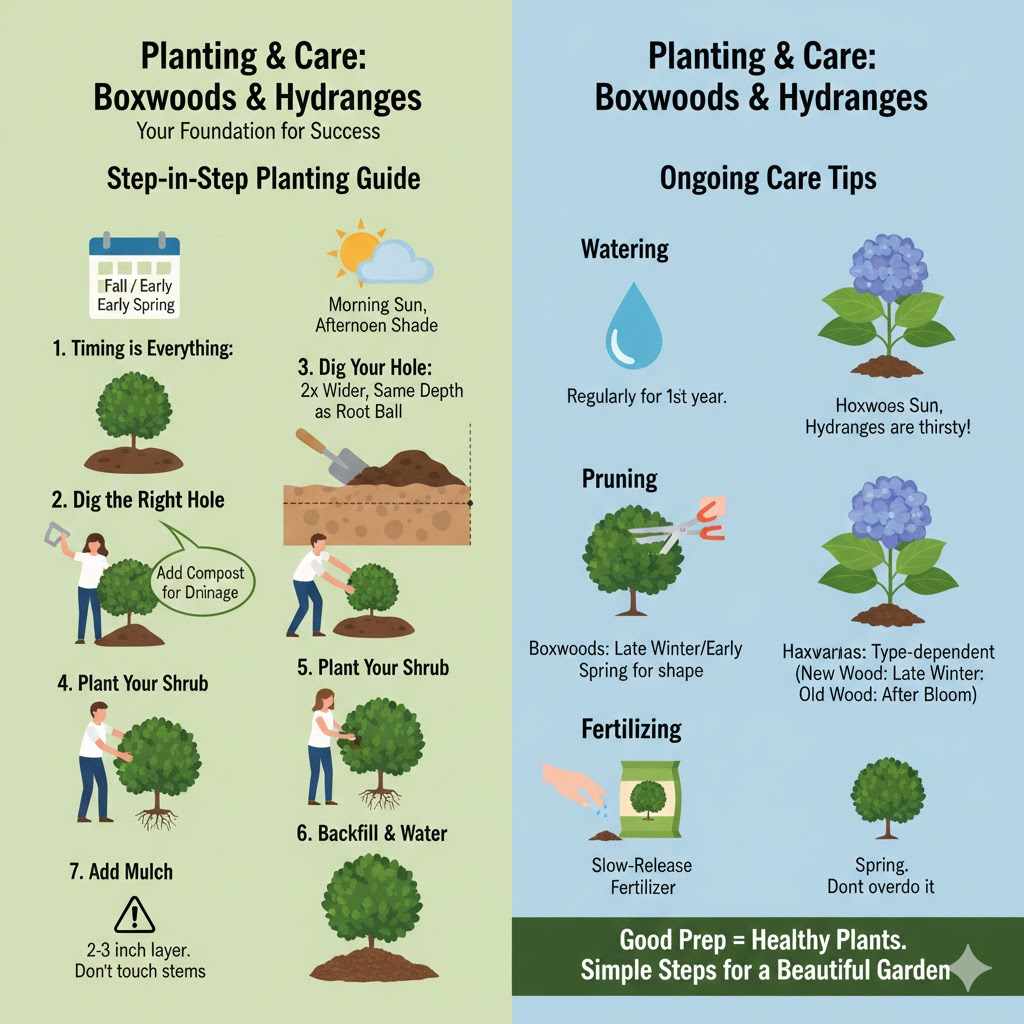
Planting and Care: Your Foundation for Success
A great design is nothing without healthy plants. The steps to get your boxwoods and hydrangeas in the ground are simple and straightforward. Just like preparing a worksurface, good prep is key to a great result.
Step-by-Step Planting Guide
- Timing is Everything: The best time to plant is in the fall or early spring. This gives the roots time to establish before the stress of summer heat or winter cold.
- Pick Your Spot: Choose a location that gets the right amount of sun for your chosen varieties. Most pairings do well with morning sun and some afternoon shade, especially in hotter climates.
- Dig the Right Hole: Dig a hole that is twice as wide as the plant’s root ball but only as deep as the root ball. You want the top of the root ball to be level with or slightly above the surrounding ground.
- Prepare the Soil: Most boxwoods and hydrangeas like well-drained soil. If you have heavy clay, amend the soil you removed from the hole with compost. According to the University of Maryland Extension, adding organic matter improves soil structure and drainage.
- Plant Your Shrub: Gently remove the plant from its container and loosen any tangled roots at the bottom. Place it in the center of the hole.
- Backfill and Water: Fill the hole back in with the amended soil, gently tamping it down to remove air pockets. Water deeply right after planting.
- Add Mulch: Apply a 2-3 inch layer of mulch (like pine bark or shredded hardwood) around the base of the plant, but don’t let it touch the stems. Mulch helps retain moisture and keeps weeds down.
Ongoing Care Tips
- Watering: Water your new plants regularly for the first year. Once established, they’ll need deep watering during dry spells. Hydrangeas are especially thirsty!
- Pruning: Prune boxwoods in late winter or early spring to shape them. For hydrangeas, pruning depends on the type. Panicle and Smooth hydrangeas bloom on new wood and can be pruned in late winter. Bigleaf and Oakleaf hydrangeas bloom on old wood, so only prune them right after they finish flowering.
- Fertilizing: A slow-release fertilizer designed for shrubs in the spring is usually sufficient. Don’t overdo it.
Frequently Asked Questions (FAQ)
Can boxwood and hydrangeas be planted together?
Absolutely! They are a classic and beautiful pairing. They have similar needs for soil and light, making them great companions in the garden. Boxwoods provide evergreen structure while hydrangeas offer spectacular seasonal blooms.
How far apart should you plant boxwoods and hydrangeas?
Always check the plant tag for its mature size. For a hedge, space boxwoods about half their mature width apart. When planting hydrangeas behind a boxwood border, leave at least 2-3 feet between the row of boxwoods and the hydrangeas to ensure good air circulation and room for growth.
Which hydrangeas look best with boxwoods?
It depends on the look you want. For a classic, elegant look, white hydrangeas like ‘Annabelle’ (Smooth) or ‘Limelight’ (Panicle) look stunning against the deep green of boxwoods. For a pop of color in a cottage-style garden, blue or pink Bigleaf hydrangeas like ‘Endless Summer’ are perfect.
Do boxwoods and hydrangeas like full sun?
Many varieties can handle full sun, but they often perform best with some afternoon shade, especially in hot climates. Panicle hydrangeas are the most sun-tolerant. Always check the specific needs of the varieties you choose.
How do you create a border with boxwood and hydrangeas?
The easiest way is to create a layered border. Plant a low, neat hedge of a dwarf boxwood variety in the front. Behind this hedge, plant a row of taller hydrangeas. This gives you a clean, structured edge with a soft, colorful backdrop.
Can I grow boxwood and hydrangeas in pots?
Yes, you can! Choose dwarf varieties of both plants and make sure to use large containers with good drainage. Potted combinations are perfect for patios, balconies, and framing entryways. Remember that container plants need more frequent watering than those in the ground.
What is the best boxwood for a low hedge?
Dwarf English Boxwood (‘Suffruticosa’) is the traditional choice for very low, formal hedges. Other great options that stay compact include ‘Winter Gem’ and ‘Green Velvet’, which are also known for being very hardy.
Conclusion: Building Your Dream Garden
Just like a well-built piece of furniture, a well-designed garden can bring joy and beauty to your home for years to come. The combination of boxwood and hydrangea is more than just a planting idea; it’s a reliable formula for creating a landscape that has it all—structure, color, and year-round interest. You don’t need a lot of complicated plans or exotic plants to achieve a high-end look.
By starting with simple principles of design and choosing the right varieties, you can create stunning borders, elegant pathways, and lush garden beds. Remember to prepare your soil, give your plants room to grow, and care for them as they get established.
Your effort will be rewarded with a beautiful, timeless garden that increases your home’s curb appeal and gives you a wonderful space to relax and enjoy. Now go ahead, get your hands dirty, and build something beautiful right outside your door.