Can I Leave Paint in My Car Overnight? The Proven Dangers
Leaving paint in your car overnight is not recommended. Extreme temperatures, both hot and cold, can permanently ruin the paint by causing it to separate, become lumpy, or change consistency. A car’s interior can get dangerously hot or cold very quickly, destroying the paint’s formula and making it unusable for your project.
Hello fellow makers! It’s Md Meraj, and today we’re tackling a question I hear all the time. You’ve just made a trip to the hardware store, picked out the perfect color, and loaded the cans into your car. You get home, tired after a long day, and think, “Can I just leave the paint in my car overnight?” It seems so convenient, right?
But that simple shortcut can lead to a lot of frustration and wasted money. Your car is not a safe place for that precious paint. Don’t worry, though. I’m here to explain exactly why this is a bad idea in simple, easy-to-understand terms. We’ll look at the dangers, and I’ll show you the right way to care for your materials. Let’s make sure your next project is a success from start to finish!
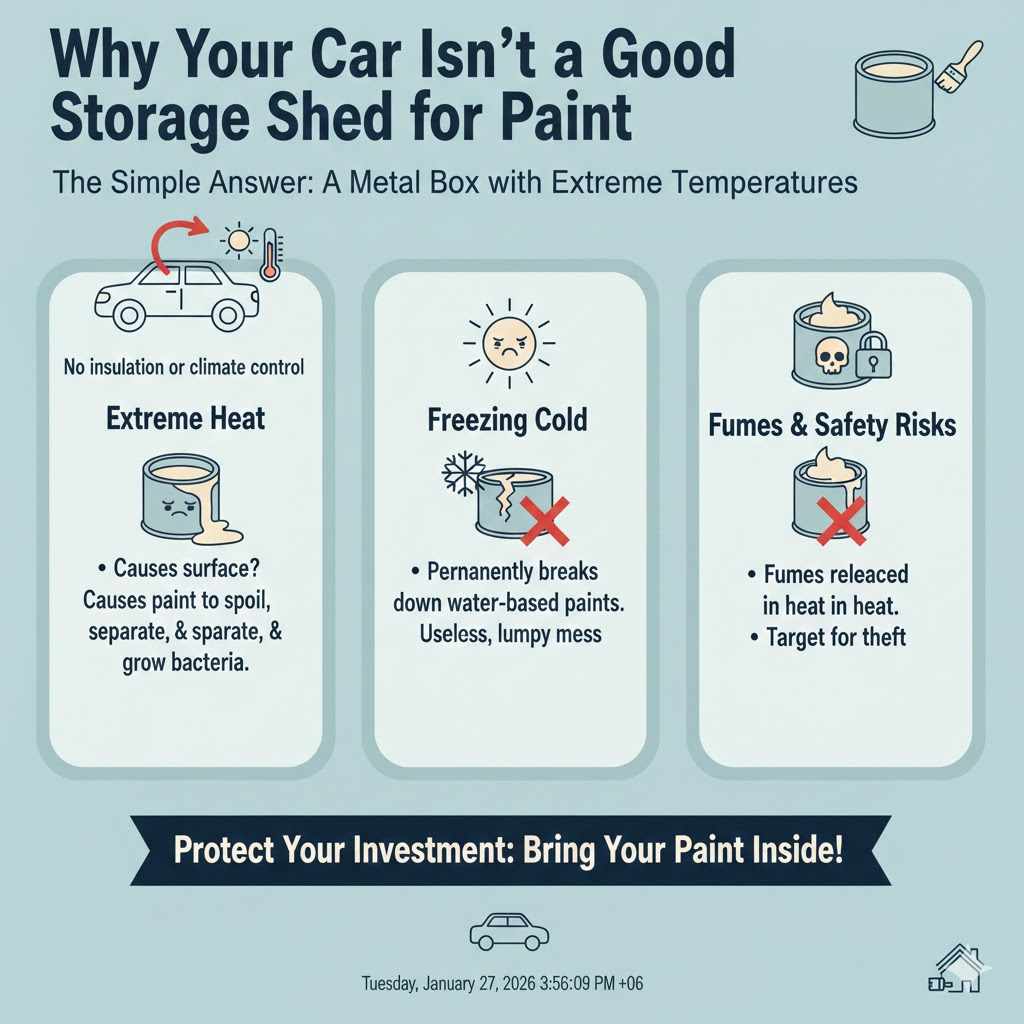
The Simple Answer: Why Your Car Isn’t a Good Storage Shed for Paint
Think of your car as a metal box that sits outside. It gets incredibly hot in the summer and freezing cold in the winter. Unlike your home, it has no insulation or climate control to keep the temperature steady. Paint, whether it’s water-based latex or oil-based enamel, is a carefully balanced chemical formula. To work correctly, it needs to be stored in a stable environment.
Leaving paint in your car exposes it to three main enemies:
- Extreme Heat: Causes the paint to spoil, separate, and even grow bacteria.
- Freezing Cold: Permanently breaks down water-based paints, turning them into a useless, lumpy mess.
- Fumes & Safety Risks: Paint cans can release fumes in the heat and are a target for theft.
Let’s break down each of these dangers so you can see exactly what happens inside that can and why it’s so important to bring your paint inside.
Danger #1: How Extreme Heat Destroys Your Paint
You know that feeling of getting into a car that’s been sitting in the sun? It’s like opening an oven. That intense heat is your paint’s worst enemy. Most paint manufacturers recommend storing their products between 50°F and 90°F (10°C to 32°C). A car’s interior can easily soar far beyond that safe range.
On a pleasant 70°F day, the inside of your car can reach over 100°F in just 30 minutes. On a hot summer day, temperatures can quickly climb above 140°F. No can of paint is designed to withstand that kind of heat. This extreme environment starts a chemical reaction inside the can that you can’t reverse.
The Science Behind Spoiled Paint
It’s helpful to understand what’s actually happening to the paint when it gets too hot. Different types of paint react in different ways, but the result is always the same: a ruined product.
- For Latex/Acrylic (Water-Based) Paint: This is the most common type of paint for walls and trim. It’s an emulsion, which means pigments and binders are suspended in water. When it gets too hot, the water starts to evaporate and the chemical binders break down. The ingredients separate and will never mix back together properly. The heat can also encourage bacteria to grow, making the paint smelly and unusable.
- For Oil-Based Paint: These paints use chemical solvents instead of water. In extreme heat, these solvents can begin to “cook” or evaporate, even inside a sealed can. This thickens the paint, changes its drying time, and can ruin its ability to level out into a smooth finish.
Signs Your Paint Has Been Ruined by Heat
So, you left the paint in the car by mistake. How can you tell if it’s spoiled? Before you try to use it, open the can and look for these tell-tale signs:
- A Lumpy or Grainy Texture: If you see lumps that can’t be stirred out, the binders have been damaged.
- Thick, Gummy Consistency: The paint may seem overly thick, stringy, or difficult to stir.
- Separation: You might see a thin, watery layer on top that won’t mix back in, no matter how much you stir.
- A Foul Odor: If the paint smells sour or like rotten eggs, bacteria has started to grow inside. Do not use it!
To put this into perspective, here’s a clear look at how quickly a car’s temperature can become unsafe for paint.
| Outside Temperature | Approximate Car Interior Temperature After 30 Mins | Approximate Car Interior Temperature After 1 Hour | Is It Safe for Paint? |
|---|---|---|---|
| 65°F (18°C) | 90°F (32°C) | 100°F (38°C) | No |
| 75°F (24°C) | 100°F (38°C) | 110°F (43°C) | No |
| 85°F (29°C) | 110°F (43°C) | 120°F (49°C) | Definitely Not |
Temperatures are estimates. As data from the Centers for Disease Control (CDC) shows, car interiors heat up incredibly fast, creating an unsafe environment for children, pets, and your project materials.
Danger #2: The Surprising Damage of Freezing Temperatures
While summer heat is a major problem, winter cold is just as bad, especially for the water-based paints most of us use for home projects. Just like a can of soda will explode if you leave it in the freezer, a can of latex paint will be destroyed if it freezes.
Your car offers no protection from freezing temperatures. If the outside temperature drops to 32°F (0°C) or below, the inside of your car will also freeze. It doesn’t take long for the cold to get to the paint can and begin the damaging process.
What Happens When Water-Based Paint Freezes?
Remember how we said latex paint is an emulsion of pigments and binders suspended in water? When that water freezes, it forms ice crystals. These ice crystals expand and push the pigment and binder particles apart, permanently breaking the emulsion. It’s a bit like trying to un-bake a cake—it’s just not possible.
When the paint thaws, the ingredients won’t mix back together. The smooth, consistent liquid you started with will be gone forever. Trying to apply frozen-and-thawed paint will result in a streaky, gritty finish that won’t adhere properly to the surface and will likely peel or crack soon after drying.
Signs Your Paint Has Frozen
If you suspect a can of paint froze in your car, look for these signs after it has thawed to room temperature:
- A “Cottage Cheese” Texture: This is the most common sign. The paint will be thick and full of rubbery lumps.
- A Grainy or Sandy Feel: Even if there aren’t large lumps, the paint may feel gritty when you stir it.
- Complete Separation: Just like with heat damage, you might see a layer of clear liquid that cannot be stirred back into the thick sludge at the bottom.
Here’s a simple table to understand the risk for different types of paint.
| Paint Type | Primary Component | Freezing Point | Can It Be Used After Freezing? |
|---|---|---|---|
| Latex / Acrylic | Water | 32°F (0°C) | No, it is permanently damaged. |
| Oil-Based Enamel | Solvents | Below 0°F (-18°C) | Maybe, but freezing can thicken it and affect performance. |
| Stain (Oil-Based) | Solvents | Below 0°F (-18°C) | Usually fine, but should be brought to room temp and mixed well. |
Danger #3: More Than Just Temperature — Fumes and Safety Risks
Beyond heat and cold, there are other practical reasons to avoid leaving paint in your car. These reasons involve your health, your safety, and the cleanliness of your vehicle.
The Problem with Paint Fumes (VOCs)
Paint contains chemicals known as Volatile Organic Compounds, or VOCs. These are the solvents that give fresh paint its distinct smell and help it dry. The U.S. Environmental Protection Agency (EPA) warns that VOCs can have negative health effects when inhaled in concentrated amounts.
When a paint can heats up in a car, the pressure inside increases. This can cause some of these VOC fumes to leak out from under the lid, even if it’s sealed tightly. Your car is a small, enclosed space. These fumes can build up to unhealthy levels, and you’ll be breathing them in the next time you get in your car.
Theft and Messes: A Practical Concern
Let’s not forget two very simple, real-world problems:
- Theft: A gallon of quality paint can be expensive! Leaving it in plain sight in your car overnight makes it an easy target for thieves. You wouldn’t leave a new power tool on your car seat, and paint should be treated with the same care.
- Spills: Cans can tip over during travel. If you leave it in your car overnight, a small leak that you didn’t notice can become a huge, hardened mess by morning. Cleaning dried paint from car upholstery or carpet is a nightmare, and often impossible to remove completely.
The Right Way to Store Paint: Simple Steps for Success
Now that we know what not to do, let’s talk about the right way to store paint. It’s very easy and ensures your paint will be ready to go when you are. Following these simple steps will protect your investment and guarantee a great result for your project.
Your Ideal Paint Storage Checklist
- Find a Cool, Dry Place: A basement, a temperature-controlled garage, or a closet inside your home are perfect spots. The key is to avoid extreme temperature swings.
- Keep It Out of Direct Sunlight: Sunlight can heat the can and degrade the paint, even indoors.
- Get It Off the Floor: Don’t store paint cans directly on a concrete floor. The moisture from the concrete can cause the bottom of the metal can to rust, potentially leading to leaks. Place a small piece of scrap wood underneath it.
- Ensure a Tight Seal: After using some paint, clean the rim of the can before putting the lid back on. Place a piece of plastic wrap over the opening and then tap the lid on firmly with a rubber mallet. This creates an airtight seal.
- Label Everything: Use a permanent marker to write the date you bought it and the room you used it in (e.g., “Living Room Trim – 10/25/23”). This saves a lot of guesswork later!
What to Do If You MUST Leave It Briefly
Life happens. Sometimes you need to run another errand after picking up paint. If you absolutely cannot take the paint inside right away, here are a few tips for very short-term (think one hour, max) storage:
- Park in a shaded garage or covered parking area if possible.
- If you must park in the sun, use a sunshade for your windshield.
- Cover the paint can with a blanket or towel to insulate it from direct sunlight.
- Never leave it overnight. This is only a temporary solution to get you through a quick stop.
How to Tell if Your Paint is Still Good
Let’s say you find an old can of paint in your garage and you aren’t sure if it’s still good. Or perhaps you forgot a can in your trunk for a few hours and want to check it. Before you start painting, you should always perform a quick check to avoid ruining your project with bad paint.
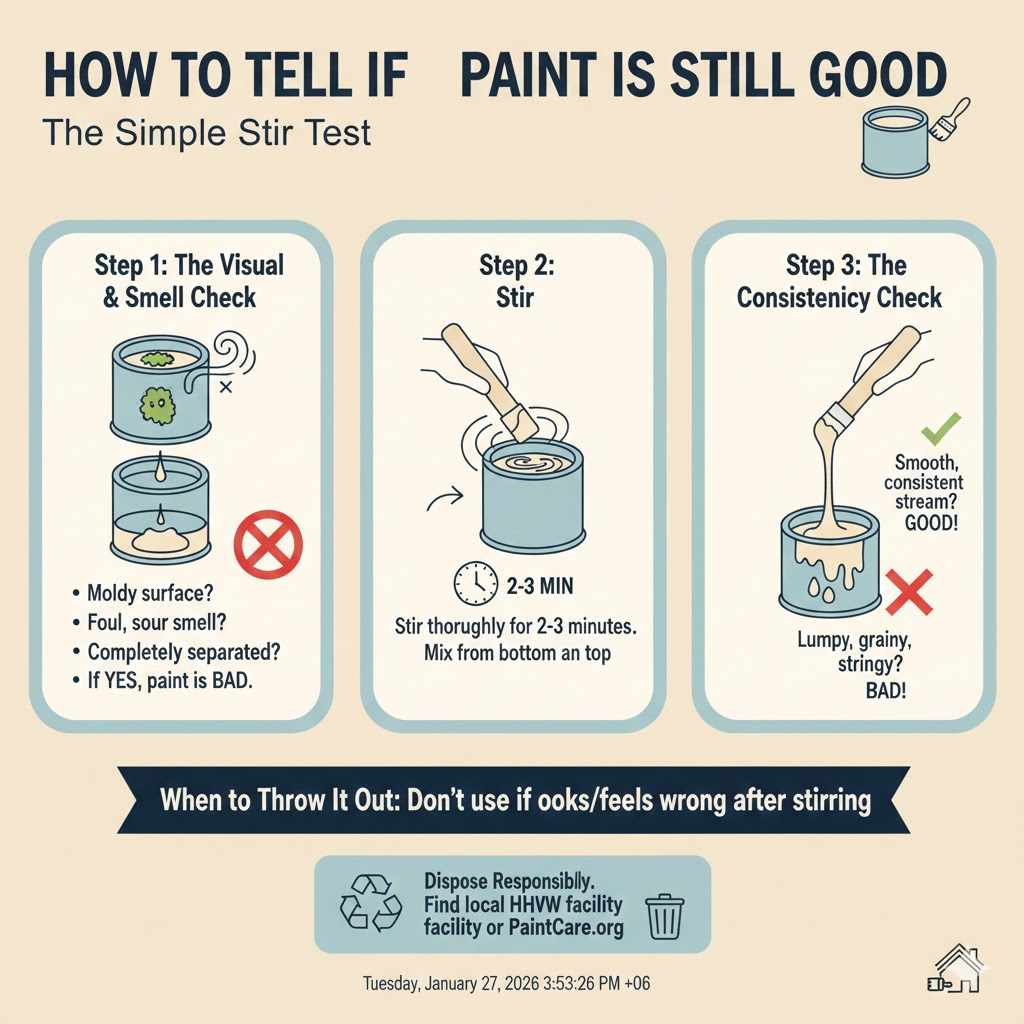
The Simple Stir Test
This easy, three-step test will tell you everything you need to know about the condition of your paint.
- Step 1: The Visual & Smell Check. Open the can and look inside. Do you see mold on the surface? Does it have a foul, sour smell? Is the paint completely separated into a watery layer and a hard lump? If you answer yes to any of these, the paint is bad.
- Step 2: The Stir. If it looks and smells okay, it’s time to stir. Use a paint stirrer or a wooden stick and stir thoroughly for at least two to three minutes. You need to mix everything from the bottom of the can up to the top.
- Step 3: The Consistency Check. After stirring well, lift the stick out of the paint. Does the paint run off in a smooth, consistent stream? If so, it’s likely good to use! If it looks lumpy, grainy, or stringy, or if there are chunks that you couldn’t mix in, the paint is no longer good.
When to Throw It Out
Trust your judgment. If the paint doesn’t look or feel right after stirring, don’t use it. Applying bad paint is a waste of time and will only lead to a poor finish that you’ll have to fix later. Trying to “save” it by adding water or paint thinner won’t work if the chemical binders are already broken.
Remember to dispose of old paint responsibly. Never pour it down the drain or throw it in the regular trash. Look for a local hazardous waste disposal facility in your town, or check resources like PaintCare.org to find a drop-off site near you.
Frequently Asked Questions (FAQ)
How long can paint sit in a hot car?
Honestly, as little time as possible. On a hot day, a car’s interior can reach damaging temperatures in under 30 minutes. It’s best to make the paint store your last stop and take the paint inside your home immediately.
What about leaving paint in a truck bed?
A truck bed has the same problems as a car’s interior. In the summer, direct sunlight will bake the can, ruining the paint. In the winter, it offers no protection from freezing temperatures. It’s also not secure, making it an easy target for theft.
Can I “fix” frozen paint?
No. Once a water-based (latex or acrylic) paint freezes, the emulsion is permanently broken. It will have a cottage cheese-like texture that cannot be fixed by stirring or adding anything to it. It’s best to dispose of it properly and buy new paint.
Does this apply to primer and wood stain too?
Yes! Primers, especially water-based ones, are just as vulnerable to extreme heat and cold. While oil-based stains are more resistant to freezing, extreme heat can still cause solvents to evaporate and ruin the consistency. It’s best to store all your coatings and finishes in a climate-controlled area.
Is it okay to transport paint on a hot day?
Yes, transporting paint is fine. The key is to minimize the time it spends in the hot car. Go directly from the store to your home. If you have an air-conditioned car, the paint will be fine for the duration of the drive.
What’s the best way to keep a paint can from tipping over in the car?
A simple and effective trick is to place the paint can inside a cardboard box. Wedge the box in a corner of your trunk or on the floor of the backseat so it can’t slide around. This will keep it upright and contain any small drips if the lid isn’t perfectly sealed.
A Final Word of Advice
As woodworkers and DIYers, we put a lot of time, effort, and care into our projects. The materials we choose are an important part of that process. Treating your paint with care is just as important as choosing the right piece of wood or using the right tool for the job.
Bringing your paint inside with you as soon as you get home is a small, simple habit that protects your investment and saves you from the frustration of a failed project. By understanding the dangers of heat, cold, and other risks, you’re setting yourself up for a beautiful, long-lasting finish every time. Happy building!