Satin vs Flat Paint: What’s the Real Difference?
Satin paint carries a real, measurable sheen — roughly 10 to 20 on a 60-degree gloss meter — while flat paint reads under 10, which is why satin bounces light and flat absorbs it. That difference decides which one survives scrubbing and which one hides a bad drywall patch. This guide covers the actual gloss-meter numbers, which rooms each finish belongs in, and what a quart really costs.
Quick Answer
Satin paint has a soft, visible sheen and holds up to scrubbing — use it on doors, trim, kitchens, and bathrooms. Flat paint has almost no sheen and hides wall imperfections — use it on ceilings and low-traffic bedrooms. Satin and flat from the same product line usually cost within a dollar or two of each other per quart.
What Is Paint Sheen, and How Is It Actually Measured?
Paint sheen is a measurable property, not just a look — it’s how much light a dried, cured paint film reflects back off its surface. Manufacturers test it with a gloss meter that shines light onto the paint at a fixed angle and reads how much bounces back. Flat paint scatters almost all of that light, which is why it looks dull and hides surface flaws. Satin paint reflects more of it in a soft, even glow, which is what lets it be wiped clean without the sheen changing.
According to Sherwin-Williams’ published gloss and sheen guide, gloss is read by reflecting light onto the surface at a 60-degree angle, while true sheen uses an 85-degree, near-grazing angle that catches the subtler glow a flat wall gives off under raking light. Below is what those readings actually look like for the two finishes this article compares.
| Finish | 60° Gloss Reading | Light Reflectance | Typical Feel |
|---|---|---|---|
| Flat / matte | 0–10 | Under 10% | No visible shine, absorbs light |
| Eggshell | 10–15 (85°) | 10–15% | Faint, low glow |
| Satin | 10–20 (60°) / 20–35 (85°) | 26–40% | Soft, visible sheen |
That reflectance gap is the entire reason the two finishes behave so differently on a wall — it’s not marketing, it’s optics. A higher reading means a harder, more light-reflective film, and that same film resists a damp cloth better than a duller, more porous one.
Best Satin Paint Pick
 |
Rust-Oleum Painter’s Touch Latex Paint, Satin, Quart A true satin sheen — the 26–40% reflectance range from the table above — built for the trim, doors, and higher-traffic walls this guide recommends satin for.
|
As an Amazon Associate we earn from qualifying purchases.
Satin Paint: Characteristics, Pros and Cons
Satin paint is a low-to-medium sheen finish that reads as a soft, even glow rather than a shine — not glossy enough to look plastic, but reflective enough to show it’s been cleaned. That harder, more reflective film is what lets it shrug off scrubbing, splatter, and greasy fingerprints that would stain flat paint permanently.
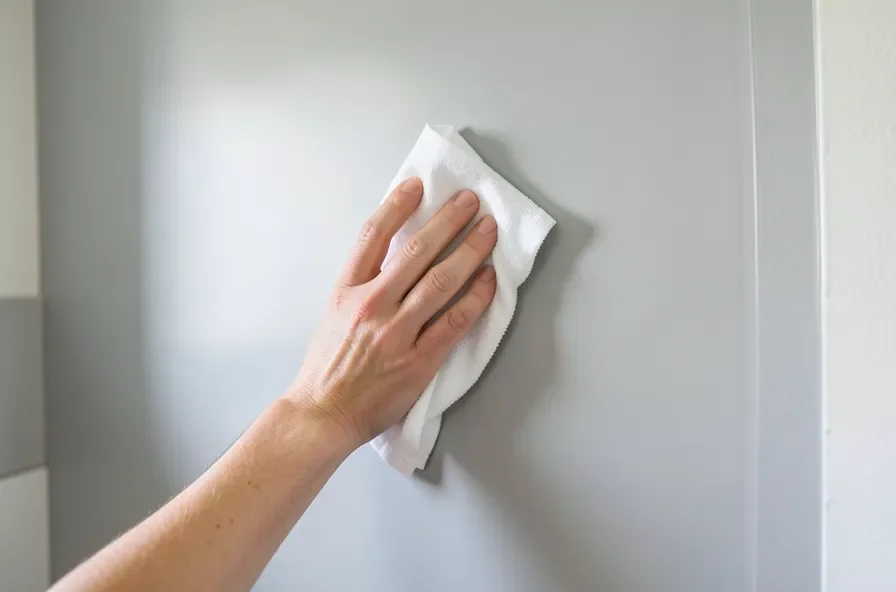
- Good for kitchens, bathrooms, doors, and trim — anywhere hands, steam, or splatter hit regularly.
- Holds up to repeated washing without the sheen wearing patchy.
- Shows roller stipple and drywall seams more than flat, so surface prep has to be cleaner.
- Costs about the same per quart as flat paint in most product lines — the finish, not the price, is the tradeoff.
Flat Paint: Characteristics, Pros and Cons
Flat paint sits at the bottom of the gloss scale — under 10% reflectance — which is exactly what makes it good at disguising a rough or repaired wall. With almost no light bouncing off it, raking light from a window or lamp doesn’t catch drywall seams, nail pops, or old patch marks the way it does on a shinier finish.
That same low-reflectance, more porous film is also why flat paint stains more easily and is harder to spot-clean — a damp cloth can burnish a shiny patch into an otherwise flat wall. Touch-ups blend in more forgivingly than on satin, but only because the whole surface is already dull.

- Best for ceilings, bedrooms, and low-traffic walls with visible imperfections.
- Hides drywall seams, nail pops, and patch repairs better than any other sheen.
- Scuffs and stains show up fast and don’t scrub out cleanly — avoid it in kitchens, bathrooms, hallways, and mudrooms.
- Usually needs a full repaint of the section, not a spot touch-up, once it’s visibly marked.
Satin vs Flat Paint by Room
The room decides the sheen more than personal taste does. Here’s how the gloss-meter difference above translates into a room-by-room pick.
| Room / Surface | Recommended Finish | Why |
|---|---|---|
| Kitchens & bathrooms | Satin | Handles steam, splatter, and frequent wiping |
| Doors & trim | Satin | Touched constantly, needs to resist scuffing |
| Hallways & mudrooms | Satin | High foot and hand traffic |
| Bedrooms (low traffic) | Flat | Hides wall flaws, no glare |
| Ceilings | Flat | Minimizes glare from light fixtures |
| Living rooms with older drywall | Flat | Disguises seams and patch marks |
Where Satin and Flat Fit on the Full Sheen Spectrum
Satin and flat are two points on a five-step sheen ladder, and knowing the neighbors helps when a store is out of the exact finish this guide recommends. In order of reflectance, low to high: flat/matte (under 10%), eggshell (10–15%), satin (26–40%), semi-gloss, then high-gloss. Eggshell is the usual fallback when a room needs more washability than flat but a store-brand doesn’t carry true satin — it splits the difference, with a little more durability than flat and a little less shine than satin. Semi-gloss and gloss sit above satin and show up mostly on doors, cabinets, and trim in homes that want maximum wipeability over a softer look.
One practical note for anyone mixing sheens in the same room: a satin wall next to a semi-gloss door reads as intentional layering, but a satin wall next to a flat ceiling is the far more common — and correct — pairing, since ceiling paint is judged on hiding fixture glare, not on withstanding a wipe-down.
Cost and VOC Differences
Sheen rarely moves the price much — satin and flat from the same product line typically land within a dollar or two of each other per quart; the satin pick above runs about $17.50 for a quart. What varies more by brand than by sheen is VOC content: many modern latex satin and flat lines are both available in low-VOC or zero-VOC formulas, so check the can’s label rather than assuming flat is automatically the “greener” choice. Good ventilation and a low-VOC label matter more to indoor air quality than the sheen does.
📊 Gloss is measured at a 60-degree angle; true sheen is measured at 85 degrees, almost grazing the surface — Source: Sherwin-Williams Gloss & Sheen Guide
Common Mistakes When Choosing Paint Sheen
The most common mistake is picking flat paint for a room because it “looks nicer” in the sample chip, then repainting a hallway six months later once every scuff mark is permanently visible. The second is assuming satin will hide wall damage the way flat does — its higher reflectance does the opposite, drawing attention to drywall seams and roller marks under side lighting. Test both sheens on an actual wall section under the room’s real lighting before committing to a full can.
“In more than a decade of trim and cabinet work, satin is the sheen I reach for on doors and baseboards nine times out of ten — flat’s real advantage only shows up on a wall with flaws worth hiding, not on anything that gets touched.”
Frequently Asked Questions
What are the disadvantages of satin paint?
Satin shows drywall seams, roller stipple, and touch-up flashing more than flat because of its higher gloss-meter reading, so surface prep needs to be cleaner. It’s also slightly harder to touch up invisibly than flat, since even a small color or sheen mismatch catches the light.
What type of paint is best for interior walls?
Latex paint is the standard choice for interior walls — durable, easy to clean, and available in low-VOC formulas. Pick satin for trim, kitchens, and bathrooms, or flat for bedrooms and ceilings, based on the room-by-room table above.
Why would anyone use flat paint instead of satin?
Flat paint’s near-zero light reflectance hides wall imperfections that satin’s higher sheen would expose — drywall seams, nail pops, and old patch marks. It’s also the standard pick for ceilings, since it absorbs light instead of reflecting fixture glare back into the room.
When should you use satin paint?
Use satin anywhere the wall gets touched, splashed, or wiped down regularly — kitchens, bathrooms, doors, trim, and hallways. Its higher gloss-meter reading (roughly 10–20 at 60 degrees) is what lets it hold up to repeated cleaning without the sheen wearing patchy.
Can you use flat paint over satin, or satin over flat?
Yes, either direction works structurally, but scuff-sand a glossier satin surface first so the new coat has enough texture to grip. Going from flat to satin generally needs fewer coats for even sheen than going from satin to flat, since flat’s dull, porous surface can telegraph through a shinier topcoat.
Conclusion
The difference between satin and flat paint comes down to a measurable gloss-meter gap — roughly 10–20 for satin versus under 10 for flat — and that gap decides everything else: satin wipes clean and holds up in high-traffic rooms, flat hides wall flaws and keeps ceilings glare-free. Match the finish to the room’s traffic and wall condition rather than to which one looks nicer on a paint chip, and the choice mostly makes itself.
Sponsored / affiliate links. As an Amazon Associate I earn from qualifying purchases. I may earn additional commission from eligible campaigns.