Can I Paint Veneer Without Sanding? The Best Genius Hack
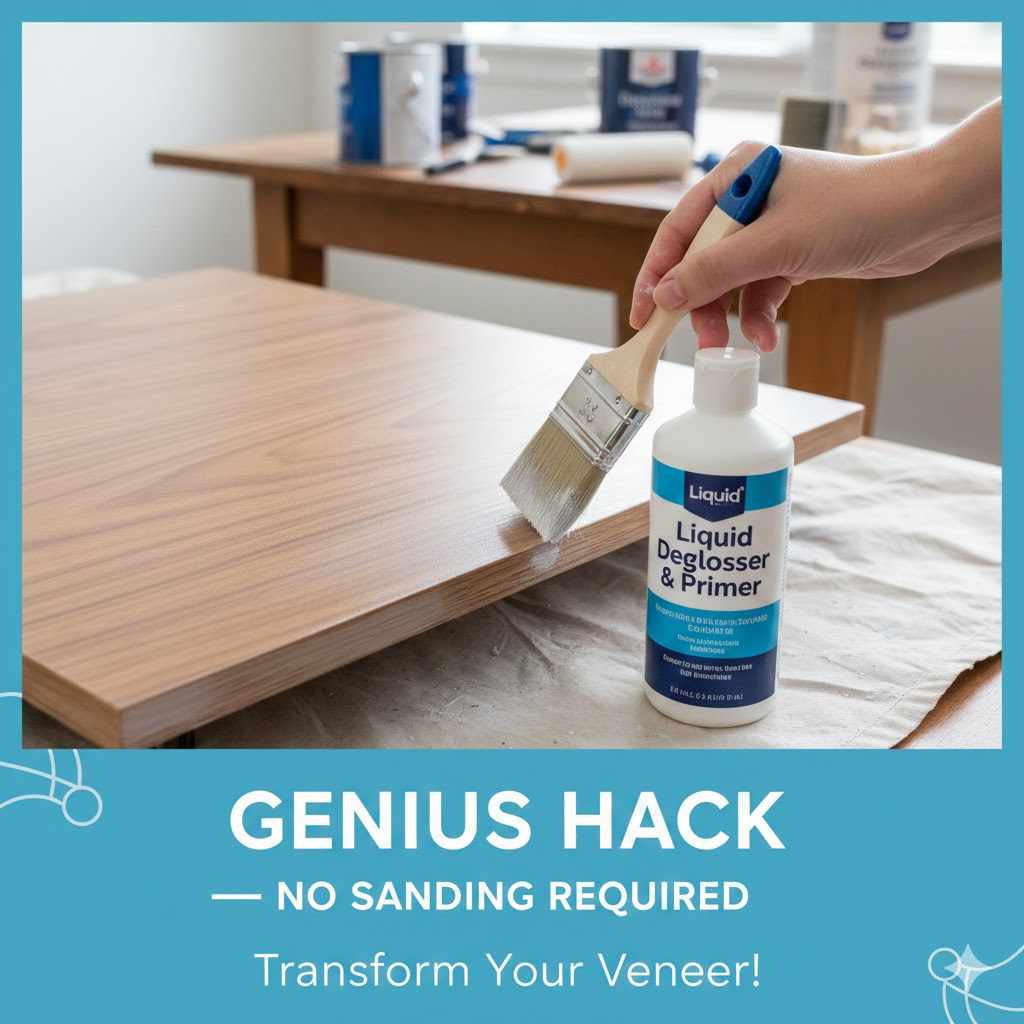
Yes, you can absolutely paint veneer without sanding! The secret is using a liquid de-glosser or a high-adhesion bonding primer. This genius hack chemically cleans and etches the surface, creating the perfect grip for paint. It saves you the mess and risk of sanding while ensuring a beautiful, durable finish that won’t peel.
Have you ever looked at an old, dated piece of veneer furniture and dreamed of giving it a fresh, modern look? Maybe it’s a thrift store find or a hand-me-down dresser. Your excitement builds until one word stops you in your tracks: sanding. The thought of all that dust, noise, and effort can be enough to make you put the project off forever.
I get it completely. Sanding can be a huge chore, especially if you’re new to DIY projects. Plus, with veneer, it’s risky. One wrong move and you can sand right through that thin wood layer, ruining the piece.
But what if I told you there’s a better way? A genius hack that lets you skip the sanding altogether. In this guide, I’ll walk you through the simple, step-by-step process to paint your veneer furniture perfectly, with no sanding required. You’ll get a durable, professional-looking finish with less work and zero dust. Let’s get started!
What is Veneer and Why is Sanding So Tricky?
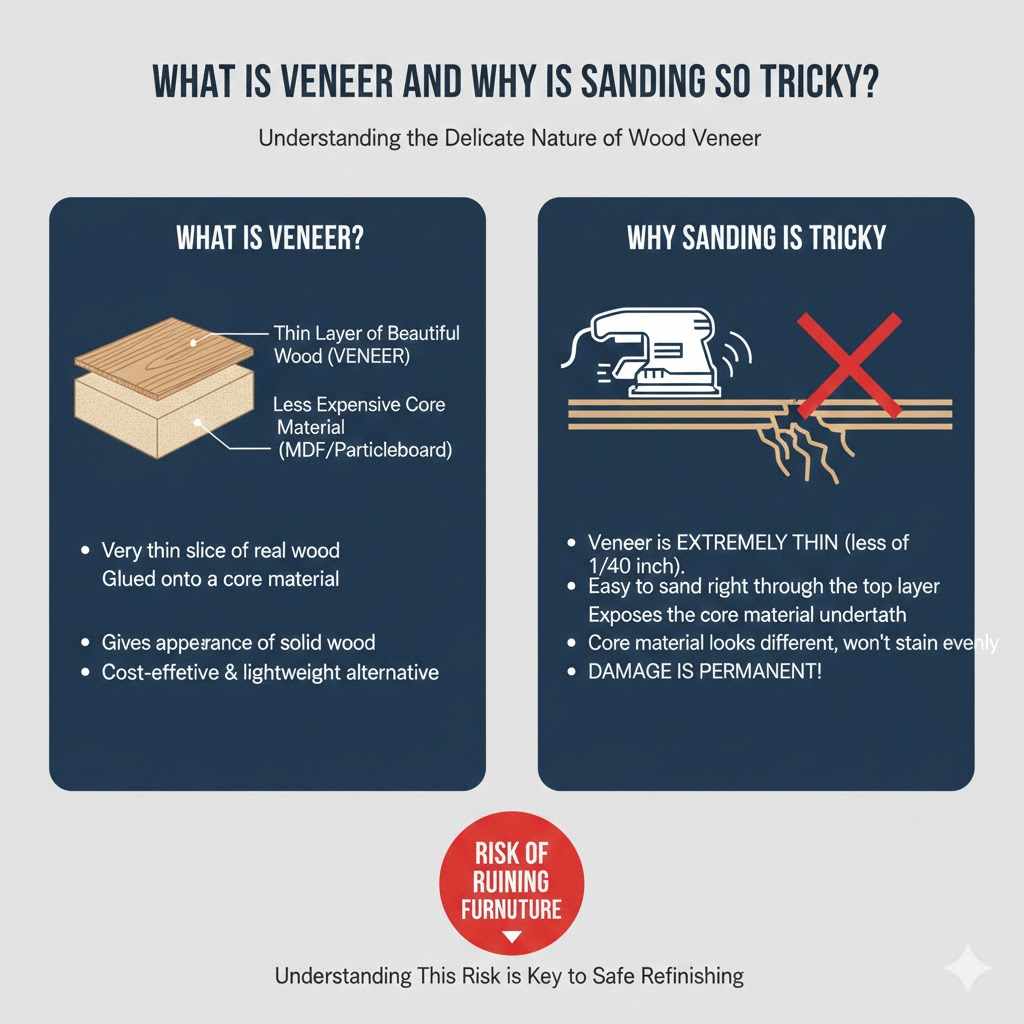
Before we dive into the solution, it helps to understand what you’re working with. Think of veneer as a very thin slice of beautiful wood glued onto a less expensive core material, like particleboard or MDF. It gives the appearance of solid wood without the cost or weight.
This is where the problem with sanding comes in. Most wood veneers are incredibly thin, sometimes less than 1/40th of an inch. If you use an electric sander or even sand too aggressively by hand, it’s shockingly easy to wear right through that delicate top layer. Once you do, there’s no going back. You’ll expose the core material underneath, which doesn’t look the same and won’t take stain or paint evenly.
This risk is exactly why so many people are afraid to update their veneer furniture. But don’t worry, the method I’m about to show you removes that risk entirely.
The No-Sand Secret Weapon: Liquid De-glosser and Bonding Primer
So, if we can’t create a good surface for paint by sanding (creating “tooth” or tiny scratches for paint to grip), how do we do it? We do it chemically. This is where our secret weapons come in:
- Liquid De-glosser (Liquid Sandpaper): This amazing product is a solvent-based cleaner that does two jobs at once. First, it deeply cleans off grease, grime, and wax. Second, it softens the factory finish just enough to dull the sheen. This “de-glossing” action creates a slightly tacky, perfectly prepped surface that primer and paint can bond to tightly.
- Bonding Primer: This isn’t your average primer. Bonding primers are specially made to stick to difficult, slick surfaces like glass, tile, laminate, and yes, sealed veneer. They act as the ultimate glue between the old surface and your new paint, ensuring your hard work won’t peel or chip away later.
By using one or both of these products, you are creating an ideal surface for paint adhesion without ever touching a piece of sandpaper. It’s a faster, cleaner, and much safer way to prep veneer for a stunning new look.
Step-by-Step Guide: How to Paint Veneer Without Sanding
Ready to transform your furniture? Follow these simple steps, and you’ll be amazed at the results. I’ll walk you through every part of the process, so you can feel confident from start to finish.
Step 1: Gather Your Supplies
Having everything ready before you start makes the project go smoothly. You don’t want to be running to the store with a half-primed dresser!
- Cleaning Supplies: A good degreasing cleaner (like TSP substitute or a mix of warm water and Dawn soap), bucket, clean rags or cloths, and scrub sponges.
- Safety Gear: Chemical-resistant gloves, safety glasses, and a respirator or mask if you’re working indoors with poor ventilation.
- Prep Materials: Wood filler for any scratches, a putty knife, painter’s tape, and drop cloths.
- The Magic Stuff: Liquid de-glosser and/or a high-quality bonding primer (shellac-based or water-based formulas work well).
- Painting Tools: Your choice of paint (latex, acrylic enamel, or chalk paint), a high-quality paintbrush, a small foam roller for flat surfaces, and paint trays.
- Finishing Touch (Optional): A clear topcoat like water-based polycrylic for extra durability.
Step 2: Prepare Your Workspace and Furniture
A little prep work here saves a lot of cleanup later.
- Find a Good Spot: Set up in a well-ventilated area, like a garage with the door open, a covered patio, or a room with open windows.
- Protect Your Floors: Lay down drop cloths to catch any drips or spills.
- Prep the Piece: Remove all hardware like knobs and handles. If you can, take out any drawers. This makes painting much easier and gives you a cleaner result.
Step 3: Clean, Clean, and Clean Again!
This is the most important step in the entire process. Paint will not stick to a dirty, greasy surface. Do not skip this!
Mix your cleaning solution according to the package directions. Using a scrub sponge or rag, wash every inch of the furniture piece. Pay extra attention to high-touch areas like drawer fronts and tabletops. After washing, wipe the entire piece down with a separate rag dipped in clean water to remove any cleaning residue. Let it dry completely. For old pieces, it’s wise to consider safety first. You can learn more about lead-safe practices from the Environmental Protection Agency (EPA) to ensure you are working safely.
Step 4: Make Any Necessary Repairs
Now is the time to fix any dings, deep scratches, or gouges. Apply a small amount of wood filler with a putty knife, pressing it firmly into the damaged area. Overfill it slightly, as the filler will shrink a little as it dries. Once it’s fully dry, you can very, very gently sand just the filler smooth with fine-grit sandpaper, being careful not to sand the surrounding veneer.
Step 5: Apply the Liquid De-glosser
Here’s where the magic happens. Put on your gloves and safety glasses.
Pour a small amount of the liquid de-glosser onto a clean, lint-free cloth. Work in small, manageable sections. Wipe the de-glosser onto the surface in a circular motion, applying gentle but firm pressure. You should see the sheen on the finish start to dull almost immediately. The surface might feel slightly tacky or sticky, which is a good sign! It means the de-glosser is working.
Follow the product’s instructions for drying time. Most de-glossers don’t require rinsing, but some do. Read the label carefully!
Step 6: Prime for a Perfect Finish
Even if you use a de-glosser, I always recommend using a bonding primer. It’s your insurance policy for a long-lasting paint job. Stir your primer thoroughly. Using a high-quality brush or a foam roller, apply a thin, even coat of primer to the entire piece.
Don’t try to get full coverage in one coat. A thin coat is much better than a thick, drippy one. Let the first coat dry completely (check the can for recoat times), and then apply a second thin coat. Two thin coats will give you a solid, bondable base for your paint.
| Primer Type | Best For | Pros | Cons |
|---|---|---|---|
| Shellac-Based Primer | Blocking tough stains and odors. Best adhesion on slick surfaces. | Incredible adhesion, dries quickly, blocks almost any stain. | Strong fumes, requires denatured alcohol for cleanup. |
| Water-Based Bonding Primer | Beginner-friendly projects and general use. | Low odor, easy soap and water cleanup, flexible. | May not block heavy stains as well as shellac. |
Step 7: It’s Time to Paint!
Once the primer is fully cured (give it at least the recommended time on the can), you can finally add your color. Stir your paint well. Apply your first coat of paint with a brush or roller. Again, thin coats are key to a smooth, professional finish. Avoid the temptation to slather it on thick to get it done faster.
Let the first coat dry, and then apply a second coat. You may even need a third coat for some colors, especially if you are painting a light color over a dark original finish. Be patient!
Step 8: Protect Your Work with a Topcoat (Optional)
For furniture that will see a lot of use—like a tabletop, desk, or dresser—a topcoat is a great idea. It adds a protective layer that resists scratches, scuffs, and water damage. A water-based polycrylic is a great choice because it dries clear and won’t yellow over time like oil-based polyurethane can.
Apply one or two thin coats with a good quality synthetic brush, letting each coat dry completely in between. Once your final topcoat is dry, you can reattach your hardware, put the drawers back in, and step back to admire your incredible work!
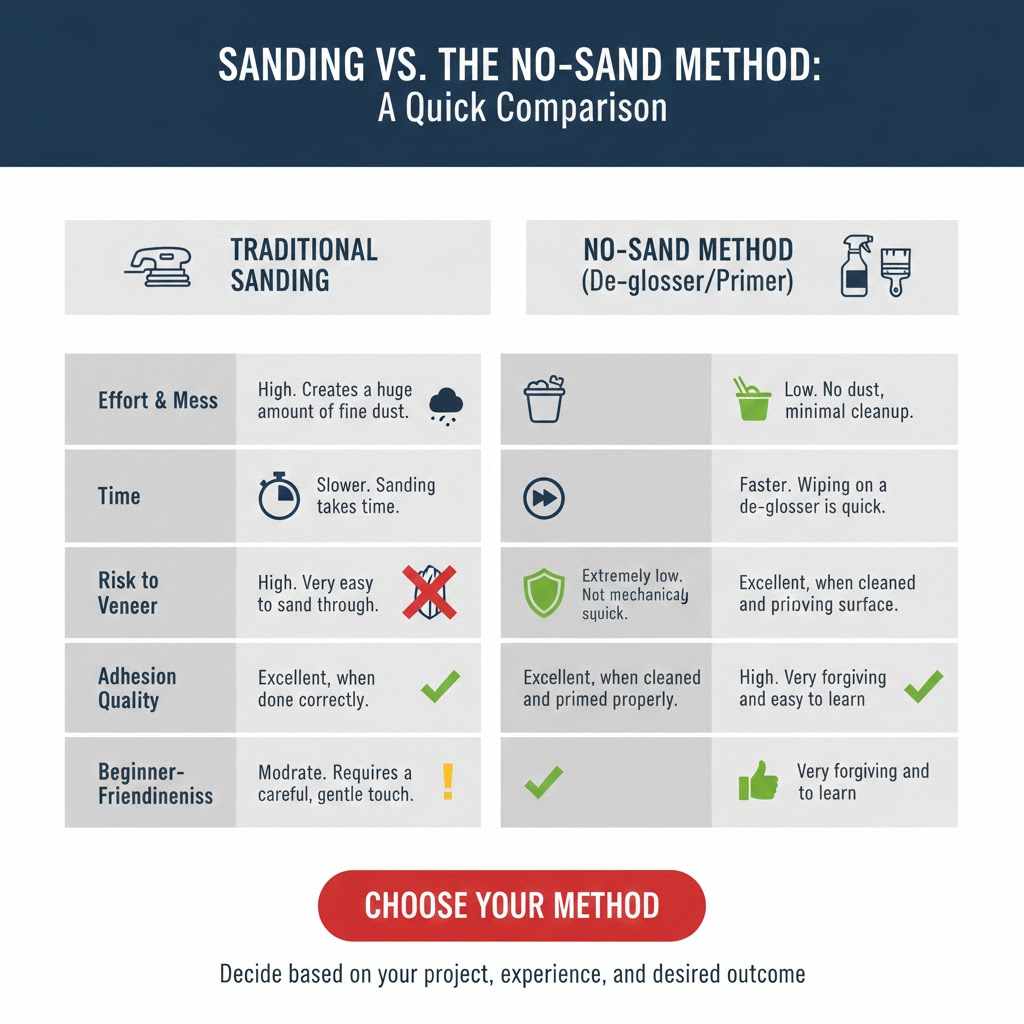
Sanding vs. The No-Sand Method: A Quick Comparison
Still not sure which path to take? Here’s a simple breakdown to help you decide.
| Factor | Traditional Sanding | No-Sand Method (De-glosser/Primer) |
|---|---|---|
| Effort & Mess | High. Creates a huge amount of fine dust. | Low. No dust, minimal cleanup. |
| Time | Slower. Sanding takes time, especially by hand. | Faster. Wiping on a de-glosser is quick. |
| Risk to Veneer | High. Very easy to sand through and ruin the piece. | Extremely low. You are not mechanically removing the surface. |
| Adhesion Quality | Excellent, when done correctly. | Excellent, when cleaned and primed properly. |
| Beginner-Friendliness | Moderate. Requires a careful, gentle touch. | High. Very forgiving and easy to learn. |
Frequently Asked Questions (FAQ)
1. What is the best primer to use on veneer without sanding?
The best primers are “bonding” primers. Look for products specifically designed to stick to glossy or slick surfaces. Shellac-based primers like Zinsser B-I-N offer incredible adhesion and stain-blocking power. High-quality water-based bonding primers like KILZ Adhesion or INSL-X Stix are also excellent, low-odor choices.
2. Will the paint really stick and not peel if I don’t sand?
Yes, absolutely! The key is proper preparation. If you clean the surface thoroughly to remove all grease and grime, and then use a quality liquid de-glosser or bonding primer, you are creating a new surface that the paint can chemically bond to. This bond is extremely strong and will prevent peeling and chipping.
3. Can I use this no-sand method on IKEA furniture?
This is a great question. Most IKEA furniture is not real wood veneer but a plastic-like material called laminate or melamine. The good news is, this method works even better on those surfaces! Laminate is non-porous and slick, so cleaning it well and using a shellac-based bonding primer is the absolute best way to ensure your paint job lasts.
4. How do I know if my furniture is real wood veneer or laminate?
Look for a wood grain pattern. On real wood veneer, the grain pattern will look natural and won’t have repeating sections. On laminate, the pattern is printed, so you might be able to spot identical patterns across the surface. Also, check the edges or the underside. Often you can see the thin layer of wood on veneer, whereas laminate often looks more like a single, solid piece of printed material.
5. What should I do if the veneer is already peeling or chipped?
If the veneer is lifting or peeling, this no-sand method for painting isn’t the first step. You must repair the veneer first. Use a good wood glue and a syringe to inject glue under the peeling section. Press it down firmly with a clamp or a heavy weight (with a piece of wax paper to prevent sticking) and let it dry completely. For chips, you can use wood filler as described in the repair step above. Once repairs are solid and dry, you can proceed with cleaning and priming.
6. How long do I need to wait between coats of primer and paint?
Always check the instructions on the can! This is the most accurate source of information. Generally, most water-based primers and paints can be recoated in 2 to 4 hours. Shellac or oil-based primers may need longer. Rushing this step can lead to a tacky, gummy finish that never cures properly, so patience is key.
You Can Do This!
Giving old veneer furniture a brand new life doesn’t have to be a dusty, difficult chore. By skipping the risky sanding process and instead relying on the chemical power of proper cleaning and a high-adhesion bonding primer, you can achieve a finish that is not only beautiful but incredibly durable.
This method is faster, cleaner, and perfect for beginners who want to build their confidence. You are saving a piece of furniture from the landfill and creating something new and personalized for your home. So go find that dated dresser or forgotten side table, grab your supplies, and get started on your transformation. You’ve got this!