Cabinet Paint vs Wall Paint: What Really Differs (Data Sheet Facts)
Use cabinet paint, meaning a urethane-modified alkyd or urethane acrylic enamel, on cabinet doors and drawer fronts. Wall paint is built to be rolled across a big vertical surface and left alone, while cabinet enamel is built to flow out flat and harden enough to survive hands, hinges and a wet sponge.
The line between the two is blurrier than most guides admit. Benjamin Moore lists its Advance waterborne alkyd as suitable for interior doors, trim, cabinets, walls and ceilings, so a cabinet-grade enamel can go on a wall, but ordinary flat or eggshell wall paint cannot do a cabinet’s job. Below you will find what actually separates them (resin, leveling, blocking and cure time), real numbers taken from manufacturer data sheets, when leftover wall paint is acceptable, and how to get enamel to last. If you are ready to start painting, our full kitchen cabinet painting walkthrough covers prep step by step.
Cabinet Paint vs Wall Paint: The Short Answer
Best Cabinet Enamel Pick
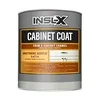 |
INSL-X Cabinet Coat Urethane Acrylic Satin Enamel, White, 1 Quart, $26.99 A water-based cabinet enamel sold as a one-quart can, so you can paint a set of doors without buying a gallon of wall paint.
|
Wall paint is a latex or acrylic emulsion chosen for coverage, color and easy roll-on application. Cabinet paint is an enamel, usually a waterborne alkyd, urethane-modified alkyd or urethane acrylic, chosen for a smooth, hard film. Two paints can be dry to the touch in the same hour and still behave completely differently a month later, which is the first myth worth clearing up.
Dry Time Is Not the Difference: Hardness and Leveling Are
Many articles say cabinet paint “dries faster” or “cures harder” without numbers. The data sheets tell a more interesting story. Sherwin-Williams lists the same drying figures at 77 degrees F and 50 percent humidity for its ProMar 200 Zero VOC interior wall latex and its Emerald Urethane Trim Enamel: about 1 hour to touch and 4 hours to recoat. So touch-dry speed will not tell you which can is which.
What differs is the resin and how the film behaves afterward. Sherwin-Williams describes Emerald Urethane Trim Enamel as a urethane-modified alkyd that delivers the look, feel and durability of an oil-based enamel with a water-based formula. Benjamin Moore describes Advance as a waterborne alkyd with the flow and leveling of conventional alkyd paint, and lists it as block-resistant. The ProMar 200 wall latex, by contrast, is listed as a vinyl acrylic.
What the manufacturer data sheets say
| Product | Type | Touch / recoat | Full hardness | VOC |
|---|---|---|---|---|
| Sherwin-Williams ProMar 200 Zero VOC Eg-Shel (wall paint) | Vinyl acrylic latex | 1 hr / 4 hrs | No special cure period listed | Under 50 g/L |
| Sherwin-Williams Emerald Urethane Trim Enamel (satin) | Urethane-modified alkyd, water-based | 1 hr / 4 hrs | Sheet lists dry times only | Under 50 g/L |
| Benjamin Moore Advance Semi-Gloss 793 | Waterborne alkyd | 4 to 6 hrs / 16 hrs | Up to 30 days for optimum hardness and sheen | 43.2 g/L |
Read the Advance line carefully: it can be recoated in 16 hours, but the sheet says it may take up to 30 days to reach optimum hardness. That gap between dry and cured is where most cabinet paint jobs get damaged. Benjamin Moore also says not to return shelves or tabletops to service for at least 5 to 7 days, and that high humidity or cool temperatures will lengthen dry, recoat and cure times.
Why Cabinets Punish Paint: Blocking, Grease and Hands
Three things wreck a cabinet finish that walls rarely see. The first is blocking, the sticking together of two painted surfaces pressed against each other. ASTM D4946 is the standard test method for blocking resistance of architectural paints, and it exists because a door or drawer front that touches its frame can stick and pull paint away when it opens. A softer film blocks more readily, especially in a warm, humid kitchen.
The second is grease and cleaner exposure. Near a range, cabinet faces collect a film of cooking oil that has to be cleaned regularly, and a soft film can burnish or wear through along the cleaning path. Our guide on how to clean painted cabinets covers that maintenance.
The third is simple wear at touch points: pulls, edges and the lower rails where knees and toes land. Chips start at edges, which is where a thin, soft film runs out of strength first.
Leveling: Why Brush Marks Fade on Enamel and Stay on Wall Paint
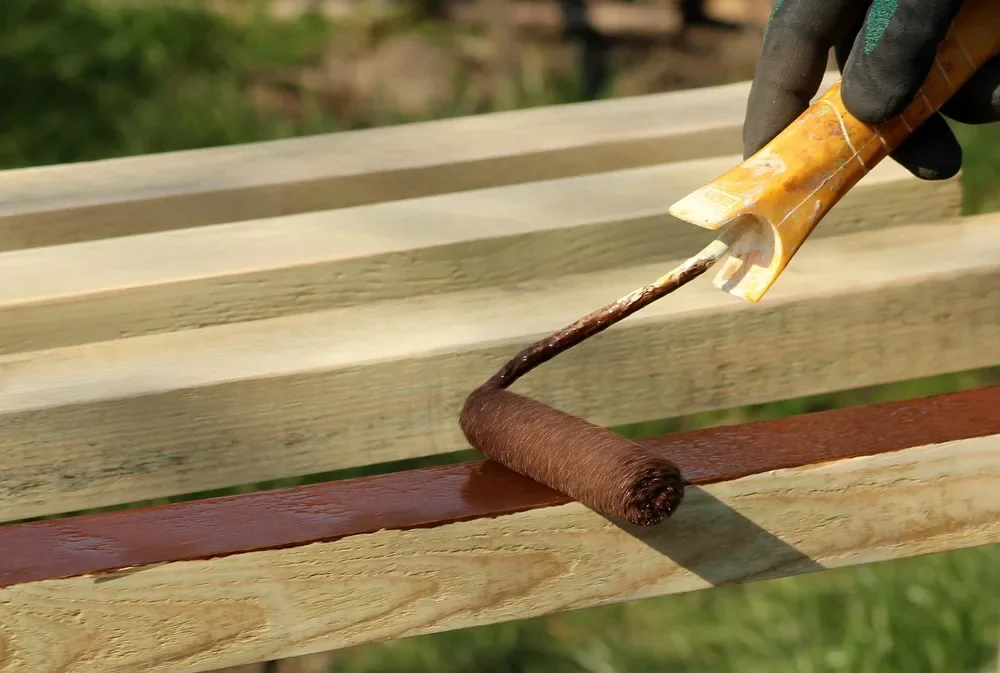
Leveling is how much the wet film flows out to erase brush and roller lines before it sets. Benjamin Moore lists excellent flow and leveling plus extended open time for Advance, and Sherwin-Williams lists excellent flow and leveling for Emerald Urethane Trim Enamel. Open time matters as much as flow: the longer the paint stays workable, the longer it has to flatten. Wall paints are formulated so a roller can keep a wet edge across a big wall, which is a different goal from flattening out on a door.
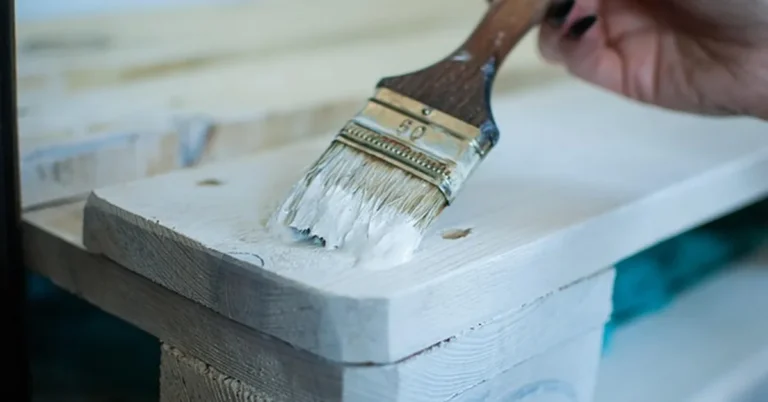
The corollary is that overbrushing hurts more with enamel. If you keep working paint that has begun to set, you drag it into ridges it can no longer level out. Lay it on, tip it off once, and leave it. Our comparison of rollers for the smoothest cabinet finish shows which covers hold up best for this.
Sheen: Cabinets Sit Higher Than Typical Wall Paint
Sheen changes both looks and cleanability. Sherwin-Williams lists the Emerald Urethane Trim Enamel satin at 35 to 45 gloss units at 60 degrees, and Benjamin Moore lists Advance semi-gloss at 50 to 60. Wall eggshell and flat sit lower still. A higher sheen shows every sanding scratch and dent, so satin is the usual compromise for cabinets: it hides imperfections better than semi-gloss and wipes cleaner than eggshell.
Can You Use Wall Paint on Cabinets Anyway?
You can, and it may look fine for a few months on a low-use piece such as a display cabinet or a bookcase. On a kitchen or bathroom cabinet, I would not. The reasons are the ones above: a film that stays softer, blocks against its frame, and can show roller texture. A primer helps adhesion but does nothing for the topcoat’s hardness. If you already have wall paint in the garage, use it on the walls and buy a quart of enamel for the doors.
The reverse also works: cabinet enamel on a wall is possible, but it costs more per square foot and shows wall flaws in a higher sheen, so it is mostly used on trim, doors and built-ins.
Picking a Cabinet Paint: What to Compare on the Can
- Resin: waterborne alkyd or urethane-modified alkyd for a hard, leveling film, urethane acrylic for easy cleanup and low odor. Avoid anything labeled only interior latex.
- Recoat window: 4 hours (Sherwin-Williams Emerald Urethane Trim Enamel) to 16 hours (Benjamin Moore Advance) changes how many coats you can finish in a weekend.
- Cure guidance: look for a stated full-hardness period, like the 30 days for Advance, and plan your reinstall around it.
- Primer requirement: the label tells you when a bonding primer is needed. Benjamin Moore, for example, lists a Fresh Start primer for MDF, thermofoil and laminate, and says cabinetry should be sanded with 220 grit or coarser before priming.
- Coverage: Advance lists 400 to 500 square feet per gallon and Emerald Urethane Trim Enamel 350 to 400. The INSL-X Cabinet Coat listing shows about 87 to 112 square feet per quart, so a full kitchen of doors and frames can take more than one quart.
If you are weighing specific brands, see our comparison of Nuvo cabinet paint vs Rust-Oleum, or Behr Cabinet, Door and Trim Enamel vs Behr Urethane Alkyd.
How to Get the Finish to Last
- Degrease first. Clean every surface, rinse and let it dry. Paint over kitchen grease is a common cause of peeling.
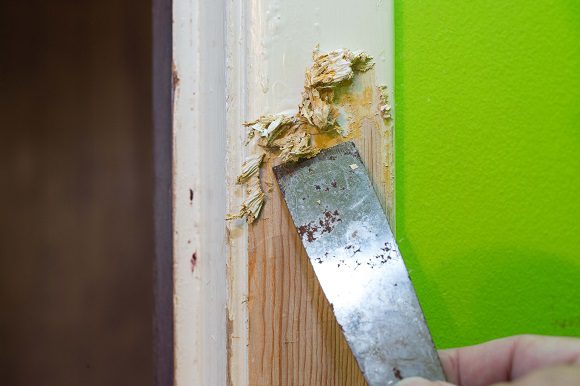
- Dull the old finish. Sherwin-Williams says glossy surfaces should be sanded dull, and Benjamin Moore says to sand glossy alkyds before applying Advance. Our guide to sanding between primer coats covers grit choices.
- Prime where the label says to. Bare wood, laminate, MDF and thermofoil all want a primer designed for them.
- Apply thin coats. Two thin coats level better and cure more evenly than one thick one. Stay inside the label temperature range: Advance lists a surface temperature of 50 to 90 degrees F, and Emerald Urethane Trim Enamel says to apply above 50 degrees F.
- Respect the cure. Rehang doors gently, add bumpers so they do not press against the frame while still soft, and hold off on scrubbing for the manufacturer’s stated cure period.
- Be careful with old paint. The Sherwin-Williams data sheet warns that scraping or sanding old paint may release lead dust, so in an older home wear a NIOSH-approved respirator and use HEPA cleanup.
If a finished door starts to chip or lift later, read how to keep paint from peeling off cabinets. Some people also add a clear topcoat, and our take on polyurethane over painted cabinets explains when that helps. You can also see how to seal cabinet paint and, if you are wondering about the parts nobody sees, whether to paint the inside of cabinets.
Frequently Asked Questions
Can I use wall paint on kitchen cabinets?
You can, but it is a poor choice. Wall paint is designed for low-contact surfaces, so on a cabinet it tends to stay softer, show roller texture, and stick to the door frame. A primer helps it grip the wood but does not make the topcoat harder. Use a cabinet enamel on doors and drawer fronts and keep the wall paint for the walls.
Is cabinet paint the same as trim paint?
Often yes. Many products are sold for both, such as Benjamin Moore Advance, which its data sheet lists for doors, trim, cabinets, walls and ceilings, and Sherwin-Williams Emerald Urethane Trim Enamel. The shared idea is a hard, leveling enamel, so a trim enamel in satin is a common cabinet choice.
How long does cabinet paint take to fully cure?
It depends on the product and conditions. Benjamin Moore says Advance can take up to 30 days to reach optimum hardness and final sheen, and advises keeping shelves and tabletops out of heavy use for at least 5 to 7 days. Recoat and touch-dry times are much shorter, so treat freshly painted doors gently for several weeks.
Do I need primer under cabinet paint?
Usually yes on bare wood, laminate, MDF and glossy finishes. Benjamin Moore lists a specific primer for MDF, thermofoil and laminate and says cabinetry should be sanded with 220 grit or coarser before priming. Always follow the primer recommendation on your can.
What sheen is best for cabinets?
Satin is the usual choice because it hides small flaws better than semi-gloss and wipes cleaner than eggshell. Semi-gloss is the easiest to wipe but shows every scratch in the surface underneath. Check the gloss range on the data sheet, since satin and semi-gloss values differ by brand.
The Bottom Line
Choose the paint for what the surface has to survive. Walls need coverage and color, so wall paint wins there. Cabinets need a film that levels, resists blocking and hardens over weeks, so a cabinet or trim enamel wins there. Get the prep and the cure period right, and either choice does its job.
Sponsored / affiliate links. As an Amazon Associate I earn from qualifying purchases. I may earn additional commission from eligible campaigns.