Can Termites Eat Pressure Treated Wood
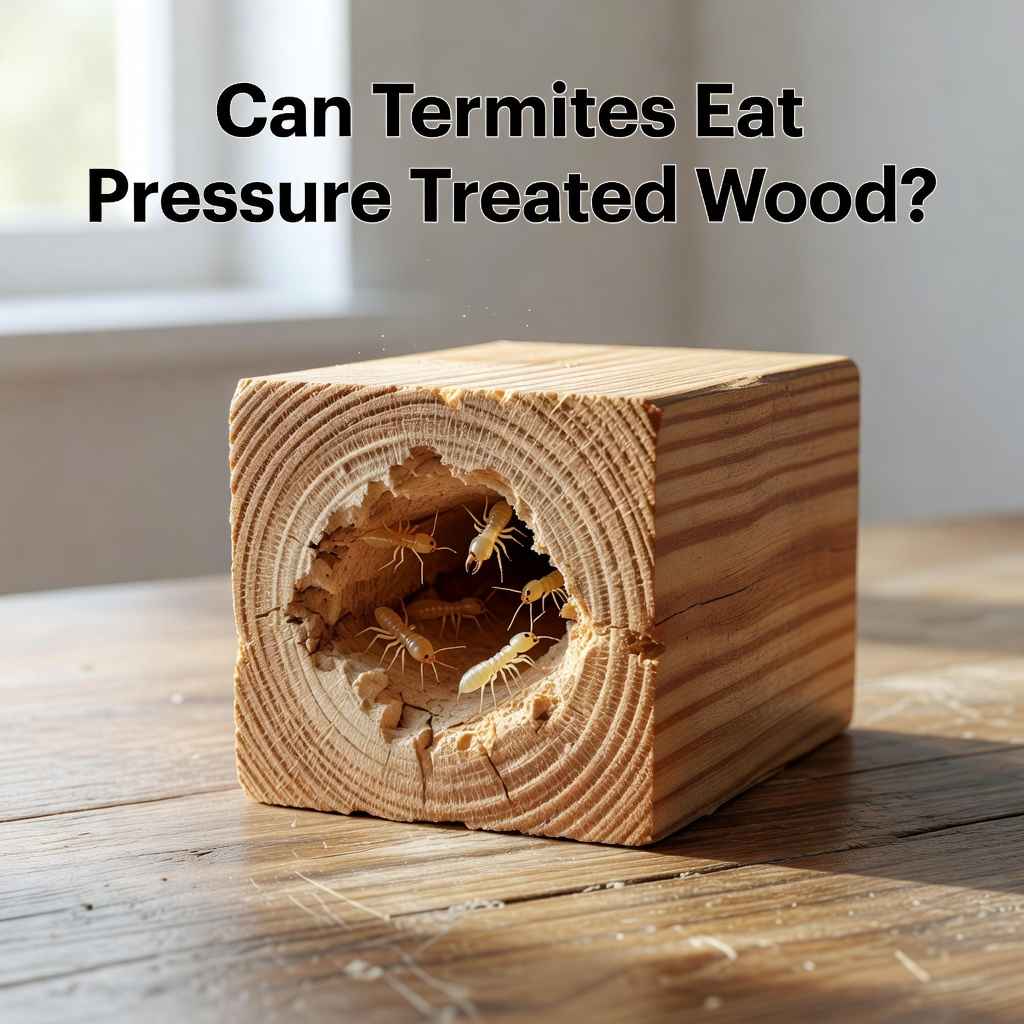
It’s a question many homeowners and builders wonder about: Can termites eat pressure treated wood? You might think that the chemicals in treated wood would keep those pests away for good, but the answer isn’t always a simple yes or no. This can be a bit confusing, especially when you’re trying to protect your home.
Don’t worry, we’ll break it down in an easy-to-follow way. We’ll show you exactly what you need to know about Can Termites Eat Pressure Treated Wood? and how to keep your structures safe.
Understanding Pressure Treated Wood And Termite Resistance
This section will explore what pressure treated wood actually is. We’ll look at the chemicals used and how they are meant to protect the wood from bugs and rot. You’ll learn why it’s a popular choice for outdoor projects and how it generally holds up against pests.
We will also discuss the specific types of treatments and their effectiveness.
What is Pressure Treated Wood
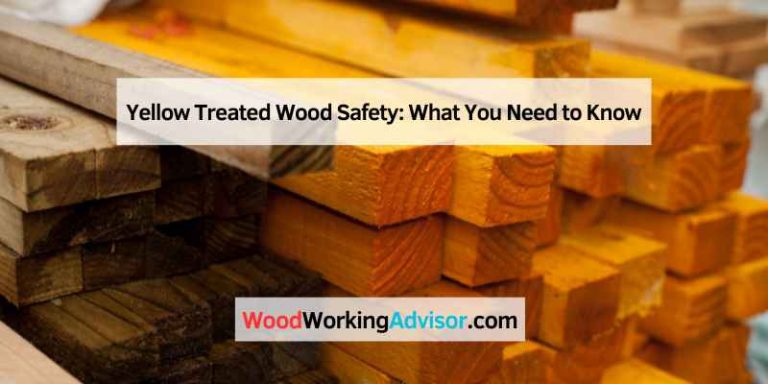
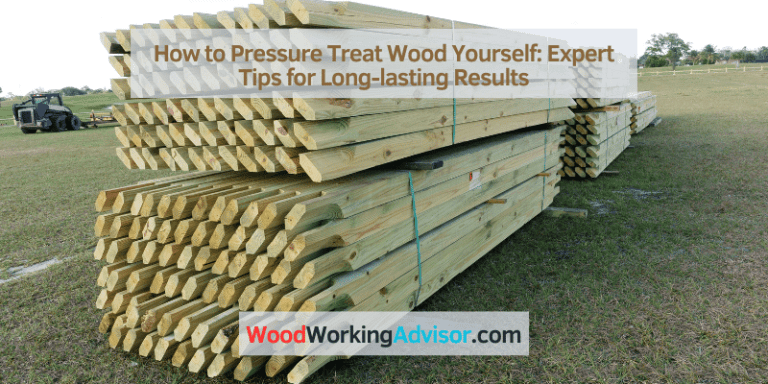
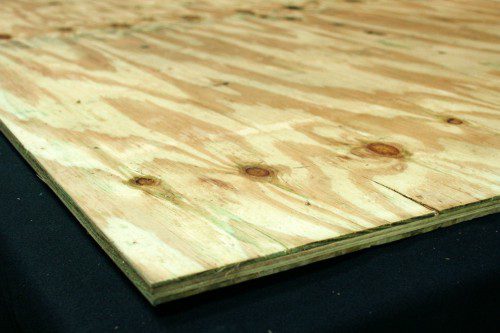
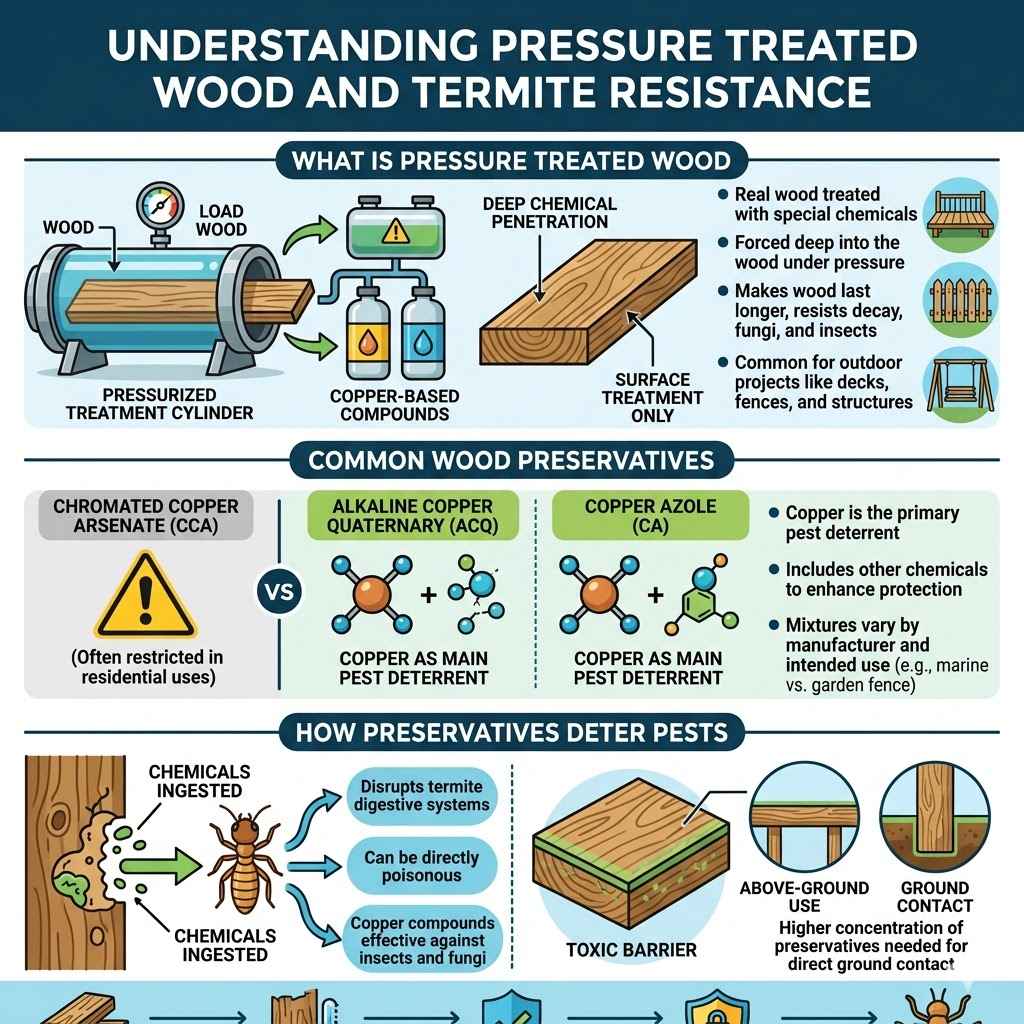
Pressure treated wood is real wood that has been treated with special chemicals. These chemicals are forced deep into the wood under pressure. This process makes the wood last longer and resist things like decay, fungi, and insects.
It’s a very common material for building decks, fences, and other outdoor structures that are exposed to the weather.
The chemicals used in pressure treating are usually copper-based compounds. These compounds are toxic to many organisms that can damage wood. The pressure helps the chemicals penetrate the entire piece of wood, not just the surface.
This deep penetration is key to its protective qualities.
Different types of pressure treated wood exist, each designed for specific uses. Some are for ground contact, meaning they need stronger protection because they’ll be in direct contact with the soil. Others are for above-ground use.
The level of treatment matters a lot when you’re thinking about pest resistance.
Common Wood Preservatives
Several types of preservatives are used to treat wood. For many years, Chromated Copper Arsenate (CCA) was widely used. However, concerns about arsenic led to its use being restricted for residential applications, especially for products that come into contact with people.
Today, Alkaline Copper Quaternary (ACQ) and Copper Azole (CA) are more common.
These newer treatments use copper as the primary pest deterrent. They also include other chemicals that work with the copper to enhance protection. The exact mixture can vary between manufacturers and the intended use of the wood.
For example, wood meant for marine environments might have a different treatment than wood for a garden fence.
The goal of these preservatives is to make the wood unappetizing and even toxic to wood-destroying organisms. Termites, for instance, feed on cellulose, a main component of wood. The chemicals interfere with their ability to digest cellulose or directly poison them.
This makes the wood unsuitable as a food source.
How Preservatives Deter Pests
The chemicals in pressure treated wood act as a powerful barrier against pests. Termites are particularly sensitive to these compounds. When termites try to consume treated wood, they ingest the preservatives along with the wood fibers.
These chemicals can disrupt their digestive systems or be directly poisonous.
Copper compounds, a main ingredient in many modern treatments, are effective against a wide range of insects and fungi. They are not typically something termites can easily tolerate or adapt to. The depth of penetration ensures that the protection isn’t just on the surface, which could be scraped away.
The effectiveness of the treatment is also linked to the concentration of the preservatives. Higher concentrations are used for wood that will be in direct contact with the ground, as this is a more challenging environment for pest resistance. Even so, no treatment is absolutely foolproof, which leads to the next important question.
Do Termites Actually Eat Pressure Treated Wood
This section addresses the core question directly. We’ll explain that while pressure treated wood is much more resistant, termites can sometimes still attack it. We’ll discuss the conditions under which this might happen and why it’s not as common as with untreated wood.
You’ll get a clear picture of the risks involved.
The Short Answer And Nuances
So, Can Termites Eat Pressure Treated Wood? The simple answer is yes, they can, but it’s much less likely than with untreated wood. Pressure treated wood is designed to be highly resistant to termite damage. The chemicals in the wood make it unpalatable and toxic to most termite species.
However, there are situations where termites might still find treated wood a viable option. This often happens if the treatment is not applied correctly, if the wood has been cut and the treated interior is exposed, or if the wood is old and the chemicals have leached out over time. It’s not a guarantee of complete protection.
Different types of termites also have varying levels of tolerance to preservatives. Some aggressive species might be more persistent in their attempts to feed on treated wood, especially if other food sources are scarce. Understanding these nuances helps in taking proper preventative measures.
Factors Influencing Termite Attraction
Several factors can make pressure treated wood more attractive to termites. One significant factor is the type and age of the treatment. Older treatments might have degraded, or newer, less potent treatments might not be sufficient for certain aggressive termite species.
Also, the concentration of the wood preservative is crucial.
Another major factor is how the wood is installed and maintained. If pressure treated wood is cut after treatment, the interior, which is not treated, is exposed. Termites can then feed on this untreated core.
Proper sealing of cut ends is vital to prevent this. Furthermore, if the wood becomes damp or starts to decay due to other reasons, it can become more appealing to termites, even if it was originally treated.
The presence of other, untreated wood sources nearby can also draw termites away from treated wood initially, but they might eventually explore all available wood. In very rare cases, some termite colonies might develop a tolerance to specific chemicals, though this is not a common occurrence with modern preservatives.
When Treated Wood Is Attacked
Termites might attack pressure treated wood under specific circumstances. This often occurs when the protective chemicals have been compromised. For example, if a deck made of pressure treated wood has had its structural integrity weakened by age or water damage, termites might exploit these vulnerabilities.
They might find areas where the wood has softened or where the preservatives have leached out over many years.
Another common scenario is when treated wood is cut during construction or renovation. The inside of the wood, which hasn’t been penetrated by the preservatives, becomes exposed. If these cut ends are not properly sealed, termites can easily access and feed on this untreated wood.
It’s like leaving a door open for them.
Environmental conditions can also play a role. In areas with extremely high termite populations or in prolonged drought conditions where termites are desperately seeking moisture and food, they may try to breach the defenses of treated wood more aggressively.
Statistics on Treated Wood Infestations
While exact statistics can vary widely by region and study, general findings indicate a significant reduction in termite activity in pressure treated wood compared to untreated wood. Studies by university extension services and pest control organizations often show that less than 5% of structural damage attributed to termites involves pressure treated wood, provided it was properly treated and installed.
For instance, a survey conducted by a leading entomology journal found that in regions with high termite pressure, untreated pine structures experienced an average of 30% more structural damage over a 10-year period compared to structures using properly treated lumber for the same duration. This highlights the substantial protective benefit of the treatment.
However, reports do exist of termites successfully infesting treated wood, particularly in older structures where treatment methods were less advanced or when maintenance was neglected. These cases are often outliers but serve as a reminder that no wood treatment offers 100% permanent protection against all termite species under all conditions.
Protecting Your Structures From Termites
In this part, we’ll provide actionable advice on how to prevent termites, even when using treated wood. This includes proper installation techniques, regular inspections, and what to do if you suspect a problem. The goal is to give you practical steps to keep your home safe and sound from these destructive insects.
Proper Installation And Cut-End Treatment
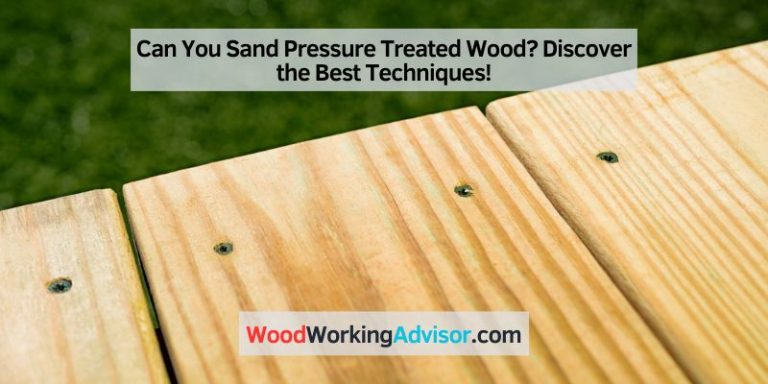
One of the most critical steps in preventing termites from attacking pressure treated wood is ensuring it’s installed correctly. This starts with treating any cut ends of the lumber. When you cut pressure treated wood, you expose the untreated interior.
You must apply a suitable wood preservative to these cut surfaces to match the protection of the original treatment.
Using the correct type of preservative for cut ends is important. These are usually liquid or spray-on treatments that contain similar chemicals to the original pressure treatment. Applying this liberally to all exposed cut edges, end grains, and drilled holes will help maintain the wood’s resistance to pests.
Additionally, ensure that pressure treated wood does not come into constant contact with soil or excessive moisture. Proper drainage around foundations and decks is essential. If wood must be in ground contact, ensure it is rated for ground contact, which means it has a higher concentration of preservatives.
Proper installation prevents common entry points for termites.
Regular Inspections And Maintenance
Regularly inspecting your property for any signs of termite activity is crucial. Look for mud tubes on walls or foundations, discarded wings near windows, or hollow-sounding wood when tapped. Early detection significantly reduces the potential for widespread damage.
Pay close attention to areas where wood meets soil or concrete, as these are common entry points.
Maintenance also plays a vital role. Keep your property clean and free of debris that can attract termites. Avoid storing firewood or other untreated wood directly against your house.
Ensure that your gutters are clean and directing water away from the foundation. Check for any leaks in plumbing or roofing that could create damp conditions attractive to termites.
Inspect your decks, fences, and any other outdoor structures made from pressure treated wood. Look for signs of softening, unusual patterns, or damage. If you notice anything suspicious, it’s best to consult with a pest control professional.
Proactive maintenance can save you a lot of money and stress in the long run.
When To Call A Professional
If you suspect a termite infestation, it’s always best to call a professional pest control service. They have the expertise and specialized tools to accurately identify the type of termite, assess the extent of the infestation, and recommend the most effective treatment plan. DIY methods may not be sufficient for established colonies.
Professionals can also advise on preventative measures and ongoing protection strategies. They can perform thorough inspections of your entire property, including hard-to-reach areas. Their knowledge of termite behavior and local pest pressures is invaluable in protecting your home.
Don’t hesitate to seek professional help if you see any of the tell-tale signs of termites. Early intervention by an expert can prevent costly damage and ensure the long-term health of your home’s structure. They can offer peace of mind that the problem is being handled effectively.
Case Study: Deck Protection Success
A homeowner in Florida noticed some unusual small holes on the surface of their pressure treated wooden deck, which was about 10 years old. The deck was still structurally sound, but they were concerned about potential termite activity. They had the deck built with ground contact rated lumber, but some areas were exposed to more moisture due to poor drainage.
A local pest control company was called in for an inspection. They confirmed that while there wasn’t an active, widespread infestation, there were signs of exploratory termite tunneling on a few of the joists. The primary issue was identified as a combination of slightly degraded protective chemicals due to age and prolonged dampness in certain areas.
The recommended solution involved:
- Addressing the drainage issues around the deck to ensure it dried out faster after rain.
- Applying a specialized termite baiting system around the perimeter of the deck to eliminate any termites in the vicinity.
- Sealing exposed cut ends and any minor damaged areas with a professional-grade wood preservative.
This multi-pronged approach successfully prevented any further termite activity and restored the homeowner’s confidence in their deck. The case highlights how maintenance and addressing environmental factors are key even with treated wood.
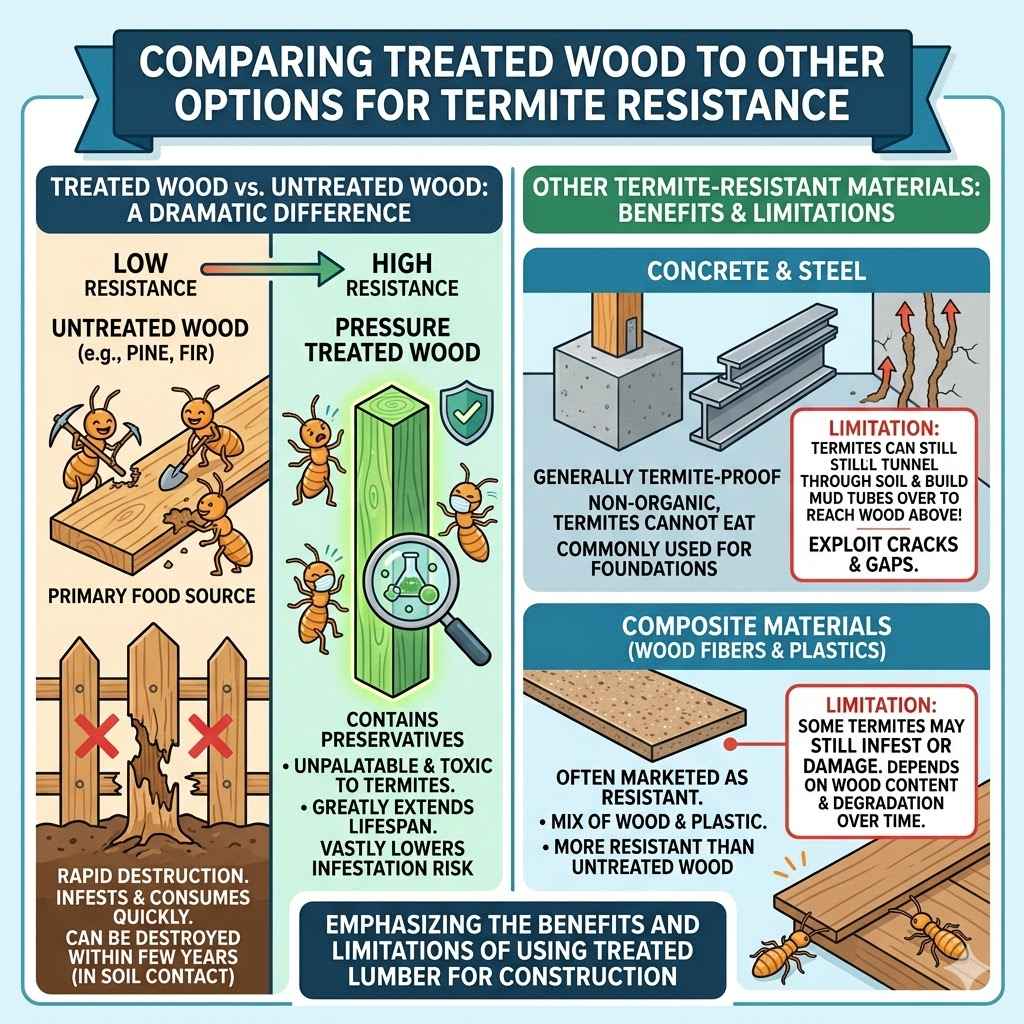
Comparing Treated Wood To Other Options
Here, we’ll briefly look at how pressure treated wood stacks up against untreated wood and other materials when it comes to termite resistance. This comparison will further emphasize the benefits and limitations of using treated lumber for your construction needs.
Treated Wood Versus Untreated Wood
The difference in termite resistance between pressure treated wood and untreated wood is substantial. Untreated wood, such as standard pine or fir, is a primary food source for termites. Without any chemical protection, termites can easily infest and consume it, leading to rapid structural damage.
For example, untreated lumber used in direct contact with the ground or soil can be completely destroyed by termites within a few years, depending on the termite species and local conditions. This is why untreated wood is generally not recommended for any exterior applications where it might be exposed to the elements or soil.
Pressure treated wood, on the other hand, has preservatives that make it unpalatable and toxic to termites. This significantly extends its lifespan and reduces the risk of infestation. While not entirely immune, the likelihood of termites successfully attacking properly treated wood is vastly lower.
Other Termite-Resistant Materials
Beyond wood treatments, other materials offer high levels of termite resistance. Concrete and steel are generally considered termite-proof because they are not organic materials that termites can eat. They form the foundation of many modern buildings for this reason.
However, termites can still cause problems even around these materials. They can tunnel through soil and build mud tubes up concrete walls to reach wooden structures above. They can also exploit small cracks or gaps in concrete to gain access to wooden elements of a building.
Composite materials, made from a mix of wood fibers and plastics, are also often marketed as termite-resistant. While they can be more resistant than untreated wood, some research suggests that certain types of termites may still be able to infest or damage them, especially if the wood content is high or if the material degrades over time.
Frequently Asked Questions
Question: Are all pressure treated woods termite proof
Answer: No, not all pressure treated woods are completely termite proof. While the treatment makes them highly resistant and unpalatable to most termites, certain conditions or aggressive species can still lead to infestation.
Question: Can termites eat pressure treated wood if it’s old
Answer: Yes, older pressure treated wood can be more susceptible to termite attack. Over time, the chemicals can leach out due to weather exposure, reducing its protective effectiveness.
Question: What is the best way to protect my deck from termites
Answer: Ensure your deck is built with properly rated pressure treated lumber, treat all cut ends with a preservative, maintain good drainage, and conduct regular inspections for any signs of termite activity.
Question: Are there any chemicals that termites absolutely cannot eat
Answer: Modern wood preservatives are designed to be toxic to termites. While no chemical is universally guaranteed to repel all termites under all circumstances indefinitely, they significantly reduce the risk.
Question: How do I know if my wood is pressure treated
Answer: Pressure treated wood often has a greenish or brownish tint and may have small incised marks from the treatment process. You can also check product labels or ask the supplier if you are unsure.
Final Thoughts
To sum up, Can Termites Eat Pressure Treated Wood? Yes, but it’s far less likely than with untreated wood. Proper treatment, installation, and regular checks are your best defense. Always seal cut ends.
Keep an eye out for damage. You can keep your structures safe and sound.