Can You Burn Pine Wood? Understanding the Good and Bad
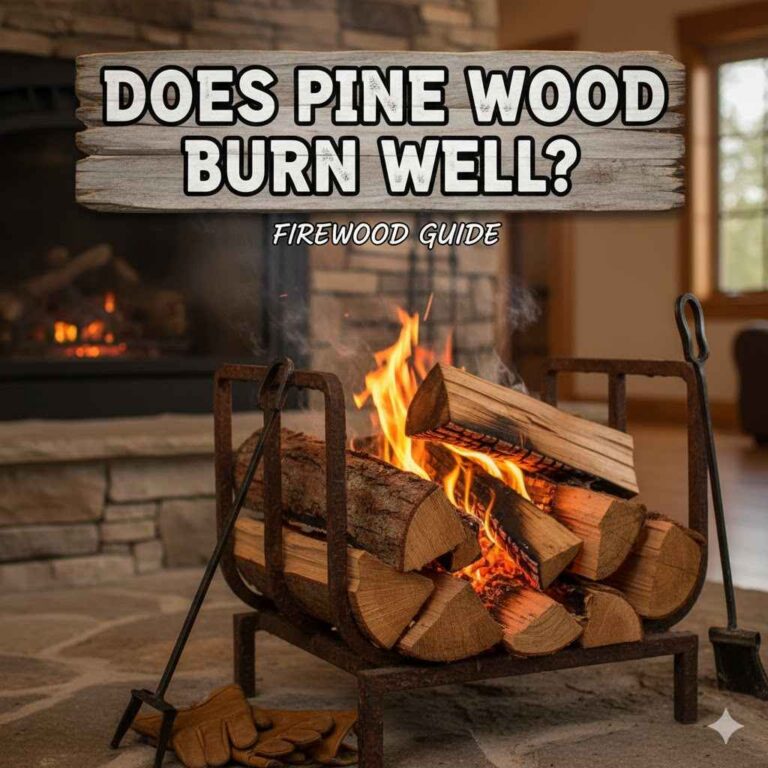
Figuring out Can You Burn Pine Wood? Pros and Cons can be tricky, especially if you’re just starting. Many people wonder if pine is safe to use in a fireplace or wood stove. It’s common to have questions about what burns well and what doesn’t. Don’t worry! This guide will break it down simply. We’ll explore the advantages and disadvantages, making sure you know everything you need to know. Next, we’ll look at the best way to safely use pine wood.
Is Pine a Good Choice for Burning? An Overview
Pine is a softwood, which means it grows faster than hardwoods like oak or maple. This quick growth leads to a few important characteristics when it comes to burning. Knowing these can help you decide if pine is right for you. Pine typically has a higher resin content compared to hardwoods. Resin is a natural substance that helps the tree survive. This resin affects how pine burns, influencing factors such as the heat produced, the smoke generated, and the potential for creosote buildup.
Types of Pine and Their Burning Characteristics
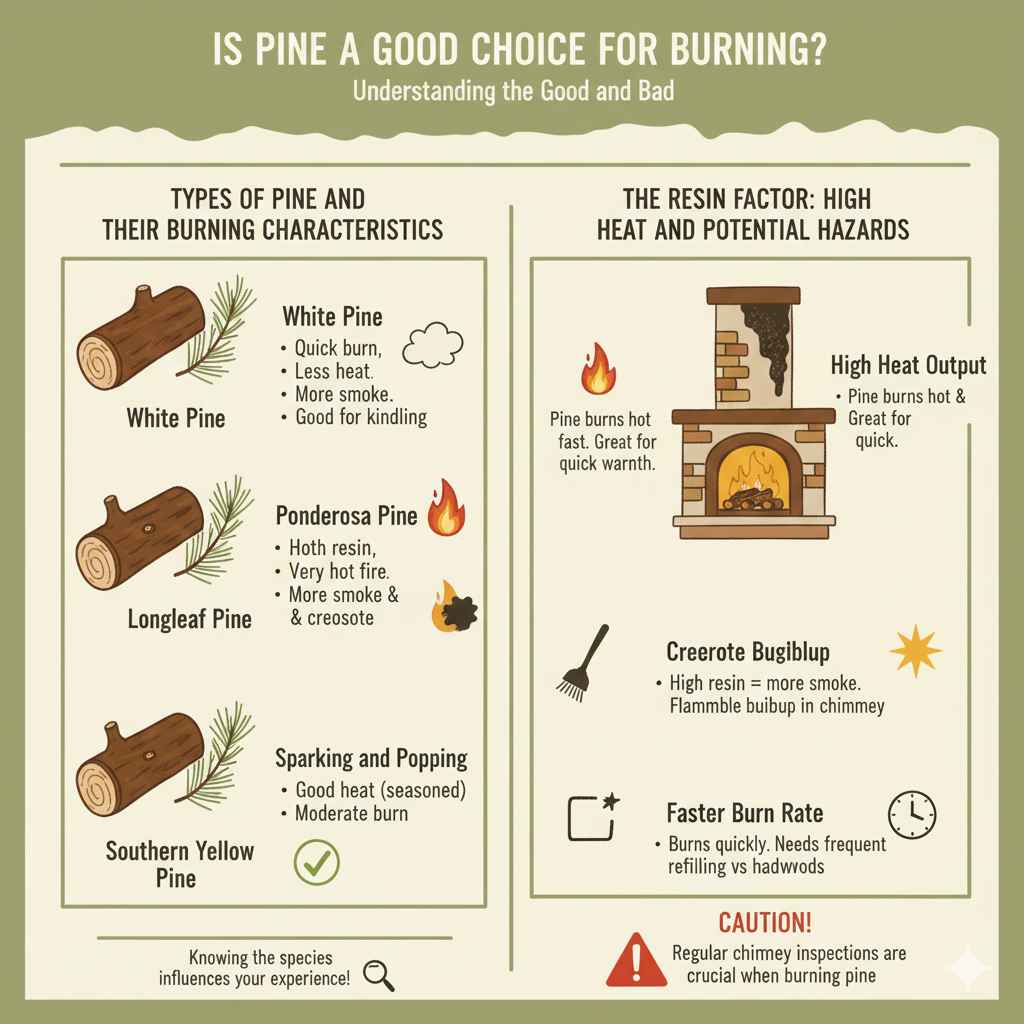
Different types of pine, like white pine, ponderosa pine, and longleaf pine, have varying characteristics when burned. These differences can significantly impact your experience. White pine often produces less heat and more smoke compared to some other pine varieties. Ponderosa pine, on the other hand, can burn hotter. Longleaf pine, known for its high resin content, is generally considered a good source of heat, but this means it may also produce more smoke. Learning about the specific type of pine you have available is key to understanding how it will perform in your fireplace or wood stove.
- White Pine: Burns relatively quickly, producing less heat, and tends to create more smoke. Ideal for kindling and quick fires.
- Ponderosa Pine: Known for a hotter burn, providing a good amount of heat, but can still produce some smoke.
- Longleaf Pine: High resin content leads to a very hot fire. However, this means more smoke and a higher chance of creosote buildup.
- Southern Yellow Pine: It is a good option when properly seasoned, offering a decent heat output and moderate burn time.
Knowing the species of pine you have can greatly influence your burn experience. For instance, white pine, common in many areas, is often used as a starter wood. Southern yellow pine, a versatile option, is frequently used for construction and home heating. Longleaf pine, with its high resin content, is favored for its hot, fast burn, but it requires careful management. Understanding these differences can help you burn safely and efficiently.
The Resin Factor: High Heat and Potential Hazards
The resin in pine is responsible for its quick and hot burn, and it’s a double-edged sword. While it creates a fast, warm fire, it also increases the chance of issues. When pine burns, the resin vaporizes and turns into smoke. This smoke contains unburned particles that can build up inside your chimney or flue. This buildup is called creosote, which is flammable. If creosote accumulates in sufficient amounts, it can ignite, leading to a dangerous chimney fire. Careful use of pine and regular chimney inspections are very important for preventing these issues.
- High Heat Output: Pine burns hot and fast due to its resin content, making it great for quickly heating a space.
- Creosote Buildup: High resin content leads to more smoke and a faster buildup of creosote in your chimney, increasing fire risk.
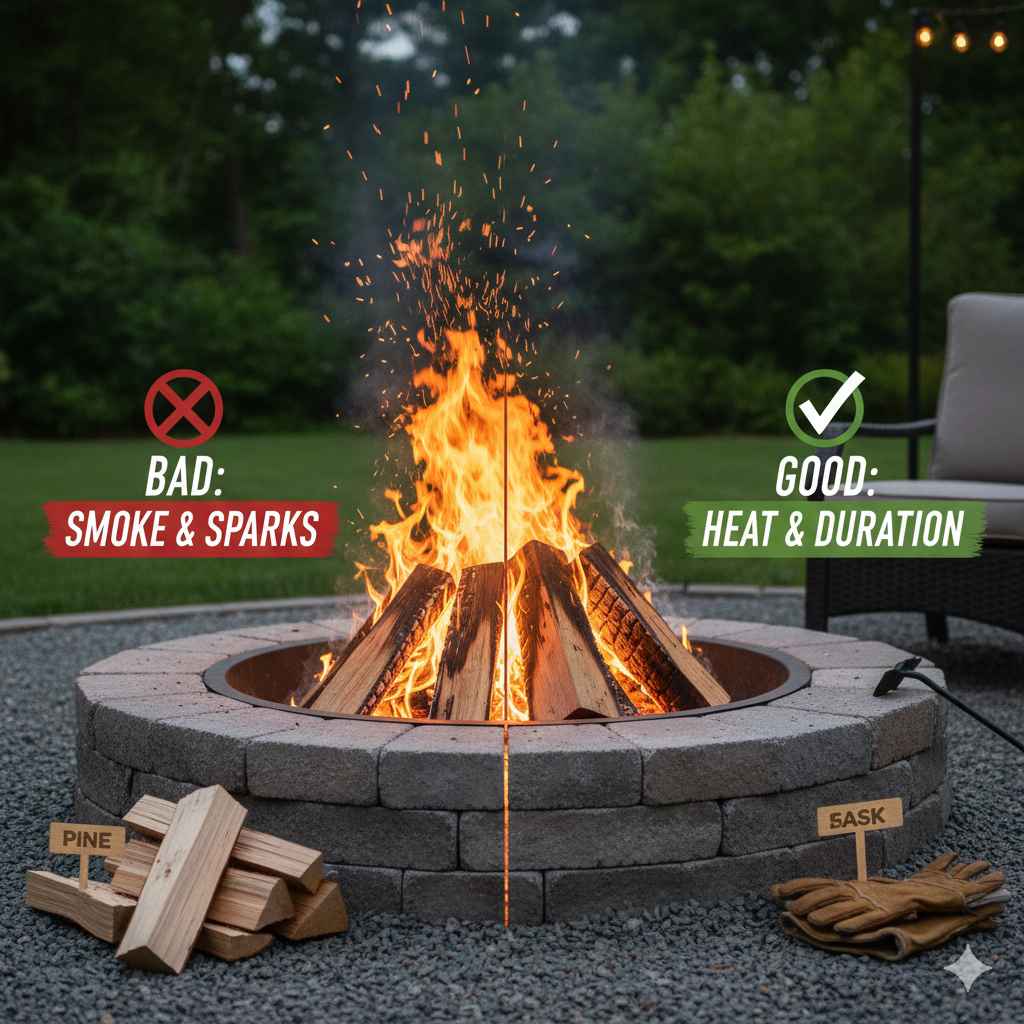
- Sparking and Popping: Pine tends to pop and spark while burning. This is caused by the sudden expansion of water and resin.
- Faster Burn Rate: Pine burns quickly, so you’ll need to replenish the fire more often compared to hardwoods.
Resin’s presence in pine explains several key observations when burning it. The high heat is a direct result of the chemical reactions during the burning process. The increase in creosote buildup is due to the incomplete combustion of the resin, leaving behind sticky deposits. Sparking is another noticeable aspect, as pockets of resin vaporize, creating small explosions. The speed at which pine burns is tied to its density and moisture content, both of which affect its efficiency as a fuel source.
Advantages of Burning Pine Wood
Despite some drawbacks, pine offers several advantages that make it an attractive option for some people. It’s often easier to find and cheaper than hardwoods like oak or maple. Pine lights quickly and helps get a fire started fast. It’s also an excellent choice for kindling. The benefits of pine make it suitable for a range of purposes, from occasional home heating to quickly getting a fire going for cooking or camping.
Easy Availability and Lower Cost
One of the top benefits of using pine is its widespread availability and affordability. Pine trees grow quickly and are commonly harvested, making pine wood readily accessible in many areas. Because it is a more common and faster-growing tree, pine wood usually costs less than slower-growing hardwoods. For those on a budget or who need a readily available wood source, pine is an appealing choice. You can find it at local wood suppliers, home improvement stores, or even by cutting your own, depending on your location and regulations.
- Abundant Supply: Pine is widely available because it grows rapidly and is farmed extensively.
- Lower Price Point: Generally, pine is more affordable than hardwoods because it’s easier to harvest and process.
- Accessibility: It can often be found locally, reducing transport costs and supporting local suppliers.
The widespread availability of pine is tied to its forestry practices. Because of its rapid growth, pine forests can be managed for sustainable harvesting, providing a consistent supply. This abundance influences its price, as supply often dictates costs. Accessibility means less distance to travel and fewer shipping expenses, making it an economically smart choice for heating or recreational use. Compared to hardwoods, pine wood is frequently found, making it easy for consumers to source, no matter their location.
Quick and Easy Ignition
Pine is known for how quickly it lights, a major advantage, especially if you want a fire fast. Its high resin content makes it flammable, allowing a fire to ignite easily. This is why it works well as kindling or as a starter wood for larger fires. If you have trouble getting a fire going, pine can significantly simplify the process. This ease of ignition is a major advantage for people who value convenience and speed. Whether you’re camping, heating your home, or just wanting a cozy fire in the fireplace, pine helps get things going fast.
- High Resin Content: Makes it highly flammable and easy to ignite.
- Ideal for Kindling: Works wonderfully for starting fires quickly.
- Convenience: Reduces the effort and time needed to get a fire going.
The ease of ignition of pine is a result of its chemical makeup. The resin acts as a natural accelerant, quickly reaching the ignition temperature. This makes pine highly practical for starting fires. Those using pine as a fire starter can often skip using lighter fluid or other chemical fire starters. This property is particularly useful in situations where weather conditions may make it hard to get a fire started. For example, pine is used for campfires and emergency fire starting situations.
Good for Kindling and Starting Fires
Because of its ease of ignition and resin content, pine is an excellent choice for kindling. Kindling helps get a fire going by providing a small, hot flame that can ignite larger pieces of wood. Small pieces of pine light quickly, creating the initial heat needed to ignite bigger logs. This makes pine a practical option for starting fires in various situations, whether in a fireplace, a wood stove, or a campfire. By using pine as kindling, you can reduce the effort required to start a fire. It is a user-friendly and effective way to get your fire going quickly.
- Prepare the Kindling: Cut or split the pine into small, thin pieces.
- Arrange the Kindling: Place the kindling in a teepee or log cabin formation with space for air to flow.
- Ignite the Kindling: Use a match or lighter to ignite the kindling from the bottom.
- Add Larger Wood: Once the kindling is burning well, add larger pieces of wood gradually.
The benefits of using pine as kindling involve its structure and chemical content. The thin pieces of wood increase the surface area exposed to heat, promoting fast ignition. The presence of resin adds to its flammability, causing a rapid, intense burst of heat. This makes pine ideal for kindling. Whether you’re a seasoned camper or starting a fire for the first time, using pine as kindling is a proven method to successfully get your fire burning.
Disadvantages of Burning Pine Wood
Despite its benefits, burning pine has downsides that should be considered. These disadvantages mainly concern the issues associated with its high resin content. This includes increased smoke, faster creosote buildup, and potentially more chimney fires. The quick burn rate of pine means you will need to reload the fire often. Addressing these disadvantages requires you to be careful and take precautions when using pine.
High Smoke Production
One of the main disadvantages of burning pine is the high level of smoke it produces. The high resin content in pine burns, creating more smoke compared to hardwoods. This is not only a nuisance, as it can cause eye irritation and odors, but it can also be harmful to the environment. The increased smoke is also a sign of inefficient burning. Proper ventilation and airflow are essential when using pine, both for safety and for a cleaner burn.
- Resin Vaporization: When burned, resin vaporizes, leading to more smoke.
- Air Quality Impact: Smoke can negatively affect indoor and outdoor air quality.
- Incomplete Combustion: Smoke often means the wood is not burning efficiently.
The high smoke production from burning pine is tied to its chemical makeup and burning process. Resin, when heated, does not always burn completely, releasing more particulate matter. This incomplete combustion results in visible smoke. This can affect air quality both inside your home and in your neighborhood. Moreover, smoke can also carry unburned hydrocarbons and other pollutants. Understanding how the high smoke output from pine affects air quality is necessary for its safe use.
Fast Creosote Buildup in Chimneys
Because pine burns with more smoke, it also creates faster creosote buildup in chimneys. Creosote is a sticky, flammable substance that forms when smoke condenses inside a chimney. Because pine has a lot of resin and creates significant amounts of smoke, this buildup can be very rapid. This poses a major fire risk. Regular chimney inspections and cleanings are crucial to remove creosote and lower the danger of chimney fires. It’s important to take care when using pine in a fireplace or wood stove.
- Resin-Rich Smoke: Pine smoke contains high amounts of unburned particles that create creosote.
- Fire Hazard: Creosote is highly flammable and can ignite, causing dangerous chimney fires.
- Chimney Inspections: Regular inspections and cleaning are essential to remove creosote.
The rapid creosote buildup is a direct result of the chemical composition of pine. When pine burns, the resin does not completely vaporize and burn, leading to the deposition of creosote. The amount of resin influences the rate of buildup. The creosote that forms is highly combustible, and the risk of chimney fires greatly increases if it’s not regularly removed. Homeowners and users of wood-burning appliances need to know about the dangers of creosote, particularly when burning pine.
Faster Burn Rate
Pine’s rapid burn rate means you’ll need to refill your fi
- More Frequent Refueling: You’ll need to add wood more often to maintain the fire.
- Higher Wood Consumption: You may go through your wood supply more quickly.
- Less Heat Retention: The fire might not maintain heat for extended periods.
The quick burn rate of pine is a result of the wood’s density and chemical makeup. Softwoods have a less dense structure and, therefore, a lower energy content per unit of volume compared to hardwoods. This, combined with the resin, causes the rapid combustion. While this can provide a fast heat, it also leads to more frequent refueling and a larger use of wood over time. Using pine in combination with other wood types might help improve burn times and manage wood consumption.
Best Practices for Burning Pine Safely
If you choose to burn pine, it’s very important to follow safety practices. Proper seasoning of the wood, combined with safe burning practices, can significantly lower the risks. Always ensure your chimney is cleaned and inspected often. By being careful and using best practices, you can enjoy the advantages of burning pine while avoiding the dangers.
Proper Wood Seasoning
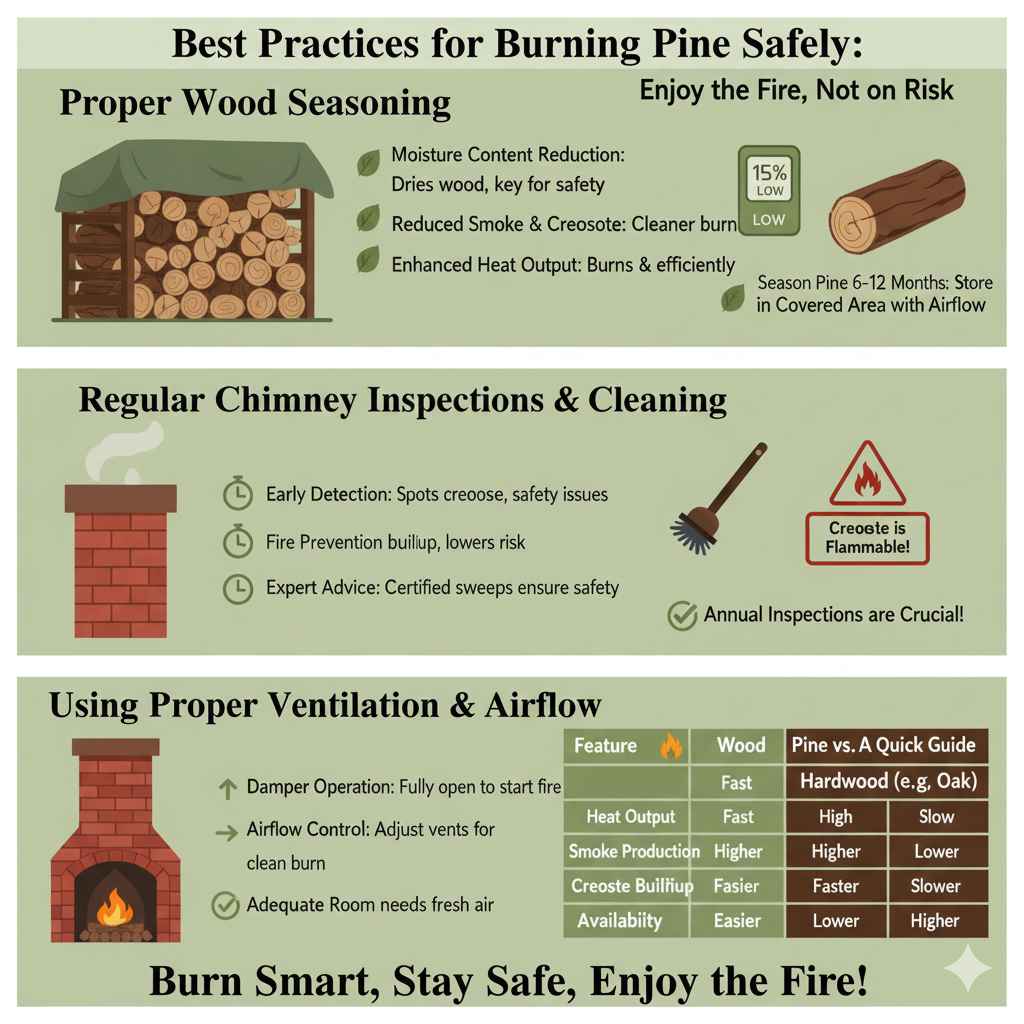
Seasoning your pine wood is essential for safe and efficient burning. Seasoning means drying the wood to remove moisture. Dry wood burns better, producing less smoke and creosote than green or freshly cut wood. It also provides more heat. Pine should be seasoned for at least six months, and ideally a year, before burning. Store the wood in a covered area with good airflow to promote drying. Properly seasoned wood burns cleaner and offers the best heat.
- Moisture Content Reduction: Drying wood lowers the moisture content, which is key.
- Reduced Smoke and Creosote: Seasoned wood produces less smoke and creosote.
- Enhanced Heat Output: Dry wood burns hotter and more efficiently.
Seasoning changes the structure of the wood, improving the combustion process. As wood dries, the water evaporates, and the wood’s cellular structure changes. This results in less energy being used to boil off the water. The reduction in moisture also improves the way that the wood burns. This means you will get more heat with less smoke. The length of time required for seasoning depends on various factors, including the climate and type of wood.
Regular Chimney Inspections and Cleaning
Regular chimney inspections and cleaning are crucial, especially if you burn pine. Because pine can cause faster creosote buildup, your chimney can become a fire risk. Schedule chimney inspections at least once a year, and have it cleaned if creosote is present. Make sure you use a certified chimney sweep. They can identify any potential problems and make sure your chimney is safe. Regular maintenance is key to safe wood burning.
- Early Detection: Inspections spot creosote and other safety issues.
- Fire Prevention: Cleaning removes creosote, lowering fire risk.
- Expert Advice: Chimney sweeps offer safety advice.
Regular chimney inspections involve a detailed evaluation of your chimney’s interior and exterior components. Certified chimney sweeps can recognize issues like cracks, blockages, and creosote accumulation. They use specialized tools to remove creosote. This is not only for fire safety but also for ensuring good airflow and efficiency. Cleaning and inspections also help spot other issues, such as damage from weather or use. Taking care of your chimney is necessary for safe and efficient operation of your fireplace.
Using Proper Ventilation and Airflow
Good ventilation and airflow are important for burning pine safely and efficiently. Proper airflow ensures that the fire gets enough oxygen, which is needed for complete combustion. This decreases smoke production and creosote buildup. Ensure the damper is fully open when starting a fire and regulate the airflow as needed. Also, make sure your fireplace or wood stove is properly installed and that the room has enough air supply. Airflow management will help you enjoy the advantages of burning pine while lowering the risks.
- Damper Operation: Make sure your damper is open when starting the fire.
- Airflow Control: Adjust air vents to control the burn rate and reduce smoke.
- Adequate Air Supply: Ensure your room has sufficient air supply to support combustion.
The principle of proper ventilation lies in the physical and chemical processes of combustion. Oxygen is vital for the fuel to burn completely. Insufficient airflow can result in incomplete combustion, leading to the creation of smoke and creosote. Adjusting the air supply affects the burn rate and efficiency of the fire. Always have enough air for the fire to burn cleanly. This not only improves safety but also maximizes the heat output from the wood.
| Feature | Pine Wood | Hardwood (e.g., Oak) |
|---|---|---|
| Burn Rate | Fast | Slow |
| Heat Output | High | High |
| Smoke Production | Higher | Lower |
| Creosote Buildup | Faster | Slower |
| Availability | Easier | More Difficult |
| Cost | Lower | Higher |
Frequently Asked Questions
Question: Is it safe to burn pine in a fireplace?
Answer: Yes, it is safe to burn pine, but it needs to be done with care. You should use properly seasoned wood, ensure good ventilation, and have your chimney inspected regularly.
Question: What is creosote, and why is it a problem?
Answer: Creosote is a tar-like substance that forms in chimneys from smoke. It’s flammable and can cause chimney fires.
Question: How long should I season pine wood?
Answer: Pine should be seasoned for at least six months, and ideally a year, to reduce its moisture content.
Question: What are the main benefits of burning pine?
Answer: Pine is readily available, often less expensive, and lights quickly, making it a convenient option for starting fires.
Question: How often should I have my chimney cleaned?
Answer: It’s best to have your chimney inspected and cleaned at least once a year, or more often if you burn pine.
Final Thoughts
Learning about Can You Burn Pine Wood? Pros and Cons helps in making informed decisions about your heating or recreational needs. Pine has advantages, like quick ignition and availability, but also downsides, like high smoke and creosote buildup. The key to safe burning is understanding these factors and taking the right steps, such as proper seasoning, regular chimney cleaning, and good ventilation. By being aware of these aspects, you can enjoy a fire without sacrificing safety. Always keep safety as your top concern when using wood-burning appliances.