Can You Trim Oak Trees in the Summer? The Proven Fatal Risk
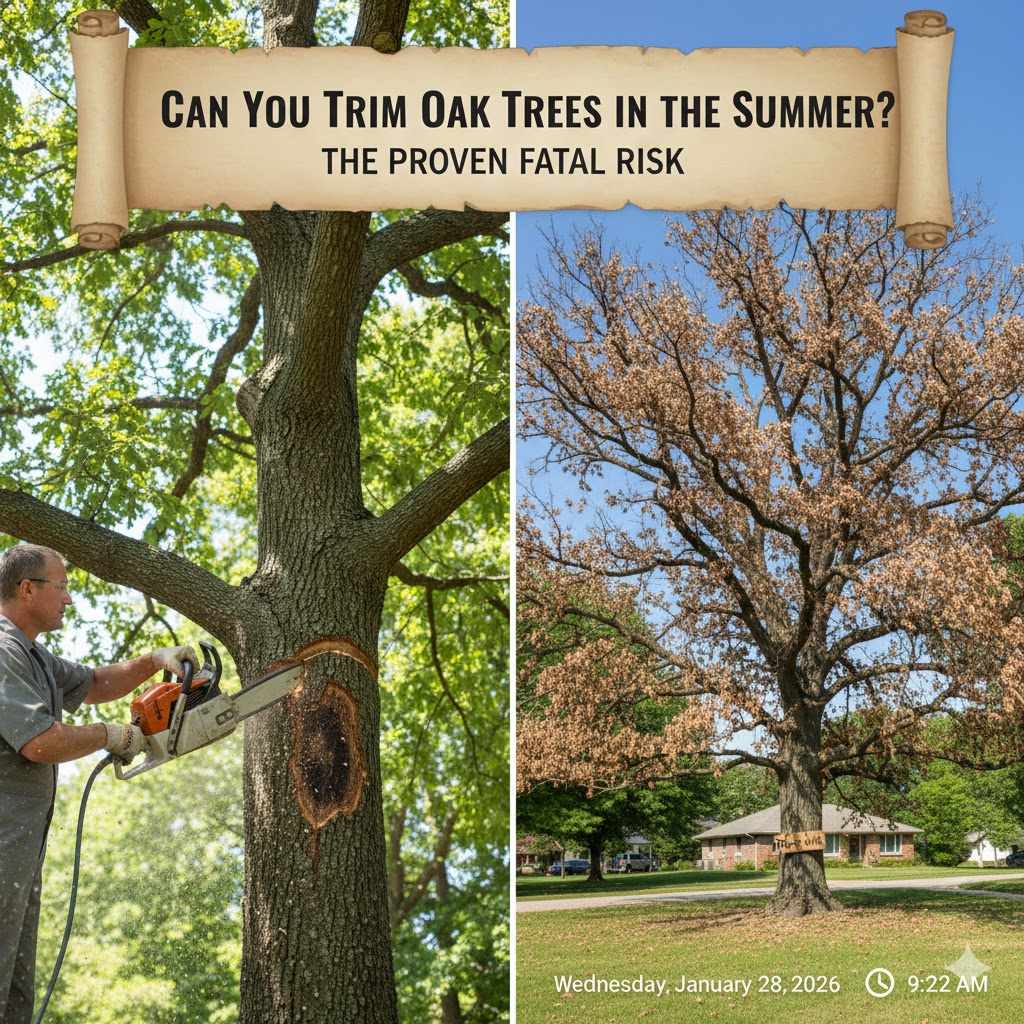
Trimming oak trees in the summer is extremely risky and not recommended. It exposes the tree to Oak Wilt, a deadly fungal disease spread by beetles attracted to fresh cuts during warm months. To protect your tree, you should only prune oaks during their dormant season in the winter.
Hello there, friend! It’s Md Meraj, and today we’re stepping out of the workshop and into the yard to talk about one of nature’s most beautiful creations: the mighty oak tree. If you’re like me, you take great pride in your home and your property. Seeing an overgrown or unruly branch on your beautiful oak tree can make you want to grab your pruning saw right away, especially on a nice summer day.
But wait. When it comes to oaks, timing is everything. A simple summer trim might seem harmless, but it can lead to a fatal mistake that could kill your tree in just a few weeks. It’s a common and heartbreaking issue for homeowners who simply didn’t know the danger. Don’t worry, though. I’m here to walk you through why summer pruning is so risky and show you the safe, simple way to keep your oaks healthy for years to come. Let’s make sure your trees stay strong and beautiful.
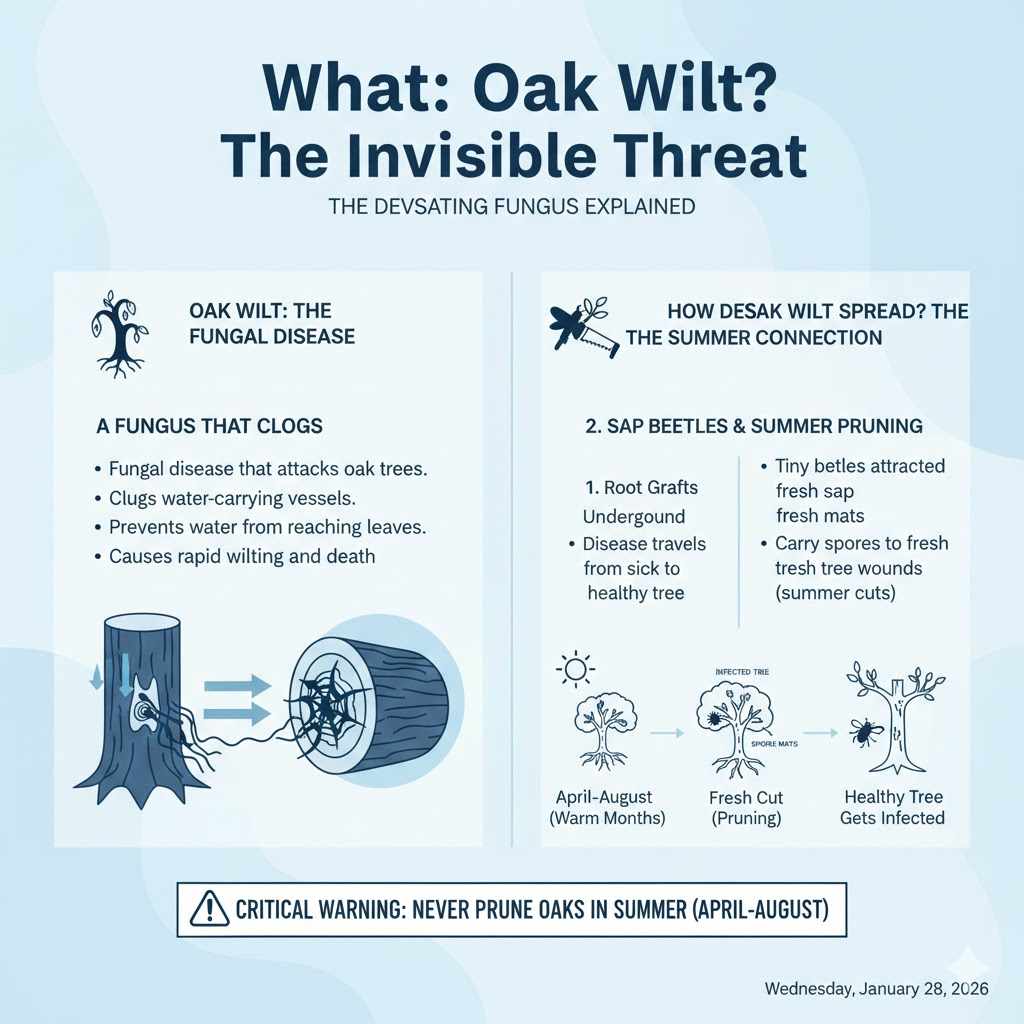
What is Oak Wilt? The Invisible Threat
Before we talk about when to prune, we need to understand why. The biggest enemy of our oak trees is a disease called Oak Wilt. Think of it as a devastating illness that can wipe out a healthy, mature oak in a single season.
Oak Wilt is a fungal disease. The fungus essentially clogs up the tree’s water-carrying vessels, kind of like a blocked artery. The tree can no longer get water to its leaves, so it quickly begins to wilt and die. It’s an aggressive disease, and once it takes hold, it’s often too late.
How Does Oak Wilt Spread? The Summer Connection
So, what does this have to do with trimming your tree in the summer? Everything. The Oak Wilt fungus travels from infected trees to healthy trees in two main ways:
- Through Root Grafts: Oaks growing near each other can fuse their roots together underground. If one tree gets sick, the disease can travel through these connected roots to its neighbors.
- Through Sap Beetles: This is where summer pruning becomes so dangerous. Tiny insects called sap beetles are the main carriers. These beetles are attracted to the smell of fresh sap from a tree wound, like the one you make when you prune a branch.
During the warm months (roughly April through August), two things happen:
- Infected oak trees form “spore mats,” which are fungal growths full of spores. These mats smell sweet and attract the sap beetles.
- The beetles feed on these mats, getting covered in fungal spores.
When you cut an oak branch in the summer, the fresh wound bleeds sap. A sap beetle, carrying the deadly spores, can smell this fresh sap from up to a mile away. It flies to your healthy tree, lands on the fresh cut to feed, and infects your tree with the Oak Wilt fungus. It’s that fast and that simple.
Why Winter is the Only Safe Time to Prune Oaks
Now that you know about the danger, the solution becomes crystal clear: only prune your oak trees when they are dormant. For most of the country, the dormant season is from November through February.
Why is winter so much safer? There are a few key reasons:
- The Beetles are Inactive: Sap beetles are not active during the cold winter months. No active beetles mean no carriers to bring the disease to your tree.
- The Fungus is Dormant: The Oak Wilt fungus does not produce the spore mats that attract beetles in the cold.
- The Tree is Resting: During dormancy, the tree’s metabolism slows way down. It won’t bleed as much sap from a cut, making it less attractive even if a random insect were around.
Pruning in the winter gives the wound plenty of time to dry and begin healing before the beetles become active again in the spring.
A Clear Guide: The Oak Pruning Calendar
To make it even simpler, here is a table that breaks down the year into “danger zones” and “safe zones.” Please note that these months can shift slightly based on your local climate, so always check with your local university extension office for the most accurate timing.
| Pruning Period | Months (General Guide) | Risk Level | Reasoning |
|---|---|---|---|
| High-Risk “Danger Zone” | April – August | EXTREMELY HIGH | Sap beetles are most active, and the fungus is producing spores. A fresh cut is an open invitation for infection. |
| Moderate-Risk “Shoulder Season” | September – October | Moderate | Beetle activity is declining but not zero. It’s still risky. Best to wait if you can. |
| Low-Risk “Safe Zone” | November – February | VERY LOW / SAFE | Beetles are dormant. Trees are dormant. This is the ideal and safest time to prune. |
| Moderate-Risk “Shoulder Season” | March | Moderate | Beetles may become active on warm days. The risk begins to increase. It’s better to finish pruning before this month. |
How to Tell If an Oak Tree Has Oak Wilt
It’s important to know the signs of this disease, both in your own trees and in your neighborhood. Catching it early can sometimes help you save nearby trees. The symptoms can vary slightly between different types of oaks.
Red Oaks vs. White Oaks: A Tale of Two Families
Oak trees fall into two main groups, and they react to Oak Wilt very differently.
- Red Oak Group (Pointed Leaf Lobes): This group includes trees like the Northern Red Oak, Pin Oak, and Black Oak. They are extremely susceptible to the disease. Once infected, a red oak can die within 4 to 6 weeks. It’s incredibly fast and aggressive.
- White Oak Group (Rounded Leaf Lobes): This group includes the White Oak, Bur Oak, and Post Oak. They have some natural resistance to the fungus. An infected white oak may survive for several years, losing a few branches at a time, and sometimes they can even fight off the infection.
Key Symptoms to Watch For
Here’s a simple checklist of symptoms. If you see these, especially during the summer, it’s time to call a professional arborist immediately.
| Symptom | Description | Most Common In |
|---|---|---|
| Leaf Discoloration | Leaves turn a dull green, brown, or bronze color, often starting at the edges and moving inward. It can look like a “scalded” or “scorched” appearance. | Both Red and White Oaks |
| Wilting | Leaves and young shoots suddenly begin to wilt and droop, usually starting at the top of the tree and moving down. | Primarily Red Oaks (very rapid) |
| Leaf Drop | The tree rapidly sheds its leaves while they are still partially green. Healthy oaks shouldn’t be losing many leaves in early or mid-summer. | Both, but much faster in Red Oaks |
| Fungal Mats (Spore Mats) | Cracks may appear in the bark of a dead or dying red oak, revealing dark, moldy-looking pads underneath. They often have a fruity smell. | Only Dead Red Oaks |
For more detailed information on identifying and managing this disease, the U.S. Department of Agriculture Forest Service is an excellent resource.
What If I Have to Cut a Branch in the Summer?
Life happens. Sometimes a storm damages a branch, and it becomes a safety hazard, hanging precariously over your house or driveway. In a true emergency, you can’t wait for winter. If you absolutely must cut an oak branch during the high-risk season, there is one critical step you must take immediately.
The One Essential Step: Paint the Wound
As soon as you make the cut, you must cover the wound with a tree wound dressing or even a simple can of latex paint. This creates a barrier that seals in the sap and blocks the beetles from landing on the fresh wood.
Here’s how to do it safely:
- Have your paint ready before you cut. You need to apply it within minutes. Don’t wait an hour, and definitely don’t wait until the next day.
- Use a simple, non-asphalt-based paint. A basic can of spray paint or a can of latex house paint and a small brush will work perfectly. The color doesn’t matter.
- Cover the entire wound. Make sure the entire surface of the fresh cut is coated with a thin layer of paint.
This simple act can be the difference between a healthy tree and a dead one. Remember, this is for emergencies only. It is not a green light for cosmetic pruning during the summer.
The Safe and Proper Way to Prune Oak Trees in Winter
When winter arrives, it’s finally time to give your oak tree the care it needs. Proper pruning not only makes your tree look better, but it also improves its health by removing dead or crossing branches and improving air circulation.
Tools You’ll Need
Having the right tools makes the job easier and safer for both you and the tree.
- Hand Pruners: For small twigs and branches up to about 3/4 inch in diameter.
- Loppers: For branches from 3/4 inch up to about 1 1/2 inches. The long handles give you good leverage.
- Pruning Saw: The essential tool for branches larger than 1 1/2 inches in diameter. A sharp saw makes clean cuts.
- Safety Gear: Always wear safety glasses, gloves, and sturdy shoes. A hard hat is a great idea if you’re working under larger limbs.
Crucial Tip: Before you start, clean your tools with rubbing alcohol or a bleach solution. This prevents you from spreading any other potential diseases between trees.
Step-by-Step Guide to a Proper Pruning Cut
You never want to just chop a branch off. There’s a proper technique that helps the tree heal quickly and effectively. For larger branches, use the “three-cut method” to avoid tearing the bark.
- The Undercut: About one foot away from the trunk, make a cut on the underside of the branch, going about one-third of the way through. This stops the bark from tearing down the trunk when the branch falls.
- The Relief Cut: A few inches further out from your first cut, cut all the way through the branch from the top. The heavy weight of the branch will be removed without damaging the trunk.
- The Final Cut: You now have a small stub left. Make your final cut just outside the “branch collar.” This is the slightly swollen area where the branch meets the trunk. You want to leave this collar intact, as it contains specialized cells that will heal over the wound. Do not make a flush cut against the trunk.
By following these steps during the safe winter season, you are doing what’s best for the long-term health and beauty of your oak tree.
Hiring a Professional: When to Call an Arborist
For large branches, work that requires a ladder, or any pruning near power lines, please do not attempt it yourself. It’s time to call in a certified arborist.
An arborist is a tree care professional. They have the training, experience, and safety equipment to handle difficult jobs. When you hire one, make sure to ask them these questions:
- Are you insured and certified?
- Do you know about Oak Wilt?
- When do you recommend pruning oak trees in our area?
If they suggest pruning your oak in June or July for anything other than a true emergency, that is a major red flag. A knowledgeable professional will always insist on waiting until the dormant season. Finding someone who understands local risks, like the experts listed by the International Society of Arboriculture, is key to protecting your investment.
Conclusion: A Little Patience for a Lifetime of Beauty
So, can you trim oak trees in the summer? The answer is a clear and resounding “no.” That quick desire to tidy up a branch can unfortunately lead to a fatal disease that destroys the very tree you’re trying to care for. The risk of Oak Wilt is simply too high.
By being patient and waiting for the cold, dormant months of winter, you are acting as a true guardian of your tree. You’re working with nature, not against it. A little planning goes a long way, ensuring your magnificent oak tree remains a strong, healthy, and beautiful part of your landscape for many generations to enjoy. Take care of your trees, and they will certainly take care of you.

Frequently Asked Questions (FAQ)
What if I already trimmed my oak tree this summer?
If you already made a cut, the most important thing to do is paint the wound immediately with any latex or acrylic paint to seal it. Then, monitor the tree closely for the next few weeks for any signs of wilting or leaf discoloration. If you see any symptoms, contact a certified arborist right away.
Does this rule apply to all types of trees?
No, this strong recommendation is specific to oak trees because of their unique vulnerability to the deadly Oak Wilt disease. Many other trees, like maples or fruit trees, have different ideal pruning times. However, for oaks, the winter-only rule is critical.
How small of a cut is dangerous for an oak tree in summer?
Unfortunately, any fresh wound that exposes sap can attract sap beetles. Even a small cut from a hand pruner or damage from a string trimmer at the base of the tree is enough to create an entry point for the Oak Wilt fungus. There is no “safe” size for a summer cut.
I see professional crews trimming oaks near power lines in the summer. Why are they allowed to?
Utility companies often have to prune for public safety to prevent power outages, and they can’t always wait for winter. Reputable utility arborists are trained in Oak Wilt prevention. They are required to paint every single cut immediately and follow strict protocols to minimize risk, procedures that are often impractical for homeowners.
Can I just use wound paint for all my summer pruning on oaks?
No, painting is an emergency damage control measure, not a preventative tool for routine pruning. The best strategy is always to avoid creating the wound in the first place during the high-risk season. Relying on paint for cosmetic summer pruning still poses an unnecessary risk to your tree’s life.
How far can Oak Wilt travel?
The disease can travel in two ways. Through underground root connections, it can slowly spread to neighboring oaks in a 50-100 foot radius. More alarmingly, the spore-carrying beetles can fly up to a mile to find a fresh cut, which is why a single infected tree can endanger an entire neighborhood.
Is firewood from a dead oak tree safe?
Firewood can spread Oak Wilt. If an oak died from the disease, the fungus can survive in the wood. Never move firewood from an infected tree to another location. If you must use it, split and stack it onsite and allow it to dry for at least a full year before burning it to ensure the fungus is dead.