Can You Mix Oak and Walnut Furniture? Yes, Here’s How
Yes, you can mix oak and walnut furniture, and it’s one of the easiest ways to make a room look curated instead of matchy-matchy. The two woods don’t clash by accident – oak’s honey-to-amber lightness and walnut’s chocolate-brown depth read as intentional contrast once one tone is clearly doing more visual work than the other. The mistake most people actually make isn’t picking the wrong woods; it’s splitting a room 50/50 between them and never checking whether both pieces lean warm or cool. Below is a simple test for that, a ratio you can apply to any room, and specific pairings for a living room, bedroom, home office, and dining room.
Oak and Walnut: The Real Differences Behind the Look
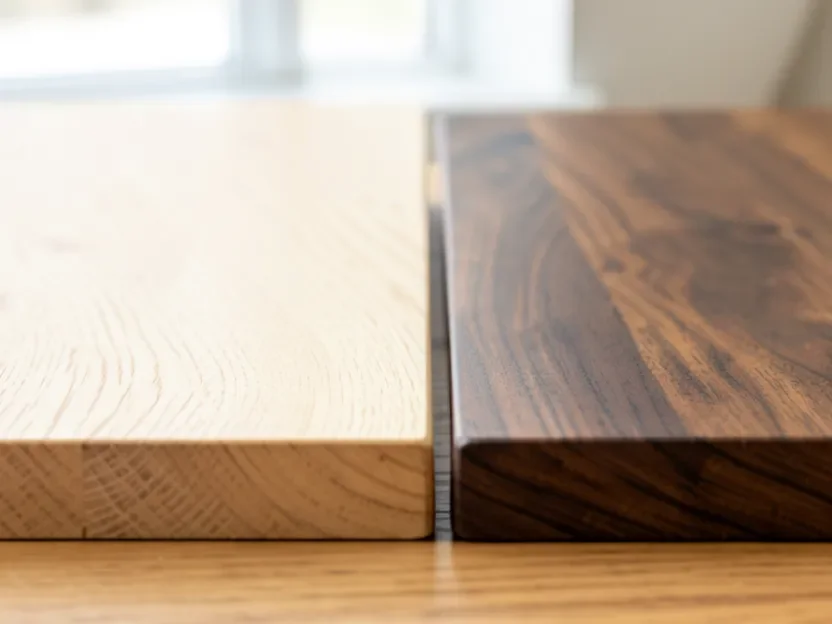
Before you combine them, it helps to know what you’re actually working with. Oak and walnut aren’t just “light wood” and “dark wood” – they differ in hardness, grain, and how they age, and those differences affect how you should use each one in a room.
Best for Matching Oak & Walnut Tones
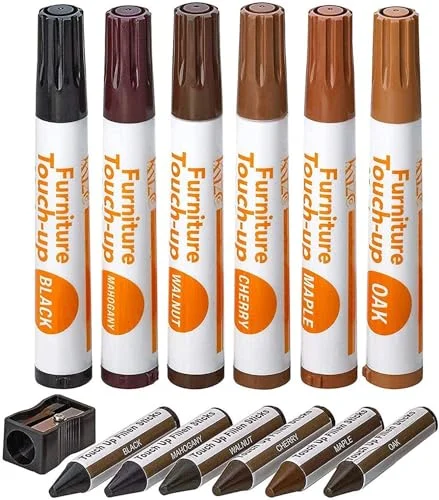 |
Katzco 13-Piece Wood Touch-Up Marker & Wax Stick Kit – $9.99 When you’re mixing oak and walnut, small dings show on both tones for different reasons – this kit includes dedicated Oak and Walnut markers so you can touch up either wood without one shade bleeding into the other.
|
Oak: Light, Bold-Grained, and Hard-Wearing
Red oak has a Janka hardness rating of about 1,290 lbf (white oak runs closer to 1,360 lbf), which is why it’s the default choice for dining tables and other pieces that take daily abuse. Its color runs from pale straw to a warm reddish-brown, and the grain is the most recognizable part of the wood – the open, ray-fleck pattern you see on quarter-sawn oak, or the wavy “cathedral” pattern on flat-sawn boards. That prominent grain is what gives oak furniture texture from across a room, even in a plain finish.
Walnut: Dark, Fine-Grained, and Naturally Stable
Black walnut sits at roughly 1,010 lbf on the Janka scale – softer than oak, though still a hardwood suitable for daily-use furniture. What sells walnut is color and grain, not hardness: a deep chocolate-to-purplish-brown tone with a fine, mostly straight grain that reads as smooth and modern next to oak’s boldness. Walnut is also dimensionally stable, meaning it resists the warping and seasonal movement that can affect wider oak boards, which is one reason it shows up so often in fine furniture and cabinetry.
How to Mix Them So It Looks Intentional, Not Accidental
Most “clashing” wood combinations aren’t actually about light versus dark – they’re about undertone. A warm, orange-leaning oak next to a cool, gray-leaning walnut can look off even when the contrast in value is exactly what a designer would recommend. Here’s how to check for that before you commit.
Run the White-Paper Undertone Test
Hold a plain sheet of white printer paper flush against each piece of furniture in daylight, away from any window with tinted glass or a colored wall nearby. The paper cancels out the room’s ambient light and makes the wood’s actual undertone obvious: if the wood looks like it’s leaning yellow, orange, or red against the white, it’s warm; if it looks pink-gray, taupe, or almost purple-brown, it’s cool. Most oak reads warm and most walnut reads slightly cool-to-neutral, but finish matters as much as species – a honey-oil oak finish and a raw-oil walnut finish can both land on the warm side, which is exactly why the paper test beats guessing from memory.
Once you know each piece’s undertone, you have two safe options: match warm-to-warm and cool-to-cool for a quieter, more traditional look, or deliberately pair warm oak with cool walnut and use a neutral rug or wall color to bridge the two. What doesn’t work is ignoring undertone altogether and combining pieces on color alone.
Apply the 60-30-10 Ratio to Wood, Not Just Color
Interior designers use the 60-30-10 rule for color palettes, and it maps directly onto wood tones: let one wood cover roughly 60% of the visible wood in the room (usually the floor, or the largest case piece), the second wood take about 30% (a media console, dining table, or accent chair), and reserve the last 10% for small accent pieces – a picture frame, a small side table, a bowl. The ratio matters more than which wood is dominant. A room that’s 60% walnut and 30% oak reads just as intentional as the reverse; a room split close to 50/50 is what tends to look unplanned.
Let Color and Texture Do the Bridging
Rugs, throw pillows, and artwork are the fastest way to connect two wood tones once the ratio is set. Pull one or two colors that show up naturally in both woods – a cream or warm gray works with almost any oak-and-walnut pairing – and repeat that color in textiles near both pieces. Metal or matte-black hardware on both the oak and walnut pieces does the same job at a smaller scale: it gives your eye a consistent detail to land on instead of jumping between two unrelated wood tones.
Common Mistakes to Avoid
Most oak-and-walnut rooms that feel off share one of three problems, and all three are easy to fix once you know to look for them.
Splitting the Room Evenly
A near-50/50 split between oak and walnut, with no clear dominant tone, is the single most common reason a mixed-wood room feels chaotic instead of curated. Go back to the 60-30-10 ratio above and pick a dominant wood, even if it’s a close call.
Matching Scale to the Wrong Piece
A large walnut sofa or sectional next to a small, delicate oak side table looks unbalanced no matter how well the undertones match – the eye reads the size mismatch before it reads the wood tone. Keep large-footprint pieces in your dominant wood and let the secondary wood show up in smaller furniture: a console, a nightstand, a set of dining chairs.
Mixing Wood Tones and Furniture Styles at the Same Time
Changing the wood tone and the furniture style in the same piece (say, an ornate traditional oak chair next to a sleek mid-century walnut credenza) doubles the visual jump your eye has to make. If you’re introducing a new wood tone, keep the style similar to what’s already in the room; save style changes for later once the wood pairing is already working.
Room-by-Room Pairings
These are starting points, not rules – use the undertone test and the 60-30-10 ratio above to adjust them to your own furniture.
Living Room
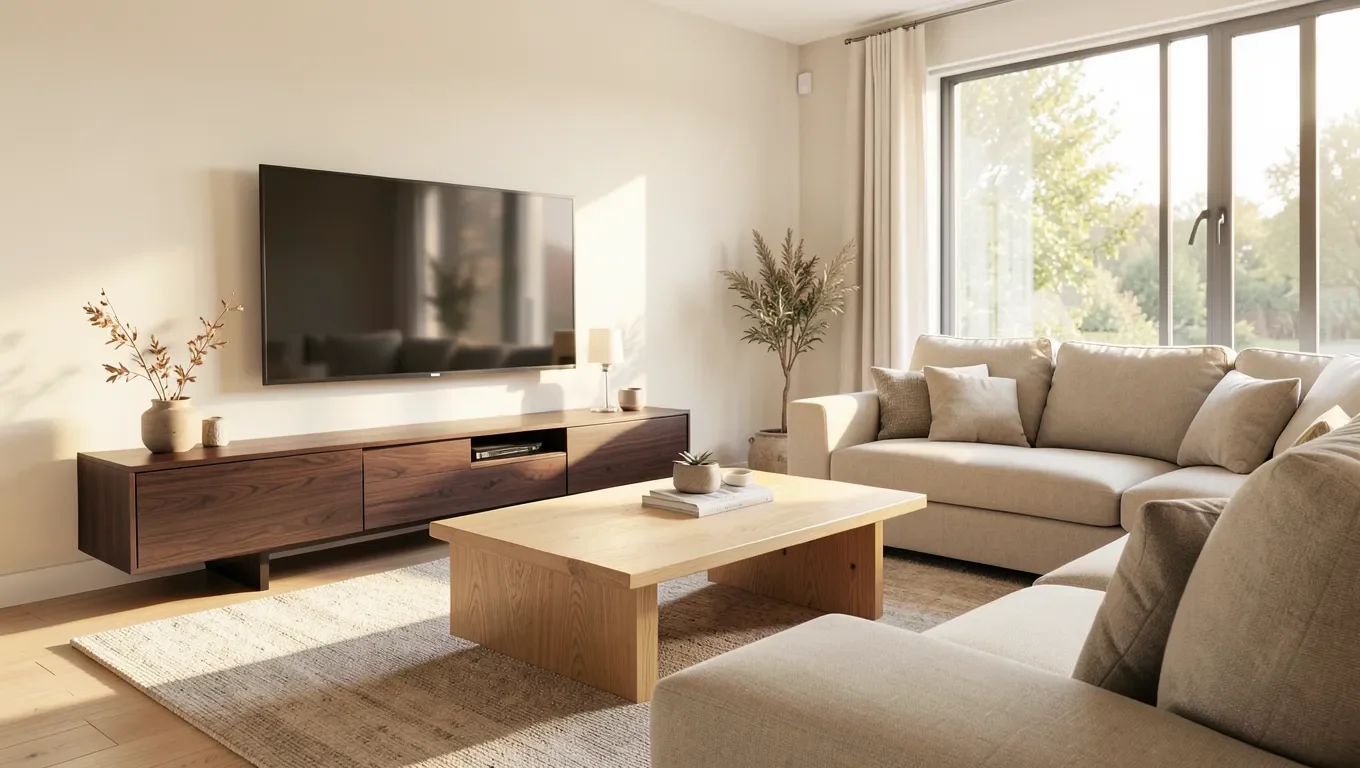
Let oak anchor the room through the flooring, a large sofa frame, or an oak coffee table, then use walnut for a media console or a single accent chair. A patterned rug that pulls in both tones, plus throw pillows in a shared neutral, ties the two together without either wood fighting for attention.
Bedroom
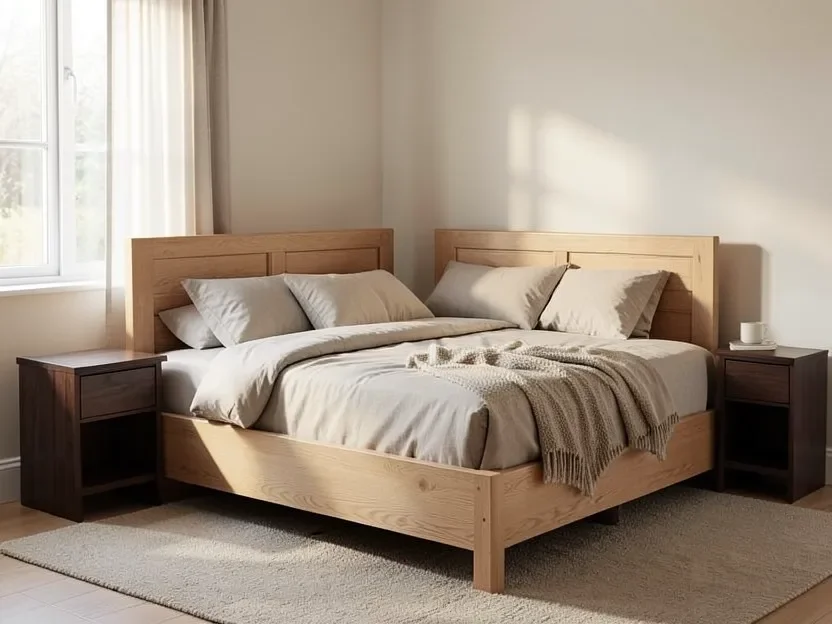
An oak bed frame paired with a set of dark walnut nightstands is one of the most forgiving combinations because the bed dominates the room’s visual weight by default (your 60%), leaving the nightstands as a clean 30% accent. A walnut bench at the foot of the bed can serve as the connecting 10%.
Home Office
A light oak desk keeps a small workspace feeling bright, while a walnut bookshelf or filing cabinet adds contrast without darkening the room. If your desk chair is upholstered rather than wood, its fabric color is a good place to bridge the two tones.
Dining Room
A walnut dining table with light oak chairs (or the reverse) is a classic mid-century pairing because the contrast reads clearly even from across the room. Keep the walls and any large rug neutral so the wood contrast, not competing patterns, is what carries the space.
Frequently Asked Questions
Can I use both oak and walnut furniture in a small room?
Answer: Yes. Use the 60-30-10 ratio at a smaller scale – let oak (or walnut) dominate through the largest piece in the room, and keep the second wood to one or two smaller pieces. A consistent color palette in your textiles matters more in a small room, since there’s less distance between pieces to soften an undertone mismatch.
What if my oak furniture is warm-toned and my walnut is cool-toned?
Answer: That’s fine as long as it’s intentional. Run the white-paper test on both pieces to confirm the undertones, then bridge them with rugs or pillows that include both a warm and a cool shade. The contrast reads as a deliberate design choice, not a mismatch, once there’s a shared color connecting the two.
Should the hardware on my oak and walnut pieces match?
Answer: Not necessarily. Matching hardware (like matte black or brushed brass) helps if the two pieces are in very different styles, since it gives your eye a repeated detail. If both pieces already share a similar style, mismatched hardware can actually look more considered than a perfect match.
How do I find the undertone of furniture I already own?
Answer: Hold a plain sheet of white paper flush against the wood in daylight, away from tinted windows or colored walls. Yellow, orange, or red hints against the white mean a warm undertone; gray, taupe, or purple-brown hints mean a cool undertone. Check the piece in more than one spot on the wood, since a worn or refinished section can read differently than the rest.
What accent colors work with both oak and walnut?
Answer: Neutral, slightly warm shades – cream, oatmeal, soft gray-beige – sit comfortably next to both woods regardless of undertone. Olive green and rust are common accent choices with oak specifically, while walnut pairs well with deeper blues and blacks; using one of the shared neutrals as your base color lets you add either accent without it looking out of place.
Final Thoughts
Mixing oak and walnut works when one wood clearly leads and the other supports it – not when they’re split evenly and left to compete. Check undertones with the white-paper test, apply the 60-30-10 ratio to whichever wood you want as the anchor, and use color and hardware to bridge the two. If you’re also comparing the woods on their own merits before you buy, our oak vs. walnut grain comparison breaks down which one suits your specific project, and our walnut vs. dark brown wood tone guide is useful if you’re pairing walnut with something other than oak. If oak and walnut are just one piece of a larger room with several other wood tones in play, our broader guide to matching wood furniture of different colors covers the general rule for how many tones to mix and where to place them.
Sponsored / affiliate links. As an Amazon Associate I earn from qualifying purchases. I may earn additional commission from eligible campaigns.