Can You Use Elmer’s Glue All For Slime Easy Guide
So, you want to make slime, and you’re wondering if Elmer’s Glue All is the magic ingredient. This is a super common question for slime makers! Sometimes, figuring out the right glue can feel a little tricky, but don’t worry.
We’re here to break it all down. Get ready for a simple, step-by-step guide that makes slime making a breeze. We’ll show you exactly how to get that perfect gooey fun using Elmer’s Glue All.
Elmer’s Glue All for Slime A Beginner’s Guide
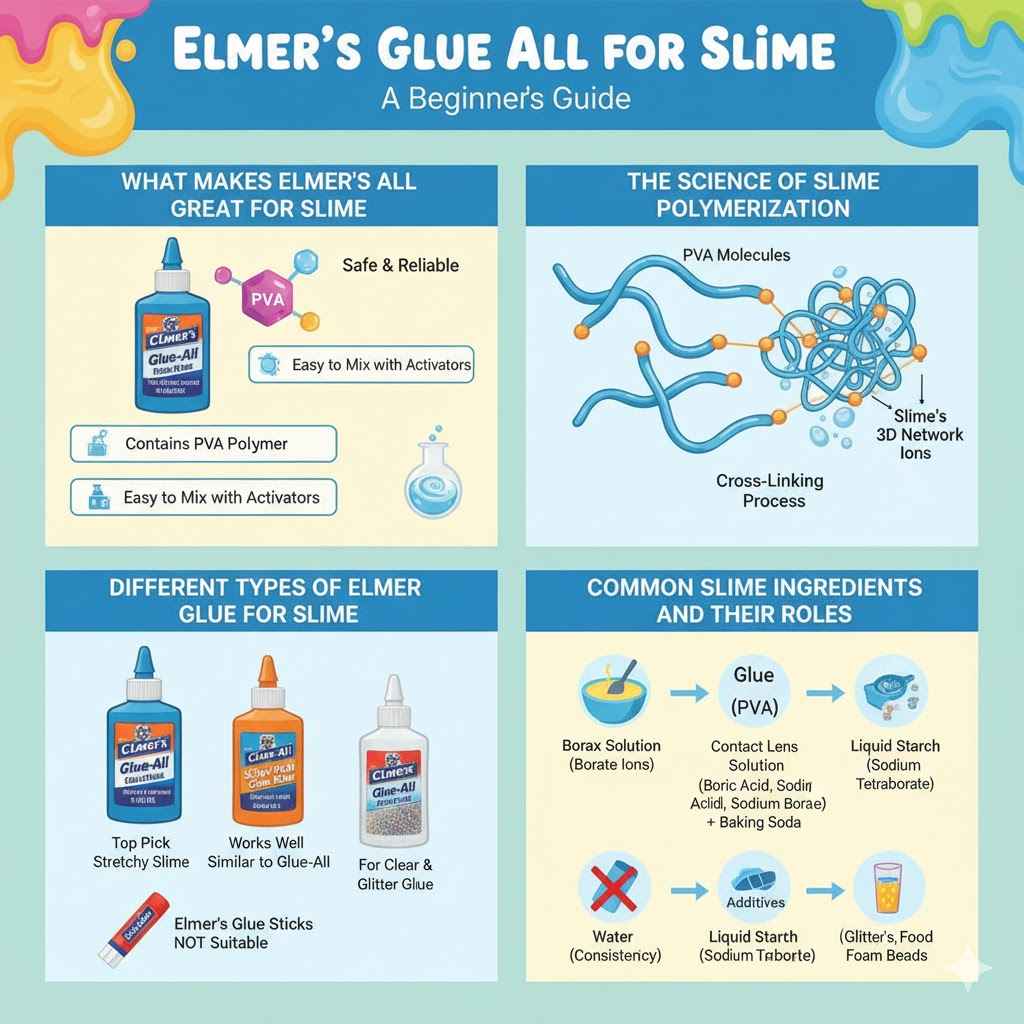
This section will explore why Elmer’s Glue All is a popular choice for slime and how its ingredients contribute to the slime-making process. We will look at the science behind how glue and activators combine to form slime and discuss the different types of Elmer’s glue and their suitability for slime. Understanding the base is key to successful slime creation.
What Makes Elmer’s Glue All Great for Slime
Elmer’s Glue All is a fantastic choice for slime because it contains polyvinyl acetate (PVA). PVA is a polymer that, when mixed with an activator, undergoes a chemical reaction. This reaction links the PVA molecules together, creating the stretchy, gooey texture we know as slime.
It’s a safe and reliable ingredient that consistently produces good results, making it a go-to for both kids and adults experimenting with slime.
The concentration of PVA in Elmer’s Glue All is just right for this transformation. It’s not too thin or too thick, allowing it to mix easily with activators like borax solution or contact lens solution. This ease of use is why so many slime recipes specifically call for it.
Plus, it’s readily available in most stores, adding to its convenience.
The Science of Slime Polymerization
Polymerization is the core scientific principle behind slime making. When you mix Elmer’s Glue All with an activator, a process called cross-linking occurs. The activator contains borate ions, which act as cross-linkers.
These borate ions form bridges between the long chains of PVA molecules in the glue. Imagine the PVA molecules as long strings. The borate ions are like tiny connectors that tie these strings together at various points.
This creates a three-dimensional network structure.
This network traps water molecules within the glue, giving slime its characteristic jiggly and pliable texture. Without sufficient cross-linking, the mixture would remain liquid. Too much cross-linking can make the slime stiff or brittle.
The art of slime making often involves finding the perfect balance of glue and activator to achieve the desired consistency. Elmer’s Glue All provides a stable base for this chemical reaction.
Different Types of Elmer’s Glue for Slime
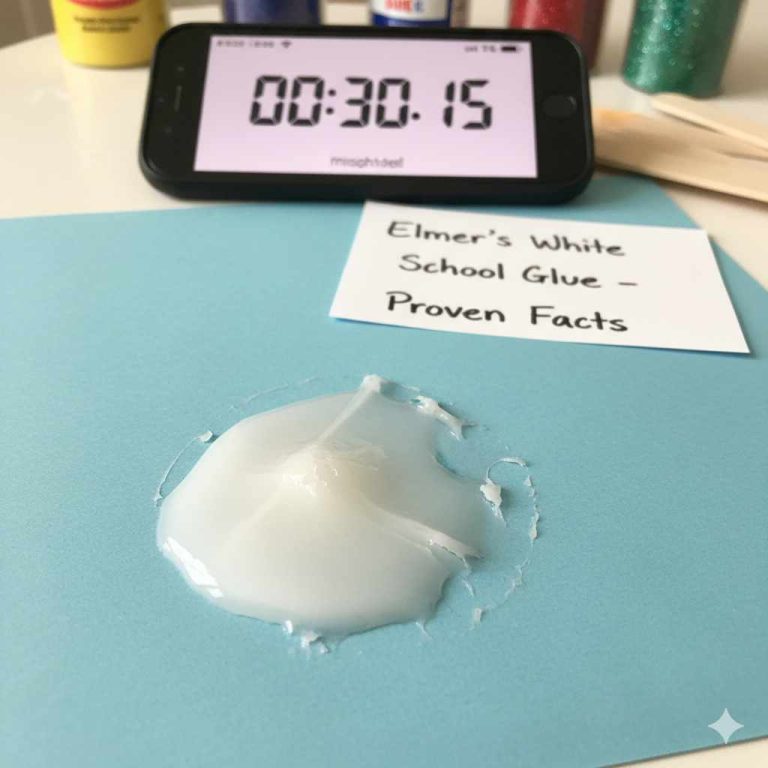
While Elmer’s Glue All is a top pick, Elmer’s offers other glues. Elmer’s School Glue (white liquid glue) is very similar to Glue All and works wonderfully for slime. It also contains PVA.
Elmer’s Clear Glue is another excellent option, perfect for making clear or glitter slimes. It allows for vibrant colors and shimmer to show through.
However, Elmer’s Glue Sticks are generally not suitable for slime. They are formulated differently, with less water and more solid binders, making them much harder to turn into slime. Always check the label to ensure you’re using a liquid PVA-based glue.
The primary distinction between Elmer’s Glue All and Elmer’s School Glue is often a slight difference in viscosity and sometimes added preservatives, but for slime, both are highly effective.
Common Slime Ingredients and Their Roles
Making slime involves a few key ingredients beyond just glue. The glue, as we’ve discussed, provides the PVA polymers. The activator is essential for creating the slime texture.
Common activators include:
- Borax Solution: This is a mixture of borax powder dissolved in water. It’s very effective but requires careful handling, especially with younger children.
- Contact Lens Solution: Many brands contain boric acid and sodium borate, acting as activators. Look for solutions that list these ingredients.
- You’ll also need baking soda, which helps the contact lens solution work better by adjusting the pH.
- Liquid Starch: Some laundry starches contain sodium tetraborate, which can activate slime. It’s a straightforward activator to use.
Baking soda is often added with contact lens solution. It helps to thicken the slime by making the borate ions more effective at cross-linking the PVA.
Water can also be added to adjust the slime’s consistency, making it stretchier or less sticky. Additives like glitter, food coloring, or foam beads are for appearance and texture, not for the slime-making reaction itself.
How to Make Slime With Elmer’s Glue All Easy Guide
This section is your go-to for the actual slime-making process. We will walk you through the steps using Elmer’s Glue All, covering different activation methods. You’ll learn the best way to measure ingredients and mix them to avoid common pitfalls.
This guide aims to make your first slime creation successful and fun.
The Basic Elmer’s Glue All Slime Recipe
Here’s a straightforward recipe to get you started. This is the classic slime everyone loves.
- Pour 1/2 cup of Elmer’s Glue All into a bowl.
- Add 1/2 teaspoon of baking soda and stir well.
- If using contact lens solution, add 1 tablespoon of contact lens solution and stir until the slime starts to form.
- Keep adding a little more contact lens solution, a teaspoon at a time, until the slime pulls away from the sides of the bowl.
- If using borax solution, mix 1/2 teaspoon of borax powder with 1 cup of warm water until dissolved. Then, add 1 tablespoon of this borax solution to your glue mixture and stir. Add more borax solution slowly, a teaspoon at a time, until the slime forms.
- If using liquid starch, add 1/4 cup of liquid starch to the glue and baking soda mixture and stir until it forms.
- You might need a little more or less liquid starch depending on the brand.
Once the slime starts to come together, take it out of the bowl and knead it with your hands. It might be sticky at first, but as you knead, it will become less sticky and more stretchy. If it’s still too sticky, add a tiny bit more activator.
Using Contact Lens Solution as an Activator
Contact lens solution is a popular and generally safe activator for slime. For this method, you’ll need Elmer’s Glue All, baking soda, and a contact lens solution that contains boric acid and sodium borate. Start with about 1/2 cup of glue in a bowl.
Add 1/2 teaspoon of baking soda and mix it in thoroughly. The baking soda helps to create the right pH for the boric acid in the solution to work its magic. Then, gradually add the contact lens solution, usually starting with 1 tablespoon.
Stir continuously.
As you stir, you’ll see the mixture begin to clump and pull away from the sides of the bowl. This is the slime forming. Continue to add the contact lens solution a teaspoon at a time, stirring after each addition, until the slime reaches your desired consistency.
It’s important not to add too much activator too quickly, as this can make the slime rubbery or breakable. Once it’s mostly formed, take the slime out and knead it with your hands. Kneading helps to fully incorporate the ingredients and makes the slime less sticky and more pliable.
The Borax Solution Method Explained
The borax solution method is a classic and very effective way to make slime. To prepare your borax activator, mix 1/2 teaspoon of borax powder with 1 cup of warm water. Stir until the borax powder is completely dissolved.
It’s important to ensure all the borax is dissolved to avoid getting gritty bits in your slime. Once dissolved, this solution acts as your activator. In a separate bowl, pour about 1/2 cup of Elmer’s Glue All.
You can add a pinch of baking soda here too, though it’s not as critical as with contact lens solution, it can still help.
Slowly add the borax solution to the glue, starting with about 1 tablespoon. Stir the mixture. You will see the slime begin to form and pull away from the bowl.
Continue to add the borax solution, a teaspoon at a time, stirring after each addition, until the slime reaches a consistency you like. Be cautious not to add too much borax solution, as this can result in a stiff or brittle slime. Once it has mostly formed, remove the slime from the bowl and knead it with your hands.
Kneading is crucial for developing the slime’s stretchy texture.
Working with Liquid Starch
Liquid starch is another easy-to-use activator for making slime with Elmer’s Glue All. It’s often found in the laundry aisle. For this method, you’ll typically use about 1/2 cup of Elmer’s Glue All and add about 1/4 cup of liquid starch.
You can also add about 1/2 teaspoon of baking soda to the glue mixture beforehand, as it can help with the activation process and result in a slightly firmer slime. Pour the glue into a bowl, stir in the baking soda if you’re using it, and then gradually add the liquid starch. Stir the mixture well.
You’ll notice it start to thicken and clump together, forming slime.
Continue to stir and add more liquid starch if needed, a little at a time, until the slime starts to pull away from the sides of the bowl. Don’t add too much starch at once, as this can make the slime tough. Once the slime has formed a cohesive mass, take it out of the bowl and knead it with your hands.
Kneading is essential to get the right stretchy texture and to reduce stickiness. It might feel a bit messy at first, but keep kneading, and you’ll achieve that perfect slime feel.
Tips for Perfect Slime Consistency
Achieving the perfect slime consistency is often about trial and error, but a few tips can help. First, always start with a good quality PVA glue like Elmer’s Glue All. Second, measure your ingredients accurately, especially the activator.
Too much activator makes slime stiff, while too little leaves it sticky and runny. If your slime is too sticky, try kneading it for a few more minutes or adding a tiny bit more activator, just a few drops at a time.
If your slime is too stiff or breaks easily, you might have added too much activator. You can try adding a little bit of lotion or a drop or two of warm water and kneading it in. This can help to rehydrate the slime and make it more flexible.
Sometimes, letting the slime rest for a few minutes after mixing can also help it achieve a better texture. Remember, patience is key! Don’t be discouraged if your first batch isn’t perfect; you’ll get the hang of it with practice.
Troubleshooting Common Slime Problems
Even with the best guides, slime making can sometimes hit a snag. This section addresses the most frequent issues beginners encounter when using Elmer’s Glue All. We will provide clear solutions and explanations so you can fix your slime and get back to enjoying the fun.
Learning to troubleshoot is part of the slime-making adventure.
Slime is Too Sticky
A sticky slime is a very common problem, especially for new slime makers. It usually means there isn’t enough activator to properly cross-link the PVA molecules in the glue. The first thing to try is kneading the slime more.
Your hands can help distribute the activator and work the molecules together. Keep kneading for a few minutes; you’ll feel it change from sticky to stretchy.
If kneading alone doesn’t solve the problem, you need to add a tiny bit more activator. If you’re using contact lens solution, add a few drops. If you’re using borax solution or liquid starch, add about half a teaspoon.
Add it slowly, a little at a time, and knead after each addition. Be patient; adding activator too quickly can make the slime too stiff. Another trick for sticky slime is to add a small amount of baby oil or lotion and knead it in.
This can make it less tacky.
Slime is Too Stiff or Rubbery
If your slime breaks easily and feels hard or rubbery, it means you’ve likely added too much activator. The PVA molecules have been over-cross-linked. Don’t throw it away just yet!
You can often fix this by adding a bit of moisture back into the slime. Try adding a small amount of warm water, just a teaspoon at a time, and knead it in thoroughly. This can help to loosen the bonds between the PVA molecules.
Another effective solution is to add a bit of lotion. A tablespoon of unscented lotion kneaded into the stiff slime can make it much more flexible and stretchy. You can also try adding a small amount of baby oil.
Sometimes, letting the slime sit out for a little while can help it become a bit more pliable as it absorbs some moisture from the air. If these methods don’t work, you might need to start over with a fresh batch, but always keep these fixes in mind.
Slime Won’t Form or Is Watery
If your mixture remains watery and won’t form into slime even after adding activator, there could be a few reasons. First, double-check that your activator is still good. Old contact lens solution might lose its potency.
Also, ensure you’re using a PVA glue like Elmer’s Glue All. Glues that don’t contain PVA won’t activate into slime. If you used a clear glue, make sure it’s the right type for slime making.
Another possibility is that you haven’t added enough activator, or you’re adding it too slowly for the reaction to occur effectively. Try adding a bit more activator, stirring well after each addition. Make sure you are stirring thoroughly.
Sometimes, a very small amount of a different activator can kickstart the process if one isn’t working well. For instance, if contact lens solution isn’t working, a tiny bit of borax solution might help it along.
Dealing with Unpleasant Smells
Sometimes, slime can develop an unpleasant odor, especially if it’s been played with for a while or if certain ingredients were used. If you’ve just made the slime and it smells odd, it might be due to the activator. Some people are sensitive to the scent of borax or certain contact lens solutions.
In this case, opting for a different activator might be the solution for your next batch.
If the slime has been played with and starts to smell, it’s usually a sign of bacterial growth. This is more common if the slime wasn’t stored properly or if it’s been exposed to unsanitary conditions. Unfortunately, once bacteria have grown in slime, it’s generally best to discard it.
To prevent this, always ensure your hands are clean before playing with slime and store it in an airtight container when not in use. You can also try adding a few drops of essential oil (like lavender or vanilla) to your slime recipe to give it a pleasant scent.
Slime Is Too Hard or Not Stretchy Enough
A slime that is not stretchy and snaps easily is usually a sign of an unbalanced recipe. This often happens when the activator is too strong or too much has been added. To fix this, you can try adding a bit of warm water.
Gradually add a teaspoon of warm water and knead it into the slime. This will help to break down some of the cross-links, making the slime more pliable and stretchy. You can also try adding a bit of lotion, which adds moisture and flexibility.
If the slime is hard from the start, it’s likely a result of too much activator. As mentioned before, adding water or lotion can help. Alternatively, you can try adding a bit more glue.
Adding more glue will dilute the activator and create a softer, stretchier slime. Remember to add the extra glue slowly and knead it in well. The goal is to rebalance the ratio of glue to activator.
Enhancing Your Slime Creations
Once you’ve mastered the basics of making slime with Elmer’s Glue All, you can start to get creative. This section explores fun ways to customize your slime, from adding colors and textures to experimenting with different slime types. Get ready to make your slime unique and exciting.
Adding Color and Sparkle
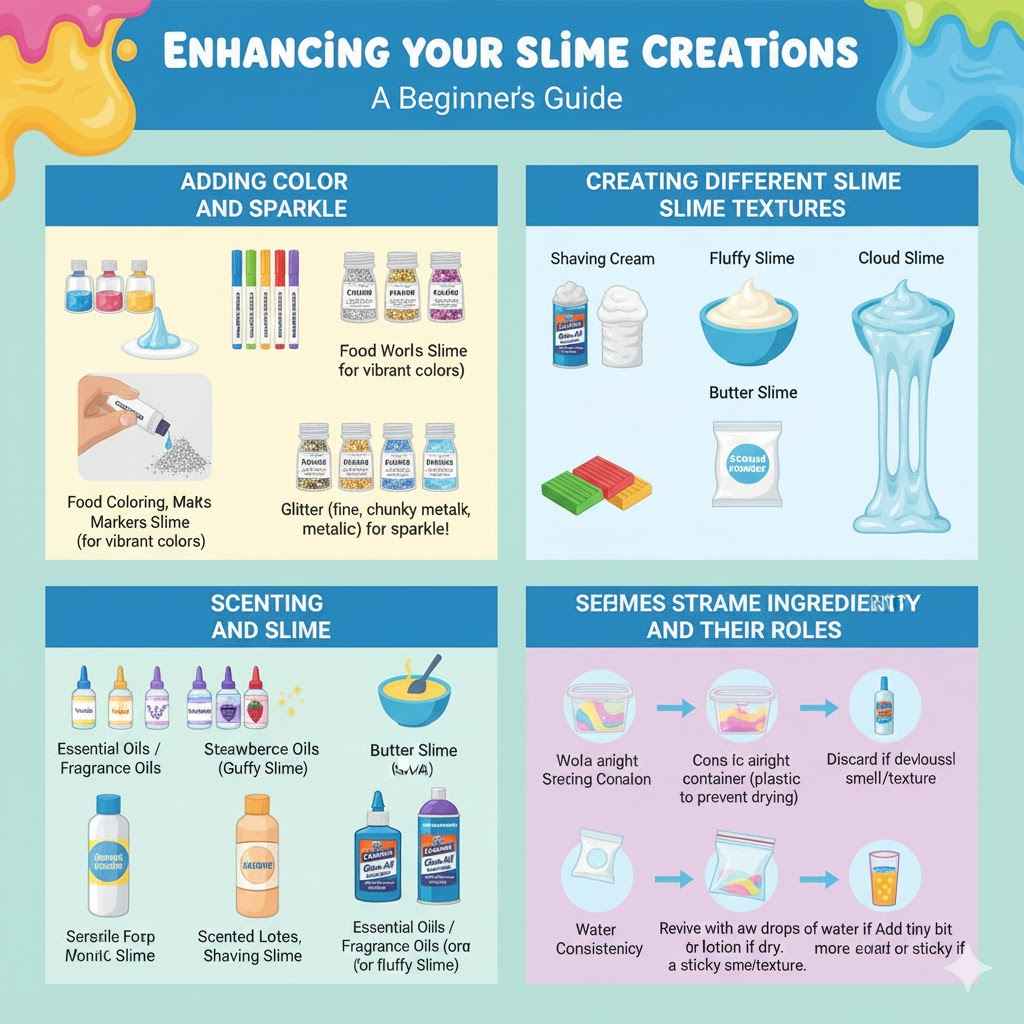
Coloring your slime is one of the easiest ways to personalize it. You can use food coloring, washable markers (the ink), or specialized slime colorants. Start with just a drop or two of food coloring and mix it into the glue before you add the activator.
This ensures an even distribution of color. For more vibrant colors, you can use gel food coloring, which is more concentrated.
For sparkle, glitter is your best friend! Elmer’s Glue All works beautifully with all types of glitter, from fine iridescent glitter to chunky craft glitter. Add the glitter to the glue mixture along with the food coloring.
You can use single colors or mix several for a unique effect. Metallic or holographic glitters can add an extra wow factor to your slime creations. Don’t be afraid to experiment with different combinations to see what you like best.
Creating Different Slime Textures
Beyond the basic stretchy slime, there are many textures you can create.
- Fluffy Slime: Add shaving cream to your glue mixture before activating. Start with about 1-2 cups of shaving cream for 1/2 cup of glue, mixing it into the glue until well combined.
- Then, add your activator. This results in a super airy, puffy, and soft slime.
- Butter Slime: This is a very smooth and spreadable slime. After making your basic slime, add a small amount of air-dry clay (like Daiso clay or similar).
- Knead the clay into the slime until it’s fully incorporated. This gives the slime a soft, buttery texture that is very satisfying to play with.
- Cloud Slime: This slime has a soft, fluffy, and drizzly texture, resembling a cloud. It’s made by adding fluffy snow powder (often found in craft stores or toy stores for slime making) to a basic slime recipe.
- The snow powder absorbs water and gives the slime its unique texture.
Experimenting with these additions can lead to a whole new world of slime fun.
Scenting Your Slime
Adding a pleasant scent can greatly enhance the sensory experience of playing with slime. You can use a few drops of essential oils or fragrance oils specifically designed for crafts. Popular scents include vanilla, lavender, strawberry, or peppermint.
Add the fragrance oil to the glue mixture before you add the activator. Start with just a few drops, as essential oils can be quite potent. Mix it in well to ensure the scent is evenly distributed throughout the slime.
Be cautious with essential oils if young children will be playing with the slime, as some can cause skin irritation.
Another way to scent slime is by using scented lotions or body sprays. If you’re making fluffy slime, you can use a scented shaving cream. Make sure the scents you choose are compatible and don’t overpower the slime-making process.
A light, pleasant scent can make your slime even more enjoyable to play with.
Slime Storage and Longevity
Proper storage is key to keeping your slime fresh and playable for as long as possible. Always store your slime in an airtight container. Plastic containers with lids, Ziploc bags, or even old food containers work well.
This prevents the slime from drying out and keeps it from picking up dust and debris from the environment.
If your slime starts to feel a bit dry or stiff after storage, you can often revive it by kneading in a few drops of water or a bit of lotion. If it becomes overly sticky, a tiny bit more activator might help. However, if your slime develops an unusual smell or texture, it might be contaminated with bacteria and should be discarded.
Properly stored, a basic Elmer’s Glue All slime can last for several weeks.
Frequently Asked Questions
Question: Can I use Elmer’s Glue All for slime?
Answer: Yes, Elmer’s Glue All is one of the best glues to use for making slime because it contains polyvinyl acetate (PVA), which reacts with activators to create the slime texture.
Question: What activator should I use with Elmer’s Glue All?
Answer: You can use contact lens solution (with boric acid and sodium borate), borax solution, or liquid starch. All of these will activate Elmer’s Glue All into slime.
Question: My slime is too sticky, what should I do?
Answer: If your slime is too sticky, knead it more. If it’s still sticky, add a few more drops of activator, a little at a time, and keep kneading until it reaches the desired consistency.
Question: My slime broke when I stretched it, what’s wrong?
Answer: This usually means you’ve added too much activator, making the slime stiff. Try kneading in a little warm water or lotion to make it more flexible and stretchy again.
Question: Can I make slime with Elmer’s glue sticks?
Answer: No, Elmer’s glue sticks are not suitable for making slime. They are formulated differently and do not contain the right type of PVA to activate into slime.
Conclusion
Yes, you absolutely can use Elmer’s Glue All for slime. It’s a reliable and easy choice. By following simple recipes and understanding how activators work, you can create fantastic slime.
Don’t be afraid to experiment with colors and textures. Have fun making your perfect slime!