How Long Does It Take Elmer’s Glue to Dry? (By Product)
Elmer’s wood glues should dry for 24 hours before you handle the joint, but the clamp time depends on which Elmer’s source you read: its FAQ says one hour or more, while its older product pages list 12 hours. Elmer’s publishes no drying time at all for School Glue. This guide gives each product’s open, clamp and dry figures, shows where the sources conflict, and explains how to tell the glue is ready.
How Long Does Elmer’s Glue Take to Dry? Times by Product
Best Stainable Elmer’s Wood Glue
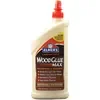 |
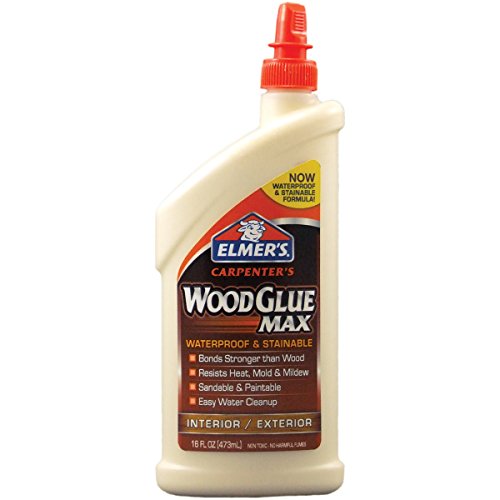
Elmer’s E7310 Carpenter’s Wood Glue Max, Interior/Exterior, 16 oz ($9.30) The one wood glue in the chart below that Elmer’s lists as both ANSI Type 1 waterproof and stainable, so it suits a joint you plan to stain or that will see weather.
|
As an Amazon Associate we earn from qualifying purchases.
| Elmer’s product | Open time | Clamp time | Dry color | Stainable |
|---|---|---|---|---|
| Carpenter’s Interior Wood Glue (2017 page) | 10-15 min | 12 hours | Yellow | No |
| Carpenter’s Wood Glue Max (2017 page) | 10-15 min | 12 hours | Beige | Yes |
| Glue-All (2015 page) | 10-15 min | 12 hours | Clear | Not listed |
| ProBond Advanced (2018 page) | 8-10 min | 12 hours | Translucent, light | No |
| Elmer’s FAQ, interior and exterior wood glues (2019) | Not listed | 1 hour or more, then dry 24 hours before handling | Not listed | Not listed |
| School Glue (2017 page) | No time published | No time published | Not listed | Not listed |
These are the figures Elmer’s itself printed. Elmer’s current site refused our automated request (HTTP 403), so every number above comes from archived copies of Elmer’s own pages, dated in the table. The wording on today’s bottle may differ, and the bottle always wins.
Elmer’s FAQ: “Clamp for one hour or more. Let dry for 24 hours before handling.” Source: Elmer’s FAQ, archived June 2019
Why Elmer’s Own Pages Disagree on Clamp Time
The conflict is real. Four Elmer’s product pages from 2015 to 2018 list a 12 hour clamp time, while Elmer’s 2019 FAQ for wood glue says clamp for one hour or more. Both end at the same place: wait 24 hours before handling the joint. We cannot tell which clamp figure Elmer’s would stand behind today.
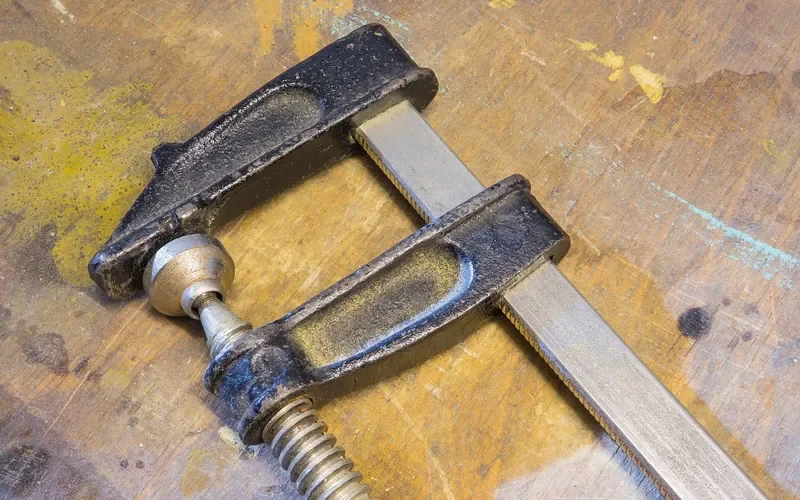
Our rule of thumb, which is our judgment and not an Elmer’s statement: treat one hour as the minimum for a light joint, and clamp longer for anything under load, such as a chair rung or a table apron. Dry to the touch is not the same as dry, and a joint pulled out of clamps early can creep. For a brand-by-brand view see our wood glue clamp time chart, and for Titebond timing see our guide to joining plywood.
Open Time, Clamp Time and Dry Time Are Three Different Clocks
Open time is how long you have after spreading glue to bring the parts together: 10 to 15 minutes on Elmer’s Carpenter’s and Glue-All pages, and 8 to 10 minutes for ProBond Advanced. Clamp time is how long the parts must stay under pressure. Dry time, in Elmer’s FAQ wording, is the 24 hours before the joint is handled.
This is why the common claim that Elmer’s glue is dry in 15 to 45 minutes does not match anything Elmer’s printed. The only short numbers on its pages are the 10 to 15 minute open time and the 8 to 10 minute ProBond open time, and those are the window for assembling the joint, not a drying time.
How to Glue Wood with Elmer’s Wood Glue, Step by Step
This order follows the instructions in Elmer’s FAQ for interior and exterior wood glues.
- Warm the parts: Keep the glue and the parts above 60 degrees F for interior use, or above 55 degrees F for exterior wood glue.
- Prepare the surfaces: Make sure they are clean, dry and free of dried glue, oil and any coating.
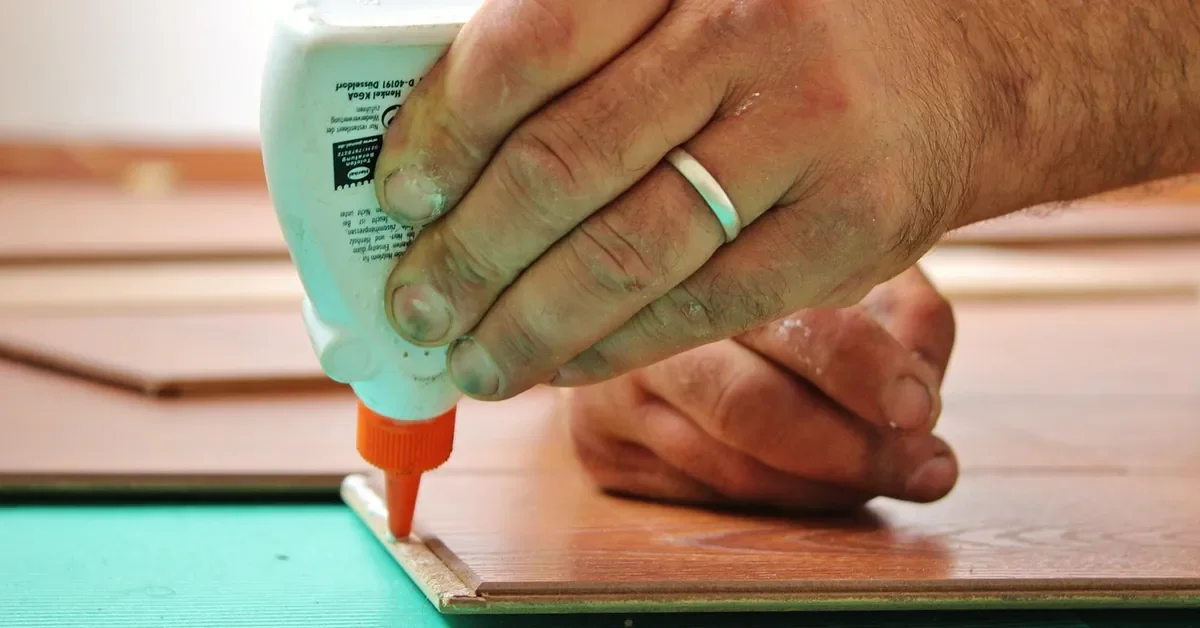
- Spread the glue: Apply glue liberally and evenly to the surfaces to be bonded, with parts that fit tight.
- Assemble inside open time: Join the parts within the 10 to 15 minute open time Elmer’s lists for its wood glues, then clamp.
- Check for squeeze-out: Clamping pressure should bring the surfaces together with some glue squeezed out of the joint.
- Wipe excess wet glue: Remove squeeze-out with a clean, dry cloth before it dries.
- Wait out the clamp and dry time: Clamp for one hour or more, then leave the joint alone for 24 hours before handling.

Elmer’s School Glue Drying Time: What Elmer’s Actually Says
Nothing numeric. The School Glue page we read describes a washable, no-run glue that is safe and non-toxic, and gives no open, clamp or dry time. Any specific minute count for it that you see elsewhere is a guess. School Glue is a paper and craft glue, so for a wood joint use a wood glue from the table above instead.
Like the other white Elmer’s glues it is a water-based adhesive, so a thin film dries as its water leaves the glue and thick puddles take longer. That general principle is why surfaces are spread thin, and it is not an Elmer’s timing claim. For what is inside the bottle, see our guide to what Elmer’s glue is made of.
Glue-All Max: The Elmer’s Glue That Needs Moisture
Most people assume glue needs dry surfaces. Elmer’s FAQ says the opposite for Glue-All Max, which is a different product from regular Glue-All: it requires moisture to cure. On porous surfaces, lightly dampen both surfaces about one minute before gluing, spread a thin layer on one side, and clamp for 1 to 4 hours. On non-porous surfaces, dampen one side and spread the glue on the other. Elmer’s also notes the glue expands as it cures.
If a Glue-All Max joint will not set, a bone-dry bond line is the first suspect. That is the reverse of the advice for the Carpenter’s wood glues, where Elmer’s wants surfaces clean, dry and free of oil and old glue.
Dry Color, Staining and Sanding After the 24 Hours
Color gives you a rough visual cue. Glue-All is listed as clear when dry, Interior Wood Glue as yellow, Wood Glue Max as beige and ProBond Advanced as translucent. Only the Max is listed as stainable, so squeeze-out left under a stain on the interior formula will show as a pale patch. Wipe it while wet, as Elmer’s instructs, and for timing before you sand see our guide to how long wood glue takes to dry before sanding.
Elmer’s also states the Max is ANSI Type 1 waterproof; if water exposure is your concern, our page on whether Elmer’s glue is waterproof separates the products that are from those that are not. If you are weighing Elmer’s wood glue against the white Glue-All, see Elmer’s glue vs wood glue.
Speeding Up Elmer’s Glue, or Fixing Glue That Will Not Dry
There is no Elmer’s-approved way to rush a cure, so the honest levers are conditions. Elmer’s wants the glue and parts above 60 degrees F for interior wood glue and above 55 degrees F for exterior, so a cold garage in winter is the main thing to fix. After that, spread a thin even coat and clamp tightly rather than leaving a thick bead. Gentle airflow helps surface water leave; strong heat can skin the glue, so skip heat guns.
If a joint is still tacky after the full 24 hours, Elmer’s own product page says to scrape and sand dried glue rather than try to wet it again. Our guide to removing adhesive from wood covers how to clean a failed bond line before regluing.
Elmer’s Glue Drying FAQ
How long does it take Elmer’s glue to dry?
For Elmer’s wood glues, Elmer’s FAQ says to let the joint dry for 24 hours before handling it. Open time is 10 to 15 minutes on its Carpenter’s and Glue-All pages. Elmer’s publishes no drying time for School Glue, so any number you see for it online is not from Elmer’s.
How long does Elmer’s School Glue take to dry?
Elmer’s does not publish a drying time for School Glue on the product page we read. It describes the glue as washable and no-run. A thin film on paper dries as its water leaves, but the exact minutes depend on thickness, paper and room conditions.
How long should you clamp Elmer’s wood glue?
Elmer’s FAQ says to clamp for one hour or more. Its older catalog pages list a 12 hour clamp time for Carpenter’s Wood Glue Max, Interior Wood Glue, Glue-All and ProBond Advanced. If the joint carries load, the longer figure is the safer choice.
Does Elmer’s glue dry clear?
It depends on the product. Elmer’s lists Glue-All as clear when dry, Carpenter’s Interior Wood Glue as yellow, Carpenter’s Wood Glue Max as beige, and ProBond Advanced as a translucent light color. Only the Max is listed as stainable.
Can you make Elmer’s glue dry faster?
You can help it, but not by much. Keep the glue, parts and room above 60 degrees F for interior wood glue, spread a thin even coat, and clamp tight. Gentle airflow helps surface water leave. Heat guns and strong heat can skin the glue and are not recommended.
Why is Elmer’s glue still sticky after 24 hours?
The usual causes are cold parts, a thick coat or trapped water. Elmer’s wants parts and glue above 60 degrees F for interior wood glue, and Glue-All Max needs moisture to cure, so drying it out can stall it. Scrape or sand the cured glue off and reglue.
Conclusion
For Elmer’s wood glues, plan on 10 to 15 minutes to assemble, at least one hour in clamps, and 24 hours before the joint is handled, going longer on clamping for anything under load. Elmer’s publishes no drying time for School Glue. Because the figures above come from archived pages, check the bottle in your hand before you unclamp.
Sponsored / affiliate links. As an Amazon Associate I earn from qualifying purchases. I may earn additional commission from eligible campaigns.