Carcass Saw Vs Tenon Saw: Which is Best for Precision Woodworking?
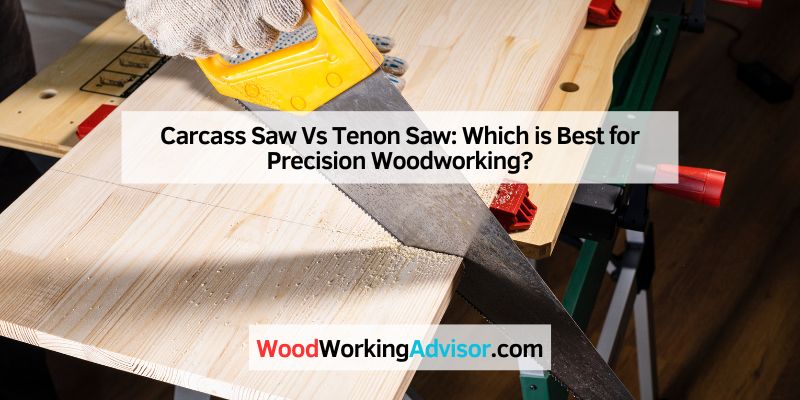
When working on woodworking projects, choosing the right saw is crucial. Carcass saws and tenon saws are popular choices for fine cuts.
Understanding the differences between these two saws can help you make better decisions for your projects. Carcass saws and tenon saws each serve unique purposes. Knowing their strengths and uses can save you time and effort. In this comparison, we will explore the features and benefits of both saws.
This will help you decide which tool suits your woodworking needs best. Stay tuned as we delve into the specifics, ensuring you have the right information to make an informed choice.
Introduction To Precision Woodworking
Accurate cuts are vital in woodworking. They make pieces fit well. A good fit means strong joints. Strong joints mean a sturdy piece.
Precision cuts save wood. Less waste means more material for projects. Also, it saves money. Careful cutting also saves time.
Choosing the right saw matters. Carcass saws are good for straight cuts. They work well with joints. Tenon saws are for detailed work. They cut tenons for mortise and tenon joints.
The carcass saw is shorter. It fits in tight spaces. The tenon saw has a stiff back. It helps keep cuts straight. Each saw has its use. Know your project needs.
Credit: www.quora.com
Carcass Saw Basics
Carcass saws are ideal for precise cuts in thin wood. Tenon saws, on the other hand, are used for deeper cuts. Both have unique applications in woodworking projects.
Design And Features
A carcass saw has a short blade. The blade is stiff and narrow. It has a pistol grip handle. The teeth are small. They are set for a fine cut. This saw is light and easy to use. It cuts on the push stroke. The blade is usually 10 to 14 inches long. The teeth count is often 14 to 16 per inch. The back is reinforced with brass or steel. This helps to keep the blade straight. It is perfect for precise cuts. It is a go-to tool for many woodworkers.
Common Uses
A carcass saw is great for making dovetail joints. It is used for cutting tenons and shoulders. It is also good for crosscutting small pieces. Many use it for fine joinery work. It is a must-have for cabinet making. It is ideal for furniture building. It works well on both hardwood and softwood. It can be used for small projects too. This saw is versatile and handy.
Tenon Saw Fundamentals
The tenon saw has a stiff, straight blade. This blade is held by a rigid back. This design helps in precise cuts. The handle is usually closed or open. Both offer a good grip.
A tenon saw is great for fine woodworking. It is used to cut tenons, or joints. Cabinet makers and carpenters use it often. It helps in making clean, straight cuts. Perfect for detailed work.
Key Differences
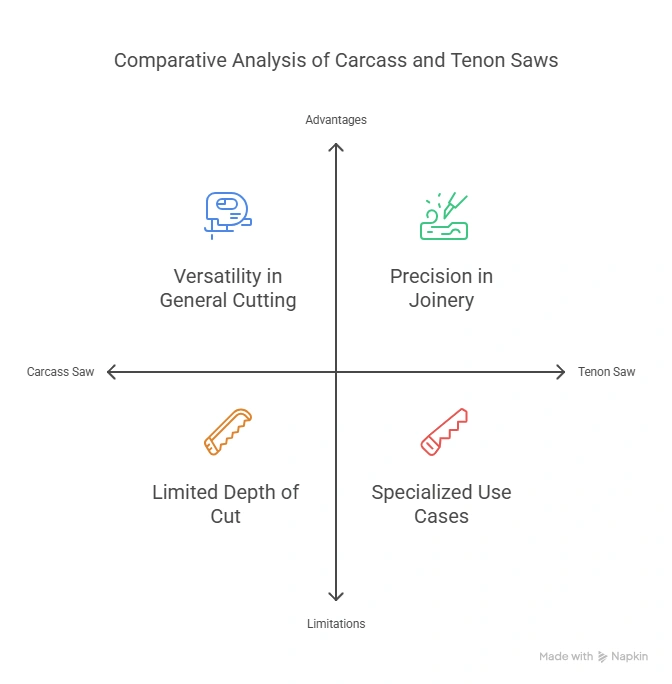
The carcass saw has a shorter, thicker blade. This makes it very strong. It is used for cutting wood joints. The tenon saw has a longer, thinner blade. It is used for fine cuts. Both saws have a back to keep the blade straight. The carcass saw’s back is heavier. The tenon saw’s back is lighter. This affects how each saw moves through the wood.
The carcass saw uses a push stroke. This means you push the saw forward. The tenon saw uses a pull stroke. This means you pull the saw back. The push stroke is strong and fast. The pull stroke is smooth and controlled. Each technique works best for different cuts. The carcass saw is good for strong, quick cuts. The tenon saw is good for precise, clean cuts.
Performance Comparison
Carcass saws are very precise. They cut straight lines well. Tenon saws also cut straight. Tenon saws are better for detailed work. Carcass saws are good for quick, accurate cuts. Both saws give clean edges. But, tenon saws are best for joints.
Carcass saws are light and easy to handle. Tenon saws are heavier. This weight helps control. A beginner will find carcass saws simpler. Tenon saws need practice. Handles on both saws are comfortable. Tenon saws have more grip options. This helps with control.
Suitability For Different Projects
Carcass saw is ideal for cutting small joints. It offers precision and control. You can use it for dovetails and tenons. The teeth are fine and make clean cuts.
Tenon saw is better for larger joints. It has a rigid blade. You can cut tenons and miter joints. This saw is strong and sturdy.
For cabinet making, carcass saw is good for small details. You can make precise cuts. It is useful for drawer joints. The fine teeth help in clean work.
Tenon saw is better for large panels. It cuts straight lines. You can use it for framework and large joints. The rigid blade helps in stability.
Pros And Cons
A carcass saw is great for quick cuts but lacks precision. A tenon saw offers accuracy but requires more effort. Both have specific uses in woodworking.
Carcass Saw Advantages And Drawbacks
A carcass saw is small and handy. It is great for making short and precise cuts. The saw is easy to control. This makes it ideal for detailed work. The blade is thin, which helps in cutting fine joints. But, it is not suitable for heavy-duty tasks. The teeth of the saw are small, which can make cutting slow. It is best for softwood and small projects. It may struggle with hardwood.
Tenon Saw Benefits And Limitations
A tenon saw has a sturdy blade. It is perfect for making straight cuts. This saw is good for cutting tenons and dovetails. The back of the saw is reinforced, which adds strength. It works well with hardwood. But, the saw is heavier than a carcass saw. It can be hard to use for long periods. It may not be ideal for very detailed work. The teeth are bigger, which can cause rougher cuts.
Expert Recommendations
Use a carcass saw for small, precise cuts. Ideal for making box joints and cutting thin pieces. It offers great control. Best for furniture making. Helpful in detailed work. Easy to handle. Great for beginners.
Choose a tenon saw for cutting tenons and larger joints. It gives clean, straight cuts. Handy for cabinetry and joinery. Works well with hardwood. Provides strong and precise cuts. Perfect for deep cuts. More suited for experienced woodworkers.

Credit: literaryworkshop.wordpress.com
Frequently Asked Questions
What Is The Difference Between A Carcass Saw And A Tenon Saw?
A carcass saw is used for rough, large cuts, while a tenon saw is for precise joinery work. Carcass saws have larger teeth; tenon saws have finer teeth.
What Is A Carcass Saw Used For?
A carcass saw is used for precise woodworking tasks. It cuts joints, tenons, and small pieces of wood accurately.
What Is The Difference Between A Back Saw And A Tenon Saw?
A back saw has a reinforced spine for precise cuts, while a tenon saw is designed for cutting tenons in joinery. Both are hand saws but serve different woodworking purposes.
When Would You Use A Tenon Saw?
Use a tenon saw for precise wood cutting tasks. It’s ideal for cutting tenons, small joints, and fine woodworking. Its rigid blade ensures straight cuts.
Conclusion
Choosing between a carcass saw and a tenon saw depends on your needs. Both saws have unique strengths. A carcass saw excels in fine joinery tasks. On the other hand, a tenon saw is ideal for cutting precise tenons. Consider the specific project you have.
The right saw can make your work easier and more precise. Understand your tools well. Happy woodworking!