Are Sawzall Blades Universal? The T-Shank Standard, Explained
Yes — almost every modern reciprocating saw, regardless of the brand printed on the housing, takes the same blade. The reason is a shank standard called T-shank (also called a tang or universal shank), which DeWalt, Milwaukee, Bosch, Makita, Ryobi, and nearly every other major tool maker has built their blade clamps around for years. It’s also why the name “Sawzall” gets used so loosely: it’s actually Milwaukee’s trademark for its own reciprocating saw, not a generic term for the tool category, the same way “Kleenex” became shorthand for tissues. People say “Sawzall blade” and mean “reciprocating saw blade,” whichever brand is in their hands.
The catch is that “almost every” isn’t “every.” A handful of older and specialty saws use a different clamp design, and grabbing a multi-pack without checking your own saw first can leave you holding blades that simply won’t lock in. Here’s what the T-shank standard actually covers, where it doesn’t reach, and how to check your specific saw in under a minute.
The Short Answer: T-Shank Is the Cross-Brand Standard
If your reciprocating saw was made in the last two decades or so, it almost certainly uses a keyless, spring-loaded clamp built for T-shank blades — a flat blade with a notched, T-shaped tang at the base. That clamp design is genuinely interchangeable across brands: a T-shank blade made for a Milwaukee Sawzall will lock into a DeWalt, Bosch, Makita, Ryobi, or Craftsman reciprocating saw without an adapter. Here’s a well-reviewed T-shank set that covers wood, metal, and mixed-material cutting, and works across those brands:
Best T-Shank Multi-Pack for Cross-Brand Saws
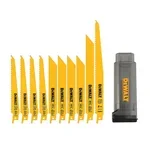 |
DEWALT DW4898 10-Piece Bi-Metal Reciprocating Saw Blade Set – $16.99 A standard T-shank multi-pack like this locks into any modern reciprocating saw’s keyless clamp — DeWalt, Milwaukee, Bosch, or otherwise — so you’re not locked into one brand’s blades.
|
That cross-brand fit is the whole reason blade multi-packs at the hardware store don’t bother listing which saw brand they’re “for” — they don’t need to, because the clamp geometry is standardized, not proprietary.
Two Shank Types: T-Shank and the Older U-Shank
Reciprocating saw blades come in two shank styles, and the difference is the whole story behind “universal” fit:
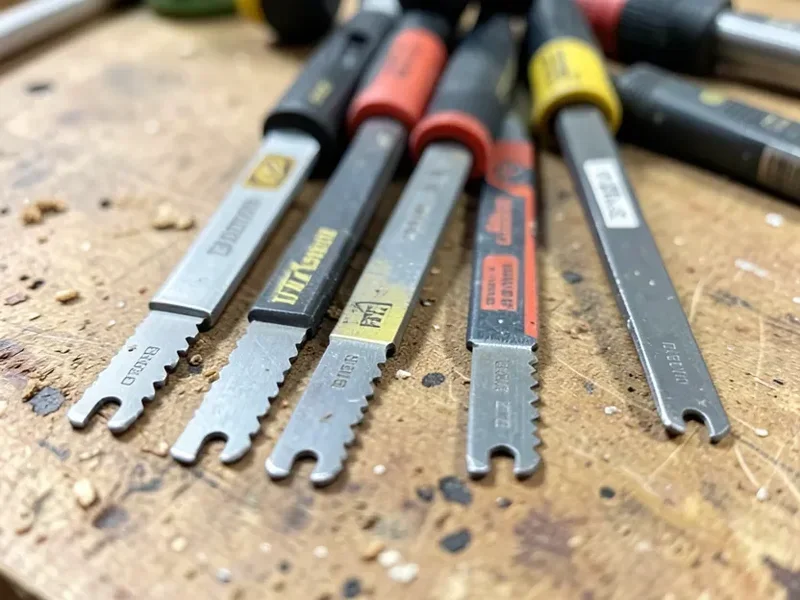
- T-shank (tang): A flat tang with a T-shaped notch cut into it. It slides into a keyless clamp and is held by spring tension or a cam lock — no screws, no wrench. This is the modern standard, and it’s what “universal” refers to when people talk about Sawzall blade compatibility.
- U-shank (also called the “universal shank” in some older catalogs, confusingly): A rounded tang with a U-shaped cutout, usually secured with a set screw rather than a keyless clamp. It was common on older reciprocating saws — mostly pre-2000s Milwaukee and some budget models — and it’s the shank you’ll still find on some older Sawzall units still in service on job sites.
A T-shank blade will not lock into a set-screw U-shank clamp, and a U-shank blade won’t seat correctly in a keyless T-shank clamp. The two aren’t interchangeable with each other, even though both get sold under the same “Sawzall blade” umbrella term. If you’re buying blades for a reciprocating saw and don’t know which clamp it has, that’s the detail worth confirming before you order ten blades at once.
Shank naming causes some genuine confusion because jigsaws use a T-shank versus U-shank distinction too, but it’s a different, smaller-scale hardware standard than the one used on reciprocating saws — a jigsaw T-shank blade will not fit a reciprocating saw’s clamp, and vice versa. If you’re specifically weighing jigsaw blade shank types, our jigsaw-focused U-shank vs. T-shank comparison covers that separately.
Is T-Shank Really Universal Across Brands?
In practice, yes — this is one of the rare cases in the power tool world where “universal” mostly means what it says. The T-shank clamp geometry (tang width, thickness, and notch position) is standardized closely enough that blades from one manufacturer reliably seat and lock in saws from another. Milwaukee, DeWalt, Bosch, Makita, Ryobi, Craftsman, Porter-Cable, and most other major brands all build their current reciprocating saws around this same clamp. That’s why a store-brand or off-brand 10-piece blade set can honestly claim compatibility with “all major reciprocating saw brands” — it’s not marketing exaggeration, it’s an accurate description of a real cross-industry standard.
This is worth contrasting with battery packs and chucks, where “compatible with major brands” claims are frequently misleading or outright false — those systems are proprietary by design. Blade shanks are one of the few places in the reciprocating saw world where manufacturers agreed on shared hardware instead of locking customers into their own ecosystem.
The Real Exception: Older and Specialty Saws
The nuance that gets lost when people say blades are “100% universal” is the installed base of older tools still doing real work. A Milwaukee Sawzall from the 1990s or early 2000s is more likely to have a U-shank, set-screw clamp rather than the keyless T-shank clamp on today’s models. Some compact or specialty reciprocating saws — one-handed models built for tight spaces, or certain rotary/oscillating hybrids marketed loosely as “reciprocating” — also use a proprietary or modified clamp that isn’t a drop-in match for standard T-shank blades.
None of that makes the T-shank standard less real — it’s still the dominant design by a wide margin, and it’s what you’ll get if you buy any current-model reciprocating saw off a shelf today. It just means “check your specific saw” is the more accurate advice than a flat “all Sawzall blades fit all saws,” especially if you’ve inherited an older tool, bought used, or are working with a compact/specialty model.
How to Check Your Saw’s Blade Clamp in 10 Seconds
You don’t need the owner’s manual for this. With the saw unplugged or the battery removed, look at the blade clamp at the front of the tool:
- If there’s a lever, collar, or button you can turn or pull by hand to release the blade — no tools involved — you have a keyless T-shank clamp. Any standard T-shank blade will fit.
- If you need a hex key or screwdriver to loosen a visible screw before the blade comes out, you likely have an older set-screw U-shank clamp. Bring the saw (or the old blade) to the store rather than guessing on a multi-pack.
- If neither matches, or the saw is a compact/specialty model, check the tool’s model number against the manufacturer’s spec sheet before buying blades in bulk.
Shank Isn’t the Only Fit Factor
Getting the shank right only gets you a blade that locks into the saw — it doesn’t guarantee it’s the right blade for the cut. Length and tooth count still need to match the job: a short, fine-tooth blade struggles in a thick wall stud, and a long, aggressive wood blade will chatter and bind trying to make a tight plunge cut in sheet metal. Teeth-per-inch (TPI) is the other spec worth understanding before you buy — we cover that in detail in our guide to what TPI means on Sawzall blades, including which TPI range fits wood, metal, and demolition work.
Buying a Multi-Pack: What Actually Matters
Once you’ve confirmed you have a standard T-shank clamp, a mixed multi-pack is usually the most practical buy rather than picking single blades one at a time. Look for a set that covers both wood-cutting blades (fewer, larger teeth, faster cut) and metal-cutting blades (more, finer teeth, bi-metal construction so they don’t snap on nails or fasteners). Bi-metal construction specifically is worth paying attention to on the label — it flexes instead of cracking when the blade hits something unexpectedly hard, which is common in demolition and remodeling work where you can’t always see what’s inside a wall or floor before you cut into it.
A case or organizer that comes with the set is a small detail that matters more than it sounds — loose reciprocating saw blades in a toolbox drawer are a real cut hazard, and a case keeps the shorter, finer-tooth blades from getting lost among the longer ones.
Blade Care and Storage
Cleaning
Wipe resin, sawdust, and metal filings off the blade after each use rather than letting them bake on — a light coat of machine oil on a rag before storage keeps bi-metal blades from developing surface rust, especially if they’re stored in a garage or job trailer with humidity swings. Built-up debris in the teeth is also a common cause of a blade cutting slower over time even when the teeth themselves aren’t dull yet.
Storage
Keep blades in their case or a dedicated blade holder rather than loose in a drawer — beyond the safety issue, letting blades rattle against each other and other metal tools dulls the teeth and can chip carbide-tipped edges. Sorting by type (wood vs. metal) inside the case saves time on the job, since grabbing the wrong TPI mid-cut is one of the more common reasons a cut comes out rough or takes twice as long as it should.
Frequently Asked Questions
Are all Sawzall blades interchangeable?
Most are, but not all. Modern T-shank blades are interchangeable across nearly every current reciprocating saw brand, including Milwaukee, DeWalt, Bosch, and Makita. Older saws with a set-screw U-shank clamp, and some compact or specialty models, need a matching U-shank or proprietary blade instead.
What types of Sawzall blades are there?
Beyond the T-shank and U-shank split, blades vary by material (wood, metal, bi-metal for mixed-material and demolition work), length, and TPI. Wood blades typically run 5–10 TPI for fast, aggressive cuts; metal blades run 14–24+ TPI for cleaner cuts on thinner or harder material.
How do I choose the right Sawzall blade?
Confirm your saw’s shank type first, then match the blade to the material — length long enough to clear the cut, TPI suited to wood versus metal, and bi-metal construction if you’re cutting demolition material where hidden nails or fasteners are likely.
Can I use a Sawzall blade on any reciprocating saw?
A standard T-shank blade fits the vast majority of reciprocating saws on the market today, regardless of brand. The exceptions are older saws with set-screw U-shank clamps and a small number of compact or specialty models — check your saw’s clamp type before assuming a blade will fit.
Conclusion
The short version holds up under scrutiny: T-shank reciprocating saw blades are a genuine cross-brand standard, and a modern saw from almost any major manufacturer will accept them without an adapter. The nuance worth remembering is that “almost any” still leaves out older set-screw U-shank saws and a handful of specialty models — a ten-second look at your saw’s clamp before you buy a multi-pack is the difference between blades that lock in immediately and a pack that sits unused in a drawer.
Sponsored / affiliate links. As an Amazon Associate I earn from qualifying purchases. I may earn additional commission from eligible campaigns.
 25 Pack 6 in 14/18 TPI Reciprocating Saw Blades for Sawzall Blades,M42 Steel Cobalt Bi-Metal Blades for Automobile Dismantling Metal Cutting,Replace for Milwaukee for Dewalt for Diablo Blade
 10 Pack 9 Inch 8/14 TPI Multi-Purpose Bi-Metal Reciprocating Saw Blades, M42 8% Cobalt Sawzall Blades for Wood, Nail-Embedded Wood & 1/8"-3/8" Medium Metal Cutting