Spiral vs Straight Planer: Noise, Real Blade Costs & Which to Buy
A straight-knife planer slices wood with two or three long blades, while a spiral (helical) planer uses dozens of small carbide inserts set on a twist. The spiral head is quieter and gentler on figured grain, but it is not the money-saver it is often sold as. This guide compares the two on noise, tearout, blade costs, and what it really costs to switch, using current Amazon listing prices around the DeWalt DW735 as the worked example.
Spiral vs Straight Planer: The Short Answer
Best DW735 Helical Upgrade
 |
Byrd Shelix Cutterhead for DeWalt DW735: $473.50 If you already own a three-knife DW735, this is the most direct way to move from straight knives to a spiral-style head without buying a new planer.
|
Buy a spiral or helical head if you plane a lot of hardwood, work in a small shop where noise matters, or hate setting knives. Stay with straight knives if you mostly plane pine and poplar, plane a few boards a month, or want the lowest entry price. The difference is real, but it lives in comfort and surface quality, not in how long the head lasts per dollar spent.
Two terms confuse this topic, so here is how they are used in this article. Straight knives are full-width blades, typically two or three of them, held in the cutterhead. Spiral and helical heads both refer to a cylinder covered in small square carbide inserts arranged in rows that twist around it. Makers use the words loosely, and Byrd sells its own head under the name Shelix. If you want the finer split between spiral and helical layouts, our helical vs spiral cutterhead comparison covers it.
How the Two Heads Actually Cut
A straight knife meets the board along its whole width at once. Each knife edge strikes, cuts, and leaves, and that simultaneous full-width impact is the main reason straight-knife planers are so loud. The knives must also sit at the same height, or one knife does most of the work and leaves a lined surface.
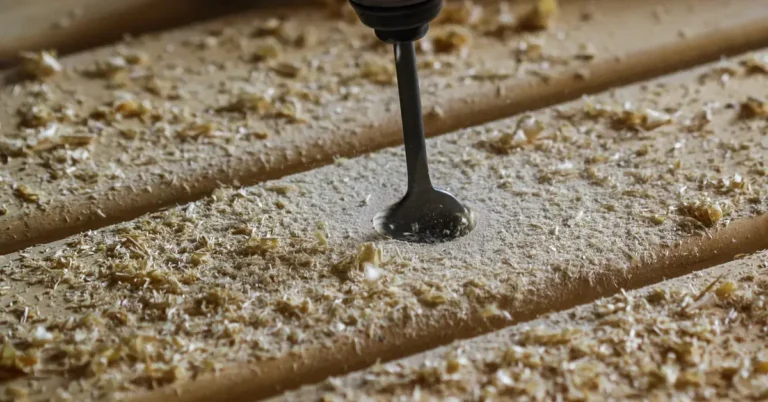
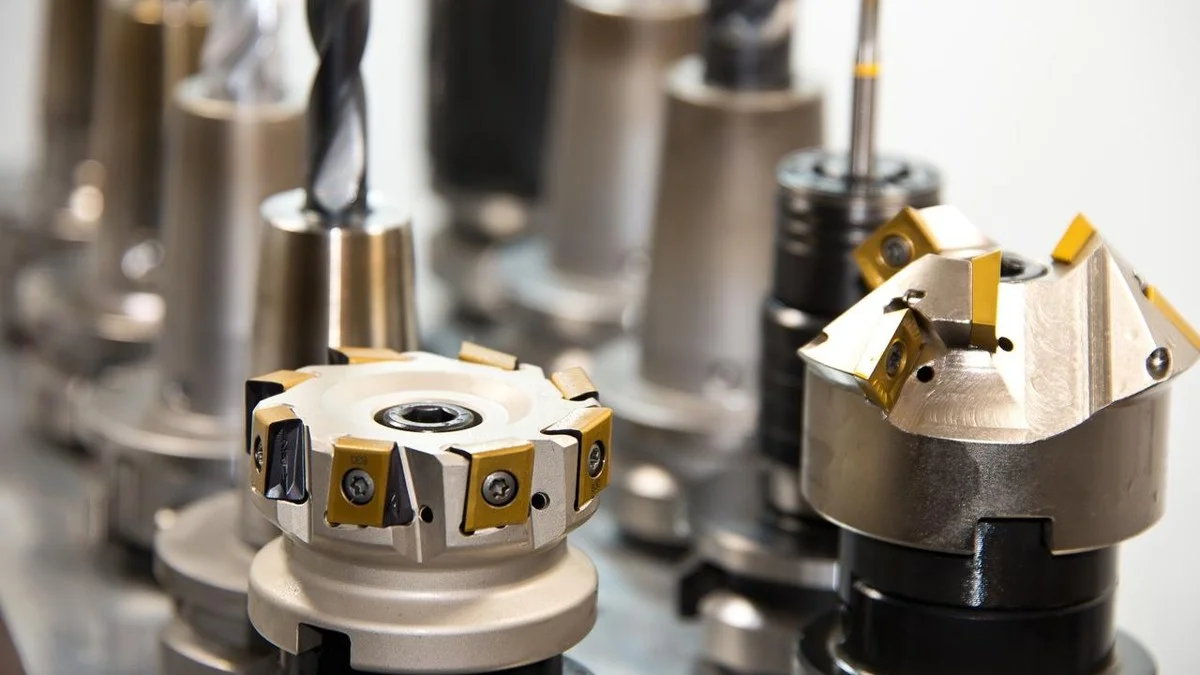
A spiral head cuts in small pieces. Each insert on a Byrd Shelix is about 15mm (roughly half an inch) wide, and the inserts are staggered so only a small slice of the board is being cut at any instant. That is a shearing cut, more like slicing a tomato than chopping it, and it explains both the lower noise and the reduced chip-out, according to Byrd’s own explanation of the design.
| Feature | Straight knife head | Spiral / helical head |
|---|---|---|
| Cutting edge | 2 or 3 full-width knives | Dozens of small carbide inserts, 15mm on a Byrd Shelix |
| Cutting action | Whole width at once | Shearing, a small slice at a time |
| Setup | Knife height must match across the head | Inserts seat in pockets; Byrd states no alignment is needed |
| If it hits a nail | A nick runs the length of the board until you fix it | Usually 1 or 2 small inserts affected; rotate or replace them |
| Noise | Loudest of the two | Lower; users report large reductions, see the noise section |
| Upfront cost | Lowest | Higher, and a retrofit is a big added cost |
The Real Cost Math: Do Spiral Heads Pay for Themselves?
This is the claim competitors repeat most and rarely test with arithmetic. Byrd states that its carbide inserts last about 10 times longer per side than steel knives, and with four sides per insert that becomes a headline of 40 times. That may be true of the cutting edge. It does not follow that the head saves you money, because straight-knife replacement is cheap.
Here are current Amazon listing prices (checked 2026-09-30, and they move often):
| Item | Listing price | What you get |
|---|---|---|
| DeWalt DW7352-2 knife pack | $79.97 | Double-sided 13-inch knives, 2 sets of 3 |
| FOXBC 13-inch knife set for DW735 | $29.99 | Set of 3 replacement knives (third-party) |
| Byrd Shelix insert box | $37.95 | 10 carbide inserts, 4 edges each |
| FOXBC 15mm insert 10-pack | $26.99 | 10 inserts for Shelix-style heads (third-party) |
| Byrd Shelix head for DW735 | $473.50 | The full replacement cutterhead |
| DeWalt DW735X planer, 3 knives | $659.00 | A new straight-knife planer, 20,000 RPM motor |
Work it through. A DeWalt knife pack is two sets for $79.97, about $40 a set, and each knife is double-sided, so one set gives you two fresh head refreshes: roughly $20 per full refresh. Even if a Shelix head never needed a single insert again, you would need around 24 refreshes to earn back the $473.50 in blade savings alone. A hobbyist who refreshes the head once a year would be waiting decades.
The nick scenario is where spiral heads shine, but the dollar gap is small. A hidden nail chips a straight knife and leaves a ridge on every board until you flip or replace that knife. On a Shelix head, Byrd says usually only one or two of the small knives are affected and you rotate them to a fresh edge. A single insert works out to about $2.70 to $3.80 from the listings above. The savings on that incident are mostly time and frustration, not dollars.
So the honest answer is that you pay for a spiral head for quiet, finish quality, and easier maintenance, and any blade saving is a bonus rather than the reason.
Noise: How Much Quieter Is a Spiral Head?
Byrd attributes the drop to the small inserts moving less air than one long knife, and its dealer site quotes a noise reduction of up to 50 percent as reported by users. That is a marketing claim from the seller, not a lab measurement, so treat it as a direction rather than a promise. Independent decibel readings vary by machine, room, and microphone placement, and no specific dB figure is verified for this article.
The safe takeaway is that a spiral head is noticeably less harsh, and it can make a garage session easier on the neighbours. It does not make a planer quiet. Dust collector and motor noise remain, so hearing protection is still the right habit with either head.
Tearout: What a Spiral Head Fixes and What It Does Not
Curly maple, birdseye, and reversing grain are where straight knives struggle, because the blade can lift a fibre before cutting it. The shearing angle of a spiral head cuts that fibre at a slant, which is why Byrd says it virtually eliminates chip-out. In practice, expect a big improvement rather than perfection: wild grain, dull inserts, and a deep pass can still leave rough spots.
Three habits reduce tearout with either head. Take lighter final passes, feed the board so the knives cut with the grain, and slow the feed rate if your machine has two speeds. Reading the grain first helps more than most upgrades.
Myth: A spiral head cures snipe
It does not. Snipe, the slight dip at the start or end of a board, comes from how the infeed and outfeed rollers and bed support the board, not from the cutter design. A spiral head gives a cleaner surface but leaves snipe where it was, so see how to prevent planer snipe for the real fixes. If lines or ridges are your complaint, check why a planer leaves lines before spending on a head.
Retrofit or Buy a New Spiral Planer?
For a DW735 owner the choice is stark. The Byrd retrofit at $473.50 is about 72 percent of a new $659 DW735X. Third-party retrofit heads are listed for less, including a FOXBC head at $369.99. None of them were tested for this article, so read reviews and check fit for your exact model before buying.
If you do not own a planer yet, factory spiral benchtop models can cost about the same as a straight-knife one. Current Amazon listings include a WEN PL1326 spiral planer at $437.40 and a Cutech 40600H with 26 carbide inserts at $499.99, against $447.99 for a DeWalt DW734 with three straight knives. That price overlap at the budget end changes the buying decision.
| Path | Listing price | Best when |
|---|---|---|
| Keep straight knives, buy spares | $30 to $40 a set | You plane softwood or plane rarely |
| Retrofit Byrd Shelix on a DW735 | $473.50 | You already own a DW735 and plane hardwood weekly |
| Third-party DW735 spiral head | $369.99 (FOXBC) | You accept a lesser-known brand for a lower price |
| New budget spiral benchtop planer | $437 to $500 | You are buying your first planer |
Which Should You Choose?
- Weekend builder, mostly pine and poplar: straight knives are fine, and spare knife sets are cheap.
- Hardwood and figured stock every week: a spiral head is the upgrade most likely to change your results.
- Small shop or shared walls: the lower noise is a real benefit, so lean spiral.
- You dislike setting knives: pocketed inserts remove that chore.
- Tight budget, no planer yet: compare a budget spiral model against a straight-knife one at the same price before defaulting to knives.
If you are still deciding whether you need a planer at all, start with do you need a wood planer, and for flattening a board first, see how to square rough lumber. For a sanding alternative, drum sander vs planer weighs the trade-offs.
Changing Knives or Inserts Safely
- Unplug the planer before touching the cutterhead. Do not rely on the switch.
- Wear cut-resistant gloves around straight knives, which are fully exposed when the cover is off.
- Clean the pocket or seat before installing a knife or insert, because a chip under it changes the cutting height.
- Tighten screws to the torque in the manual and re-check after the first few boards.
- Rotate or replace every nicked edge in one sitting instead of planing on and hoping the ridge goes away.
Frequently Asked Questions
Are spiral planers better than straight knife planers?
For finish quality on hardwood and lower noise, yes. For softwood and low use, straight knives do the job at a lower price, and the extra cost of a spiral head rarely pays back in blade savings.
Are spiral cutterhead planers quieter?
Yes. The small inserts cut a slice at a time instead of hitting the board along its whole width. Vendors quote reductions of up to 50 percent from user reports, but these are not lab measurements, and hearing protection is still advised.
Do spiral planer heads eliminate tearout?
They reduce it a lot on figured woods thanks to the shearing cut, but wild grain, dull inserts, and heavy passes can still tear. Light passes and correct feed direction still matter.
Is it worth upgrading a DW735 to a spiral head?
It depends on your use. The Byrd Shelix retrofit is listed at $473.50, about 72 percent of a new DW735X, and blade savings alone are unlikely to repay it, so the case rests on noise, finish, and less setup work.
How often do you replace spiral head inserts?
Inserts have four edges, so a dull or nicked insert is rotated to a fresh edge before being replaced. How long that takes depends on the wood and how much grit or metal it hits.
Summary
Choose a spiral head for quiet, cleaner hardwood surfaces, and easy maintenance. Choose straight knives for price and for light softwood work. Do not buy a spiral head to save on blades, because the arithmetic does not support that.
Sponsored / affiliate links. As an Amazon Associate I earn from qualifying purchases. I may earn additional commission from eligible campaigns.