
Cedarwood Scent Description: Your Essential Guide
The scent of cedarwood is warm, woody, and slightly sweet, with a clean, balsamic undertone. Think of a cozy log cabin, a freshly sharpened pencil, or the inside of a cherished hope chest. This rich, comforting aroma is created by natural oils in the wood, making it a favorite for furniture, closets, and crafts.
Hello friends! It’s Md Meraj, your guide in the workshop. Have you ever opened an old chest and been greeted by that wonderful, nostalgic smell? Or walked into a closet lined with beautiful, reddish wood and just taken a deep breath? That, my friends, is the magic of cedarwood. It’s a scent many of us love, but it can be hard to describe. You might know you like it, but putting words to it can be tricky.
Don’t worry! Understanding the scent of cedar is a fun part of woodworking. It helps you choose the right wood for the right project. In this guide, I’ll walk you through everything you need to know about the amazing smell of cedar. We will explore where it comes from, why it lasts so long, and how you can keep it fresh in your own projects. Let’s dive in and get to know this incredible wood together.
What Does Cedarwood Really Smell Like? A Beginner’s Breakdown
Trying to pin down a scent with words is like trying to catch the wind. But let’s give it a go! The best way to understand the cedarwood scent is to break it down into layers. Imagine you’re holding a freshly cut piece of cedar. Close your eyes and breathe it in.
First, you get the main note: woody. This is the foundation. It’s not a damp, forest-floor woodiness, but a dry, clean, and polished wood smell. It reminds you of a well-kept antique store or the frame of a new house being built. It’s solid, reliable, and grounding.
Next, you’ll notice a warm and slightly sweet quality. This isn’t sugary sweet like vanilla. It’s more of a resinous sweetness, almost like a hint of honey or amber. This warmth is what makes the scent so comforting and inviting. It’s the reason cedar-lined closets feel so cozy and protective.
Then comes the balsamic undertone. This is a term from the perfume world, but it’s easy to understand. Think of the crisp, clean scent of a pine forest after it rains. It’s a fresh, slightly resinous note that adds depth and a touch of sharpness. It cuts through the warmth and keeps the scent from being too heavy.
Finally, some people pick up subtle hints of spice or even a touch of camphor. This is very gentle, like a distant echo of cinnamon or clove. This complexity is what makes the scent so fascinating and timeless. It’s a smell that tells a story of forests, craftsmanship, and memories.

The Different Types of Cedar and Their Unique Scents
Not all cedar smells the same! Just like different apples have different flavors, various types of cedar trees produce wood with distinct aromas. Knowing the differences can help you pick the perfect wood for your project’s look, feel, and of course, smell. Let’s look at some of the most common types you’ll find in the workshop.
Understanding these varieties is key. Some “cedars” aren’t even true cedars from the genus Cedrus. For example, the popular Eastern Red Cedar is actually a type of juniper. The U.S. Forest Service notes that its scientific name is Juniperus virginiana. This is a fun fact for any woodworker!
Here’s a simple table to help you tell them apart:
| Type of Cedar | Common Use | Scent Description | Scent Strength |
|---|---|---|---|
| Eastern Red Cedar (Aromatic Cedar) | Closet linings, chests, decorative boxes | Classic “cedar chest” smell. Sharp, pungent, woody, and slightly spicy. Very nostalgic. | Strong |
| Western Red Cedar | Siding, decking, outdoor furniture, saunas | Softer and sweeter than its eastern cousin. More earthy and less sharp. Very pleasant and spa-like. | Medium |
| Spanish Cedar | Humidors, fine furniture, boat building | Spicy, peppery, and pungent. Often described as having a “cigar box” aroma. Very distinct. | Strong |
| Atlas Cedarwood | Essential oils, perfumery (less common for lumber) | Warm, sweet, and almost creamy. Has a deep balsamic note without the sharpness of Red Cedar. | Medium |
| Northern White Cedar | Fences, shingles, log cabins | Mild, clean, and slightly sweet. Much more subtle than Red Cedar. Less aromatic overall. | Light |
As you can see, if you’re building a moth-repellent chest, Eastern Red Cedar is your best bet due to its strong, pungent oils. If you’re building a sauna or outdoor bench, the softer, sweeter scent of Western Red Cedar creates a wonderfully relaxing atmosphere.
Why Does Cedarwood Smell So Good (and Last So Long)?
The secret to cedar’s amazing and long-lasting aroma lies in its natural chemistry. It’s not magic, but it certainly feels like it! The wood is packed with natural oils and compounds that it produces to protect itself from insects and decay. We just happen to find these protective oils wonderfully fragrant.
The Science Made Simple
- Aromatic Oils: The primary drivers of the scent are volatile organic compounds stored in the wood’s heartwood (the dense inner part). The two most famous are cedrol and cedrene. Cedrol gives it that sweet, woody character, while cedrene adds a sharper, balsamic note.
- Slow Release: Cedarwood has a porous but dense cellular structure. This structure acts like a natural time-release capsule. It holds onto these fragrant oils and releases them very slowly over years, and even decades. This is why a cedar chest made by your grandfather can still smell fresh today.
- Protection equals Perfume: These same oils that smell great to us are repellents for many insects, like clothes moths and carpet beetles. The wood isn’t trying to smell nice for us; it’s trying to survive! We are just lucky beneficiaries of its brilliant defense mechanism.
So, when you sand a piece of cedar, you are exposing new layers of wood cells, releasing a fresh burst of these trapped oils. This is why the scent can be revived so easily, even after many years.
Cedarwood Scent in Your Home and Workshop
Beyond just smelling nice, the aroma of cedarwood brings practical benefits to your home and creative space. It’s a functional feature that adds value to anything you build. Let’s explore some of the ways this amazing scent can enhance your projects and your environment.
A Natural Pest Repellent
This is cedar’s most famous superpower. The oils in aromatic cedar (especially Eastern Red Cedar) are a powerful natural deterrent for clothes moths, their larvae, and other pests like cockroaches and silverfish. This is why it has been the go-to wood for centuries for building:
- Hope Chests & Blanket Trunks: To protect precious linens, wool blankets, and heirloom clothing.
- Closet Linings: Cedar planks or panels can turn any closet into a protective sanctuary for your wardrobe.
- Dresser Drawer Liners: A simple sheet of cedar in a drawer can help keep sweaters and socks safe and smelling fresh.
Building something with cedar isn’t just about craftsmanship; it’s about creating a functional piece of furniture that actively protects what’s inside. It’s a thoughtful touch that adds incredible value.
Creating a Calming Workshop Atmosphere
Your workshop should be a place of focus and enjoyment. The environment plays a huge role in that. The smell of cedar is well-known in aromatherapy for its calming and grounding properties. When you’re cutting or sanding cedar, you’re not just making sawdust; you’re releasing a natural fragrance that can help reduce stress and improve focus.
Imagine the difference between working in a space that smells of chemical glues and finishes versus one filled with the warm, natural aroma of wood. It makes the entire creative process more pleasant and rewarding. Having cedar scraps in a bin can even gently scent your shop for weeks.
Adding Value and Craftsmanship to Your Projects
The scent of cedar instantly communicates quality and care. When you hand over a gift you made—like a jewelry box or a small keepsake chest—the moment the recipient opens it and gets that first whiff of cedar, it elevates the entire experience. It’s an invisible but powerful feature.
- Sensory Experience: A project made with cedar engages more than just sight and touch; it engages the sense of smell, creating a stronger emotional connection.
- A Premium Touch: Lining a box made from a more common wood like oak or pine with a thin layer of Spanish Cedar adds a surprising and luxurious detail.
- A Lasting Impression: The scent lingers, reminding the user of the craftsmanship and thoughtfulness that went into the piece long after it was made.
How to Revive the Scent of Old Cedar Wood
Has your old cedar chest or closet lost its powerful aroma? Don’t worry, that wonderful scent is still locked inside! The surface of the wood can get sealed with dust, oils, and simple exposure to the air over time, trapping the fragrance. All it takes is a little bit of simple maintenance to bring it roaring back to life.
Here is a simple, step-by-step process that anyone can follow. It’s quick, easy, and incredibly effective.
- Start with a Gentle Cleaning: First, you need to clean the surface. Empty the chest or closet completely. Use a vacuum with a brush attachment to remove all loose dust and debris. Afterward, wipe the surface with a clean, dry, lint-free cloth. Avoid using water or chemical cleaners, as they can stain the wood or create a barrier that blocks the scent.
- The Magic of Light Sanding: This is the most important step. Take a piece of fine-grit sandpaper (around 220-grit is perfect) and lightly sand all the interior surfaces of the wood. You don’t need to press hard or remove a lot of material. The goal is simply to remove the very top microscopic layer of wood fibers to expose the fresh, oil-rich wood underneath. You’ll immediately smell the difference as the fragrance is released!
- Wipe Away the Dust: After sanding, there will be a fine layer of cedar dust. It’s important to remove this. Use a dry cloth or a tack cloth to wipe down all the surfaces thoroughly. You can also use your vacuum with the brush attachment again to make sure you get all the dust out of the corners.
- (Optional) A Boost with Cedar Oil: If you want an extra-strong scent, you can apply a tiny amount of 100% natural cedarwood essential oil. Put a few drops on a clean cloth and wipe a very thin layer onto the wood. Let it soak in completely for a few hours before putting your items back. A little goes a long way, and be sure to use oil derived from the same type of cedar if possible. This step isn’t necessary for most projects, as sanding alone does a fantastic job.
And that’s it! With these simple steps, your decades-old cedar project will smell as good as the day it was made. It’s a great way to maintain your projects and keep them functional for generations.
Cedarwood vs. Other Popular Wood Scents
Cedarwood has a superstar reputation, but it’s not the only great-smelling wood on the block. Understanding how it compares to other popular scents like pine and sandalwood can help you appreciate its unique qualities and decide which aroma is right for your mood or project.
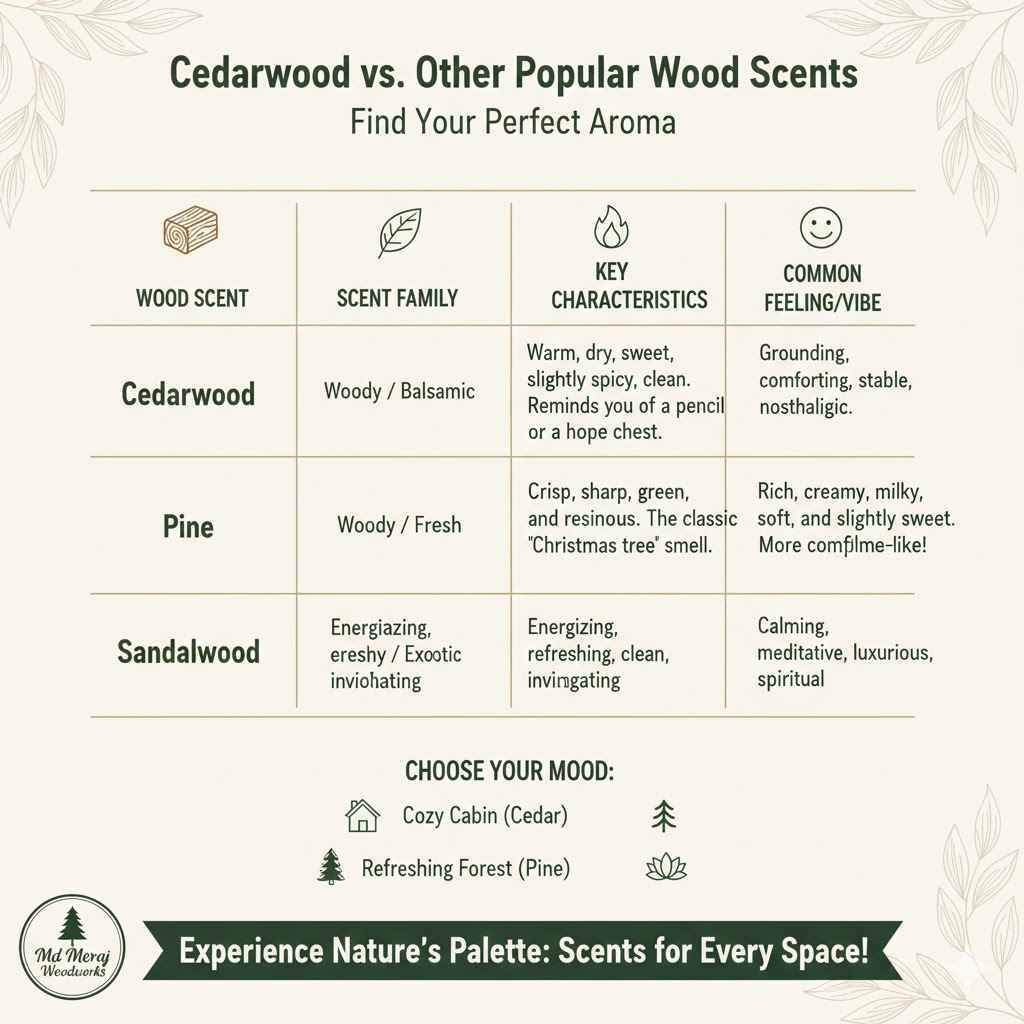
Here’s a comparison table to break down the key differences:
| Wood Scent | Scent Family | Key Characteristics | Common Feeling/Vibe |
|---|---|---|---|
| Cedarwood | Woody / Balsamic | Warm, dry, sweet, slightly spicy, clean. Reminds you of a pencil or a hope chest. | Grounding, comforting, stable, nostalgic. |
| Pine | Woody / Fresh | Crisp, sharp, green, and resinous. The classic “Christmas tree” smell. | Energizing, refreshing, clean, invigorating. |
| Sandalwood | Woody / Exotic | Rich, creamy, milky, soft, and slightly sweet. More complex and perfume-like. | Calming, meditative, luxurious, spiritual. |
Think of it this way: if you want your home to feel like a cozy, protective cabin, cedar is your friend. If you want it to feel like a refreshing walk through a crisp forest, pine is the answer. And if you’re looking for a scent that feels more like a calm, quiet temple or a luxury spa, sandalwood would be the choice.
Frequently Asked Questions (FAQ)
How long does the smell of cedar last?
The scent of cedarwood can last for many years, even decades! The strong aroma comes from natural oils locked in the wood. While the surface scent may fade over time, it can be easily revived by lightly sanding the wood, which exposes fresh layers and releases the fragrance again.
Is the smell of cedarwood safe for pets?
Generally, the natural scent from cedar wood planks or furniture is considered safe for most pets like dogs and cats. However, concentrated cedarwood essential oils can be toxic if ingested or applied to their skin. It’s always best to keep pets from chewing on cedar wood and to consult your veterinarian if you have any concerns, especially with birds or small rodents who can be more sensitive to strong scents.
Can I make my own cedar closet lining?
Absolutely! This is a fantastic and achievable DIY project. You can buy thin planks or panels of Eastern Red (Aromatic) Cedar from most home improvement stores. Simply measure your closet walls, cut the planks to fit, and attach them using construction adhesive or small finishing nails. It’s a weekend project that adds incredible value and protection to your home.
Does all cedar wood repel moths?
While most cedar has some aromatic properties, Eastern Red Cedar (often called Aromatic Cedar) is the most effective at repelling clothes moths due to its high concentration of protective natural oils. Other cedars, like Western Red Cedar, have a pleasant smell but are not as potent as a pest deterrent.
Why doesn’t my old cedar chest smell anymore?
The scent hasn’t gone away; it’s just trapped! Over time, the pores on the wood’s surface get clogged with dust and air exposure, which forms a barrier. A quick, light sanding with fine-grit sandpaper is all you need to open up those pores and release the wonderful cedar aroma once again.
What’s the difference between cedarwood essential oil and the smell from the wood?
The smell from the wood is the slow, natural release of aromatic compounds. It’s a subtle, background scent. Cedarwood essential oil is a highly concentrated liquid extracted from the wood through a process like steam distillation. The oil is much more potent and intense. Think of it as the difference between smelling an orange peel versus a drop of concentrated orange extract.
Is Western Red Cedar the same as Eastern Red Cedar?
No, they are different species with different properties. Eastern Red Cedar (Juniperus virginiana) has the classic sharp, pungent scent and is used for closet linings. Western Red Cedar (Thuja plicata) has a softer, sweeter smell and is often used for outdoor projects like decks and siding because of its excellent weather resistance.
Conclusion: Embrace the Timeless Scent of Cedar
So there you have it—a full tour of the wonderful world of the cedarwood scent. From the warm, woody aroma of an antique chest to the crisp, clean notes of a modern sauna, cedar offers a range of smells that can enrich our homes and workshops. It’s more than just a pleasant fragrance; it’s a sign of quality, a natural protector, and a direct connection to the beauty of the forest.
Now you can not only recognize that distinct smell but also describe it, understand where it comes from, and even bring it back to life in your older pieces. I hope this guide gives you the confidence to choose the right cedar for your next project and to appreciate the unique character it brings. The next time you’re in the lumber aisle or your workshop, take a moment to pick up a piece of cedar. Breathe it in and enjoy one of the simplest and most rewarding pleasures of woodworking.