Cedar Closet Ideas: DIY Layouts, Real Costs & 1 Mistake to Avoid
A cedar closet uses aromatic Eastern or Western red cedar planks to repel moths and control humidity, but sealing or varnishing the wood blocks the oils that make it work. Skip that step and a $360 DIY lining job loses its scent within months instead of years. This guide covers plank costs per square foot, Eastern versus Western red cedar, layout ideas for shelving and rods, and the sanding schedule that keeps the aroma alive.
See our comparison of real cedar closet products by price and species if you already know you want to line a closet and just need to pick the materials.

Benefits of a Cedar Closet
Best Cedar Closet Lining Pick

Real Wood Cedar Wall Boards Kit (20 Sq Ft) – $129.00
Solid aromatic cedar boards sized to line a standard reach-in closet in one afternoon — matches the plank-based approach this guide’s cost breakdown is built around, at roughly $6.45 per square foot.
- Best for: A full DIY closet lining project, walls and back panel
- Why we picked it: Solid boards (not veneer), so sanding to refresh the scent works for years
- Main drawback: Natural color and width variation between pieces — not a uniform, machined look
Compare more cedar closet options
 Option 1 Cedar Tongue & Groove Panels (9.7 Sq Ft) – $79.99
|
 Option 2 Cedar Oil, 8 oz – $28.40
|
 Option 3 SuiteSymphony Closet Organizer Kit – $153.26
|
As an Amazon Associate we earn from qualifying purchases.
Aromatic cedar is a natural moth, cockroach, and silverfish deterrent — the same cedarwood oils that give it a scent are what insects avoid. Cedar also acts as a mild natural dehumidifier, which keeps stored clothing drier and helps prevent the mildew that ruins furs, wool, and leather in a standard closet. Because the protection comes from the wood’s own oils rather than a chemical treatment, cedar lining stays safe around kids and pets — but only as long as the wood surface stays bare (more on that below).
Choosing the Right Cedar
The two species sold for closets behave differently. Aromatic Eastern Red Cedar has the strongest, longest-lasting scent and is the standard choice for tongue-and-groove closet planking. Western Red Cedar has a milder aroma but resists moisture and warping better, which is why it shows up more often in humid basements or exterior-adjacent closets. For a full breakdown of grain, cost, and durability differences, see our Eastern Red Cedar vs. Western Red Cedar guide.
| Cedar Type | Scent Strength | Best For |
|---|---|---|
| Aromatic Eastern Red Cedar | Strong, long-lasting | Standard closet lining, moth protection |
| Western Red Cedar | Mild | Humid spaces, basements, moisture control |
Whichever species you pick, inspect the boards before buying: reject anything with splits, loose knots, or a faint (rather than strong) cedar smell — a weak smell in the store means a weak smell once it’s installed.
How Much Does It Cost to Line a Closet in Cedar?
For a standard 4-by-8-foot closet, tongue-and-groove cedar planks run about $360 in materials; 1/4-inch aromatic cedar plywood panels cost roughly $200 to $230 for the same space, with a milder scent. Add trim and fasteners and a full plank job lands near $400 total. Professional installation typically runs $1,000 to $3,000 depending on closet size and labor rates in your area.
📊 Cedar planks cost about $30 per box, covering roughly 15 square feet — a full 4’x8′ closet needs about $360 in planks or $230 in plywood panels. — Source: Bob Vila, 2026
Plywood is the better choice on a tight budget or for a closet you’re lining yourself in an afternoon; solid tongue-and-groove planks are worth the extra cost when the scent needs to last as long as possible between sandings.
Designing Your Cedar Closet
Measure the space before buying anything — hanging space, shelf depth, and drawer width all depend on the closet’s actual dimensions, not a generic layout. Use double hanging rods to roughly double clothing capacity in the same footprint, and reserve the top shelf for rarely-used seasonal items since it’s the hardest to reach. Clear bins with labels keep small items visible without turning every drawer into a search project.
How to Install Cedar Planks in a Closet
Cedar planks can go directly over existing drywall as long as the wall is clean, dry, and smooth. Let the wood adjust to the closet before installing it, and don’t seal the finished surface — that step comes later in this guide, and skipping it is what keeps the closet working.
- Acclimate the wood: Let cedar planks sit inside the closet for 48 to 72 hours before installing so they adjust to the room’s humidity and don’t warp later.
- Measure and order extra: Measure wall and ceiling area, then add 10 to 15 percent to the total for cutting waste and mistakes.
- Install horizontally over drywall: Fasten planks to the wall studs with finish nails or construction adhesive, working horizontally from the bottom up.
- Sand after installation: Lightly sand the installed cedar with fine-grit sandpaper to open the grain and release the strongest aroma.
- Leave it bare: Skip stain, sealant, or polyurethane entirely — a top coat traps the aromatic oils inside the wood instead of letting them do their job.

The Biggest Mistake: Sealing the Cedar
The most common cedar closet mistake isn’t a design choice — it’s finishing the wood like any other piece of trim. Aromatic cedar’s scent and pest resistance both come from oils sitting in the open grain at the wood’s surface. Any stain, varnish, or polyurethane forms a film over that surface and seals the oils in, which is exactly backwards from what a cedar closet is supposed to do.
“The biggest mistake we see in cedar closets is someone brushing on a coat of polyurethane for a ‘finished’ look — that seals in the oils, and the closet stops smelling like cedar or repelling moths within a season. Leave it bare and just sand it every few years instead.”
Our team
Essential Features
Shelving Options
Wooden shelves hold the most weight and pair naturally with cedar planking. Adjustable shelves let you reconfigure the space as your storage needs change. Wire shelves allow air to circulate around folded clothes, which matters more in a sealed closet than an open one. Corner shelves and pull-out shelves make small or deep closets easier to use fully.
Hanging Solutions
Double hanging rods roughly double clothing capacity in the same wall space. Pull-down rods bring a high rod within reach without a step stool. Valet rods hold an outfit for the next day, and simple hooks handle bags, hats, and belts that don’t need a hanger at all.
Incorporating Accessories
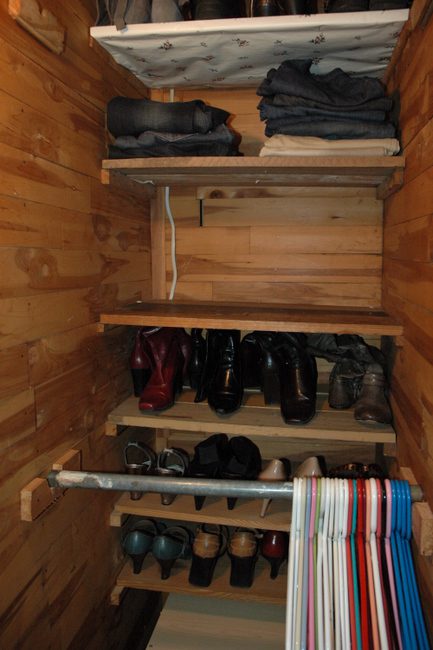
Drawer inserts keep jewelry, socks, and small accessories separated instead of sliding around loose. A dedicated shoe rack gets pairs off the floor and visible at a glance — vertical racks work well in narrow closets, while adjustable shelf-style racks fit more pairs in a wider one. For a closet you’re building from scratch, our cedar plywood closet guide covers a budget-friendly panel approach to the same layout ideas.
Maintenance Tips
Dust cedar shelves and walls with a soft, dry cloth — never water, which can raise the grain and encourage mildew on an otherwise moisture-resistant wood. Cedar needs a certain surface area exposed to keep repelling moths effectively, so avoid covering large sections with hanging garment bags long-term.
Cedar’s scent fades as the surface oils oxidize, typically every three to seven years depending on how often the closet is opened and how much airflow it gets. When it fades, lightly sand the wood with 150-grit sandpaper to expose fresh, oily wood underneath — this is the same “sand, don’t seal” principle from above. Between sandings, a few drops of cedar oil wiped on with a soft cloth restores the scent for a few more months.
Inspiration and Ideas
A modern cedar closet pairs sleek, minimal shelving with a light stain on any surrounding trim (never on the cedar itself), glass doors, and LED strip lighting to show off the wood’s natural grain. A rustic take leans into rough-hewn boards, iron hooks, and woven baskets for a warmer, cabin-style feel. Both styles work with the same bare, unsealed cedar underneath — the difference is entirely in the hardware and trim around it.
Frequently Asked Questions
What Are the Benefits of a Cedar Closet?
A cedar closet repels moths and other pests, resists mildew by controlling humidity, and adds a pleasant natural scent without chemicals. It’s durable, low-maintenance, and safe around kids and pets.
How Do You Build a Cedar Closet?
Measure the space, let the cedar planks acclimate for 48 to 72 hours, then install them horizontally over existing drywall into the studs with finish nails or adhesive. Sand the surface afterward to release the scent, and leave it unsealed.
Should You Seal or Stain a Cedar Closet?
No. Sealing, staining, or applying polyurethane traps the aromatic oils inside the wood instead of letting them reach the surface, which stops the closet from repelling moths or smelling like cedar. Leave the wood bare.
How Much Does It Cost to Line a Closet With Cedar?
A standard 4-by-8-foot closet costs about $360 in tongue-and-groove cedar planks, or roughly $200 to $230 in aromatic cedar plywood panels. Professional installation typically runs $1,000 to $3,000 depending on closet size.
How Do You Maintain a Cedar Closet?
Dust with a dry cloth and avoid water. Every three to seven years, once the scent fades, sand the wood lightly with 150-grit sandpaper to expose fresh oils, and use cedar oil between sandings to extend the scent.
Conclusion
A cedar closet earns its cost back in protected clothing and a closet that never smells musty — as long as the wood stays bare. Pick Eastern red cedar for the strongest scent or Western red cedar for a moisture-prone space, budget $230 to $400 for a standard closet, and skip the sealant entirely. Sand every few years, and the same lining keeps working for decades.
Sponsored / affiliate links. As an Amazon Associate I earn from qualifying purchases. I may earn additional commission from eligible campaigns.