Dark Hardwood Floor Living Room Ideas: Essential Design
Transform your living room with dark hardwood floors! This guide offers easy design tips for a sophisticated, cozy space, focusing on balancing colors, furniture, and decor for a stunning, approachable look anyone can achieve.
Thinking about dark hardwood floors for your living room? You’re not alone! Many homeowners love the rich, elegant look they bring. But sometimes, picturing how to pull it all together can feel a bit daunting. You might wonder how to match your furniture, what colors will work best, or if the room will feel too dark. Don’t worry! With a few simple ideas and a touch of creativity, you can create a warm, stylish, and inviting living space that feels just right. I’m here to walk you through it, step-by-step, making it easy and enjoyable.
Why Choose Dark Hardwood Floors for Your Living Room?
Dark hardwood floors, like walnut, espresso, or dark oak, add a touch of timeless elegance and warmth to any living room. They create a grounded, cozy atmosphere that feels both luxurious and inviting. Unlike lighter woods, dark floors have a natural ability to hide minor scuffs and dirt, making them a practical choice for busy households. They serve as a beautiful, versatile foundation for a wide range of design styles, from modern minimalist to rustic farmhouse.
The Charisma of Dark Wood
The deep tones of dark hardwood floors bring a sense of sophistication and depth to a room. They can make a large living room feel more intimate and cozy, and can provide a striking contrast against lighter walls and furniture, making your decor pop. It’s like having a beautiful, natural piece of art underfoot!
Practicality Meets Beauty
For many of us, life in a living room means kids, pets, and everyday spills. Dark hardwood floors are surprisingly forgiving. While no floor is entirely “indestructible,” the darker hues tend to camouflage dust, dirt, and minor scratches better than their lighter counterparts. This means less stress about maintenance and more time to enjoy your beautiful space. According to HGTV, choosing the right wood finish is key to durability, and dark finishes often come with robust protective topcoats.
Key Design Principles for Your Dark Hardwood Living Room
Getting the look right with dark hardwood floors is all about balance. Think of your floor as the foundation. Now, let’s build on that!
1. Mastering the Light and Dark Contrast
The most crucial element when working with dark hardwood floors is managing light. You want to create a warm, inviting atmosphere, not a cave!
- Walls: Opt for lighter paint colors on your walls. Crisp whites, warm off-whites, soft grays, pale blues, or gentle greens can beautifully brighten the space and make the dark floors stand out as a feature. A light, neutral palette ensures your living room feels airy and spacious.
- Ceilings: Painting your ceiling a bright white is a simple yet effective trick to maximize natural light and make the room feel taller.
- Natural Light: Maximize natural light by keeping window treatments light and airy. Sheer curtains or light-colored blinds can diffuse sunlight beautifully without blocking it.
2. Furniture Placement and Style
Your furniture choices will significantly impact how your dark hardwood floor living room feels. Consider both style and color.
- Color Palette: Complement your dark floors with furniture in medium to light tones. Think about creams, tans, light grays, soft blues, or even muted pastels. This contrast prevents the room from feeling too heavy.
- Material Mix: Combine different textures and materials. A plush cream sofa, a natural wood coffee table (perhaps in a lighter tone or with lighter accents), and woven accent pieces can add warmth and visual interest.
- Leggy Furniture: Furniture with visible legs, especially sofas and chairs, allows the floor to be seen more, enhancing the sense of space and showcasing the beautiful wood.
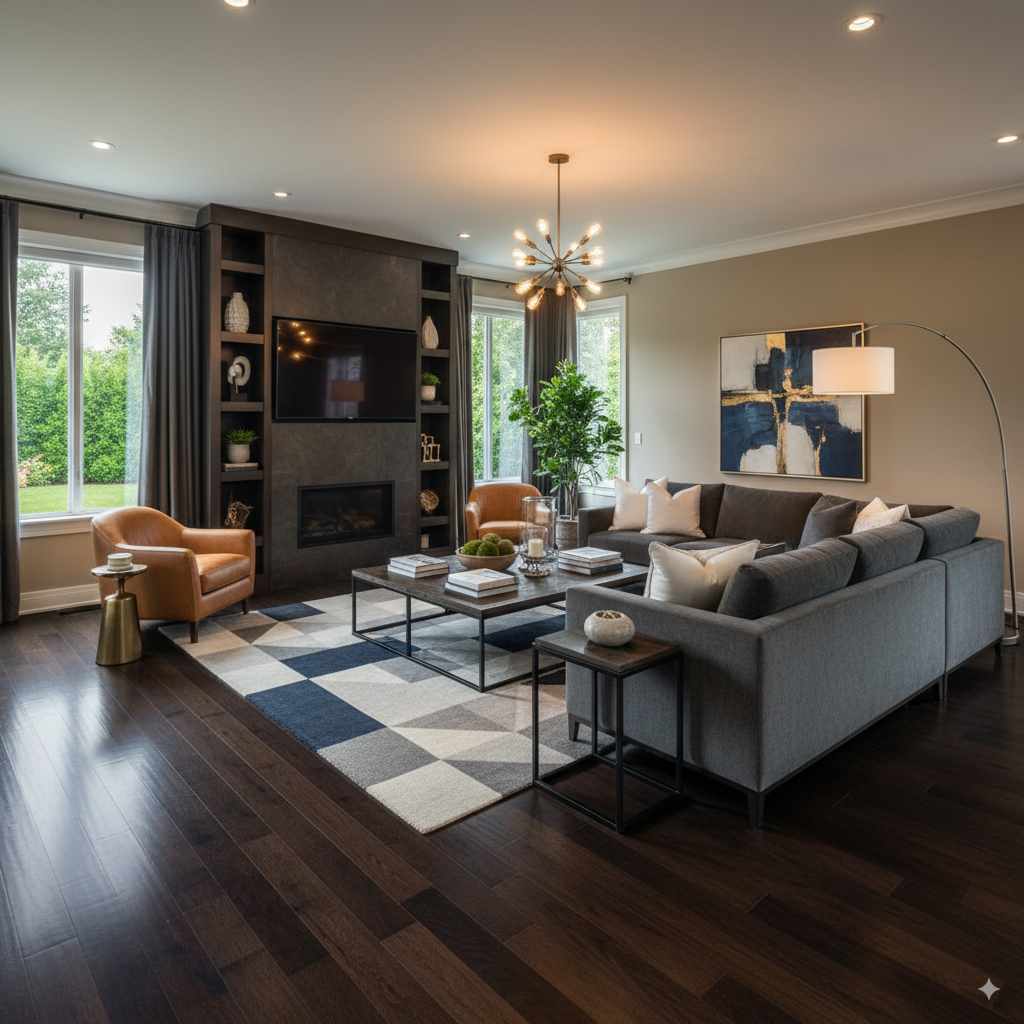
- Area Rugs: A well-chosen area rug can break up large expanses of dark wood, add color and pattern, and define specific zones within your living room. Opt for lighter rugs with bold patterns or subtle textures to draw the eye and add comfort.
3. Lighting is Your Best Friend
With dark floors, thoughtful lighting is non-negotiable. Layering different light sources is key to creating a functional and inviting ambiance.
- Ambient Lighting: This is your general, overhead light. Consider a stylish pendant light or a flush-mount fixture. Dimmers are a fantastic addition, allowing you to control the mood.
- Task Lighting: Think about areas where you’ll be reading or working. Floor lamps and table lamps provide focused light and add decorative elements.
- Accent Lighting: Use this to highlight artwork or architectural features. Sconces on the walls can add a warm glow and reduce shadows.
- Warm Bulbs: Always choose light bulbs with a warm color temperature (around 2700K-3000K). This creates a cozy, inviting glow, starkly different from harsh, cool-toned lights.
4. Decor and Accessories
These are the finishing touches that bring your dark hardwood floor living room to life!
- Mirrors: Strategically placed mirrors can reflect light and create the illusion of more space, making the room feel brighter and larger.
- Metallic Accents: Incorporate touches of brass, gold, or brushed nickel in your decor. These metals catch the light beautifully and add a touch of sparkle against the dark wood.
- Artwork: Choose artwork with lighter backgrounds or vibrant colors to provide a visual break and add personality.
- Greenery: Potted plants bring life and color into the space, offering a natural contrast to the dark wood.
Design Styles That Shine with Dark Hardwood Floors
Dark hardwood floors are incredibly versatile and can anchor almost any design style. Here are a few popular choices:
Modern & Contemporary
For a sleek, sophisticated look, pair dark hardwood floors with clean-lined furniture, minimal clutter, and a neutral color palette. Think of light gray sofas, white accent chairs, and geometric metal decor. The dark floors provide a rich, grounding element to the minimalist aesthetic.
Rustic & Farmhouse
Embrace the warmth of dark wood with rustic elements. Combine your dark floors with reclaimed wood furniture, cozy textiles like chunky knit throws, and vintage-inspired decor. Lighter-colored walls and perhaps a generously sized, light-colored area rug will keep the space feeling bright and welcoming.
Traditional & Elegant
Dark hardwood floors are a classic choice for traditional living rooms. Pair them with plush, upholstered furniture in rich jewel tones or classic neutrals. Elaborate moldings, antique-inspired rugs, and elegant lighting fixtures will complete the look.
Bohemian & Eclectic
Don’t be afraid to mix and match! Dark floors can handle a bit of playful design. Layer different patterns and textures with your furniture and decor. Think colorful rugs, mixed-material furniture, and an abundance of plants and personal treasures. The dark wood provides a stable, sophisticated base for a more vibrant, free-spirited vibe.
Understanding Different Types of Dark Hardwood
Not all dark hardwoods are created equal. The species of wood and the stain used will affect the final look, durability, and cost. As a beginner, understanding these differences can help you make an informed decision.
Popular Dark Wood Species
While many wood species can be stained dark, some naturally lend themselves well to this treatment and offer distinct characteristics:
- Walnut: Known for its rich, dark chocolate hues and beautiful, unique grain patterns. It’s a strong hardwood, but can be softer than oak.
- Mahogany: Offers a deep, reddish-brown tone that darkens beautifully with age and light. It’s prized for its stability and resistance to wear.
- Cherry: While often lighter, cherry wood darkens significantly over time when exposed to light, developing a rich, warm, reddish-brown patina.
- Oak (Red & White): Oak is a very popular, durable, and readily available hardwood. Stains like espresso, dark walnut, or ebony create a striking dark finish that still showcases the wood’s natural grain.
Stain Options for Dark Floors
You can achieve a dark look on almost any hardwood species by applying stain. The darker the stain, the more the natural grain of the wood may be obscured, but the deeper the richness. Some common dark stain terms include:
- Espresso: A very deep, dark brown, often with cool undertones.
- Dark Walnut: A rich, warm, dark brown, similar to natural walnut.
- Ebony: The darkest, almost black stain, offering a dramatic, modern look.
- Jacobean & Provincial: These are also popular dark brown stains with varying undertones, traditionally used for a classic, rich look.
The Woodworking Network offers great insights into selecting the right stain shades to achieve your desired aesthetic.
A Table of Dark Wood Floors: Pros and Cons
To help you weigh your options, here’s a quick look at the advantages and disadvantages of opting for dark hardwood floors.
| Aspect | Pros | Cons |
|---|---|---|
| Aesthetics | Elegant, sophisticated, warm, luxurious feel. Creates a grounded, cozy atmosphere. Makes lighter decor pop. | Can make a room feel smaller or darker if not balanced with light. May show dust or scratches more prominently in direct sunlight depending on finish. |
| Maintenance | Hides minor dirt and scuffs well. Requires regular sweeping and occasional damp mopping. | Deep scratches can be harder to repair discreetly than on lighter floors. Requires careful use of furniture pads. |
| Versatility | Complements a wide range of decor styles (modern, rustic, traditional). | Can sometimes dominate a space if not balanced with other elements. Color matching for future repairs or additions can be tricky. |
| Resale Value | Generally perceived as a premium feature, potentially increasing home value. | Not as universally preferred as mid-tone woods by all buyers, though still highly desirable. |
| Cost | Varies greatly by wood species and installation method. Can be a significant investment but offers long-term value. | Premium wood species (like walnut) and professional installation can increase upfront costs. |
Bringing it all Together: A Step-by-Step Approach to Designing Your Space
Let’s break down how to design your living room with dark hardwood floors into manageable steps. Think of this as your blueprint!
Step 1: Visualize Your Goal
Before you buy anything, picture the feeling you want your living room to evoke. Is it a cozy reading nook? A sophisticated entertaining space? A family-friendly hub? Having a clear vision will guide your decisions.
Step 2: Assess Your Room’s Light
How much natural light does your living room get? Are there large windows, or is it a bit darker? This is crucial. If you have abundant natural light, you have more flexibility. If it’s a dimmer space, leaning towards lighter walls and ample artificial lighting is key.
Step 3: Choose Your Wall Color Palette
Based on your light assessment and desired mood, select your wall paint.
- For brighter rooms: Neutrals like off-white, light beige, or soft gray work wonderfully.
- For dimmer rooms: Consider colors with a bit more warmth or a slight sheen to bounce light, like a pale creamy yellow or a very light, warm taupe.
Consider getting paint swatches and holding them up next to your dark flooring (if already installed) or samples/photos of your chosen flooring.
Step 4: Select Key Furniture Pieces
Think about your main seating: sofa and accent chairs. Aim for contrasting colors. A light grey, cream, or even a muted navy sofa can look stunning against dark floors. Consider furniture with legs to allow the floor to show through.
Step 5: Plan Your Lighting Strategy
Ensure a good mix of ambient, task, and accent lighting. Think about where you need light most and choose fixtures that add to your room’s style.
- Example: A statement pendant light for ambient, a sleek floor lamp behind a reading chair for task lighting, and maybe some wall sconces flanking a mirror for accent.
Step 6: Choose an Area Rug
A rug is essential for defining spaces and adding comfort. Select a rug that is significantly lighter than your floors. A geometric pattern in blues and creams, or a textured shag rug in a warm ivory, can add personality without overwhelming the space.
Step 7: Add Decorative Touches
Now for the fun part!
- Mirrors: Place a large mirror opposite a window to maximize light.
- Metallics: Introduce brass or gold elements in lamps, photo frames, or decorative trays.
- Art: Hang pieces that add color and visual interest.
- Plants: Greenery adds life and a natural complement to wood tones.
Don’t overdo it; a few well-chosen items are better than many scattered ones.
Expert Tip: The Power of Sample Boards
Before committing to any colors or materials, create a sample board! Gather swatches of your flooring, paint chips, fabric samples for upholstery and pillows, and even small samples of metal finishes. Arrange them together to see how everything harmonizes. This simple DIY step can save you from costly mistakes and ensure your design vision comes to life beautifully. For more on creating cohesive designs, the U.S. Environmental Protection Agency offers resources on home energy efficiency, which relates to how well your space utilizes light and insulation.
Frequently Asked Questions About Dark Hardwood Floor Living Rooms
Q1: Will dark hardwood floors make my living room look too dark?
Not necessarily! If you balance them with lighter walls, plenty of artificial lighting (especially warm-toned bulbs), and reflective decor like mirrors and metallic accents, your living room can feel bright and cozy. The key is strategic contrast.
Q2: What color furniture should I choose for a dark hardwood living room?
Aim for furniture in medium to light tones. Creams, tans, light grays, soft blues, muted greens, and even some lighter wood tones will create a beautiful contrast and prevent the room from feeling too heavy. Furniture with visible legs also helps to show off the floor.
Q3: Are dark hardwood floors hard to maintain?
Dark hardwood floors are generally easier to maintain in terms of hiding everyday dirt and minor scuffs compared to very light floors. However, deep scratches or gouges can be more noticeable. Regular sweeping and occasional damp mopping are usually sufficient. Be sure to use felt pads under furniture legs.
Q4: What type of area rug works best with dark hardwood floors?
Choose an area rug that is significantly lighter than your floors! A rug in a cream, beige, light gray, or a pattern featuring lighter colors will break up the expanse of dark wood, add warmth, and define your living area. Texture and pattern can add interest.
Q5: Can I use dark hardwood floors in a small living room?
Yes, you can! In a small living room, it’s even more important to focus on balancing the dark floors with light walls, generous lighting, and furniture that doesn’t overwhelm the space. Furniture with legs and strategically placed mirrors can help create a sense of openness.
Q6: What are some popular dark wood species or finishes?
Popular dark woods include Walnut, Mahogany, and Oak stained in shades like Espresso, Dark Walnut, Ebony, Jacobean, or Provincial. These provide a rich, deep look that is highly sought after.
Conclusion
Embracing dark hardwood floors in your living room is a fantastic choice for creating a space that is both elegant and warm. By understanding the principles of color balance, thoughtful furniture selection, and strategic lighting, you can design a room that feels inviting, stylish, and perfectly suited to your lifestyle. Remember, the magic lies in the details – from the shade of your walls to the sparkle of a metallic accent. Don’t be afraid to experiment and have fun with the process!
Your living room is your sanctuary, and with these dark hardwood floor ideas, you’re well on your way to crafting a beautifully grounded, comfortable, and deeply personal space that you’ll love for years to come. Happy designing!