Difference between Lacquer Thinner And Paint Thinner: Key Insights
When you’re diving into the world of painting, varnishing, or even simple DIY projects, you might find yourself puzzled by the seemingly similar products on the shelves. Among these, lacquer thinner and paint thinner often cause confusion.
You might be wondering, what’s the real difference? Understanding these two can save you time, effort, and money, and even ensure the success of your project. Imagine the satisfaction of picking the right product with confidence, knowing you’re about to achieve the perfect finish.
Let’s unravel the mystery behind lacquer thinner and paint thinner so you can make informed choices that lead to flawless results. Keep reading to discover how each can work for you and your creative endeavors.

Credit: www.woodsmith.com
Composition
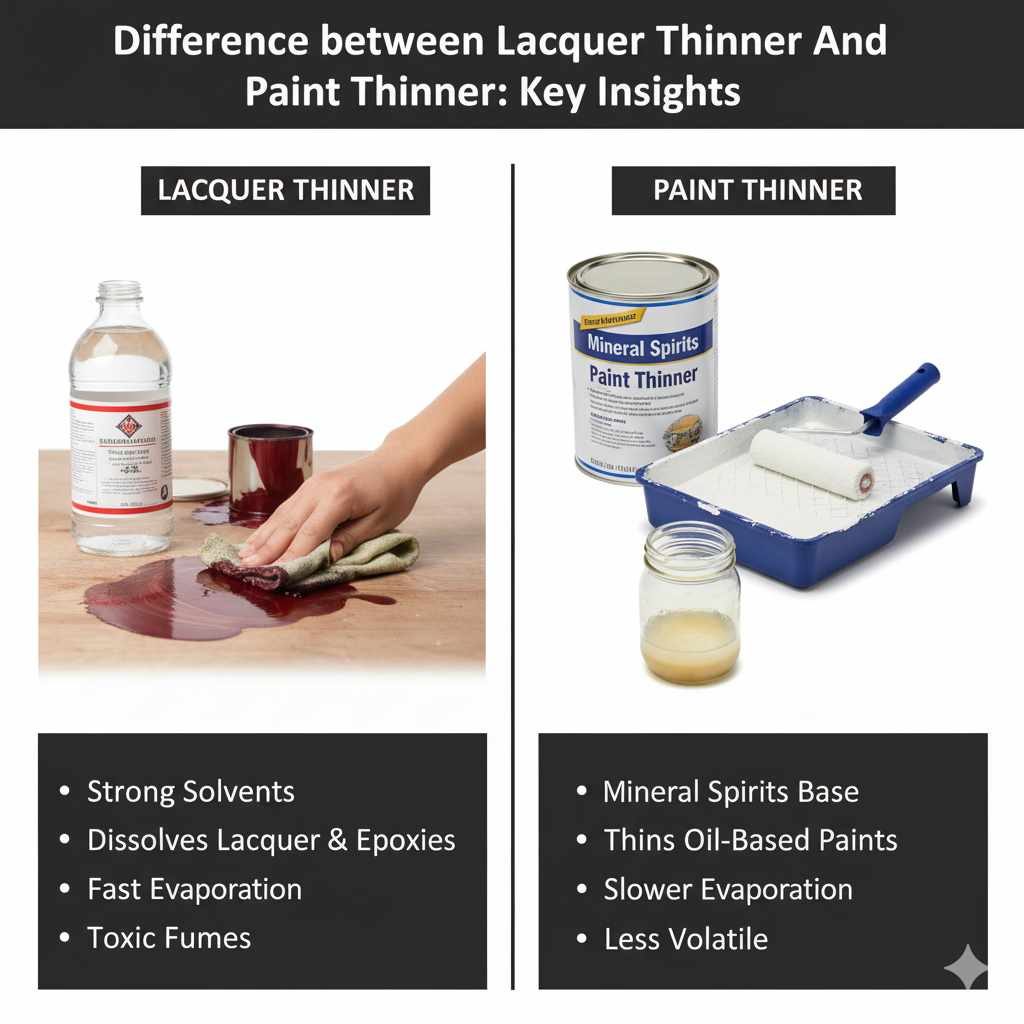
Lacquer thinner is made from a mix of strong solvents. These solvents include acetone, toluene, and methanol. They are powerful and can dissolve many materials. Paint thinner is simpler. It mainly contains mineral spirits. Mineral spirits are less harsh than lacquer thinner. Lacquer thinner evaporates quickly. This makes it dry fast. Paint thinner evaporates slower. This gives more time to work with paint. Lacquer thinner can dissolve more types of paint. Paint thinner works best with oil-based paints.
Lacquer thinner is used for removing tough residues. It cleans paint brushes quickly. Paint thinner is used for thinning paint. It helps in creating smooth finishes. Lacquer thinner is more volatile and has a stronger smell. Paint thinner is milder and less smelly. Both are useful in painting tasks. But they serve different purposes.
:max_bytes(150000):strip_icc()/SPR-difference-between-lacquer-thinner-and-paint-thinner-5195075-HERO-8f0eb1d34a694a0a953f5346a133ddaf.jpg)
Credit: www.thespruce.com
Uses
Lacquer thinner is used to thin lacquer-based paints. It is also good for cleaning paint tools and brushes. This thinner can remove sticky substances like glue. Many artists use it for quick drying. It helps in removing old stains on wood. Strong cleaning power is a key feature. It’s used in car paint jobs too. This thinner gives a smooth finish.
Paint thinner is used for oil-based paints. It cleans paint brushes and rollers. This thinner can also clean floors and surfaces. It is less strong than lacquer thinner. Good for gentle cleaning tasks. Many use it to remove paint spills. It helps make paint easy to spread. Paint thinner is safe for home use. It does not dry as fast as lacquer thinner.
Performance Characteristics
Lacquer thinner evaporates quickly, making it ideal for fast-drying applications. Paint thinner evaporates more slowly, providing a longer working time. Each has unique performance characteristics suitable for different tasks in painting and cleaning. Understanding these differences helps in choosing the right solvent for your needs.
Drying Speed
Lacquer thinner dries fasterthan paint thinner. This speed helps complete projects quickly. It is ideal for urgenttasks. Paint thinner dries slowly. It allows for smooth finishesand adjustments. Choose based on your project’s needs. Quick drying for speed. Slow drying for perfection.
Effectiveness
Lacquer thinner is strong. It removes tough stains and old paint. Great for heavy-duty jobs. Paint thinner is gentle. It works well for smalltasks and delicate surfaces. Lacquer thinner is best for hard-to-clean spots. Paint thinner is better for minor cleaning. Both have their own uses. Decide what your project needs.
Safety Considerations
Lacquer thinnerhas high levels of toxins. These can harm health. Skin contact should be avoided. Fumes can cause dizziness or headaches. It is more toxic than paint thinner. Paint thinneris less harmful. But, it is still not safe. Always use it in a well-ventilated area.
Use gloveswhen handling lacquer thinner. Wear a mask to avoid breathing fumes. Keep it away from flames. Paint thinner requires caution too. Wash hands after use. Keep both products out of children’s reach. Store them in a cool, dry place. Follow all safety instructions on labels.
Environmental Impact
Lacquer thinnerand paint thinnerhave different effects on the environment. Lacquer thinner is usually stronger. It can harm plants and animals more. It can also make the air dirty. This happens because it has strong chemicals. These chemicals can be bad for nature.
Paint thinner is less harmful. It is milder and less toxic. It does not hurt the environment as much. But, it is still important to use it safely. Always throw away these products the right way. This helps keep the earth safe and clean. Both thinners need careful handling.
Cost Comparison
Lacquer thinnerusually costs more than paint thinner. This is because it has a stronger formula. It can dissolve tougher substances. Paint thinner is often cheaper. It is used for simple tasks. Many people buy it for basic paint jobs. Lacquer thinner is for more complex jobs. This is why it costs more.
Prices can vary. Store location matters. Some places sell it cheaper. Online shopping can offer discounts. Always check prices before buying. Compare brands. Some brands offer better deals. Buying in bulk can save money. It is smart to look for sales. Saving a little bit helps.
Suitable Projects
Lacquer thinner is great for cleaning spray guns. It removes dried paint quickly. Use it for removing lacquer-based coatings. It works on wood and metal surfaces. Sometimes, it can clean brushes too. Lacquer thinner is strong. It can dissolve many types of paints. It is also used in industrial settings. Not suitable for plastic surfaces. It might melt them. Always use in a well-ventilated area.
Paint thinner is perfect for thinning oil-based paints. Use it for cleaning brushes. It helps to remove paint spills. Safe for wood surfaces. Paint thinner is less harsh than lacquer thinner. It works well for home projects. Not ideal for strong coatings. It is also good for reducing paint thickness. Always store it carefully. Keep it away from children.

Credit: www.youtube.com
Frequently Asked Questions
What Is Lacquer Thinner Used For?
Lacquer thinner is used for thinning paints, cleaning paint equipment, and removing adhesives. It dissolves lacquer and similar products. It effectively cleans surfaces before painting and removes tough stains. Use it in well-ventilated areas due to its strong fumes.
What Is The Use Of Paint Thinner?
Paint thinner is used to dilute paint for smooth application. It cleans brushes, tools, and surfaces with paint residue. Additionally, it helps remove stubborn paint stains and can be used in various art and DIY projects to alter paint consistency for desired effects.
Is Paint Thinner Or Lacquer Thinner Better For Cleaning?
Lacquer thinner cleans faster and dissolves more substances. It’s ideal for tough cleaning tasks. Paint thinner is milder and safer for general use. Choose lacquer thinner for heavy-duty cleaning and paint thinner for lighter, everyday tasks. Always use in a well-ventilated area and follow safety precautions.
Is Lacquer Thinner Just Acetone?
Lacquer thinner is not just acetone. It is a mixture of solvents, including acetone, toluene, and others. These components dissolve paint and clean surfaces effectively. Acetone is just one part of lacquer thinner, not the sole ingredient.
Conclusion
Understanding the difference matters. Lacquer thinner is stronger. It dissolves tough substances. Paint thinner is milder. It’s used for thinning paints. Each serves a unique purpose. Choose based on your project’s needs. Using the right thinner ensures better results. Safety is crucial.
Work in a well-ventilated space. Wear protective gear. Both thinners can be flammable. Handle with care. Proper disposal is important too. Never pour them down drains. Always read labels for guidance. With this knowledge, make informed decisions. Achieve the best finish for your project.
Your tools and surfaces will thank you.