Difference Between White Oak and Red Oak: The Ultimate Key
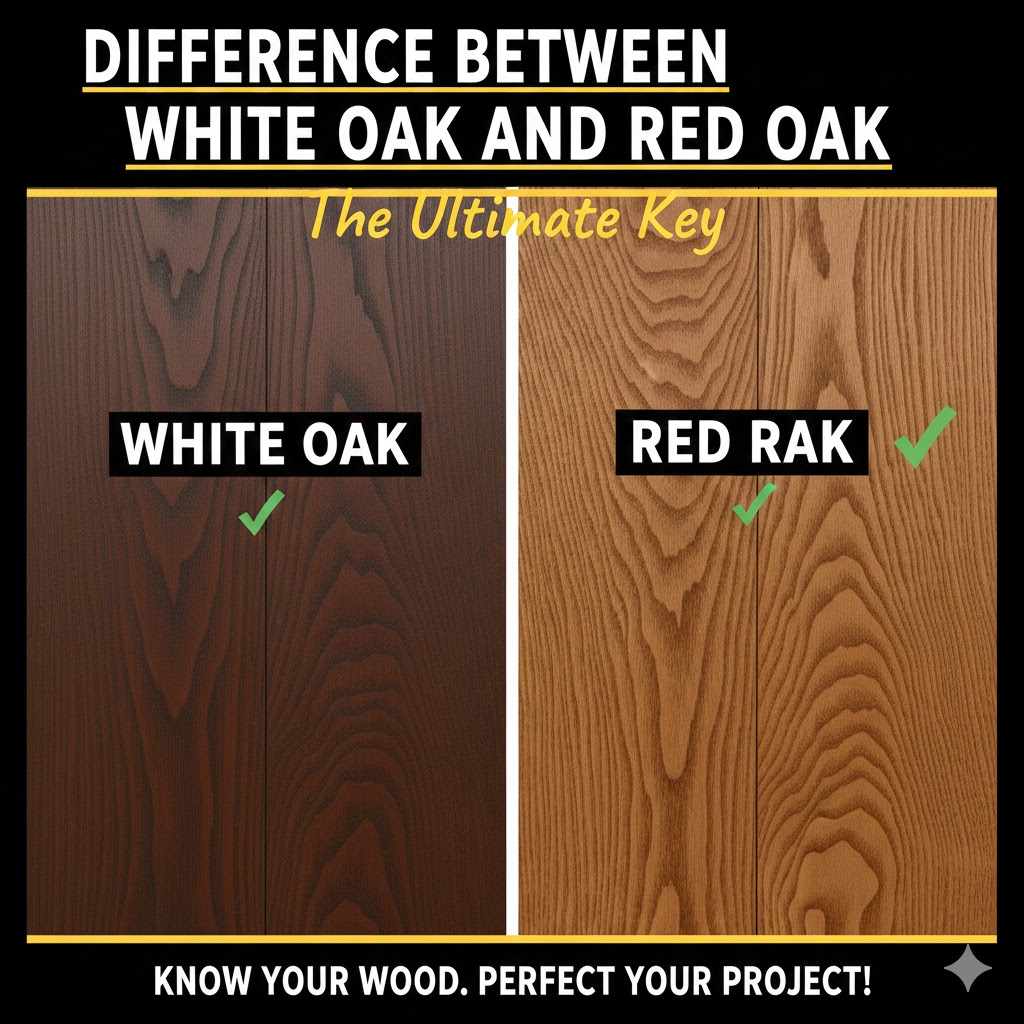
The main difference between white oak and red oak lies in their color, grain, and pore structure. White oak is typically lighter, has a straighter grain, and contains tyloses, making its pores clogged and water-resistant. Red oak has a pinkish hue, a more porous, open grain, and is not suitable for outdoor use without a heavy finish.
Hello there! I’m Md Meraj. In my workshop, I see a lot of new woodworkers puzzling over two very similar-looking boards: white oak and red oak. They look almost the same, but choosing the wrong one can make or break your project. It’s a common stumbling block, but don’t you worry. Telling them apart is easier than you think once you know the secrets.
In this guide, I’m going to show you simple, foolproof ways to identify each type of oak. We’ll look at everything from a quick visual check to a fun little trick you can do right in your workshop. Let’s get you building with confidence!
Why It’s So Important to Know the Difference
You might be thinking, “They’re both oak, they’re both strong. What’s the big deal?” Well, picking the right oak is crucial for the success and longevity of your work. The differences might seem small, but they have a huge impact on how your project turns out, especially in three key areas:
- Durability and Use: This is the big one. White oak is famously water-resistant, making it the champion for outdoor furniture, boats, and even whiskey barrels. Red oak, on the other hand, acts like a sponge. Its open pores will soak up moisture, leading to rot and decay if used outdoors. Using red oak for a patio chair would be a recipe for disaster.
- Staining and Finishing: The way these two woods absorb stain is completely different. Red oak’s large, open pores drink up stain easily and evenly, which is great for beginners. White oak’s pores are clogged, making it a bit trickier to stain without blotching. The tannins in white oak can also react unexpectedly with certain finishes, so knowing your wood is key to a beautiful result.
- Cost and Appearance: Generally, red oak is more abundant and therefore a bit more budget-friendly. White oak is often considered a premium wood, especially quartersawn white oak, which is famous for the stunning ray flecks seen in Arts and Crafts furniture. Knowing the difference helps you budget properly and achieve the specific look you’re going for.
By the end of this guide, you won’t just see two pieces of wood. You’ll see one perfect for an indoor bookshelf and another destined to become a beautiful, weather-proof garden bench.

The Top 5 Ways to Tell White Oak and Red Oak Apart
Let’s dive into the simple, practical methods you can use to identify your lumber. We’ll start with the easiest visual clues and move to the most definitive tests.
1. Color: Your First Quick Clue
The most obvious place to start is the color of the raw, unfinished wood. While their names suggest a clear difference, it can be subtle.
- White Oak: Tends to be a lighter color, ranging from a pale beige or tan to a light greyish-brown. It has a calmer, more neutral tone.
- Red Oak: Usually has a noticeable pink or reddish tint. Even lighter pieces of red oak will often have a warmer, rosier undertone compared to the cooler feel of white oak.
A word of caution: Relying on color alone can be tricky. The color of wood can vary greatly depending on where the tree grew, how it was dried, and how much light it’s been exposed to. An older piece of white oak might have yellowed over time, and a piece of red oak from a certain region might look less pink. Think of color as a starting hint, not the final word.
2. Grain Pattern: Look at the Rays
The grain pattern gives us a much more reliable clue. Both red and white oak have prominent grain, but the secret is to look at the “medullary rays.” These are cellular structures that run from the center of the tree outward. On a quartersawn board (where the growth rings meet the face of the board at a 60 to 90-degree angle), these rays appear as beautiful flecks or ribbons.
- White Oak: Has strikingly long medullary rays. It’s common to see rays that are well over an inch long, creating the famous and desirable “ray fleck” pattern. If you see long, dramatic flashes in the grain, you’re likely looking at white oak.
- Red Oak: Has much shorter rays. You’ll still see them, but they will almost always be less than half an inch long. They look more like small dashes or specks rather than the bold ribbons of white oak.
Even on a plainsawn board (the most common cut), you can often spot these rays on the edges. This is a very good indicator that helps you tell the two apart.
3. The End Grain Test: The Most Reliable Method
If you really want to be 100% certain, you need to look at the end grain. This is the part of the board where you can see the tree’s growth rings like a bullseye. What you’re looking for here is the structure of the pores.
Red Oak’s Open Pores: In red oak, the large pores in the earlywood (the lighter, wider part of a growth ring) are open and hollow. They look like tiny straws or pinpricks packed together. You can often see clear daylight through them if you hold the wood up to a light source.
White Oak’s Clogged Pores (Tyloses): This is white oak’s secret weapon. The pores in white oak are filled with crystalline structures called tyloses. These act like natural plugs, blocking the pores completely. When you look at the end grain of white oak, the pores will look filled or clogged up. They won’t appear as deep, open holes.
This structural difference is precisely why white oak is used for boatbuilding and whiskey barrels—the liquid can’t get through the clogged pores! You can learn more about wood anatomy from university resources like the University of New Hampshire Extension, which provides great visual guides.
4. A Fun Workshop Trick: The Bubble Test
Here’s a practical way to test for those open pores in red oak. You’ll need a small offcut of the wood, about 4 to 6 inches long. Apply some soap or wood glue to one end of the board to create a film, and then try to blow through the other end grain, like you’re blowing through a straw.
- Cut a small, manageable piece of your mystery oak.
- Put a dab of soapy water on one of the end grains.
- Place your mouth on the opposite end grain and blow hard.
If you have red oak, the air will travel through the open pores and you’ll see bubbles form on the other end! If you have white oak, nothing will happen. The tyloses block the airflow completely. It’s a simple, fun, and surefire way to know what you have.
5. Leaf and Acorn Identification (If You Have the Tree!)
If you’re sourcing your own wood or just curious about the trees in your yard, you can also look at the leaves and acorns.
- Red Oak Leaves: Have pointed lobes with sharp, bristle-like tips.
- White Oak Leaves: Have smooth, rounded lobes with no sharp points.
A Quick Comparison: White Oak vs. Red Oak at a Glance
Here is a simple table to help you remember the key differences. You can print this out and hang it in your workshop!
| Feature | White Oak | Red Oak |
|---|---|---|
| Color | Light tan, beige, greyish | Pinkish, reddish-brown |
| End Grain Pores | Clogged with tyloses (waterproof) | Open and hollow (porous) |
| Grain Rays | Long (often over 1 inch) | Short (usually under 1/2 inch) |
| Water Resistance | Excellent; suitable for outdoors | Poor; for indoor use only |
| Hardness (Janka) | Approx. 1360 (Slightly harder) | Approx. 1290 (Very hard) |
| Common Use | Outdoor furniture, barrels, boats | Indoor furniture, cabinetry, flooring |
| Cost | Generally more expensive | More affordable and widely available |
Diving Deeper: Physical Properties and Workability
Beyond looks, the physical properties of each oak affect how you work with them and what they are best suited for.
Hardness and Durability: The Janka Scale
The Janka Hardness Test measures the force required to embed a steel ball into a piece of wood. It’s a great way to measure a wood’s resistance to dents and wear.
- White Oak scores around 1360 on the Janka scale.
- Red Oak scores slightly lower, around 1290.
What does this mean for you? In reality, both are incredibly hard and durable woods, perfect for things like flooring and tabletops that see a lot of wear and tear. While white oak is technically harder, you are unlikely to notice a practical difference in most furniture projects. Both are a huge step up in durability from softwoods like pine. The U.S. government maintains excellent data on wood properties through the Forest Products Laboratory, which is a fantastic resource for any woodworker.
Weight and Density
Because its cellular structure is denser (thanks again, tyloses!), white oak is slightly heavier than red oak. A board foot of white oak weighs around 4.0 lbs, while red oak is closer to 3.7 lbs. This added density contributes to white oak’s strength and stability, making it a favorite for structural applications and high-end furniture that needs to last for generations.
Finishing and Staining: Getting the Perfect Look
This is where the two oaks really show their different personalities. How they react to stains and finishes will guide your finishing process.
How They Take a Stain
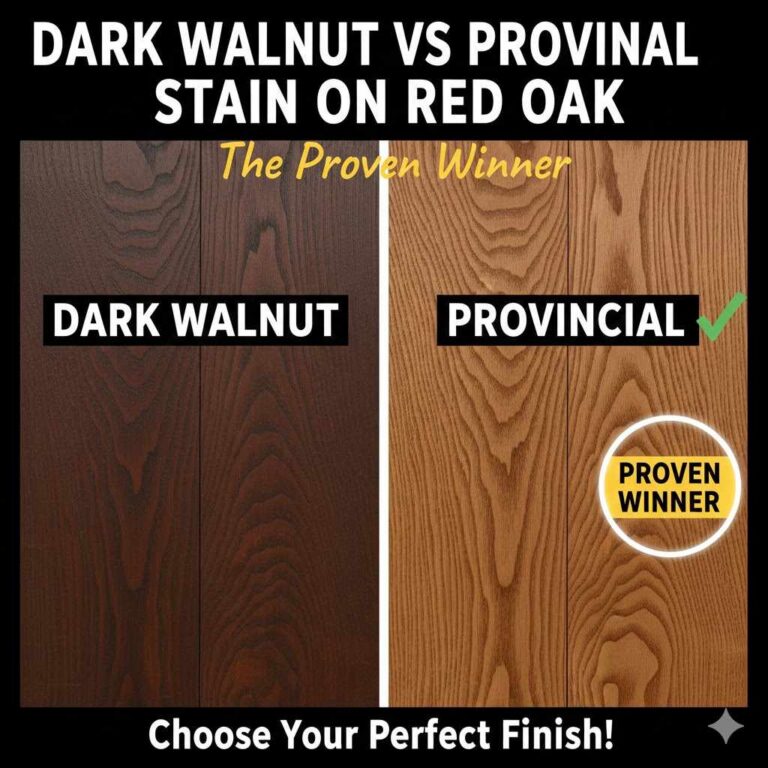
Red Oak is a beginner’s dream when it comes to staining. Its large, open pores readily absorb stain, leading to a deep, rich, and even color. You don’t usually need a pre-stain wood conditioner. The only thing to watch for is its natural reddish hue, which will influence the final color. A light-colored stain on red oak will still carry a warm, reddish tint.
White Oak can be more challenging. Its clogged pores don’t absorb stain as easily. If you apply stain directly, it can look blotchy. To get an even finish, it’s highly recommended to use a pre-stain wood conditioner. White oak is also high in tannins, which can react with water-based finishes and cause a greenish or greyish discoloration. It’s often best to stick with oil-based stains and finishes for white oak to avoid any surprises.
Choosing the Right Project for Each Wood
Now that you’re an expert in telling them apart, let’s talk about where each one truly shines.
Ideal Projects for White Oak:
- Outdoor benches, chairs, and tables
- Planter boxes
- Boat building components
- Kitchen and bathroom cabinetry where moisture is present
- Entryway flooring
- Classic Arts and Crafts and Mission-style furniture
- Barrels for aging spirits and wine
Ideal Projects for Red Oak:
- Indoor dining tables, desks, and bookcases
- General cabinetry
- Hardwood flooring in living rooms and bedrooms
- Interior trim, molding, and staircases
- Decorative items and boxes
- Any project that will be painted
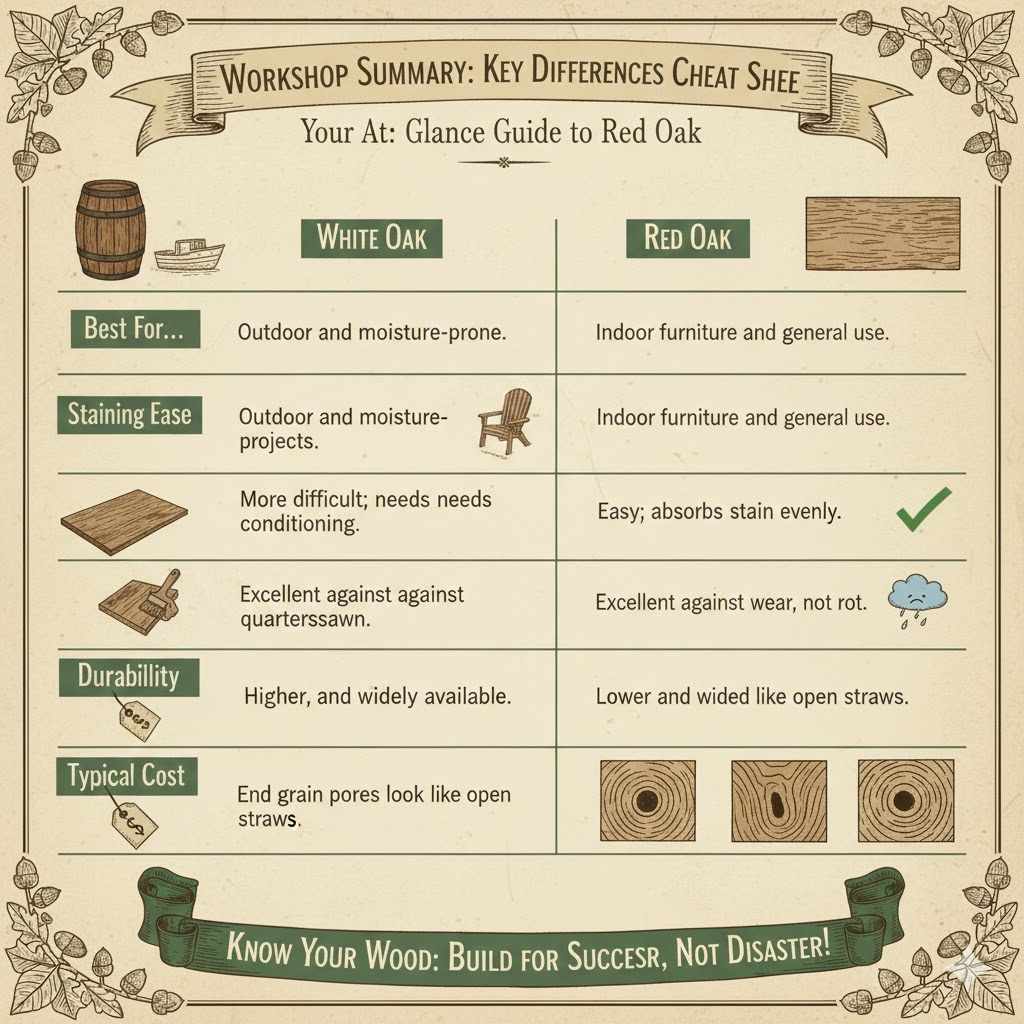
Your Workshop Summary: Key Differences Cheat Sheet
Let’s put it all together in one more handy table focused on practical workshop decisions.
| Workshop Consideration | White Oak | Red Oak |
|---|---|---|
| Best For… | Outdoor and moisture-prone projects. | Indoor furniture and general use. |
| Staining Ease | More difficult; needs conditioning. | Easy; absorbs stain evenly. |
| Durability | Excellent, especially against rot. | Excellent against wear, but not rot. |
| Typical Cost | Higher, especially for quartersawn. | Lower and more widely available. |
| Finishing Notes | High in tannins; best with oil finishes. | Very versatile with most finishes. |
| Easiest ID Trick | End grain pores look filled. | End grain pores look like open straws. |
Frequently Asked Questions (FAQ)
Is white oak actually white?
Not really! The name is relative. It’s lighter and more neutral in tone compared to the pinkish-red of red oak. It can range from a creamy beige to a grayish-brown. The “white” helps distinguish it from its red-hued cousin.
Can I use red oak outside if I seal it really well?
While you can use high-quality exterior finishes, it’s generally not recommended. Red oak is so porous that moisture will eventually find its way in, especially through joints or small cracks in the finish that develop over time. Once water gets in, red oak is highly susceptible to rot. It’s much safer to use white oak or another naturally weather-resistant wood for outdoor projects.
Which is better for hardwood flooring?
Both are excellent choices for flooring! Red oak is the most popular hardwood flooring in the U.S. because it’s durable, affordable, and stains beautifully. White oak is a more premium option, slightly harder, and its neutral color is very popular in modern home design. If you’re installing flooring in a kitchen or a mudroom, white oak’s superior water resistance gives it an edge.
How can I tell the difference on a piece of finished furniture?
It’s much harder with a finish on, but not impossible. Look closely at the grain for the length of the rays. Even with a stain, white oak’s long, ribbon-like rays are often visible, whereas red oak’s will look like shorter flecks. You can also sometimes see the texture of the open pores on red oak, even under a finish. If an end grain is visible anywhere (like the bottom of a leg), that remains your best bet.
Do they smell different?
Yes, they do! Many experienced woodworkers can tell them apart by smell when cutting. White oak has a distinct, somewhat pleasant and sweet smell that is often associated with wine or whiskey barrels. Red oak has a sharper, more bitter or acidic scent. This is a subtle clue, but a real one!
Is one oak “stronger” than the other?
Both red and white oak are considered very strong, hard, and heavy woods. White oak is slightly denser, harder, and has a higher bending strength and compression strength. For everyday furniture, both are more than strong enough. The key difference isn’t raw strength but resistance to the elements, where white oak is the clear winner.
Conclusion: Choose Your Oak with Confidence
There you have it! The mystery of white oak versus red oak is solved. While they may look alike at first glance, you now have the knowledge to tell them apart like a pro. Remember the ultimate keys: the long rays in white oak versus the short ones in red oak, and the surefire end grain test that reveals white oak’s clogged, waterproof pores.
Choosing between them is no longer about guessing. It’s about knowing which wood is right for your specific project. Do you need something that will stand up to the rain on your patio? Grab the white oak. Are you building a beautiful indoor bookshelf that you want to stain a deep, rich color? Red oak is your best friend.
You’re now equipped with the secrets to making a smart, informed choice. Go on, step into your workshop with this new confidence. Pick up a board, examine its grain, and know that you’re on your way to building something beautiful, functional, and made to last. Happy building!