Does Hot Glue Work on Cardboard? Yes, but It Bonds Fast
Yes, hot glue works on cardboard, and it bonds fast – usually within 30-60 seconds of firm pressure.
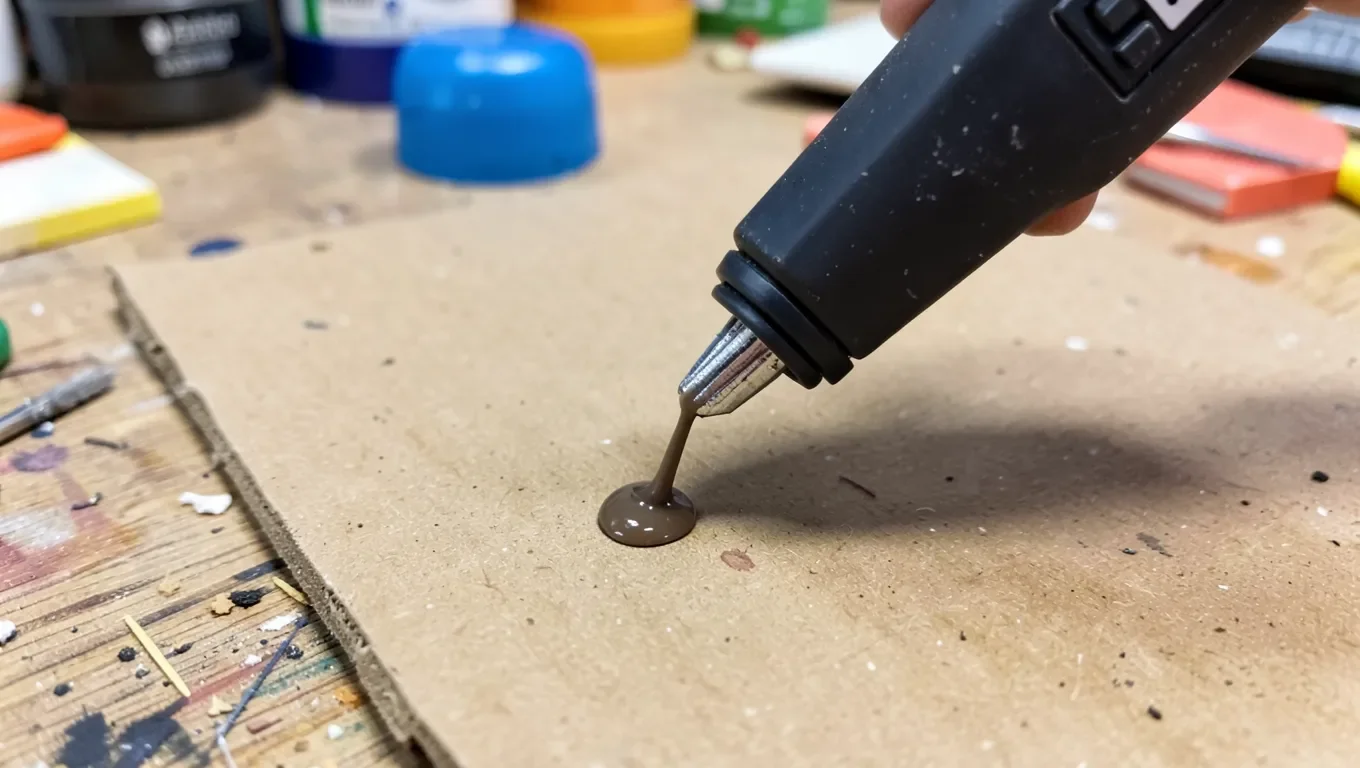
Cardboard’s rough, porous surface is actually close to ideal for hot glue – the melted adhesive soaks into the fluted paper fibers and mechanically grips them as it cools, rather than just sitting on top the way it does on smooth plastic or glass. That said, “works” doesn’t mean “works for everything” – thin, single-wall cardboard can scorch under a high-temp glue gun, and heavy items need more than a couple of dots to stay put.
This guide covers how strong the bond actually is, how to avoid burning or warping the cardboard, what to do when you’re gluing cardboard to a different material like metal or plastic, and when a different adhesive is the smarter choice.
Properties Of Hot Glue
Set It To Low Heat For Cardboard
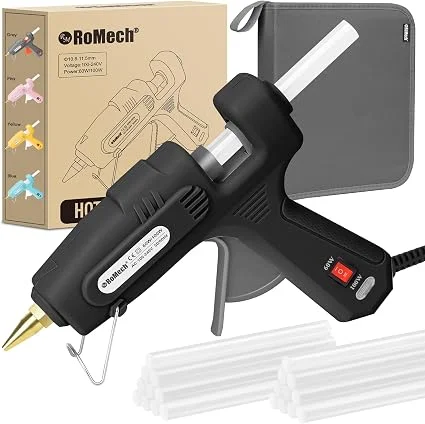 |
ROMECH 60/100W Dual Temp Hot Glue Gun and Sticks Set A low/high switch lets you drop to the cooler setting for thin cardboard and switch to full heat for thicker double-wall boxes or bonding to metal – one gun instead of buying two.
|
Adhesive Strength
Hot glue’s bond strength on cardboard comes from mechanical grip, not chemical bonding – the melted polymer flows into the paper fibers and hardens around them as it cools, which is why a clean, dry surface bonds far better than a dusty or greasy one. Once fully set (about a minute for a thin bead), the bond holds up well under normal handling and can outlast the cardboard itself in a light-duty craft project.
Temperature Sensitivity
Hot glue needs heat to apply but loses strength again if it gets reheated – leaving a glued cardboard project in a hot car or near a heat vent can soften the bond enough to fail under load. On the cold end, hot glue becomes noticeably more brittle below roughly 40°F, so a bond that flexes fine indoors can crack if the same piece is stored in an unheated garage over winter.
Cardboard Characteristics
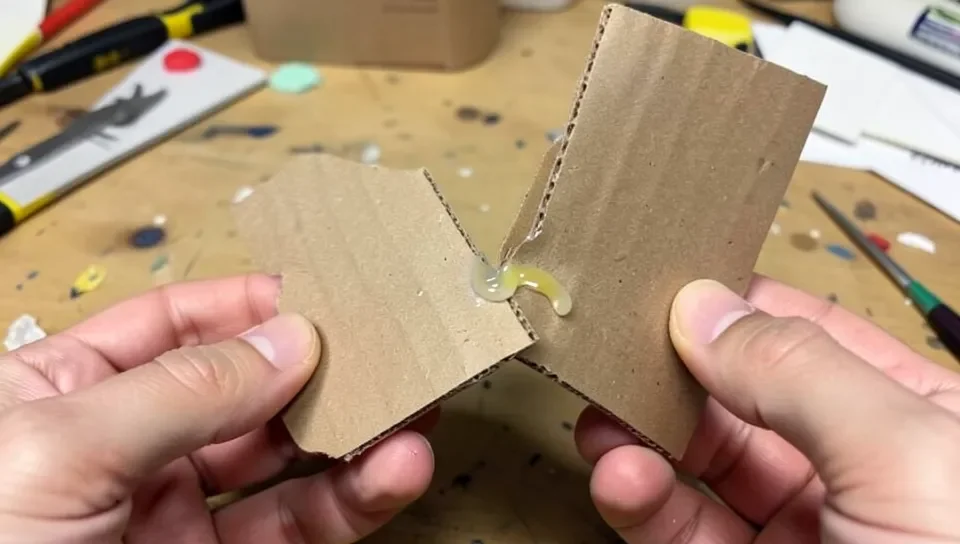
Cardboard’s corrugated structure – a fluted paper layer sandwiched between two flat liners – gives hot glue plenty of surface texture and exposed fiber edges to grip, which is part of why it bonds cardboard more reliably than it bonds smooth materials like glass or glazed ceramic. Single-wall cardboard (one flute layer, used for cereal boxes and light packaging) is thinner and scorches more easily than double-wall or triple-wall cardboard (used for shipping boxes), which can tolerate more heat and hold a stronger joint.
Compatibility Factors
Hot glue also has to bond well when cardboard is joined to a different material – a common real-world case is a cardboard model or display attached to a metal frame, wire, or plastic base. On smooth metal or plastic, hot glue bonds by mechanical grip alone since there’s no porous surface to soak into, so the joint depends entirely on surface area and cleanliness. Wipe any oil or dust off the metal first, use a generous bead rather than a thin line, and expect the metal-side bond to be noticeably weaker than the cardboard-side bond – if the piece will bear real weight or stress, a two-part epoxy is a more reliable choice for the metal-to-cardboard joint specifically.
Cardboard-to-plastic follows a similar rule: smooth, glossy plastics (like acrylic or polished ABS) bond weakly with hot glue and can pop off with moderate flexing, while textured or slightly porous plastics hold better. A quick scuff with fine sandpaper on the plastic surface before gluing meaningfully improves adhesion in both cases.
For cardboard-to-cardboard – the most common case – the bond is genuinely durable under normal handling and holds up to daily use without special treatment, since both sides are ideal receiving surfaces for the melted adhesive.
Application Techniques
Low-temperature glue guns run around 250°F and are the safer choice for thin, single-wall cardboard and for kids’ craft projects, since they’re far less likely to scorch the material or burn skin on contact. High-temperature guns run closer to 380°F and bond faster with a stronger initial grip, which matters more on thicker double-wall or triple-wall cardboard that can handle the extra heat. A dual-temperature gun covers both cases without needing two separate tools.
Apply glue in a thin, continuous line rather than one large blob – a thick pool of glue takes longer to cool and is more likely to ooze out from under pressure before it sets. Press the pieces together immediately and hold firm for about 30 seconds; cardboard’s flexibility means it can spring back apart if released too early, even after the glue has started to set.
Advantages Of Using Hot Glue
Speed is hot glue’s biggest practical advantage – a bond sets in under a minute, compared to the hours some wood glues or the full cure time epoxy needs. That makes it genuinely useful for time-boxed school projects, quick repairs, and any craft where waiting overnight isn’t an option. Combined with a reasonably strong, durable hold on cardboard-to-cardboard joints, it covers most casual crafting needs without requiring clamps or a long drying window.
Limitations And Challenges
The biggest real limitation is heat damage – a high-temp glue gun applied directly and held too long can scorch or warp thin, single-wall cardboard, sometimes visibly discoloring the surface. Testing on a scrap piece from the same box first is the simplest way to catch this before it happens on the actual project.
Weight capacity is the other real limitation. Hot glue holds lightweight items reliably but starts to fail under sustained heavy loads, since the bond can slowly creep (deform under constant stress) even without breaking outright. For anything heavier than light craft materials or décor, reinforcing with packing tape along the seam, or switching to a stronger adhesive entirely, is the safer call.
Alternative Adhesives
PVA glue (white glue) dries clear, is non-toxic, and actually forms a stronger long-term chemical bond with cardboard than hot glue does, since it soaks into the fibers rather than just gripping them mechanically. The tradeoff is dry time – anywhere from 20 minutes to a few hours depending on the amount applied – which makes it a poor fit for anything that needs to be handled right away.
Double-sided tape needs no drying time at all and is genuinely convenient for flat, lightweight joins like mounting paper to cardboard or assembling a display board. It’s noticeably weaker than either hot glue or PVA under any real stress, though, so it’s best reserved for light decorative work rather than structural joints.
Two-part epoxy is worth mentioning for the cases hot glue struggles with – bonding cardboard to metal or plastic, or any joint that needs to bear real weight. It cures harder and more permanently than either hot glue or PVA, at the cost of a short working time and a curing wait before the piece can be handled.
Practical Tips
Hot glue burns are the most common injury with these tools – the nozzle and the glue itself both stay hot enough to cause a real burn for a minute or more after application. Keep a bowl of cool (not ice) water nearby during any project; if glue touches skin, dip the area rather than trying to peel the glue off immediately, since it’s still soft enough to spread the burn if picked at right away. Unplug the gun between uses and let it cool before packing it away, and supervise kids closely rather than leaving a hot glue gun unattended at any age.
For the cardboard itself: keep the surface clean and dry, apply a thin controlled bead rather than a thick pool, and use the low-temperature setting whenever the material is thin enough that scorching is a real risk. Working in small sections keeps the glue from skinning over before the pieces are pressed together, which is the most common cause of a weak, incomplete bond.
Frequently Asked Questions
Does Hot Glue Stick To Cardboard?
Yes, hot glue sticks to cardboard very well. It creates a strong bond. Make sure the surfaces are clean. Apply the glue evenly for the best results.
How Long Does Hot Glue Take To Dry On Cardboard?
Hot glue dries on cardboard in about 1-2 minutes. This makes it great for quick projects. Ensure you press the surfaces together while it dries.
Is Hot Glue Strong Enough For Cardboard?
Hot glue is strong enough for cardboard. It provides a durable bond. Ideal for crafts and small projects. Ensure proper application for maximum strength.
Can Hot Glue Damage Cardboard?
Hot glue can damage thin cardboard if too much is applied. Use a moderate amount. Test on a small area first.
Can Hot Glue Bond Metal And Cardboard Together?
Yes, but the bond is weaker than cardboard-to-cardboard, since hot glue has no porous surface to grip on metal. Clean the metal first, use a generous bead, and switch to a two-part epoxy if the joint needs to hold real weight.
Conclusion
Hot glue works well on cardboard for many DIY projects. It provides a strong bond, quick drying time, and ease of use. Consider your project’s requirements before choosing hot glue. It’s great for crafts, repairs, and school projects. Always ensure safety while handling hot glue.
For best results, use a high-temperature glue gun. Experiment and see how hot glue can enhance your cardboard creations. Remember, practice makes perfect. Happy crafting!
Sponsored / affiliate links. As an Amazon Associate I earn from qualifying purchases. I may earn additional commission from eligible campaigns.