Hardwood Floor Bathroom Ideas: Essential Designs
Yes, you can have beautiful hardwood floors in your bathroom! With the right wood type, proper sealing, and careful installation, hardwood floors offer warmth, elegance, and a timeless look that can transform your bathroom into a spa-like retreat. This guide breaks down everything you need to know to make your dream bathroom a reality.
Thinking about hardwood floors for your bathroom can feel a little daunting. Bathrooms are naturally more humid and prone to water splashes, right? You might worry that wood and water don’t mix. But guess what? With a little know-how, you can absolutely achieve that gorgeous, warm flooring you’ve always wanted in your bathroom. I’m here to show you how it’s completely doable, even for beginners. We’ll explore the best wood choices, essential design ideas, and the practical steps to make sure your beautiful new floor lasts for years. Ready to create a stunning bathroom? Let’s dive in!
Why Consider Hardwood Floors in Your Bathroom?
Hardwood floors bring a natural warmth and timeless beauty that few other materials can match. They instantly elevate the look and feel of any space, making your bathroom feel more luxurious and inviting. Unlike cold tile, wood offers a softer step and can even feel warmer underfoot, especially in colder months. Plus, a well-maintained hardwood floor can significantly increase your home’s value.
For many, the primary concern is moisture. Traditional hardwood can warp, swell, or stain when exposed to significant water. However, advancements in wood treatments and finishes, along with careful selection of wood species, have made hardwood flooring a viable and stylish option for bathrooms. It’s all about choosing the right materials and employing smart design strategies.
Choosing the Right Hardwood for Your Bathroom
Not all hardwood species are created equal when it comes to bathroom suitability. The key is to select woods that are naturally dense and resistant to moisture. These woods have a tighter grain and less porous structure, making them less susceptible to water damage.
Durable & Moisture-Resistant Wood Species
When selecting hardwood for a bathroom, prioritize species known for their density and natural resistance to moisture and wear. Here are some excellent choices:
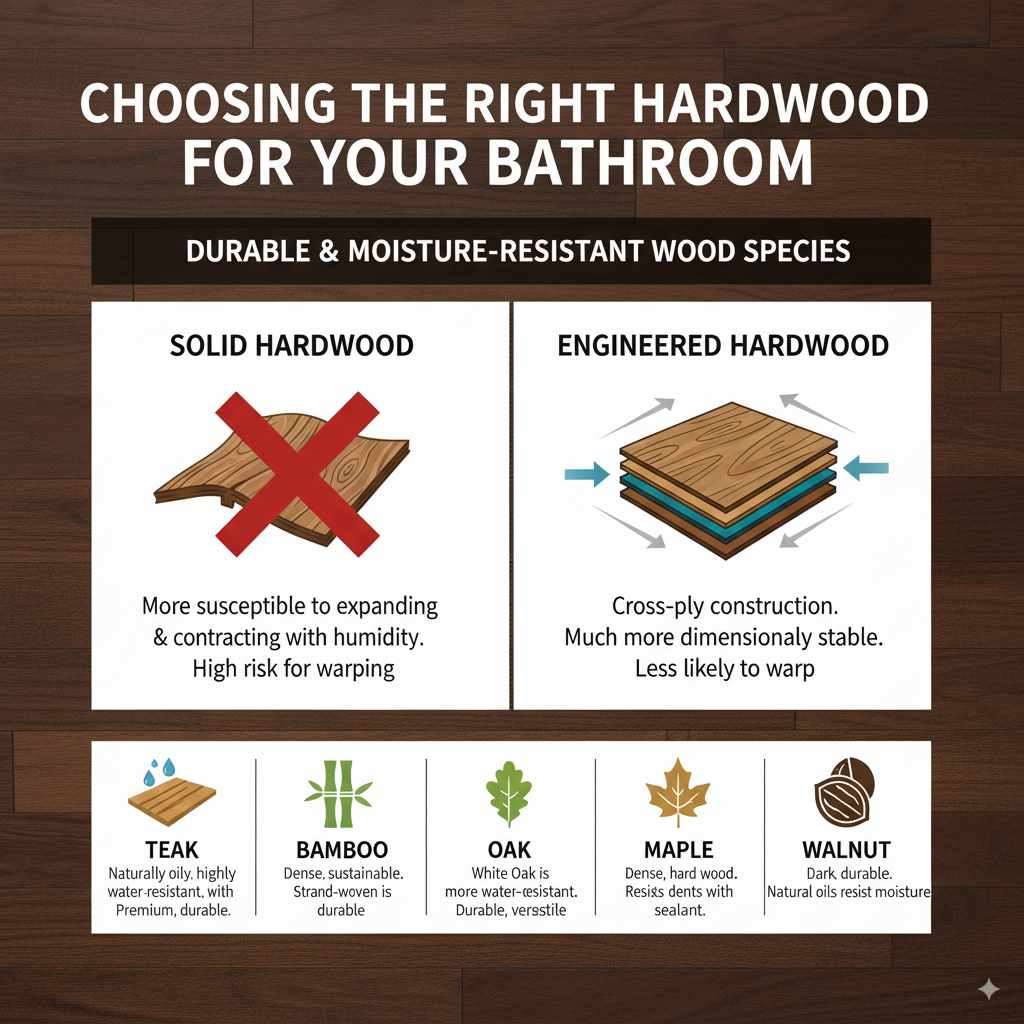
- Teak: This is often considered the gold standard for wet environments. Teak contains natural oils that make it highly resistant to water damage and decay. It’s incredibly durable and has a beautiful, rich color. While it’s a premium option, its longevity in a bathroom setting makes it a worthwhile investment for many.
- Bamboo: While technically a grass, bamboo flooring is often categorized with hardwood due to its strength and appearance. Strand-woven bamboo is particularly dense and stable. It’s a sustainable choice and can be quite water-resistant, especially with proper finishes.
- Oak (Red & White): Both red and white oak are popular choices. White oak is generally considered more water-resistant than red oak due to its closed cellular structure. Both are very durable and widely available, making them a more budget-friendly option compared to teak. They take stains well, giving you flexibility in design.
- Maple: Hard maple is a very dense and durable wood. While not as inherently moisture-resistant as teak or white oak, its hardness helps it resist dents and scratches. With the right sealant, it can perform well in a bathroom.
- Walnut: Walnut offers a beautiful dark color and is quite durable. Its natural oils provide some moisture resistance, and its density makes it a good contender.
Engineered vs. Solid Hardwood
For bathrooms, engineered hardwood often has an advantage over solid hardwood. Let’s break down why:
- Solid Hardwood: This is a single piece of solid wood from top to bottom. While beautiful, it’s more susceptible to expanding and contracting with changes in humidity, which can be a significant issue in a bathroom.
- Engineered Hardwood: This flooring is made of multiple layers of wood veneer glued together, with a top layer of real hardwood. The cross-ply construction makes engineered hardwood much more dimensionally stable. It’s less likely to warp or buckle due to moisture fluctuations, making it a safer bet for bathrooms.
Recommendation: For bathrooms, I strongly recommend opting for engineered hardwood. Its stability significantly reduces the risk of moisture-related damage.
Essential Hardwood Floor Bathroom Designs
Once you’ve chosen your wood, it’s time to think about the look! Hardwood floors can create a variety of styles, from modern sleek to rustic charm.
Color Palettes and Finishes
The color and finish of your hardwood can dramatically impact your bathroom’s atmosphere.
- Light & Airy: Bleached or natural finishes on woods like maple or pale oak create a bright, spacious feel, perfect for smaller bathrooms. Pair these with white or light gray walls and minimalist fixtures.
- Warm & Inviting: Medium tones of oak or walnut bring a cozy, inviting warmth. These work well in traditional or transitional style bathrooms. Consider a satin or matte finish for a sophisticated look.
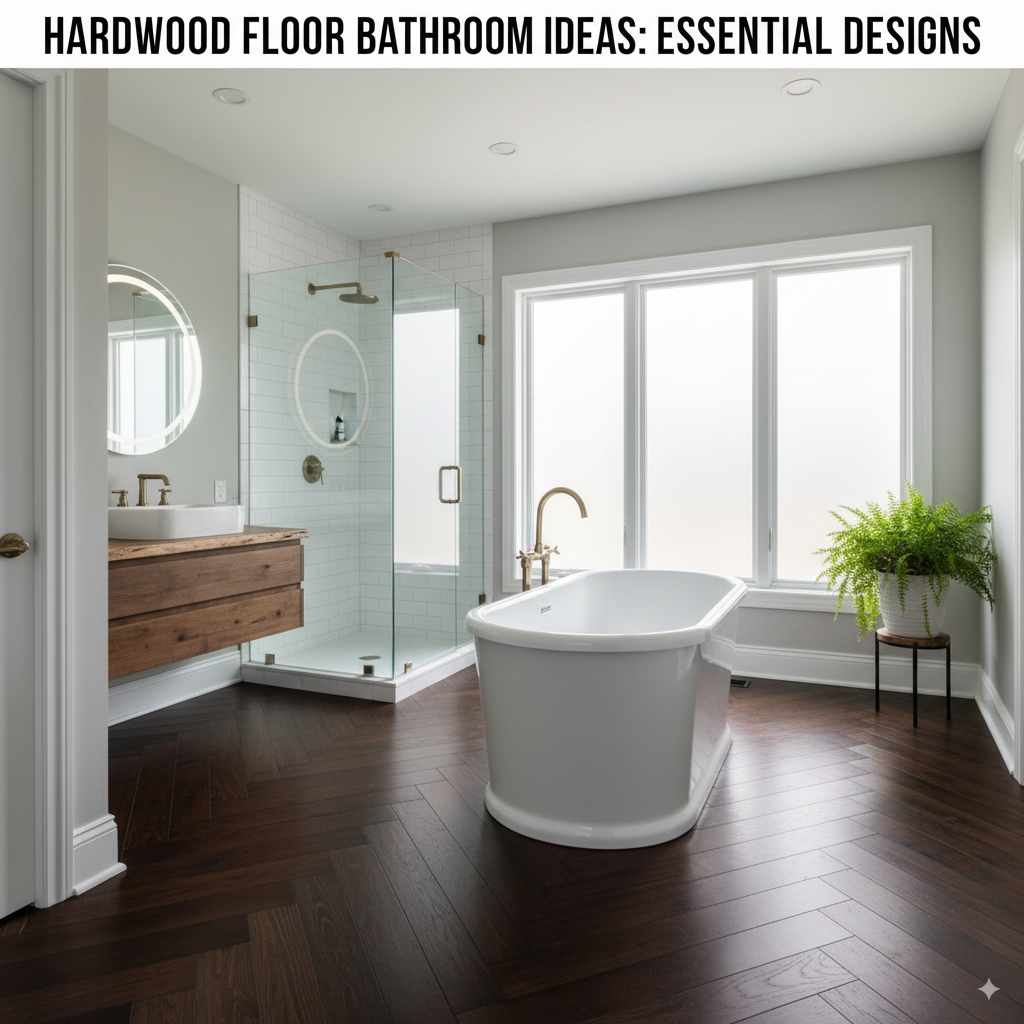
- Bold & Dramatic: Darker woods like walnut or stained oak can create a luxurious, spa-like atmosphere. These pair beautifully with metallic accents (like brushed brass or matte black) and sophisticated decor.
Wood Grain and Plank Size
The pattern of the wood grain and the width of the planks also play a role:
- Subtle Grain: Woods like maple or bamboo often have a more uniform, subtle grain, which can lend a modern, uncluttered look.
- Pronounced Grain: Oak and walnut have more distinct grain patterns, adding texture and character.
- Plank Width: Wider planks (5 inches or more) tend to make a room feel larger and more contemporary. Narrower planks can offer a more traditional or detailed look.
Contrast and Complement
Think about how your hardwood floor will interact with other elements in your bathroom:
- Contrast: A dark wood floor contrasts beautifully with white vanity cabinets and crisp white subway tiles.
- Complement: A medium-toned oak floor can complement stone or natural-look tiles on shower walls, creating a cohesive, earthy feel.
Installation: Key Steps for Bathroom Success
Proper installation is critical for the longevity of hardwood floors in a bathroom. If you’re DIY-ing, take your time and follow these guidelines carefully. If hiring a professional, ensure they understand the unique challenges of bathroom installations.
1. Prepare the Subfloor
A clean, dry, and level subfloor is essential. Remove any old flooring, adhesive, or debris. Ensure the subfloor is completely dry before proceeding. If you have concrete subfloors, you might need a moisture barrier.
2. Acclimate the Flooring
Let the hardwood planks acclimate to your bathroom’s environment for at least 48-72 hours before installation. This allows the wood to adjust to the room’s temperature and humidity, minimizing expansion or contraction issues later.
3. Use a High-Quality Moisture Barrier
This is non-negotiable in a bathroom. A reliable moisture barrier (sometimes called a vapor barrier) goes directly over the subfloor and beneath the hardwood. This acts as a shield against moisture seeping up from below. Consult your flooring manufacturer’s recommendations for the best type of barrier.
4. Choose the Right Installation Method
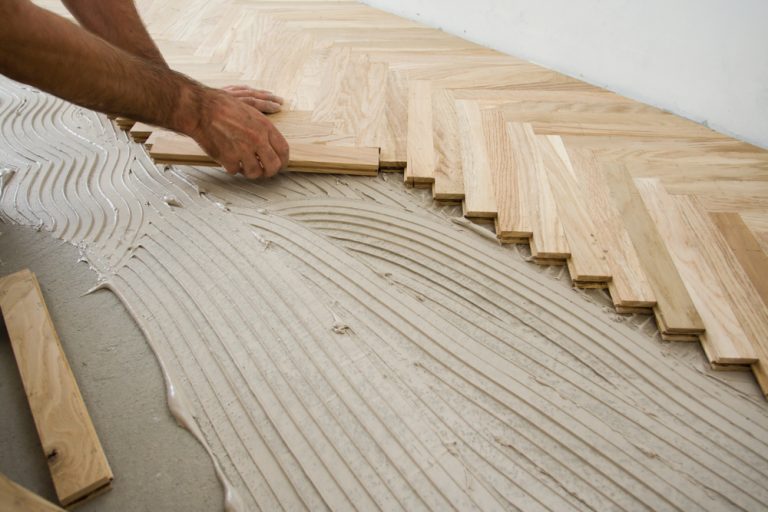
- Glue-Down: This method provides a strong bond and can help seal the floor against minor spills. It’s often recommended for bathrooms, especially with engineered hardwood. Use a high-quality, moisture-resistant adhesive specifically designed for wood flooring.
- Nail-Down: While common for solid hardwood, it’s less ideal for bathrooms, especially on lower levels or over concrete. If used, ensure the subfloor is properly prepared and a moisture barrier is in place.
- Floating Floor: Some engineered hardwoods can be installed as a floating floor. While convenient, ensure the locking mechanism is robust and that a good underlayment with moisture-resistant properties is used.
For bathrooms, a glue-down installation using engineered hardwood is generally the most secure and moisture-resistant method. For more on subfloor preparation, the National Association of Home Builders (NAHB) offers valuable resources.
5. Proper Sealing and Finishing
Once installed, the hardwood needs a robust protective finish. Polyurethane finishes, especially water-based ones, offer excellent durability and water resistance. Look for finishes that contain UV inhibitors to prevent fading.
- Apply multiple coats of a high-quality, water-based polyurethane finish.
- Ensure each coat is fully cured before applying the next.
- Consider a matte or satin finish, as high-gloss finishes can show water spots more readily.
Water Protection Strategies
Even with the best wood and installation, extra precautions are wise in a bathroom.
- Immediate Clean-Up: Wipe up any spills or splashes immediately with a soft cloth. Don’t let water sit on the floor.
- Ventilation: Ensure your bathroom is well-ventilated with an effective exhaust fan. Running the fan during and after showers helps reduce humidity.
- Door Sweeps: Use door sweeps on your shower door to minimize water escaping onto the floor.
- Area Rugs: Place absorbent mats or rugs outside the shower and in front of the sink to catch drips and splashes. Ensure these rugs have non-slip backing.
- Regular Maintenance: Follow a consistent cleaning and maintenance schedule to keep the finish in good condition.
Pros and Cons of Hardwood Bathroom Floors
Like any flooring choice, hardwood has its advantages and disadvantages in a bathroom setting.
Here’s a quick look:
| Pros | Cons |
|---|---|
| Aesthetically pleasing, natural warmth and beauty | Susceptible to moisture damage if not properly sealed and maintained |
| Increases home value | Requires more diligent cleaning and immediate spill cleanup |
| Comfortable underfoot compared to tile | Can be more expensive than some other flooring options |
| Timeless appeal, never goes out of style | Can be scratched or dented, especially with high traffic or falling objects |
| Offers design flexibility with various stains and finishes | Installation can be more complex and requires specialized knowledge for bathrooms |
Hardwood Floor Bathroom Visual Ideas
Let’s get inspired! Here are some popular looks you can achieve:
Spa-Like Retreat
Imagine stepping into a tranquil oasis. Darker wood tones, like rich walnut or deep-stained oak, create a luxurious foundation. Pair this with natural stone accents (like marble or slate tile on shower walls), plush white towels, and minimalist fixtures in brushed nickel or matte black. A floating vanity can enhance the sense of space.
Modern Minimalist
For a clean, contemporary look, opt for lighter wood species like maple or a pale oak with a natural or bleached finish. Wide planks work particularly well here. Combine with sleek, white cabinetry, simple subway tile, and chrome or brushed stainless steel hardware. Keep decor to a minimum for an uncluttered feel.
Rustic Charm
Bring the outdoors in with reclaimed wood-look engineered flooring or naturally distressed oak. Wider planks with visible knots and grain add character. Complement this with a farmhouse-style vanity, shiplap accents, and vintage-inspired fixtures. Terra cotta or natural stone tiles elsewhere in the bathroom can enhance the rustic vibe.
Coastal Vibe
Achieve a light, breezy coastal feel with whitewashed oak or a pale, silver-toned wood. Pair with light blue or seafoam green accents, white cabinetry, and hardware in brushed or polished nickel. Woven accessories and natural textures can further enhance the theme.
Maintenance Tips for Your Bathroom Hardwood
Keeping your hardwood floors looking their best in the bathroom requires a bit more attention than in other rooms, but it’s manageable!
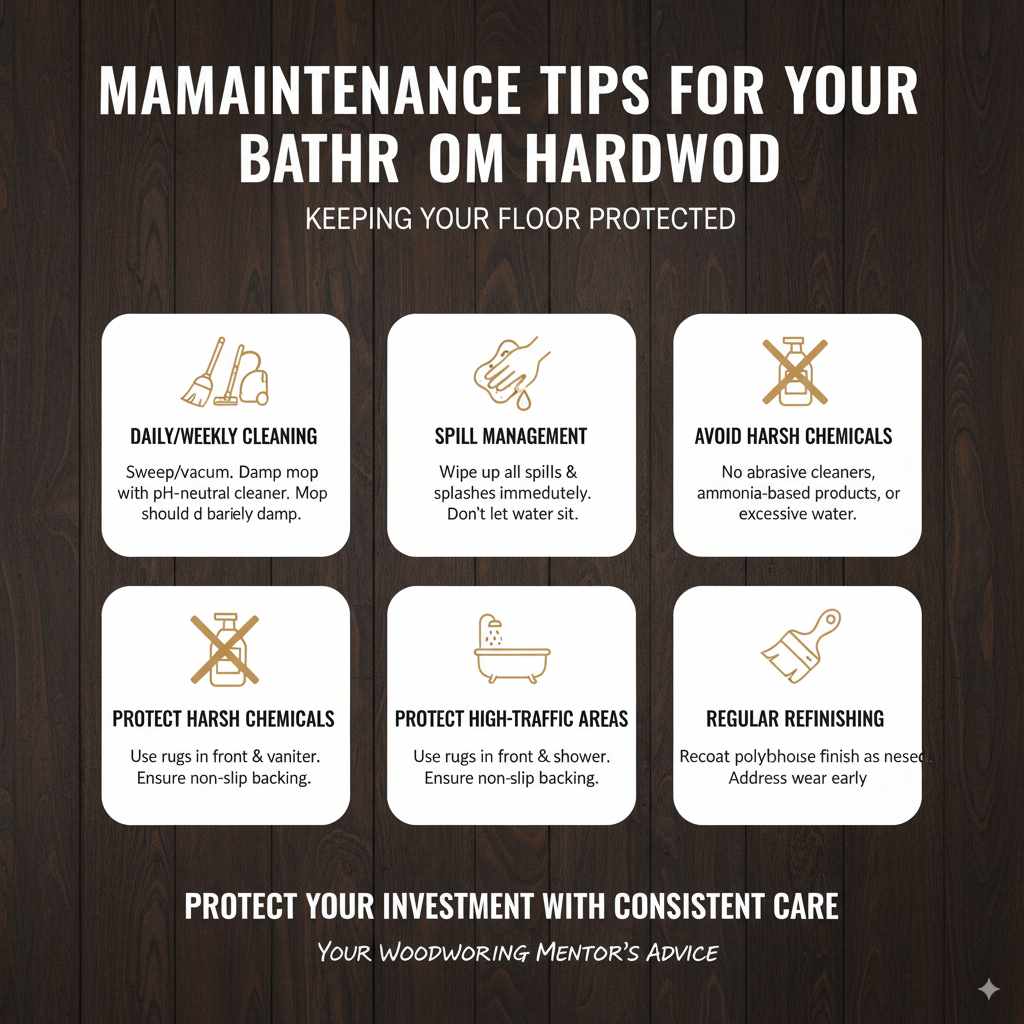
- Daily/Weekly Cleaning: Sweep or vacuum (with a soft brush attachment) regularly to remove dust and grit that can scratch the finish. For damp mopping, use a pH-neutral wood floor cleaner and a slightly damp mop. Wring out the mop extremely well – it should be barely damp, not wet.
- Spill Management: As mentioned, wipe up all spills and splashes immediately.
- Avoid Harsh Chemicals: Never use abrasive cleaners, ammonia-based products, or excessive water. These can damage the finish and the wood itself.
- Protect High-Traffic Areas: Consider strategically placed area rugs in front of the vanity and shower. Ensure they have a non-slip backing and clean them regularly.
- Regular Refinishing: A high-quality polyurethane finish typically lasts many years, but eventually, it may need a recoat or refinish. Keep an eye on wear patterns and address them before the wood itself is damaged.
Frequently Asked Questions About Hardwood Bathroom Floors
Here are some common questions beginners have:
Q1: Is it really okay to put hardwood in a bathroom?
Yes, with the right wood species (like teak or white oak), engineered hardwood, proper installation including a moisture barrier, and a durable finish, it can be a beautiful and successful choice. Diligent maintenance is key.
Q2: What’s the best type of hardwood for a bathroom?
Engineered hardwood is generally recommended over solid hardwood due to its enhanced stability and resistance to moisture fluctuations. Woods like teak, bamboo, and white oak are naturally more moisture-resistant.
Q3: How much more expensive is hardwood for a bathroom compared to tile?
The cost can vary greatly depending on the wood species and quality. High-end hardwoods can be more expensive than standard ceramic tile, but comparable to natural stone tiles. However, when you factor in the aesthetic appeal and potential increase in home value, it can be a worthwhile investment.
Q4: How do I protect my hardwood floor from shower steam?
Ensure excellent ventilation with a powerful exhaust fan that runs during and after showers. Also, use a high-quality finish with good sealer properties, and clean up any condensation visible on the floor.
Q5: Can I install hardwood floors myself in a bathroom?
While possible for experienced DIYers, bathroom installations of hardwood require particular attention to subfloor prep, moisture barriers, and adhesive choice. If you’re new to flooring, consider hiring a professional installer experienced with bathrooms to ensure it’s done correctly and to protect your investment.
Q6: Will my hardwood floors get damaged if I drop something heavy?
Hardwood, particularly denser species, is quite durable against dents and scratches. However, dropping a very heavy object can still cause damage. Using area rugs in high-traffic zones and being mindful of what you’re carrying can help prevent accidental damage.
Conclusion
Creating a bathroom with hardwood floors is absolutely achievable and can result in a stunning, warm, and inviting space. By carefully selecting moisture-resistant wood species, prioritizing engineered hardwood for its stability, ensuring meticulous installation with proper moisture barriers, and committing to regular, mindful maintenance, you can enjoy the timeless beauty of wood beneath your feet. Don’t let the fear of moisture hold you back – with the right knowledge and approach, your dream hardwood bathroom is well within reach. Happy building!