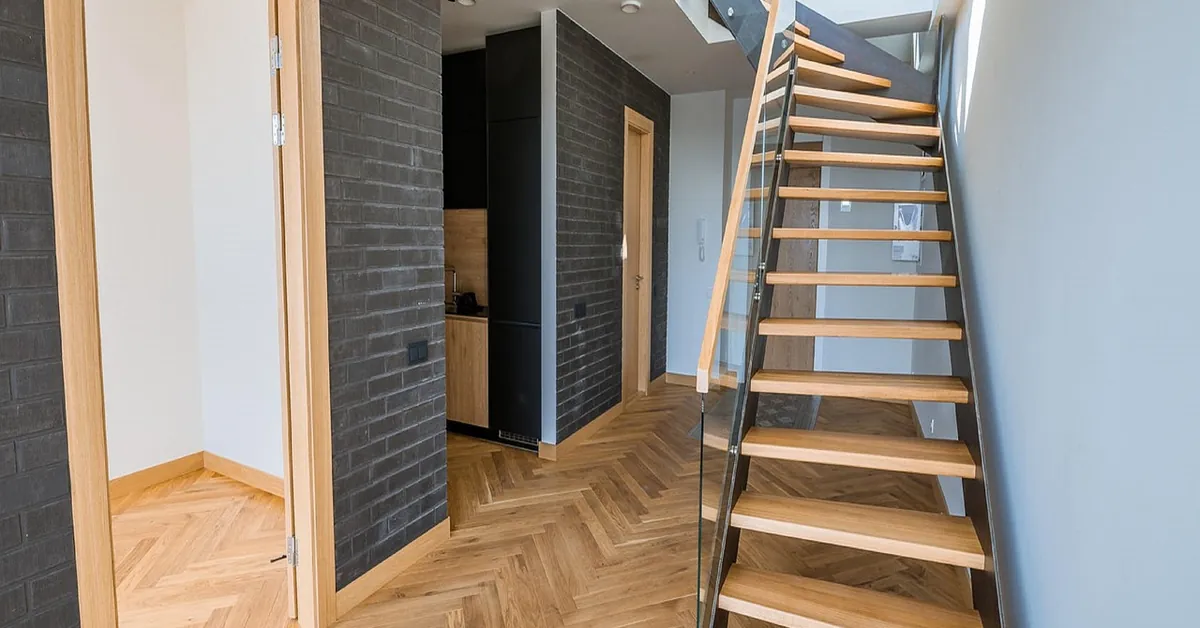
Hardwood Floor Transition Between Rooms: Right Strip by Height Gap
The right hardwood floor transition between rooms depends on one number, the height gap across the doorway: T-molding for flush floors, a reducer for roughly 1/4 to 1/2 inch, and a leveling fix for anything bigger. Pick the wrong strip and you get a trip edge or a seam that opens in winter. This guide matches strip to gap, floor type and install method.
Which Hardwood Floor Transition Strip Fits Your Doorway?
Best Oak Reducer Strip Pick | |
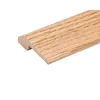 |
72 Inch Red Oak Overlap Reducer, 2 Inch Wide: $61.99 A solid red oak overlap reducer made for floors 5/16 to 3/8 inch thick, which puts it in the 1/4 to 1/2 inch band of the table below where most hardwood-to-thinner-floor doorways land. It ships unfinished, so you can stain it to match.
|
As an Amazon Associate we earn from qualifying purchases. | |
Measure the gap first, then choose the strip. The table uses the thresholds in the ADA standards for changes in level, because they are the clearest published numbers for when a step becomes a trip hazard, plus the usual strip behavior for each range.
| Height gap across doorway | Strip to use | What to know |
|---|---|---|
| 0 to about 1/8 inch (flush) | T-molding | Caps the seam and the expansion gap between two floors. No slope needed. |
| Up to 1/4 inch | T-molding or a low reducer | The ADA standards allow a vertical change of up to 1/4 inch without a bevel. |
| 1/4 to 1/2 inch | Overlap reducer | The ADA standards require a bevel no steeper than 1:2 in this range. |
| More than 1/2 inch | Level the floor or build a ramp threshold | The ADA standards treat this as a ramp, so a plain reducer is the wrong tool. |
| Floor ends at a wall, sliding door or cabinet | End cap or threshold | Finishes a floor edge that has no neighbor to meet. |
Changes in level can be up to 1/4 inch without treatment, or 1/2 inch if beveled with a slope no steeper than 1:2; above 1/2 inch is treated as a ramp. Source: U.S. Access Board, ADA Standards guide to floor and ground surfaces
Those figures are written for accessible routes, but they are a sound rule for any home. For a closer look at the reducer itself, see what a reducer strip for wood flooring is.
How to Measure the Height Gap Across a Doorway
Lay a straightedge or a 4 foot level across the seam so it rests on the higher floor and overhangs the lower one, then slide a tape or ruler under it. Check three points across the doorway, near each jamb and in the middle. If the readings differ by more than 1/8 inch, the subfloor is sloped or uneven and you need a flexible strip or a leveling fix before you buy anything.
Measure the finished floors, not the bare subfloor, because underlayment and glue add height. Typical finished thicknesses are listed below, but your product spec sheet is the number to trust.
| Floor type | Typical finished thickness | Gap against 3/4 inch solid oak |
|---|---|---|
| Solid hardwood | 3/4 inch | Flush if both are 3/4 inch |
| Engineered hardwood | 3/8 to 3/4 inch | 0 to 3/8 inch |
| Laminate | about 1/4 to 1/2 inch, before underlayment | About 1/4 to 1/2 inch |
| Luxury vinyl plank | about 5/32 to 5/16 inch, before any pad | About 7/16 to 19/32 inch |
A worked example: 3/4 inch solid oak (0.750) beside a 3/8 inch engineered floor (0.375) leaves a 0.375 inch, or 3/8 inch, gap. That falls in the 1/4 to 1/2 inch band, so it needs a reducer, not a T-molding. Add a 1/8 inch underlayment under the engineered floor and the gap shrinks to 1/4 inch, which is why you measure the finished floors.
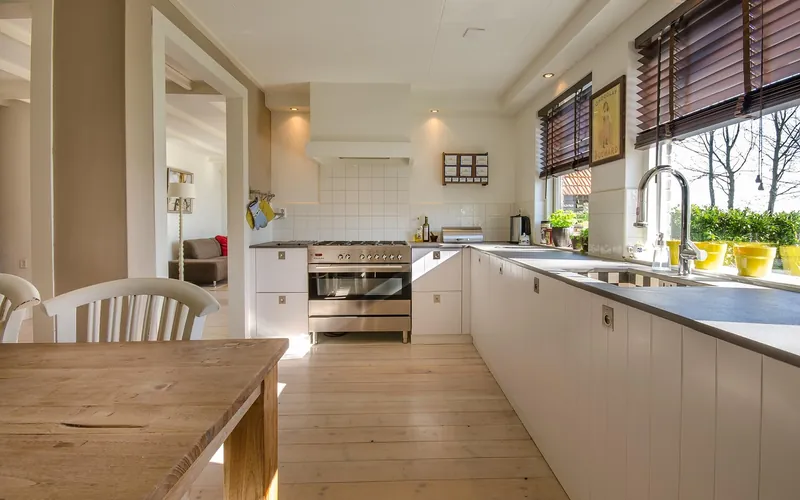
Transition Strip Types, and Where Each One Goes
T-molding: floors that meet flush
T-molding has a flat top and a stem that drops into the gap between two floors at the same height. It is the standard break between two floating floors, and it also works between two nail-down floors that run in different directions.
Overlap reducer: a step down to a thinner floor
A reducer slopes from the taller floor down to the lower one and covers the exposed edge of the taller plank, which removes the step. It is the strip for most hardwood-to-laminate, vinyl or engineered doorways. Match the overlap size on the product to the thickness of the thinner floor.
Multi-purpose reducer: uneven or mixed gaps
A multi-purpose reducer can be used as a T-molding, a reducer or an end cap, depending on how it is set. It is useful when the gap differs from one side of the opening to the other, but it will not rescue a doorway that is more than 1/2 inch out.
Stair nose and end cap
A stair nose caps a step edge, and an end cap finishes a floor where it stops at a wall or sliding door. If your hardwood runs up a staircase, our guide to installing hardwood flooring on stairs covers nosing and riser math.
Floating Floors Need a Different Transition Than Nail-Down Floors
A nail-down or glue-down floor is fixed to the subfloor, so a strip in the doorway is mostly cosmetic and a height fix. A floating floor is not fixed, so the doorway is where each room is allowed to move. The practical rules are:
- Never fasten through a floating plank. Use a track fixed to the subfloor, or a strip glued down with room left at the plank edge.
- Leave the expansion gap your manufacturer specifies at the doorway. The strip must cover the gap without locking both floors together.
- Break long runs. Manufacturers set their own maximum continuous run for floating floors, commonly cited in the range of 25 to 40 feet, so a doorway is the natural place to split the floor.
- Follow the wall gap for nail-down floors. Our guide to installing hardwood flooring with nail-down steps and gap specs explains the wall expansion gap in detail.
If you are pairing hardwood with laminate, the underlayment adds height you must count, which is covered in what laminate flooring underlay to use and how thick.
Contrasting Wood Floors Between Rooms
Two species or stain tones in adjoining rooms can look deliberate if the join looks planned. Three approaches work:
- Border or inlay strip: a 2 to 3 inch band of a third species or tone between the floors frames each room.
- Shared undertone: pull both floors toward the same warm or cool undertone and a plain T-molding in a neutral finish will not clash.
- Plank direction: run boards perpendicular across the doorway for a bold divide, or parallel to soften it.
Two different species can be butted together without a strip in an open plan, if both are nail-down or glue-down, flush, and the joint is straight. Species differ in how much they move with humidity, so a visible strip or small gap is the safer choice if the species are very different. Floating floors always need their own break.
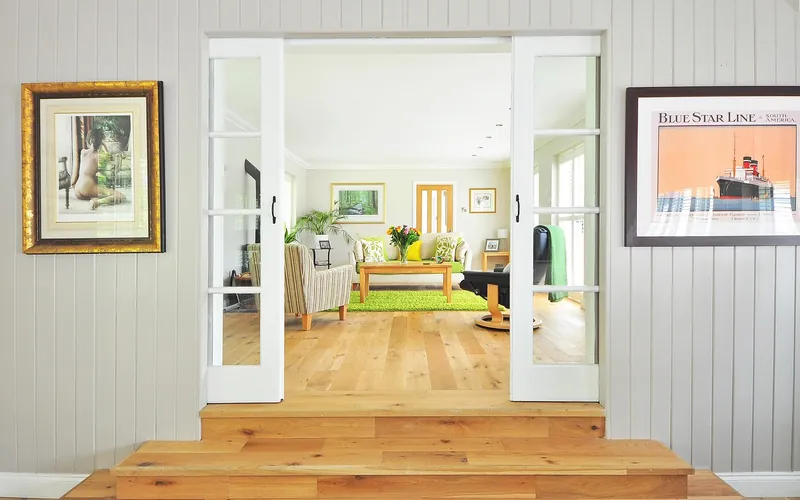
Slopes, Stone Floors and Other Awkward Doorways
Three situations catch people out. On a sloped or uneven doorway, use a multi-purpose reducer that can be shimmed along its length, and correct the slope first if the readings differ by more than 1/4 inch. Where hardwood meets stone, tile or a cement screed, you cannot nail into the harder surface, so use a strip or track that is glued, or fastened to the concrete with masonry screws, as the strip maker directs. The stone edge is often the higher side, so check the gap with the table above. For the tile case, see tile and wood flooring transition ideas.
To level a low spot on a concrete subfloor, use a self-leveling underlayment. On a wood subfloor, add plywood underlayment or patch the low area, and plane or sand the high side.
Tools and Materials You Need to Install a Transition Strip
- Tape measure, pencil and a 4 foot level or straightedge
- Miter saw or fine-tooth hand saw (see how to cut angles with a miter saw)
- The strip, plus a matching track or adhesive for your floor type
- Finish nails or screws, a drill and a pilot bit
- Color-matched wood filler (see how to fill nail holes in trim)
- Safety glasses, hearing protection and work gloves
How to Install a Hardwood Floor Transition Strip, Step by Step
- Clear the doorway. Remove the old strip with a pry bar, pull any nails, and vacuum the subfloor.
- Measure the gap and the opening. Confirm the strip type from the table, then measure jamb to jamb.
- Cut to length. Cut with the finished face up on a fine-tooth blade, wearing eye and ear protection, and keep your hands clear of the blade path.
- Dry fit. Set the strip in place and check that it sits flat, does not rock, and covers the gap at both edges.
- Fix the subfloor first. Screw down any loose panel or squeak before fastening the strip.
- Fasten it. For solid wood, drill pilot holes and drive finish nails or screws about 8 to 12 inches apart. For a track system, fix the track to the subfloor, then press the strip into it. For glue-down strips, run a bead of adhesive and weigh it down while it cures.
- Finish. Fill nail holes with color-matched filler, sand lightly, and keep foot traffic off a stained strip until it cures.
Common Transition Mistakes to Avoid
- Using a T-molding over a 3/8 inch step, which leaves an unbeveled edge to trip on.
- Nailing through a floating plank, which locks the floor and causes buckling or gaps later.
- Cutting the strip to the door width instead of jamb to jamb, which leaves visible subfloor.
- Buying the strip before measuring finished heights with underlayment included.
- Choosing a strip that is much lighter than both floors, so it reads as a mistake instead of a feature. A strip one or two shades darker than the floor usually looks more intentional.
Hardwood Floor Transition FAQ
Can I use T-molding if the two floors are not the same height?
Only for a very small difference. A T-molding is a flat cap with no slope, so it suits floors that are flush or within about 1/8 inch. At 1/4 inch you are at the limit of an unbeveled edge under the ADA standards, and anything more calls for a reducer.
What is the most common transition between hardwood and a thinner floor?
An overlap reducer. It ramps from the taller hardwood down to the thinner floor, which covers the exposed plank edge and removes the step. T-molding is the usual choice when both floors are flush, especially with floating floors that each need their own expansion gap.
Do I need a transition strip between two rooms of the same hardwood?
Not always. Nail-down or glue-down floors of the same height can run through a doorway with no strip at all. Floating floors usually need a break at the doorway, because each room should be able to expand on its own, and many manufacturers also cap the length of one continuous run.
Where should a transition strip sit in a doorway?
Center it under the closed door so the strip is hidden when the door is shut and the seam lines up with the door and frame. Measure the opening, then cut the strip to the width of the jambs, not to the width of the door.
Can I nail a transition strip through floating floor planks?
No. Fastening through a floating plank pins it in place and defeats the expansion gap. Use a track screwed to the subfloor, or a strip that is glued down with a gap left at the plank edge, as your flooring manufacturer specifies.
What do I do when the height difference is more than 1/2 inch?
Fix the height instead of hiding it. The ADA standards treat a change of more than 1/2 inch as a ramp, and in a home it is still a trip hazard. Add plywood underlayment under the lower floor, plane or sand the high side, or use a purpose-built ramp threshold.
Conclusion
Measure the finished height gap at three points, pick the strip from the table, and fasten it to the subfloor, not to a floating floor. Flush floors get a T-molding, a 1/4 to 1/2 inch step gets a reducer, and a bigger step needs the floor fixed. For the bigger picture on picking a floor, see our wood flooring guide.
Sponsored / affiliate links. As an Amazon Associate I earn from qualifying purchases. I may earn additional commission from eligible campaigns.