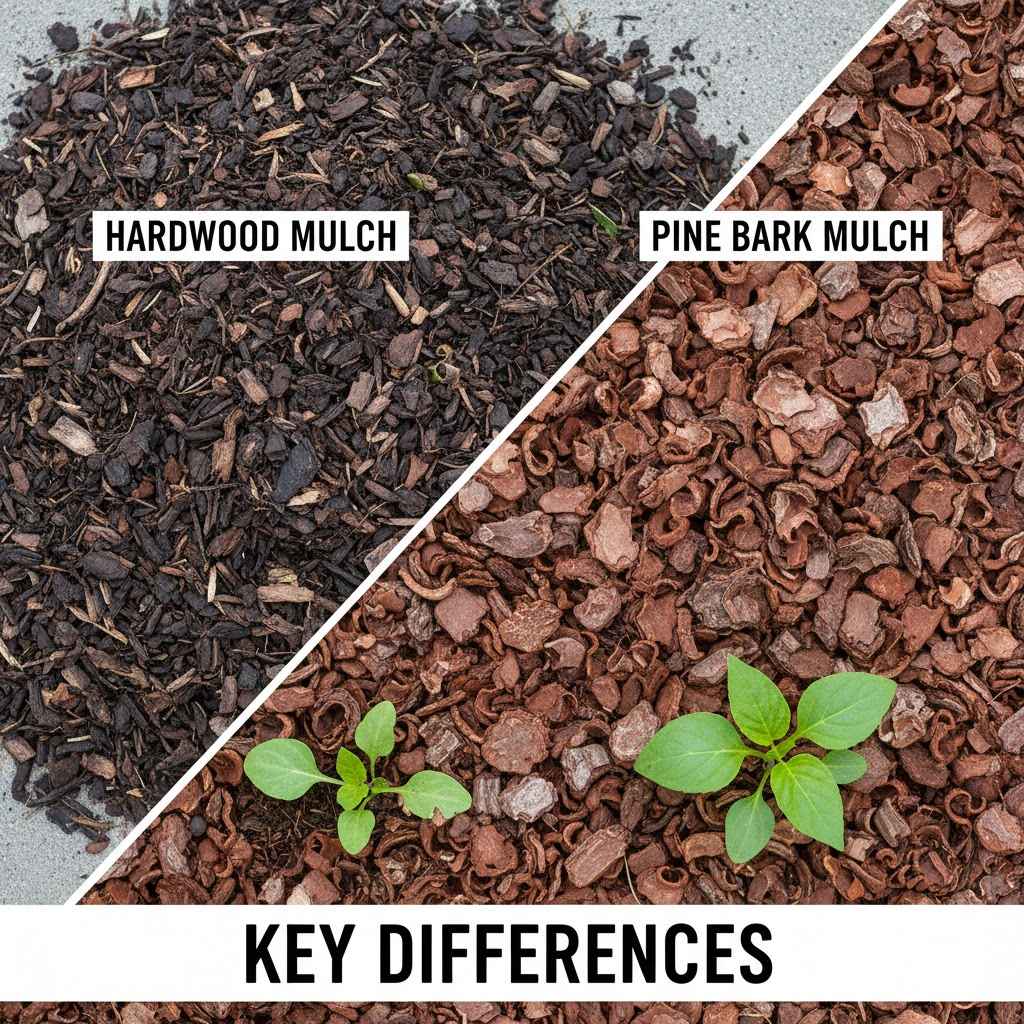
Hardwood vs Pine Bark Mulch: Key Differences
Choosing the right mulch for your garden can seem tricky, especially when you first start out. You see bags of mulch everywhere and wonder what makes one different from another. That’s why understanding the Hardwood vs Pine Bark Mulch: Key Differences is so important for new gardeners.
It can feel a little confusing with all the options. Don’t worry, we’ll make it simple to figure out which one is best for your plants. Let’s break down what you need to know.
What Is Mulch and Why Use It
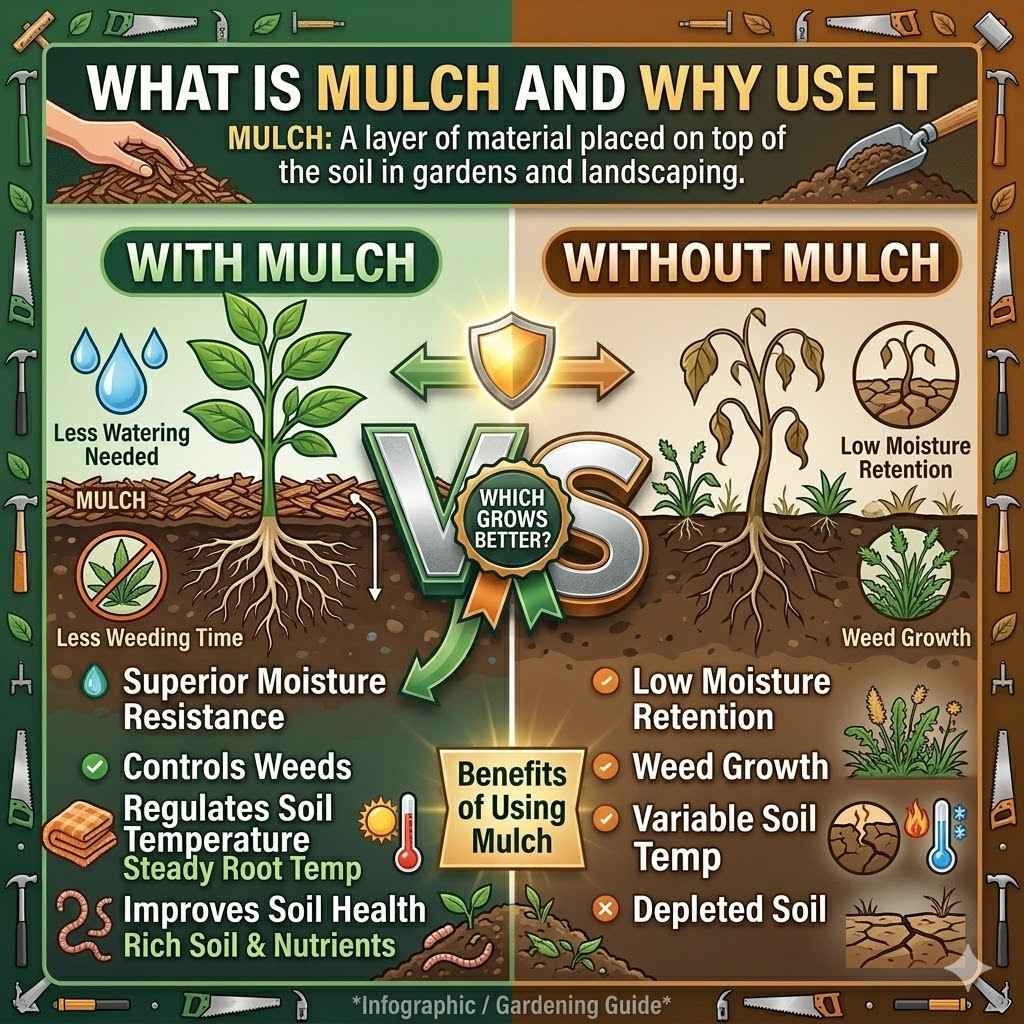
Mulch is a layer of material placed on top of the soil in gardens and landscaping. Its main job is to cover the ground around plants. People use mulch for many good reasons that help plants grow better.
It acts like a protective blanket for the soil.
Benefits of Using Mulch
- Keeps Soil Moist Mulch helps stop water from evaporating from the soil surface. This means your plants need less watering. Think of it like an umbrella for the soil, keeping the moisture in. This is especially helpful during hot, dry weather when water is precious.
- Controls Weeds A good layer of mulch blocks sunlight from reaching weed seeds in the soil. Without sunlight, most weed seeds cannot sprout. This means fewer pesky weeds trying to steal nutrients and water from your garden plants. You’ll spend less time pulling weeds and more time enjoying your garden.
- Regulates Soil Temperature Mulch insulates the soil. It keeps it cooler in the summer heat and warmer when the weather turns cold. This steady temperature helps plant roots stay healthy and protected from extreme weather changes. It’s like giving your plants a cozy blanket.
- Improves Soil Health Over time, organic mulches break down. As they decompose, they add nutrients and organic matter to the soil. This makes the soil richer and better for plant growth. It’s a natural way to feed your garden over time.
Hardwood Mulch Explained
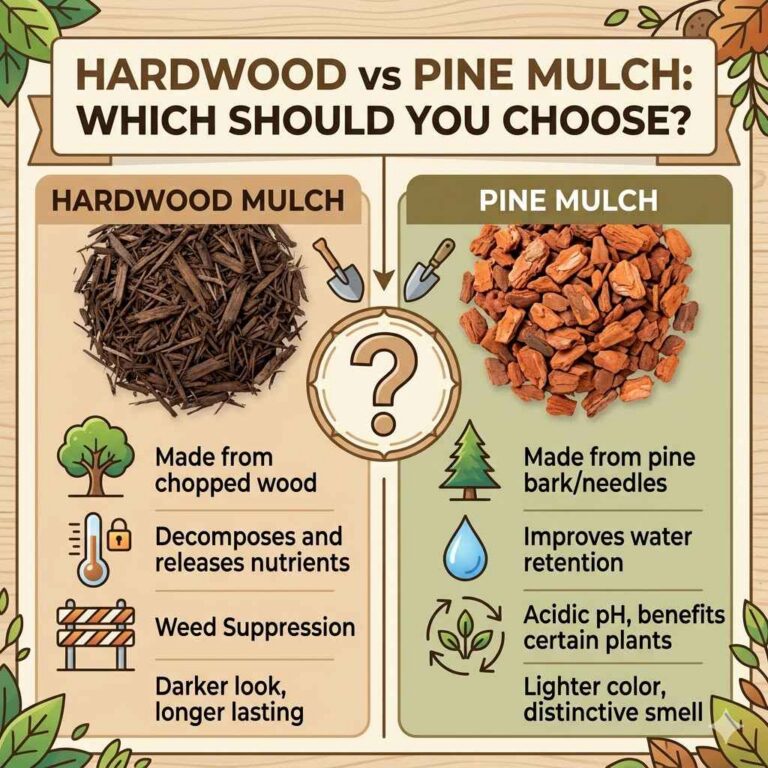
Hardwood mulch is made from the wood of deciduous trees. These are trees that lose their leaves every year, like oak, maple, and walnut. It’s a popular choice because it breaks down slowly and looks neat and tidy in garden beds.
This makes it a favorite for many gardeners and landscapers.
Types of Hardwood Mulch
Hardwood mulch comes in a few common forms, each with slightly different looks and textures. These variations can affect how they perform in your garden and how long they last.
Shredded Hardwood Mulch
This type is made from chipped or shredded hardwood. It often has a mix of different sizes of wood chips. It’s a good all-around mulch that holds its shape well.
Hardwood Bark Mulch
This is specifically from the bark of hardwood trees. Bark mulch tends to be a bit lighter in color and has a more uniform texture. It’s great for a clean, polished look.
Dyed Hardwood Mulch
Sometimes, hardwood mulch is colored red, black, or brown. This is done with non-toxic dyes to give gardens a specific aesthetic. The color helps it stand out and can make flower beds look very attractive.
Pros and Cons of Hardwood Mulch
Hardwood mulch offers several advantages for gardeners. However, it also has some drawbacks to consider before you buy.
Advantages
- Long-Lasting Hardwood mulch breaks down slowly. This means it stays in place and looks good for a longer time. You won’t need to replace it as often as some other types of mulch.
- Nutrient Rich As it decomposes, hardwood mulch adds valuable nutrients to the soil. This can help your plants grow stronger and healthier over time. It’s like a slow-release food for your garden.
- Aesthetically Pleasing Hardwood mulch often has a natural, earthy look. It can come in various colors, which helps enhance the beauty of garden beds and walkways. It gives a finished appearance.
- Weed Suppression Its dense texture effectively blocks sunlight, preventing most weed seeds from germinating. This significantly reduces the need for weeding in your garden spaces.
Disadvantages
- Can Compact Over time, hardwood mulch can become dense and compacted, especially if it’s a finer grade. This can make it harder for water and air to penetrate the soil. You might need to fluff it up occasionally.
- Potential for Fungal Growth In wet conditions, some types of hardwood mulch can develop surface mold or fungus. This is usually harmless but can be unsightly. It’s more common in shaded, damp areas.
- Can Harbor Pests Certain types of hardwood mulch, particularly those with larger chunks, might offer hiding places for insects or small animals. This is not always a problem but is something to be aware of.
For example, a gardener who used a dark brown dyed hardwood mulch found that her flower beds looked consistently beautiful throughout the summer. She only had to top it up once a year, saving her time and effort on garden maintenance. This allowed her to focus more on planting and enjoying her colorful blooms.
Pine Bark Mulch Explained
Pine bark mulch comes from pine trees. It’s known for its distinctive reddish-brown color and often has a more shredded or fibrous texture. This type of mulch is often favored for its natural look and its slightly acidic properties, which can benefit certain plants.
Types of Pine Bark Mulch
Pine bark mulch is processed in ways that create different textures and appearances, making it suitable for various garden uses.
Shredded Pine Bark
This is the most common type. It’s made of long, stringy pieces of pine bark. It tends to stay in place well and creates a natural look.
Pine Bark Fines
These are smaller, more processed pieces of pine bark, almost like a coarse soil. They are very fine and can create a very smooth, uniform look. They are excellent for breaking up heavy soils.
Mini Bark Nuggets
These are small, nugget-shaped pieces of pine bark. They offer a bit more texture and dimension than fines or shredded bark. They are popular for decorative landscaping.
Pros and Cons of Pine Bark Mulch
Pine bark mulch has its own set of advantages and disadvantages that make it a good fit for some gardens but not others.
Advantages
- Slightly Acidic Pine bark naturally has a slightly acidic pH. This is beneficial for acid-loving plants like azaleas, rhododendrons, and blueberries. It helps create the right soil conditions for them.
- Good Drainage The fibrous texture of shredded pine bark allows for excellent air circulation and drainage. This helps prevent soil from becoming waterlogged, which is good for most plant roots.
- Attractive Appearance The rich reddish-brown color of pine bark mulch is very appealing. It adds warmth and beauty to any garden landscape. It looks especially nice around darker foliage plants.
- Repels Some Pests Some gardeners report that the scent of pine bark can help deter certain garden pests. While not a complete solution, it can offer a little extra protection.
Disadvantages
- Breaks Down Faster Compared to hardwood mulch, pine bark tends to decompose more quickly. This means you might need to replenish it more often to maintain its depth and appearance.
- Can Float Away In heavy rains or on sloped areas, lighter shredded pine bark can sometimes be washed away. This is less of an issue with bark nuggets or fines.
- Can Be Dusty Pine bark fines, in particular, can become dusty when dry. This can be a minor nuisance during application, but it settles once it gets wet.
- Cost Varies Depending on your location and the specific type, pine bark mulch can sometimes be more expensive than general hardwood mulch.
Consider Sarah, who has a garden full of hydrangeas and blueberries. She chooses pine bark mulch every year because she knows it helps keep the soil slightly acidic, which her plants love. Her garden thrives with the rich color of the pine bark and the healthy growth of her favorite shrubs.
Hardwood vs Pine Bark Mulch Key Differences Compared
Now that we’ve looked at each type individually, let’s directly compare the Hardwood vs Pine Bark Mulch: Key Differences to help you make a clear choice. These distinctions matter for how they look, how they perform, and how they affect your garden soil.
Appearance and Texture
Hardwood mulch often has a more uniform, consistent look, especially the dyed varieties. It can range from fine to chunky. Pine bark mulch, particularly shredded, has a more natural, stringy appearance.
Bark nuggets offer a more decorative, textured look.
Decomposition Rate
Hardwood mulch generally decomposes slower. This means it lasts longer in the garden, typically needing replacement every 12-18 months. Pine bark mulch breaks down faster, often needing replenishment every 6-12 months.
This makes hardwood mulch a more economical choice for longevity.
pH Impact on Soil
Hardwood mulch is generally considered pH-neutral. It won’t significantly alter the acidity of your soil. Pine bark mulch is slightly acidic.
This is a key benefit for plants that prefer acidic soil conditions, like azaleas, rhododendrons, and blueberries.
Weed Suppression Effectiveness
Both types are good at suppressing weeds when applied in sufficient depth. Hardwood mulch, especially denser varieties, might offer slightly better long-term weed control due to its slower decomposition and tendency to form a more solid layer. Pine bark’s fibrous nature also creates a good barrier.
Cost and Availability
Availability can depend on your local area. Hardwood mulch is often widely available and can be more budget-friendly. Pine bark mulch can sometimes be more costly, especially specialty types like mini nuggets or fines, depending on sourcing and processing.
Suitability for Different Plants
Hardwood mulch is a versatile, all-purpose option suitable for most plants. Pine bark mulch is an excellent choice for acid-loving plants. It can also be a good decorative choice for pathways or areas where a natural, rustic look is desired.
Durability and Longevity
Hardwood mulch generally lasts longer due to its slower decomposition. This means less frequent replenishment and potentially lower long-term costs. Pine bark mulch requires more frequent top-ups because it breaks down more quickly.
Water Drainage and Retention
Both mulches help retain soil moisture. The fibrous nature of pine bark can sometimes offer slightly better drainage and aeration than compacted hardwood mulch. However, the specific texture of hardwood mulch also impacts this.
Comparison Table
Here’s a quick look at the main differences:
| Feature | Hardwood Mulch | Pine Bark Mulch |
|---|---|---|
| Source | Deciduous trees (oak, maple) | Pine trees |
| Appearance | Uniform, various colors (natural or dyed) | Reddish-brown, fibrous, natural look |
| Decomposition Rate | Slow | Faster |
| Soil pH Impact | Neutral | Slightly acidic |
| Weed Suppression | Good to Excellent | Good |
| Longevity | Longer lasting | Shorter lasting |
| Best For | General landscaping, most plants | Acid-loving plants, decorative use |
Real-Life Application Example
A community garden project decided to mulch their entire vegetable plot with hardwood mulch. They chose it because they wanted a long-lasting solution that would suppress weeds effectively throughout the growing season. The gardeners noticed a significant reduction in weeding time.
Plus, the soil retained moisture better during a dry spell, meaning the vegetables stayed healthier with less watering. The even, dark color also made the garden look very tidy and professional.
In another instance, a homeowner specializing in rhododendrons and azaleas used pine bark mulch around her flowering shrubs. She specifically chose shredded pine bark. This choice not only provided the acidic environment her plants needed to thrive but also gave her landscape a beautiful, natural aesthetic.
The mulch helped retain moisture around the sensitive root systems, and she observed lusher, more vibrant blooms compared to previous years.
Scenario 1: Choosing for a Vegetable Garden
- Consider your main plants: For a vegetable garden, you likely want to boost soil health and suppress weeds.
- Think about maintenance: You want a mulch that doesn’t break down too quickly, reducing the need for frequent reapplication.
- Factor in soil needs: Most vegetables do well in neutral soil.
- Recommendation: Hardwood mulch is often the best choice for vegetable gardens. Its slower decomposition means it lasts longer, and its neutral pH is suitable for most vegetables. It effectively suppresses weeds and conserves moisture, leading to healthier crops with less effort.
Scenario 2: Choosing for a Flower Bed with Acid-Loving Plants
- Identify special plant needs: You have plants like azaleas, blueberries, or hydrangeas that require slightly acidic soil.
- Consider the visual appeal: You want something that complements the flowers and creates an attractive setting.
- Think about water needs: These plants benefit from good drainage and consistent moisture.
- Recommendation: Pine bark mulch, especially shredded or fines, is ideal for this situation. It naturally lowers soil pH, creating the perfect environment for acid-loving plants. Its appealing reddish-brown color enhances the beauty of flowers, and its texture promotes good drainage and moisture retention.
How to Apply Mulch Correctly
Applying mulch properly is key to getting its full benefits. Doing it the right way ensures your plants thrive and your garden looks its best. It’s not just about spreading it around; there’s a bit more to it.
Step-by-Step Application Process
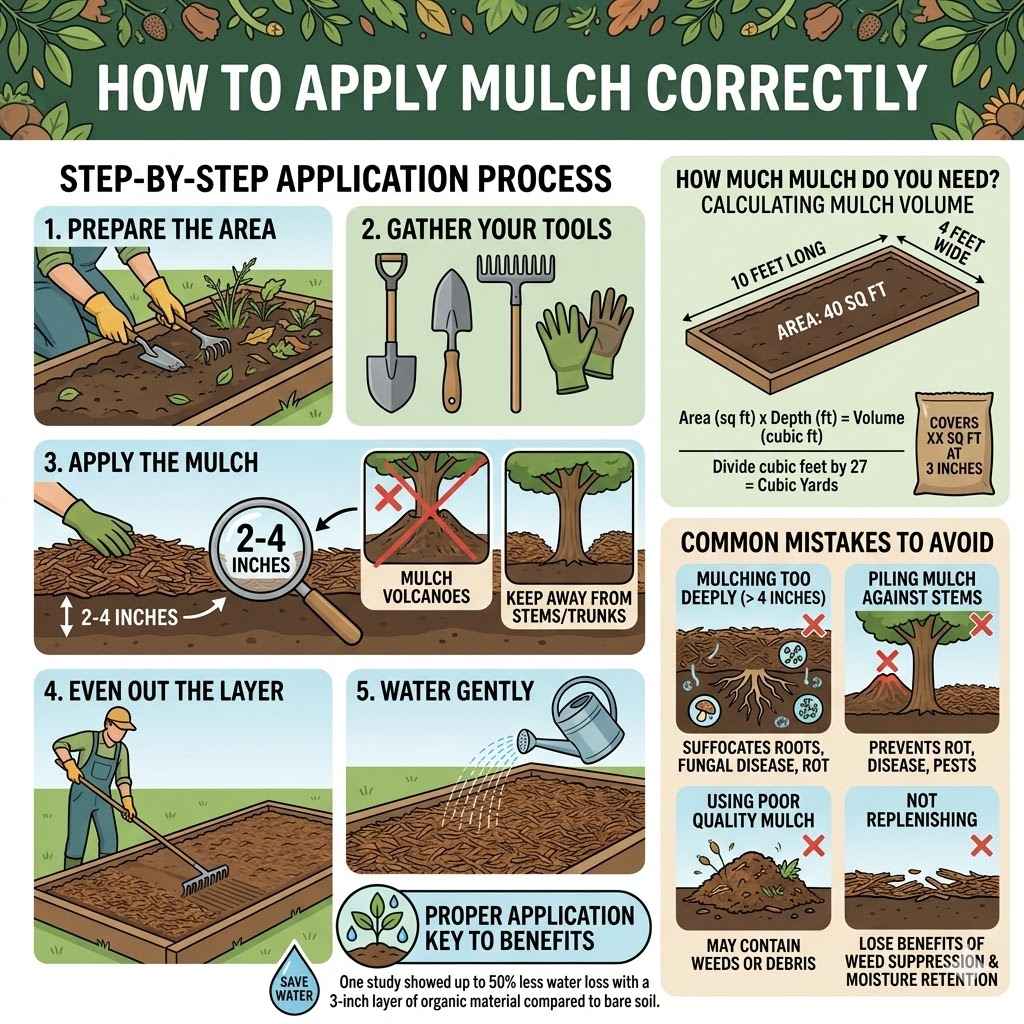
- Prepare the Area Clear the area of weeds. Remove any existing debris like leaves or grass clippings. You want a clean surface for the mulch.
- Gather Your Tools You’ll need a shovel or spade for scooping mulch and a rake for spreading it evenly. Gloves are also a good idea.
- Apply the Mulch Spread a layer of mulch about 2-4 inches deep around your plants. Make sure to keep the mulch a few inches away from the stems or trunks of trees and shrubs. This is called “mulch volcanoes” if it’s too close, and it can harm plants by trapping moisture and encouraging rot.
- Even Out the Layer Use your rake to create a smooth, even surface. This not only looks better but also helps the mulch work more effectively.
- Water Gently Lightly water the mulch after application. This helps settle it into place and prevents it from blowing away easily.
How Much Mulch Do You Need
Calculating how much mulch to buy is important to avoid over or underbuying. The amount you need depends on the size of the area you want to cover and the desired depth of the mulch layer.
Calculating Mulch Volume
You can measure the area in square feet. For example, if you have a garden bed that is 10 feet long and 4 feet wide, the area is 40 square feet. Most mulch bags will state how many square feet they cover at a certain depth.
A common depth for mulch is 3 inches.
You can use online mulch calculators or do a simple calculation: Area (sq ft) x Depth (ft) = Volume (cubic ft). Since most mulch is sold by the cubic yard, you’ll need to divide your cubic feet by 27 (because there are 27 cubic feet in a cubic yard).
For example, a 40 sq ft area needing 3 inches (0.25 ft) of mulch would require 10 cubic feet (40 x 0.25). Divided by 27, that’s about 0.37 cubic yards. It’s always a good idea to buy a little extra to account for settling and adjustments.
Common Mistakes to Avoid
Applying mulch seems simple, but some common errors can reduce its effectiveness or even harm your plants.
- Mulching Too Deeply Applying mulch more than 4 inches deep can suffocate plant roots, preventing air and water from reaching them. It can also lead to fungal diseases and root rot.
- Piling Mulch Against Stems As mentioned, keeping mulch away from plant stems and tree trunks is crucial. This prevents rot, disease, and pests from being attracted to the vulnerable parts of the plant.
- Using Poor Quality Mulch Very cheap mulch might contain weed seeds or even debris that isn’t good for your garden. Always check the quality of the mulch you are buying.
- Not Replenishing Mulch breaks down over time. If you let the layer get too thin, you lose the benefits of weed suppression and moisture retention.
One study showed that gardens mulched with a 3-inch layer of organic material experienced up to 50% less water loss compared to bare soil. This highlights how important proper application and depth are for water conservation in gardening.
Frequently Asked Questions
Question: Which mulch is better for preventing weeds Hardwood or Pine Bark
Answer: Both hardwood and pine bark mulch are effective at suppressing weeds when applied in a sufficient layer. Hardwood mulch, especially denser varieties, might offer slightly longer-lasting weed control due to its slower breakdown rate, creating a more consistent barrier.
Question: Can pine bark mulch make my soil too acidic
Answer: Pine bark mulch is only slightly acidic and generally does not significantly alter the pH of most garden soils. It is beneficial for acid-loving plants but unlikely to harm plants that prefer neutral or slightly alkaline conditions unless used excessively.
Question: How often should I reapply hardwood mulch
Answer: Hardwood mulch breaks down slowly and typically needs to be reapplied every 12 to 18 months. You should replenish it when the layer becomes too thin to effectively suppress weeds or retain moisture.
Question: Is dyed mulch safe for my garden
Answer: Yes, most dyed mulches use non-toxic dyes that are safe for plants, pets, and people. The color is primarily for aesthetic purposes and does not harm the soil or plants when used properly.
Question: Can I mix hardwood and pine bark mulch
Answer: Yes, you can mix hardwood and pine bark mulch. This can offer a combination of benefits, such as the longevity of hardwood with the aesthetic or pH benefits of pine bark. Ensure both are good quality products.
Conclusion
Choosing between hardwood and pine bark mulch comes down to your specific garden needs. For general use and long-lasting weed control, hardwood mulch is a great, versatile option. If you have plants that thrive in slightly acidic soil or prefer a natural reddish-brown look, pine bark mulch is an excellent choice.
Both offer fantastic benefits for soil health and plant care when applied correctly. Select the one that best fits your plants and your garden’s style.