Hickory Vs Maple Cabinets: The Ultimate Guide
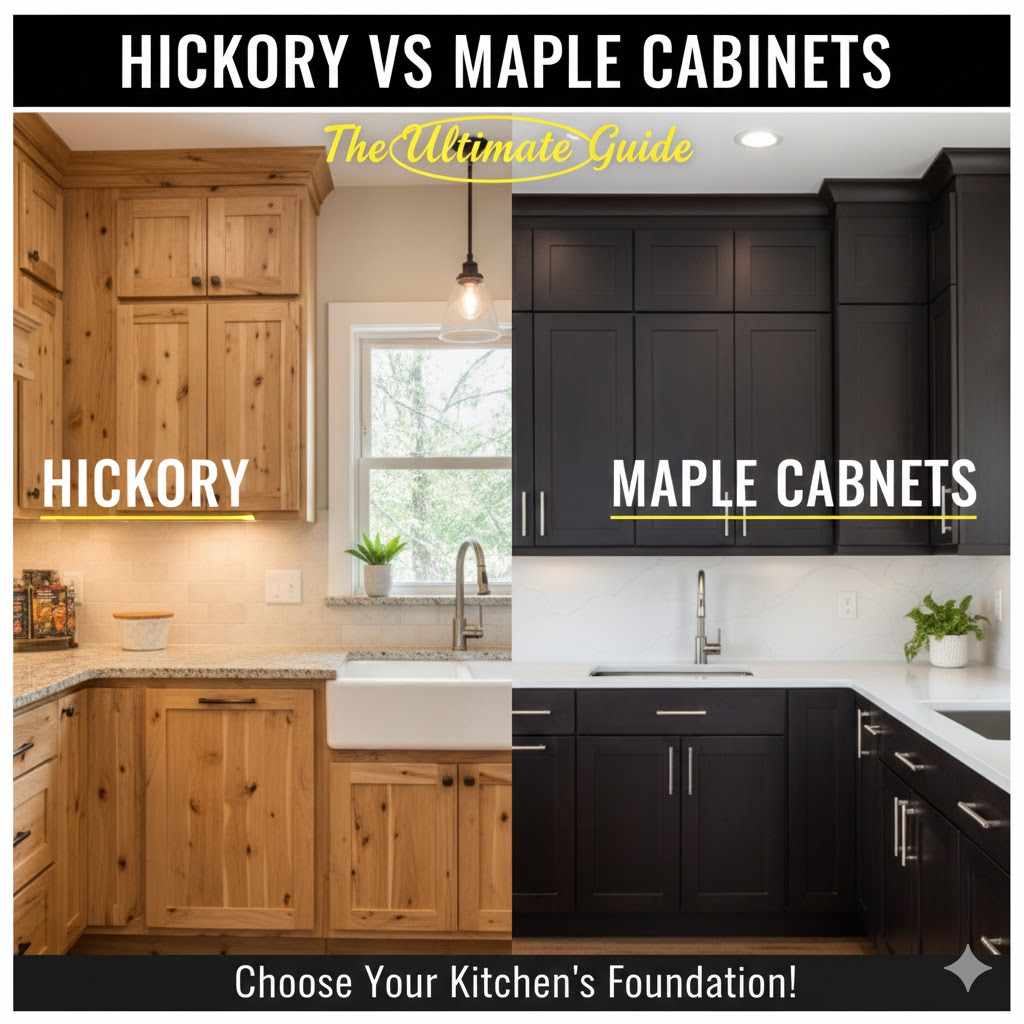
Choosing between hickory and maple cabinets comes down to your style and budget. Hickory is harder, more durable, and offers a bold, rustic look with strong grain patterns, making it great for high-traffic areas. Maple provides a smooth, uniform appearance perfect for modern and traditional kitchens and is easier to stain or paint for a clean, consistent finish.
Walking into a cabinet showroom can feel a bit overwhelming, can’t it? You’re faced with dozens of options, and two of the most popular choices you’ll hear about are hickory and maple. Both are fantastic, strong woods, but they have very different personalities. Picking the wrong one can change the entire feel of your kitchen, and nobody wants that kind of surprise after all their hard work.
Don’t you worry. We’re going to break this down together, step-by-step. Think of me as your friendly guide in the workshop. We’ll look at everything from how they look to how much they cost, and I promise to keep it simple. By the end of this guide, you’ll feel confident and ready to choose the perfect wood for your dream cabinets.
Understanding the Contenders: A Friendly Introduction
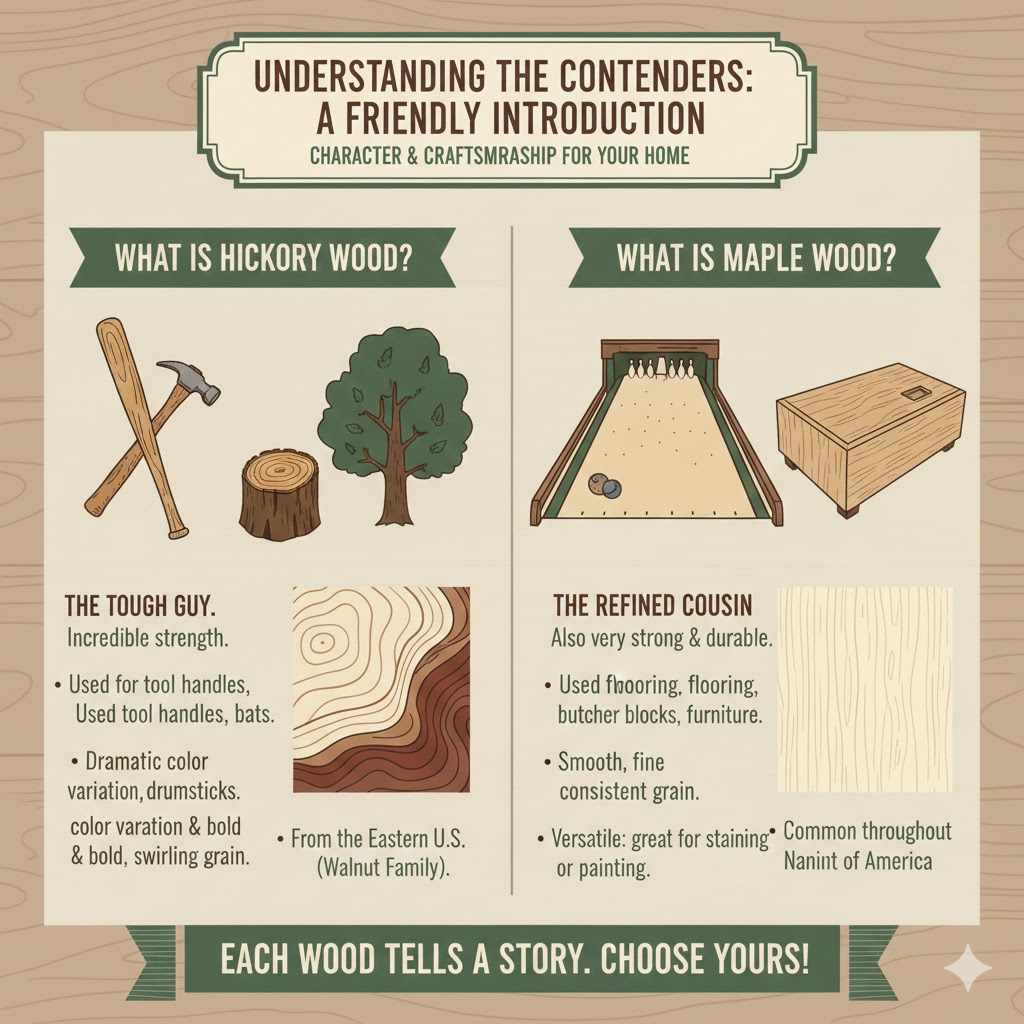
Before we dive into the details, let’s get properly introduced to our two contenders. Just like people, every wood has its own unique story and character. Knowing a little about where they come from helps you appreciate what makes them special.
What is Hickory Wood?
Hickory is the tough guy of the American forest. It’s known for its incredible strength and durability—so strong, in fact, that it’s traditionally used for things like tool handles, drumsticks, and baseball bats. When you choose hickory for your cabinets, you’re bringing that same resilience right into your kitchen. It comes from the hickory tree, which is part of the walnut family, and is found all over the Eastern United States. Its most defining feature is its dramatic color variation and bold grain pattern, which we’ll talk more about in a moment.
What is Maple Wood?
Maple is like hickory’s more refined cousin. It’s also a very strong and durable hardwood, common throughout North America, but its claim to fame is its smooth, fine grain and creamy, consistent color. Think of beautiful bowling alley floors or sturdy butcher blocks—that’s often maple. Because of its clean appearance, maple is incredibly versatile. It can be stained to look like more expensive woods like cherry or walnut, or it can be painted to achieve a flawless, smooth finish. It’s a go-to choice for cabinet makers who want a reliable and beautiful material.
Appearance Face-Off: Grain, Color, and Character
This is where hickory and maple really show their different personalities. How your cabinets look will set the tone for your entire kitchen, so let’s get a clear picture of what each wood brings to the table.
Hickory: Bold, Rustic, and Full of Drama
Hickory is never boring. Its most striking feature is the strong contrast between its light sapwood (the outer part of the tree) and its darker heartwood (the center). A single cabinet door can feature streaks of creamy white, tan, and deep brown all at once. This variation is what people love—or sometimes dislike—about it.
- Grain Pattern: The grain is often strong, with waves and burls that give it a very natural, organic feel. No two pieces of hickory are ever exactly alike.
- Color: Expect a wide range of colors, from pale blonde to reddish-brown, often on the same piece of wood. Mineral streaks and knots are common and considered part of its charm.
- Overall Feel: Hickory cabinets instantly create a rustic, warm, and inviting atmosphere. They feel grounded and authentic, perfect for farmhouse, lodge, or industrial-style kitchens.
Maple: Smooth, Clean, and Consistent
If you prefer a more uniform and serene look, maple might be your winner. Maple wood is known for its subtle and elegant appearance. Its color is generally consistent, which gives it a clean and polished feel.
- Grain Pattern: Maple has a very fine, straight grain pattern. It’s often so subtle that from a distance, the surface can look perfectly smooth and unblemished.
- Color: Most maple is a light, creamy white, sometimes with a slight golden or reddish hue. The color is very consistent across boards, giving you a predictable and uniform look.
- Overall Feel: Maple cabinets feel bright, airy, and timeless. They work beautifully in modern, traditional, and transitional kitchens where a clean and uncluttered look is desired.
Durability and Strength: Which Wood Can Take a Beating?
Your kitchen cabinets work hard. They get bumped, slammed, and scraped every single day. You need a wood that can stand up to the challenge. Both hickory and maple are considered hardwoods, but there’s a clear winner in the strength department.
Understanding the Janka Hardness Scale
In the woodworking world, we measure a wood’s hardness using something called the Janka Hardness Scale. It’s a simple test: it measures the amount of force needed to press a small steel ball halfway into a piece of wood. The higher the Janka rating, the harder and more resistant the wood is to dents and scratches. You can learn more about this test from reliable sources like the U.S. Forest Service Forest Products Laboratory.
Comparing Hickory and Maple Hardness
This is where hickory truly shines. It is one of the hardest commercially available domestic hardwoods in North America. Maple is no slouch—it’s very hard and durable itself—but hickory is in another league. This makes hickory an outstanding choice for busy kitchens with kids, pets, or just a lot of activity.
Let’s look at the numbers to see the difference clearly.
| Wood Species | Average Janka Hardness Rating (lbf) | Durability Notes |
|---|---|---|
| Hickory | 1820 | Extremely hard and shock-resistant. Highly resistant to dents and scratches. Ideal for high-traffic, high-impact areas. |
| Hard Maple | 1450 | Very hard and durable. Resists wear and tear well. A solid choice for kitchens and furniture that see regular use. |
| Red Oak (for comparison) | 1290 | A popular and durable cabinet wood, but softer than both Hard Maple and Hickory. |
As you can see, while Hard Maple is significantly harder than a standard like Red Oak, Hickory is even tougher. This extra hardness means a hickory cabinet door is less likely to dent if you accidentally bang a pot against it.
Staining and Finishing: A DIYer’s Guide
How a wood takes stain or paint is a huge factor, especially if you plan on finishing the cabinets yourself. Hickory and maple behave very differently in this area, and it’s important to know what you’re getting into.
The Challenge of Staining Hickory
Hickory’s wild grain and color variations make staining a bit tricky. The dense parts of the wood and the less dense parts absorb stain at different rates. This can amplify the wood’s natural contrasts, creating a very bold, sometimes uneven, look.
- Light Stains: Light or natural stains work best, as they celebrate the wood’s natural character without overwhelming it.
- Dark Stains: Dark stains can look blotchy and can make the color variations even more dramatic. It’s often best to let a professional handle dark staining on hickory.
- Our Advice: If you love hickory, embrace its natural beauty. A clear coat or a light, warm stain is often the best way to let its personality shine through.
Tips for Finishing Maple Smoothly
Maple’s fine, tight grain is a double-edged sword. While it creates a beautifully smooth surface, it can also make staining a challenge. Maple is prone to “blotching,” where the stain absorbs unevenly and creates dark patches.
- Use a Wood Conditioner: This is a must! Applying a pre-stain wood conditioner before your stain will help the wood absorb the color more evenly, preventing blotchiness.
- Gel Stains are Your Friend: Gel stains sit on top of the wood more than liquid stains, which penetrate deep. This results in a much more uniform color on tricky woods like maple.
- Consider a Pro for Dark Stains: Just like with hickory, achieving a perfect, even dark stain on maple can be difficult. If you have your heart set on a deep espresso or black finish, professional finishing might be worth the investment.
Painting Hickory vs. Maple Cabinets
If you’re planning to paint your cabinets, maple is the clear winner. Its smooth surface and subtle grain provide the perfect canvas for a flawless, glass-like painted finish. The grain won’t show through the paint, giving you that clean, professional look.
Hickory can be painted, but its stronger grain texture might be slightly visible through the paint. Also, because hickory is such a character-filled and often more expensive wood, many people feel that painting it covers up what makes it special. If your goal is painted cabinets from the start, choosing maple is often a more practical and cost-effective choice.
Cost and Budget: What Will Your Cabinets Cost?
Let’s talk money. For most of us, budget is a major factor in any home renovation project. The cost of cabinets can vary widely based on the style, finish, and construction quality, but the wood species itself plays a big role.
Factors Influencing Cabinet Prices
Generally, hickory cabinets tend to be slightly more expensive than maple cabinets. This is because hickory can be more difficult to work with—its extreme hardness can be tough on tools, and its color variation requires careful selection to create balanced-looking cabinet doors. Maple is more widely available and consistent, making it a bit more efficient for large-scale cabinet manufacturers to process.
Here’s a simple table to summarize the key differences that impact everything from look to price.
| Feature | Hickory Cabinets | Maple Cabinets |
|---|---|---|
| Average Cost | Moderate to High | Moderate |
| Appearance | Bold, dramatic grain with high color variation | Smooth, fine grain with consistent, light color |
| Best For Staining | Best with clear or light stains to show character | Good, but requires pre-stain conditioner to prevent blotching |
| Best For Painting | Possible, but grain may show through | Excellent, provides a perfectly smooth finish |
| Durability | Exceptional (Janka: 1820) | Very High (Janka: 1450) |
| Common Styles | Rustic, Farmhouse, Industrial, Craftsman | Modern, Traditional, Transitional, Scandinavian |
Finding the Perfect Style Fit for Your Home
A kitchen is more than just a place to cook; it’s the heart of your home. The cabinets you choose play the leading role in defining its style. Let’s see where hickory and maple feel most at home.
When to Choose Hickory Cabinets
Hickory makes a powerful statement. Its rugged beauty is a natural fit for styles that celebrate warmth, texture, and natural materials. Think about choosing hickory if you love:
- Rustic & Lodge Styles: Hickory is the star of the show here. Pair it with stone countertops, a large farmhouse sink, and warm, earthy colors to create a cozy, cabin-like retreat.
- Farmhouse Kitchens: Both modern and traditional farmhouse designs can benefit from hickory’s warmth. It adds a layer of authentic, handcrafted character that is central to the farmhouse look.
- Industrial Designs: The natural toughness of hickory pairs surprisingly well with industrial elements like exposed brick, concrete countertops, and metal accents. It can soften the hard edges of the industrial look while adding organic texture.
When to Choose Maple Cabinets
Maple’s quiet elegance makes it one of the most versatile cabinet woods available. Its ability to be finished in countless ways allows it to adapt to almost any design aesthetic.
- Modern & Contemporary Kitchens: The clean lines and smooth surfaces of maple are perfect for modern design. Painted white, gray, or a bold color, maple cabinets create the sleek, seamless look that defines contemporary spaces.
- Traditional Kitchens: With a light or medium stain and paired with detailed molding and classic hardware, maple can create a warm and elegant traditional kitchen. It can even be stained to mimic more expensive woods like cherry for a classic, high-end look.
- Transitional Styles: This popular style blends the best of traditional and modern design. Maple is a perfect choice here because its simplicity forms a beautiful bridge between classic and contemporary elements.
Hickory vs. Maple: A Quick Pros and Cons List
Sometimes, a simple list is the best way to see everything clearly. Let’s break it down one last time.
Pros and Cons of Hickory Cabinets
- Pros:
- Extremely durable and resistant to dents.
- Unique, beautiful grain pattern with tons of character.
- Creates a warm, rustic, one-of-a-kind look.
- Hides minor wear and tear well due to its busy grain.
- Cons:
- Can be more expensive than maple.
- The busy grain and color variation can feel overwhelming in small spaces.
- Difficult to stain evenly, especially with dark colors.
- Not the best choice for a sleek, uniform, or painted look.
Pros and Cons of Maple Cabinets
- Pros:
- Very durable and hard-wearing.
- Smooth, uniform appearance offers a clean, timeless look.
- Extremely versatile—looks great with any finish, from clear coats to dark stains to paint.
- Excellent surface for painting, resulting in a flawless finish.
- Generally more affordable than hickory.
- Cons:
- Prone to blotching when stained if not properly conditioned first.
- Can sometimes yellow slightly over time with certain oil-based finishes.
- Dents and scratches can be more noticeable on its smooth, light surface.
- May lack the unique character some homeowners desire.
So, Which Cabinet Wood is Right for You?
By now, you probably have a good feeling for which wood is calling your name. To make it crystal clear, ask yourself these simple questions.
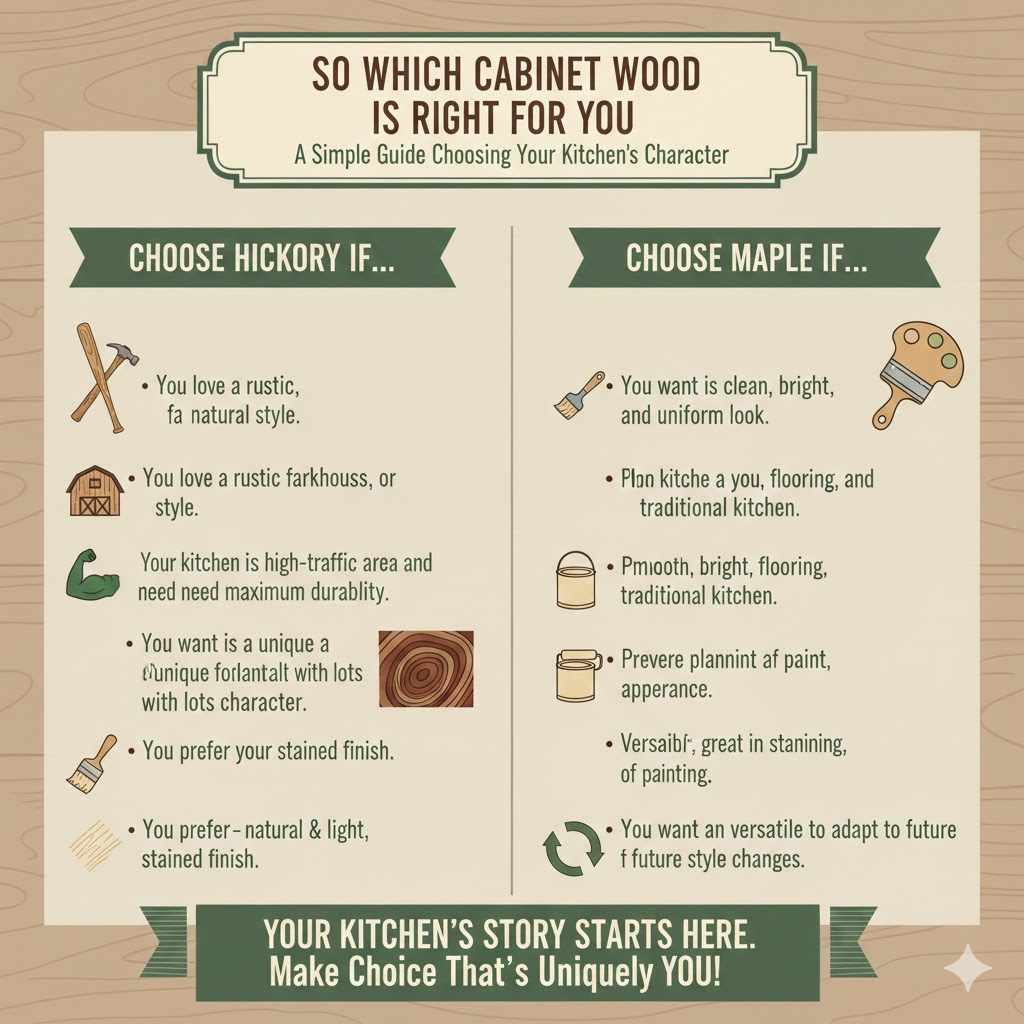
Choose Hickory if…
- You love a rustic, farmhouse, or natural style.
- Your kitchen is a high-traffic area and you need maximum durability.
- You want your cabinets to be a unique focal point with lots of character.
- You prefer a natural or light-stained finish.
Choose Maple if…
- You want a clean, bright, and uniform look for a modern or traditional kitchen.
- You are planning to paint your cabinets.
- You prefer a consistent and predictable appearance.
- You want a versatile wood that can adapt to future style changes.
Frequently Asked Questions (FAQ)
Is hickory more expensive than maple cabinets?
Yes, generally hickory cabinets are slightly more expensive. This is due to the wood being harder on machinery and the labor required to sort and match the varied boards to create a visually pleasing layout.
Which is better for painting, hickory or maple?
Maple is definitely the better choice for painting. Its smooth surface and fine, barely-there grain create a perfect, flawless canvas for paint. Hickory’s stronger grain can sometimes show through the paint, disrupting the smooth finish.
Is maple considered a hardwood?
Absolutely. Maple, specifically Hard Maple (Acer saccharum), is one of the benchmark hardwoods used for furniture, flooring, and cabinets. It is known for its density, strength, and resistance to wear.
How do I clean hickory and maple cabinets?
Cleaning for both is simple. Use a soft, damp cloth with a mild soap and water solution. Wipe in the direction of the wood grain, and immediately dry the surface with a separate clean, dry cloth. Avoid harsh chemicals or abrasive cleaners on both types of wood.
Will maple cabinets yellow over time?
Maple can develop a yellowish tint over time, especially if it’s finished with an oil-based polyurethane and exposed to a lot of direct sunlight. Using a water-based finish can significantly reduce this yellowing effect and keep the wood looking its natural, creamy color for longer.
Which wood is more sustainable?
Both hickory and maple trees are abundant in North American forests and are considered sustainable choices when sourced from responsibly managed forests. Always look for cabinets from manufacturers who specify that their wood is sustainably harvested.
Final Thoughts: Building with Confidence
Choosing between hickory and maple isn’t about finding the “best” wood—it’s about finding the best wood for you. Both are fantastic, durable materials that can create a stunning kitchen. Hickory brings the drama, warmth, and untamed beauty of the forest indoors. Maple offers a clean, calm, and versatile foundation that you can build any style upon.
Trust your gut and your personal style. Think about how you live in your kitchen and what kind of atmosphere you want to create. You’ve now got all the knowledge you need to walk into that showroom or start your DIY project with confidence. You’re not just picking a wood; you’re choosing the heart of your home. Now go ahead and make a choice you’ll be proud of for years to come. Happy building!