Is Plywood Good for Kitchen Cabinets? Grades, Thickness & Cost
What Makes Plywood a Good Kitchen Cabinet Material
Best Edge Banding Pick
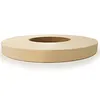
Edge Supply Birch 3/4″ x 250′ Iron-On Edge Banding
Pre-glued real birch veneer roll — enough to band every exposed door, shelf, and side edge on a full set of kitchen cabinets.
- Best for: Banding every 3/4-inch birch cabinet edge in one project
- Why we picked it: Matches the birch face veneer used on most cabinet-grade sheets, and 250 feet covers a full kitchen without reordering
- Main drawback: Only matches birch — order a different roll if your cabinets are maple or oak veneer
Compare more edge banding options
 Option 1 BEVTEE 3/4″ x 50′ Birch Edge Banding
|
 Option 2 Birch 1/2″ x 50′ Edge Banding
|
 Option 3 Birch 7/8″ x 250′ Edge Banding
|
As an Amazon Associate we earn from qualifying purchases.
Plywood is layers of wood veneer glued together with the grain of each layer running perpendicular to the next. That cross-grain construction is what makes it useful for cabinets: it resists the warping, cracking, and expansion that solid wood boards go through as humidity changes in a kitchen. It also holds screws and hinge hardware far better than MDF or particleboard, both of which are made from compressed fibers or chips rather than continuous wood layers.
In my own shop, that difference shows up fastest at the hinge points — cabinet-grade birch plywood holds a confirmat screw tight for years, while MDF strips out at the same spot if you don’t pre-drill and use the right screw type. That’s a bigger factor in cabinet longevity than most buying guides mention.
Not every sheet of plywood is cabinet-grade, though. The grade, core type, and thickness you choose for each part of the cabinet matter more than the “plywood vs. MDF” question alone — that’s what the next two sections cover.
Plywood Grades and Core Types for Cabinets
Plywood veneer is graded A through D based on how clean the face surface is. A-grade veneer is smooth and free of knots or patches — this is what you want for cabinet doors and any visible face frame. B-grade allows minor patches and is fine for cabinet sides that sit against a wall. C and D grades have visible knots, splits, or patches and belong on backs, or not in a kitchen cabinet at all.
Cabinet-grade sheets also come in two core constructions:
- Veneer core — full plywood, layer after layer of real wood veneer. Lighter, and the strongest screw-holding option.
- MDF core with a veneer face — an MDF center with a thin wood veneer glued to each face. Heavier and machines cleaner on a table saw with no voids, but it holds screws closer to MDF than to full plywood, so it needs pilot holes and cam-lock or confirmat hardware at stress points.
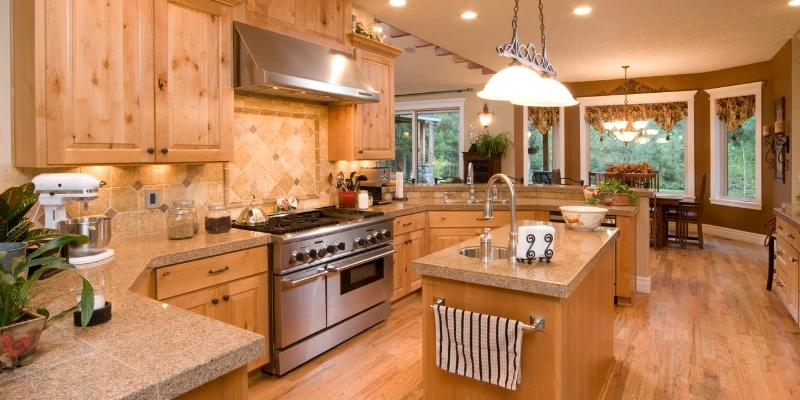
For species, birch is the most common cabinet-grade choice — tight, even grain that finishes well under paint or a light stain. Maple is harder and slightly more expensive, and shows blotching if stained without a pre-conditioner. Oak gives a strong, visible grain pattern for a traditional look. Pine or fir plywood is a softwood, budget option best reserved for cabinet backs and shelving that won’t be seen. Marine plywood is the moisture-resistant option worth the extra cost only under a sink base or in a laundry/utility cabinet — it’s overkill for the rest of the kitchen.
What Thickness Plywood Do You Need for Each Cabinet Part?
Cabinet plywood isn’t one thickness throughout — using 3/4-inch everywhere wastes material and weight, while using thin stock in the wrong spot leads to sagging or racking. Here’s the standard breakdown cabinetmakers use:
| Cabinet Part | Recommended Thickness | Why This Thickness |
|---|---|---|
| Boxes, face frames, doors | 3/4 inch | Structural strength, holds hinges and hardware without flexing |
| Cabinet backs, drawer sides | 1/2 inch | Enough rigidity for a drawer box without adding unnecessary weight |
| Back panels (non-structural) | 1/4 inch | Encloses the cabinet without adding cost where strength isn’t needed |
| Adjustable shelves (24″+ span) | 3/4 inch | Thinner shelves sag noticeably under dish and cookware weight over a 24-inch span |
Any exposed plywood edge — a shelf front, a door edge, an open cabinet side — shows the raw veneer layers unless it’s covered. Iron-on edge banding matched to your face veneer (birch, maple, or oak) is the standard fix and takes about ten minutes per edge with a household iron.
Plywood vs. MDF vs. Particleboard vs. Solid Wood for Cabinets
Plywood is stronger than MDF and particleboard, and more dimensionally stable than solid wood. MDF sags under sustained weight and swells if it gets wet; particleboard is the weakest and cheapest of the three engineered options. Solid wood looks and feels premium but moves with humidity — doors can stick in summer and gap in winter.
| Material | Moisture Resistance | Screw Holding | Best For |
|---|---|---|---|
| Cabinet-grade plywood | High | Strong | Boxes, doors, shelves — the standard choice |
| MDF | Low (swells if wet) | Weak without pre-drilling | Painted doors where a perfectly smooth surface matters most |
| Particleboard | Very low | Weakest of the three | Budget cabinet interiors not exposed to moisture |
| Solid wood | Moderate (moves with humidity) | Strong | Face frames and doors where a natural wood look is the priority |
Plywood is generally stronger than MDF for cabinet construction, and it doesn’t sag under the weight of stacked dishes or a mounted microwave the way MDF shelving can over a few years. MDF’s advantage is a perfectly smooth surface for a painted finish with no visible grain. If you’re weighing solid wood as a third option, our types of wood guide breaks down how solid species compare to engineered options like plywood beyond just cabinets.
How Much Does Cabinet-Grade Plywood Cost in 2026?
A 3/4-inch, 4×8 sheet of cabinet-grade birch plywood currently runs about $45–$140 depending on veneer grade and region, with hardwood-specialty suppliers typically at the lower end and home centers at the higher end. Maple runs a bit more — roughly $65–$110 per sheet — and premium grades with tightly matched face veneer push toward the top of that range. Pine or fir softwood plywood is the cheapest option but isn’t recommended for any visible cabinet surface.
For a full kitchen (roughly 8–12 sheets for an average-size kitchen’s boxes, doors, and backs), that puts material cost alone somewhere between $400 and $1,600 before hardware, edge banding, and finish. Check current big-box pricing against a hardwood specialty supplier before buying in bulk — our 3/4-inch plywood pricing guide tracks what Lowe’s charges for comparable stock.
📊 Birch plywood typically saves $20–$30 per sheet over maple at the same 3/4-inch thickness and grade — a meaningful difference across the 8–12 sheets a full kitchen usually needs. — Source: hardwood-specialty supplier pricing, 2026
Pros and Cons of Plywood Kitchen Cabinets
Pros: strong and durable under daily use, resists moisture and warping better than MDF or particleboard, holds screws and hardware securely, and takes stain, paint, or a clear finish well when the correct veneer grade is used.
Cons: cabinet-grade sheets cost more upfront than MDF or particleboard, quality varies significantly between veneer grades so a low-grade sheet can still warp or show voids at the edge, and exposed edges need banding or the raw plies will show.
Finishing and Maintaining Plywood Cabinets
Plywood takes stain, paint, and clear finishes well, but the face veneer species changes the prep. Birch and maple are tight-grained and can blotch under stain without a pre-stain conditioner — paint is often the more forgiving finish on these species. Oak’s open grain takes stain evenly and shows more of the natural wood character. If painting is the plan, our full guide to painting plywood cabinets covers the sanding, priming, and paint-type steps in detail.
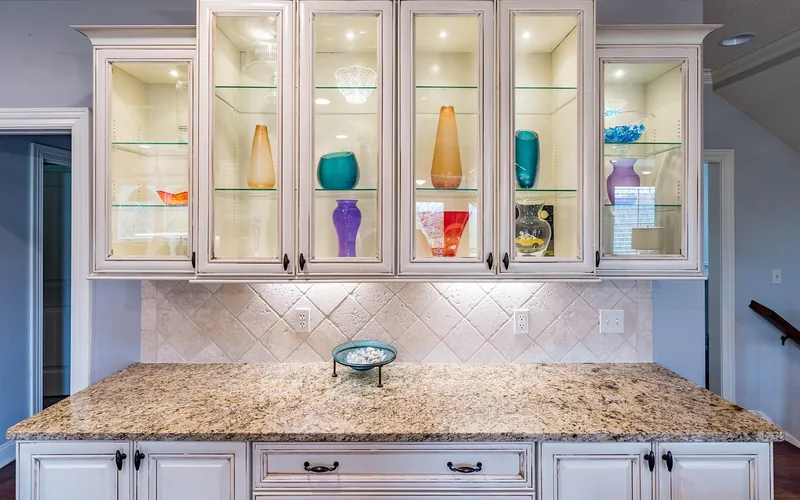
Day-to-day care is simple: wipe surfaces with a soft, damp cloth and mild soap, and avoid harsh solvents or abrasive scrub pads that can dull a finish. Wipe up spills promptly — even cabinet-grade plywood isn’t waterproof, and standing water at a seam or edge will eventually work its way past the finish. Check hinges and pulls periodically and tighten them before they work loose enough to stress the screw holes. If your kitchen already has painted or finished wood cabinets and you’re maintaining rather than replacing them, our guide to cleaning oak kitchen cabinets without stripping the finish covers safe cleaning methods that won’t damage the topcoat.
Formaldehyde and VOC Safety: What to Check Before You Buy
Plywood is manufactured with adhesives, and some of those adhesives off-gas formaldehyde. According to the U.S. Environmental Protection Agency, composite wood products — including hardwood plywood used in finished goods like cabinets — have been required to meet TSCA Title VI formaldehyde emission limits since March 22, 2019, with compliant products labeled by an EPA-recognized third-party certifier. California’s CARB Phase II standard is treated as equivalent to this federal rule.
In practice, this means: check the sheet’s edge stamp or the manufacturer’s spec sheet for a TSCA Title VI or CARB2 compliance statement before you buy, especially if you’re sourcing plywood from an importer rather than a well-known domestic mill. Look for “no added urea-formaldehyde” (NAUF) or “low-VOC” labeling if you or a family member has a sensitivity, and ventilate a newly built kitchen for a few days before heavy use.
Frequently Asked Questions
Is Plywood Durable for Kitchen Cabinets?
Yes. Cabinet-grade plywood withstands daily kitchen humidity and temperature swings better than MDF or particleboard because of its cross-grain layered construction, which resists warping and cracking. Properly sealed and using at least 3/4-inch stock for the boxes and doors, it can last decades in normal kitchen use.
What Plywood Grade Should You Use for Kitchen Cabinets?
Use A-grade veneer for any visible surface — cabinet doors, drawer fronts, and the face frame. B-grade is acceptable for cabinet sides that sit flush against a wall or another cabinet. Save C- and D-grade sheets, which show knots and patches, for backs or skip them in a kitchen entirely.
What Thickness Plywood Is Best for Cabinet Boxes?
3/4-inch plywood is standard for cabinet boxes, face frames, and doors because it holds hinge hardware without flexing. Drop to 1/2-inch for cabinet backs and drawer sides, and 1/4-inch for non-structural back panels where strength isn’t needed.
Is Birch or Maple Plywood Better for Kitchen Cabinets?
Birch is the more common and typically cheaper choice, with tight, even grain that finishes well under paint or a light stain. Maple is slightly harder and more expensive, and can blotch if stained without a pre-conditioner. For painted cabinets, birch is usually the more cost-effective pick with no visible performance downside.
How Does Plywood Compare to MDF for Cabinets?
Plywood is generally stronger than MDF for cabinets, with better moisture resistance and less sagging under sustained weight. MDF offers a smoother, grain-free surface that’s easier to paint to a flawless finish. For durability and long-term structural performance, plywood typically outperforms MDF in kitchen cabinet applications.
Can Plywood Be Painted or Stained Easily?
Yes. Plywood accepts both paint and stain well once the surface is properly sanded and primed. Birch and maple veneers can blotch under stain without a pre-stain conditioner, so many painters choose paint over stain on these species. See our full guide to painting plywood cabinets for the step-by-step process.
Bottom Line
Plywood is a strong, moisture-resistant choice for kitchen cabinets when you match the grade and thickness to the job — A-grade, 3/4-inch veneer core for boxes and doors, thinner stock for backs and drawer sides, and a checked TSCA Title VI label for peace of mind on formaldehyde emissions. Get those choices right and cabinet-grade plywood will outlast MDF and particleboard cabinets by years. Outfitting a bathroom, garage, or closet instead? See our broader room-by-room guide to plywood cabinets for grade recommendations outside the kitchen.
Sponsored / affiliate links. As an Amazon Associate I earn from qualifying purchases. I may earn additional commission from eligible campaigns.