How Long a Wood Deck Last Snow: Essential Guide
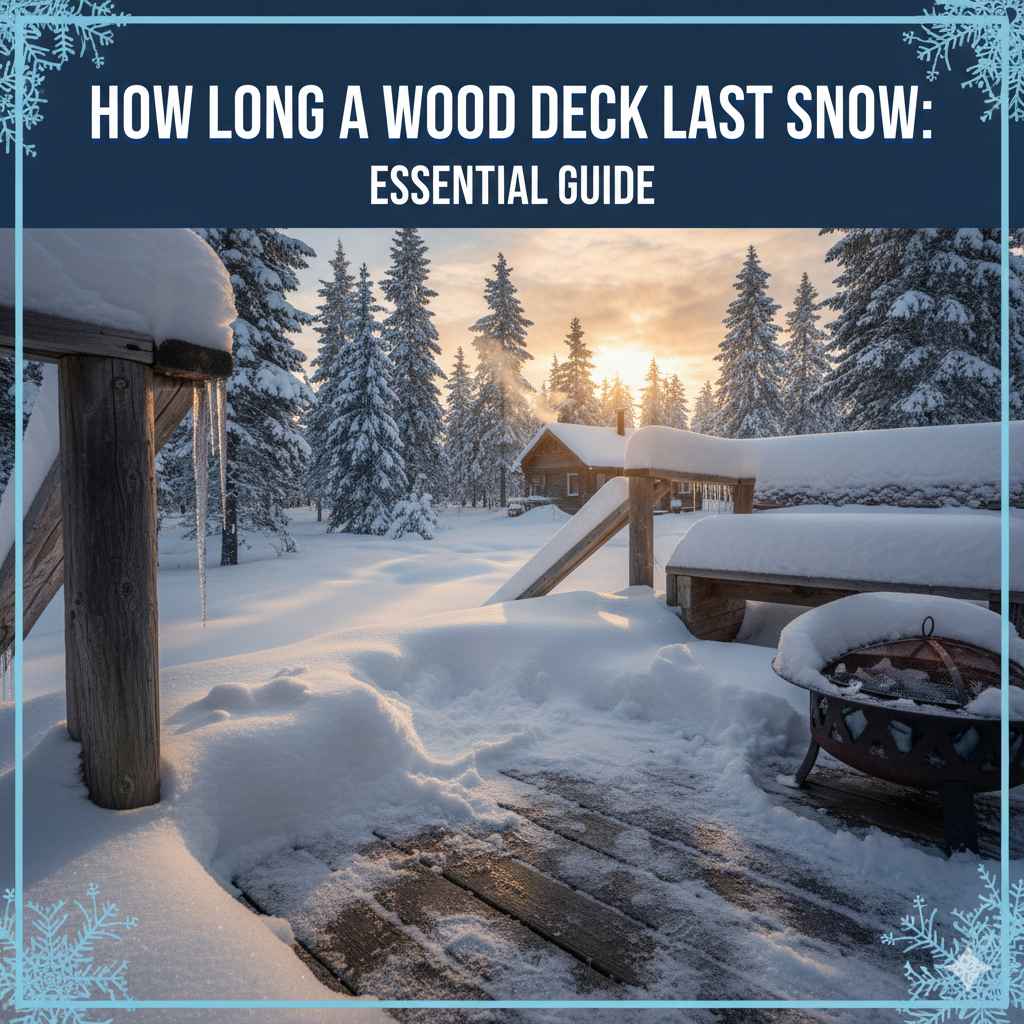
A well-maintained wood deck can last anywhere from 10 to 20 years or even longer, depending on the type of wood, climate, and crucial winter care. Proper snow management and regular upkeep are key to maximizing your deck’s lifespan through harsh winter conditions.
Winter weather can be tough on your outdoor spaces, and your beautiful wood deck is no exception. Many homeowners worry about how snow and ice will affect their deck’s durability. You might be wondering, “How long can a wood deck really last when faced with snow and cold?” It’s a common concern, and one that can feel a bit overwhelming if you’re new to deck maintenance. But don’t worry! With the right knowledge and a few simple steps, you can protect your deck and ensure it stands strong for years to come, no matter how many snowfalls you get. We’ll break down everything you need to know, from wood types to essential winterizing tips, so you can feel confident caring for your investment.
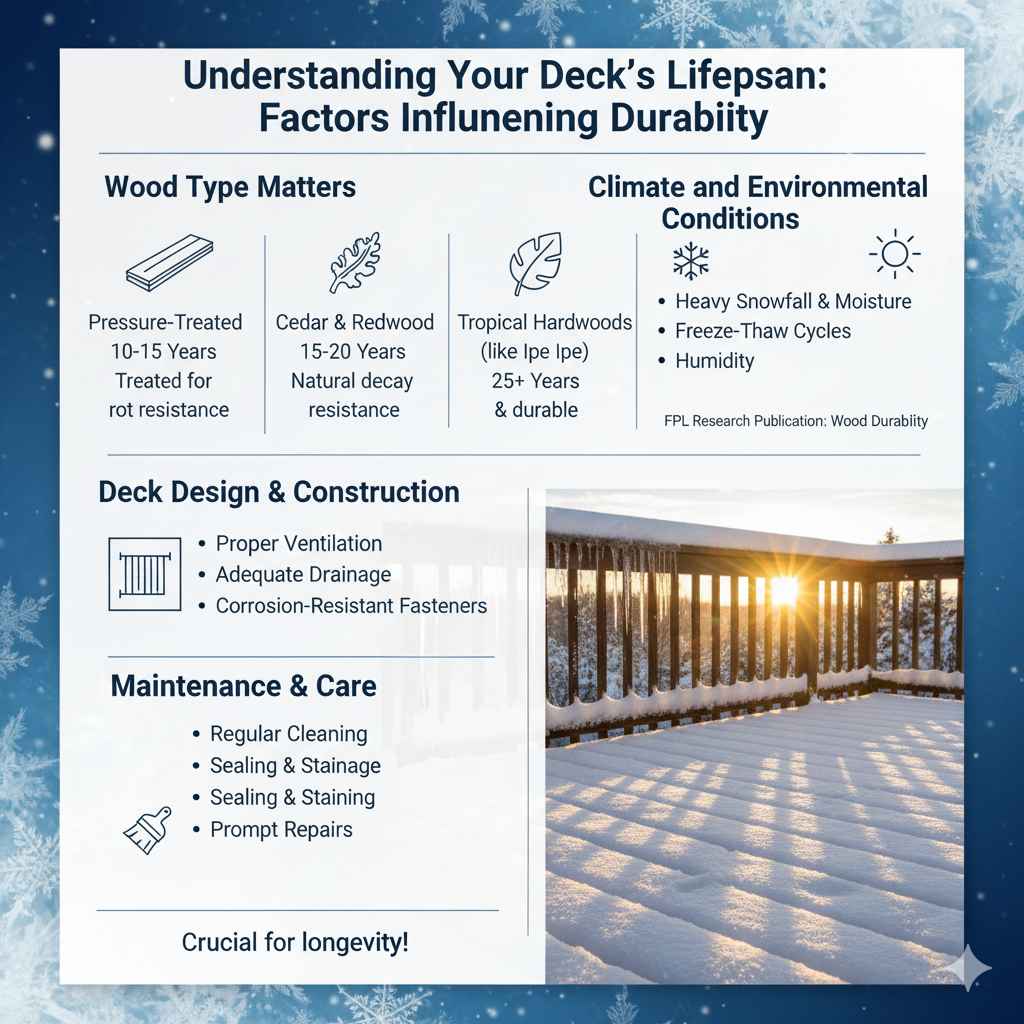
Understanding Your Deck’s Lifespan: Factors Influencing Durability
The lifespan of your wood deck isn’t set in stone; it’s a dynamic figure influenced by several key factors. Think of it like this: a sturdy ship will last longer in calm seas than in a storm, and a deck’s longevity is similarly affected by its environment and how it’s treated. Understanding these elements is the first step to ensuring your deck weathers the winter beautifully and lasts for many seasons.
Wood Type Matters
Not all wood is created equal when it comes to standing up to the elements, especially snow and moisture. Some hardwoods are naturally more resistant to decay and insect damage, meaning they’ll likely outlast softer woods, even in challenging climates.
- Pressure-Treated Lumber: This is a very popular and cost-effective choice. The wood is treated with chemicals to resist rot, decay, and insects. With proper care, it can last 10-15 years, sometimes longer.
- Cedar and Redwood: These naturally resistant woods have oils that help them fight off decay and insects. They offer a beautiful aesthetic and can typically last 15-20 years, or even longer with good maintenance.
- Tropical Hardwoods (like Ipe): These are premium options known for their incredible density and natural durability. They can last 25 years or more, but come with a higher initial cost.
Climate and Environmental Conditions
The amount of snow your deck experiences, the frequency of freeze-thaw cycles, and the general humidity all play a significant role. Areas with heavy snowfall and prolonged periods of ice and moisture will put more stress on a deck than drier, milder climates. Constant exposure to dampness can lead to rot and other issues if not managed properly. For more information on how climate affects outdoor structures, consult resources from organizations like the Forest Products Laboratory, a division of the U.S. Forest Service, which conducts extensive research on wood durability (FPL Research Publication).
Deck Design and Construction
A well-designed deck with proper ventilation and drainage will fare much better than one that traps moisture. Good construction practices, like ensuring adequate spacing between deck boards and using corrosion-resistant fasteners, also contribute to longevity. A deck built with an eye for detail can withstand more abuse from winter elements.
Maintenance and Care
This is perhaps the most crucial factor that is within your control. Regular cleaning, sealing, and addressing minor issues promptly can dramatically extend your deck’s life. Neglecting your deck, especially during winter, is like ignoring a small leak in your roof – it can turn into a big problem.
The Impact of Snow and Ice on Your Wood Deck
Snow and ice aren’t just cold and beautiful; they can be sneaky saboteurs of your wood deck. Understanding how they damage your deck helps you take the right preventative measures.
Moisture Absorption and Rot
Wood is a porous material. When snow melts, it soaks into the wood. If this moisture doesn’t have a chance to dry out before freezing again, it can lead to a damaging cycle. This constant dampness creates an ideal environment for mold, mildew, and rot to take hold, weakening the wood structure over time. The more saturated the wood, the higher the risk of rot.
Freeze-Thaw Cycles
This is a major enemy of any outdoor surface. When water seeps into small cracks or pores in the wood, it freezes and expands. Then, when the temperature rises, it thaws and contracts. This repeated expansion and contraction puts immense stress on the wood fibers, gradually causing them to break down. Over many winters, this can lead to splintering, cracking, and even structural weakening.
Weight Load and Structural Strain
Heavy snow accumulation can put a significant weight load on your deck. While decks are designed to handle some load, excessive, compacted snow can exceed its designed capacity, potentially leading to sagging or even structural failure. Ice, being denser than snow, adds even more weight. It’s important to be aware of how much snow your deck is actually bearing.
Damage to Finishes and Sealants
The repeated exposure to moisture, salt (if used for de-icing), and the physical scraping of snow removal can wear down the protective finishes and sealants on your deck. Once these layers are compromised, the bare wood is more vulnerable to all the damaging effects mentioned above.
Essential Winterizing Steps for Your Wood Deck
Protecting your deck before and during winter is key to ensuring its longevity and your safety. Think of these steps as giving your deck a warm, protective coat for the cold months ahead.
1. Thorough Cleaning
Before the first snow falls, give your deck a good scrub. Remove all debris, fallen leaves, dirt, and grime. These organic materials trap moisture and can promote mold growth. Use a stiff brush or broom and a deck-friendly cleaner. For stubborn spots, a pressure washer on a low setting can be effective, but be cautious not to damage the wood fibers. Always rinse thoroughly.
2. Inspect and Repair
Walk around your deck and look for any loose boards, popped nails or screws, or rotting sections. Address these issues promptly. Replacing a few boards or tightening fasteners now can prevent much larger, more expensive repairs down the line.
3. Seal and Stain
Applying a high-quality deck sealer or stain before winter is one of the most effective ways to protect your wood. A good sealant will create a barrier against moisture, preventing it from penetrating the wood. Choose a product designed for exterior use and follow the manufacturer’s instructions carefully. Allow ample drying time before the cold weather sets in.
The type of sealant you choose can impact its effectiveness and longevity. Water-repellent sealants are a good starting point, while those containing UV inhibitors can also protect against sun damage during less cloudy winter days. For many homeowners, a semi-transparent stain offers both protection and aesthetic appeal, allowing the wood grain to show through while adding color and a protective layer. Explore options from reputable brands; many offer formulations specifically for different wood types and climates.
4. Consider Deck Covers or Tarps
For added protection, especially if you live in an area with particularly harsh winters, consider a breathable deck cover or a tarp. Ensure the cover allows for some air circulation to prevent moisture buildup and mildew. Properly securing these covers is essential to prevent wind damage.
Snow Removal: The Right Way to Clear Your Deck
When snow does arrive, how you remove it makes a big difference. The goal is to clear the snow without damaging the wood or its protective finish.
What to Use (and What to Avoid)
- Best Options:
- Plastic Snow Shovels: These are gentler on deck surfaces than metal ones.
- Soft Bristle Brooms: Excellent for clearing light, powdery snow.
- Leaf Blowers: Very effective for light, dry snow.
- What to Avoid:
- Metal Snow Shovels: These can easily scratch and gouge the wood or damage sealants.
- Aggressive Scraping: Never try to chip away at thick ice; this will damage the wood.
Techniques for Safe Snow Removal
- Shovel With the Grain: When shoveling, try to move snow in the direction of the deck boards to minimize scraping.
- Don’t Over-Shovel: Remove snow in layers, especially if it’s a deep snowfall. Trying to move too much at once increases the risk of damage.
- Prioritize Clearing Pathways: For safety, focus on clearing main pathways on the deck first.
- Avoid Salt and Chemical De-icers: Many common de-icing salts and chemicals can be corrosive to wood and damage the finish, leading to discoloration and deterioration. If you must use a de-icer, opt for pet-safe and eco-friendly options that are specifically formulated for wood, or consider using sand for traction. Always check the product recommendations. You can find more information on safe de-icing practices for wood structures from sources like the Decks.com guide.
Dealing with Ice
Patience is key when dealing with ice. Never try to chip or hack away at thick ice. It’s better to let it melt naturally or use a de-icer designed for wood surfaces. For grip, sprinkle sand or a safe de-icer on icy patches. If the ice is accumulating heavily, gently breaking it up with a broom can sometimes help, but avoid forceful actions.
Long-Term Deck Health: Beyond the Snow Season
Your deck’s ability to withstand snow and ice is also a result of diligent care throughout the rest of the year. Thinking about your deck’s health year-round will pay dividends in its longevity.
Regular Cleaning and Inspection
Throughout spring, summer, and fall, sweep your deck regularly to remove dirt, pollen, and debris. Give it a good wash at least once a year. Continue to inspect for any signs of damage, loose fasteners, or weathering.
Reapplying Sealant/Stain
Most deck sealants and stains need to be reapplied every 1-3 years, depending on the product, climate, and wear and tear. Pay attention to how water beads on the surface. If water starts to soak in instead of beading up, it’s time for a reapplication. Always clean the deck thoroughly before reapplying.
Checking Structural Integrity
Periodically inspect the posts, beams, and joists that support your deck. Look for any signs of rot, insect damage, or warping. Ensuring the foundation of your deck is sound is paramount for its overall lifespan and safety.
Proper Drainage
Make sure water drains away from your deck and its foundation. Clogged gutters or poorly graded soil around posts can lead to moisture issues that weaken the structure over time.
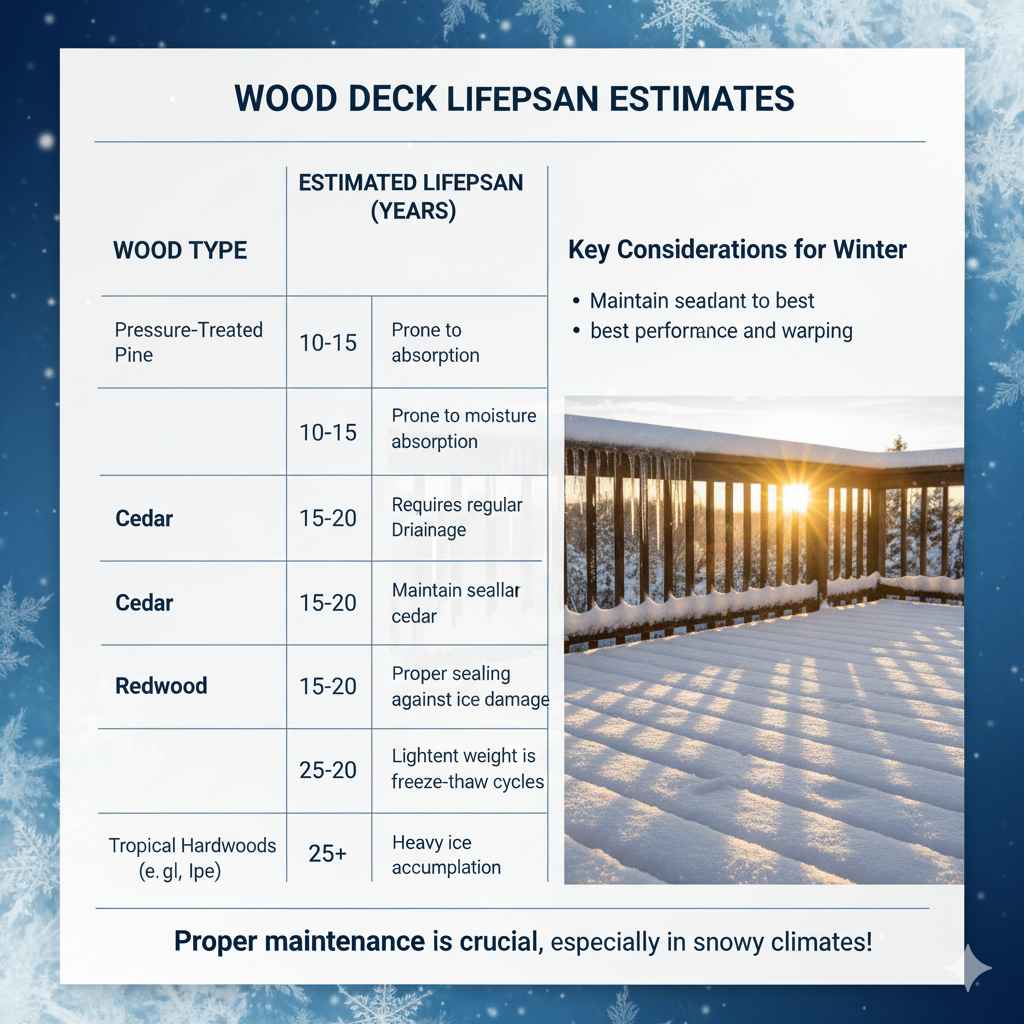
Table: Wood Deck Lifespan Estimates
Here’s a general overview of how long different wood deck types might last, keeping in mind that proper maintenance is crucial for reaching these figures, especially in snowy climates.
| Wood Type | Estimated Lifespan (Years) | Key Considerations for Winter |
|---|---|---|
| Pressure-Treated Pine | 10-15 | Prone to moisture absorption; requires regular sealing. More susceptible to warping if not properly dried and sealed. |
| Cedar | 15-20 | Naturally resistant to rot but can still absorb moisture. Maintain sealant for best performance. Its lighter weight can be an advantage with heavy snow. |
| Redwood | 15-20 | Similar to cedar in natural resistance. Proper sealing is still recommended against ice damage and freeze-thaw cycles. |
| Tropical Hardwoods (e.g., Ipe) | 25+ | Extremely dense and durable. Still benefit from sealing to maintain color and prevent surface checking from extreme temperature fluctuations. Ice accumulation can be very heavy. |
Frequently Asked Questions About Wood Decks and Snow
Q1: How much snow can a wood deck safely hold?
A1: Decks are engineered to carry significant loads, but there’s a limit. Extremely heavy, wet snow can exceed safety margins. It’s best to err on the side of caution and remove excess, compacted snow if it accumulates deeply, especially if you notice any signs of strain like sagging.
Q2: Is it okay to use rock salt to de-ice my wood deck?
A2: Generally, no. Rock salt (sodium chloride) and other chemical de-icers can damage wood finishes, bleach the wood, and lead to faster deterioration. It’s better to use sand for traction or specialized, wood-safe de-icers.
Q3: How often should I reseal my wood deck?
A3: This varies, but typically every 1-3 years. In climates with harsh winters, you might need to reapply more frequently. A good indicator is when water stops beading on the surface and starts to soak in.
Q4: What if I can’t remove all the snow from my deck without using a metal shovel?
A4: If you encounter stubborn, icy snow and only have a metal shovel, be extremely gentle. Try to lift rather than scrape. Focus on removing the bulk of the snow and leave a thin layer if necessary to avoid damaging the wood surface. For persistent ice, consider melting agents or simply waiting for warmer temperatures.
Q5: Will my wood deck rust in the winter?
A5: Wood itself does not rust. However, any metal fasteners (nails, screws, bolts) used in the deck’s construction can rust if they are not made of corrosion-resistant materials like stainless steel or hot-dipped galvanized steel. This rusting can stain the wood and weaken the fastener over time.
Q6: How can I prevent mold and mildew on my deck during winter?
A6: Mold and mildew thrive in damp, dark conditions. Regular cleaning in the fall to remove organic debris, ensuring good ventilation (if possible), and applying a quality sealant can significantly reduce the risk. Prompt snow removal also helps by reducing the time the wood stays wet.
Conclusion
Your wood deck is a valuable addition to your home, offering a space for relaxation and enjoyment for many years. By understanding how snow and winter’s elements can impact its longevity and by implementing proactive care, you can confidently navigate the colder months. Remember, a well-maintained deck can comfortably last a decade, often two, or even longer. Key to this enduring life is diligent winter preparation: thorough cleaning, timely repairs, and the protective application of sealants. When snow does fall, gentle removal with the right tools and avoiding harsh chemicals are crucial. By treating your deck with care throughout the year, it will reward you with reliable beauty and strength, season after season.