Cedar Deck Boards: Sizes, Grades & Cost Per Sq Ft (2026)
Cedar deck boards come in nominal sizes from 5/4×6 up to 2×12, with Western Red Cedar running $5-$10 per square foot for materials in 2026 — roughly double pressure-treated pine but with far less upkeep. The exception: Northern White Cedar costs less but dents and cracks more easily underfoot. This guide covers real board dimensions, grade differences, installed cost, and the maintenance schedule that actually keeps cedar decking looking good.
Quick Answer
Cedar deck boards are sold in nominal sizes (5/4×6, 2×6, 2×8) that measure smaller once milled — a 2×6 is actually 1-1/2″ x 5-1/2″. Material costs run $5-$10 per square foot depending on species and grade; installed cost including labor runs $30-$50 per square foot. With sealing every 1-2 years, a Select Tight Knot Western Red Cedar deck typically lasts 15-20 years, longer for clear-grade heartwood in a dry climate.
What Size Are Cedar Deck Boards? (Nominal vs. Actual Dimensions)
Best Cedar Deck Sealer Pick

Ready Seal 112 Stain and Sealer, Natural Cedar
A penetrating oil sealer formulated to match cedar’s natural tone, applied with no back-brushing required.
- Best for: resealing weathered or newly-installed cedar decking every 1-2 years
- Why we picked it: “Goof Proof” no-lap-mark formula matters most on a large horizontal deck surface where lap marks are hard to avoid with other stains
- Main drawback: oil-based sealers like this darken over multiple coats — don’t skip the recoat-timing window
Compare more cedar deck sealer options
 Option 1 Olympic Maximum Cedar Transparent
|
 Option 2 Thompson’s WaterSeal Semi-Transparent
|
 Option 3 Storm System Cedartone Protector
|
As an Amazon Associate we earn from qualifying purchases.
Cedar deck boards are sold by nominal size, which is always larger than the board you actually get after milling and drying. A “2×6” cedar board never measures a true 2 inches by 6 inches — it measures 1-1/2″ x 5-1/2″. This is the same nominal-vs-actual gap you’ll find in any dimensional lumber, but it catches first-time deck buyers off guard because cedar is often sold at specialty yards where the sizing chart isn’t posted as clearly as at a big-box store.
| Nominal Size | Actual Size | Typical Use |
|---|---|---|
| 5/4 x 6 | 1″ x 5-1/2″ | Most common decking profile — the industry sweet spot for 16″ joist spacing |
| 2 x 6 | 1-1/2″ x 5-1/2″ | Thicker, more rigid boards for wider joist spacing or heavier foot traffic |
| 2 x 8 | 1-1/2″ x 7-1/4″ | Stair treads, wider deck surfaces with fewer seams |
| 2 x 10 | 1-1/2″ x 9-1/4″ | Fascia boards, bench tops, stair stringers |
| 2 x 12 | 1-1/2″ x 11-1/4″ | Fascia and skirting on taller decks |
Standard lengths run 8, 10, 12, and 16 feet. If your deck run is longer than 16 feet, plan a butt joint centered over a joist rather than trying to source a custom length — most yards don’t stock cedar longer than 16 feet, and special-order lengths carry a real premium.
Which Cedar Species Works Best for Decking?
Not all cedar sold at the lumber yard is the same species, and the differences affect both price, color, and how the deck ages. Cedar compares favorably to redwood on cost in most regions — for how cedar stacks up against every other decking species, see our types of wood guide.
| Species | Color | Cost/Sq Ft | Best For |
|---|---|---|---|
| Western Red Cedar | Warm reddish-brown | $5 – $10 | Most decks — best balance of rot resistance, stability, and availability |
| Alaskan Yellow Cedar | Pale yellow | $7 – $12 | High-traffic decks where extra hardness justifies the premium |
| Northern White Cedar | Light straw | $4 – $8 | Budget builds — softer, dents and cracks more easily underfoot |
| Eastern Red Cedar | Reddish with cream sapwood | $5 – $9 | Fence posts and closets more than deck surfaces — knotty and holds stain unevenly |
Western Red Cedar is what most people mean when they say “cedar deck boards” — it’s what you’ll find stocked at nearly every lumber yard and what the cost figures below assume unless noted otherwise.
Cedar Grades: Clear vs. Premium vs. Knotty
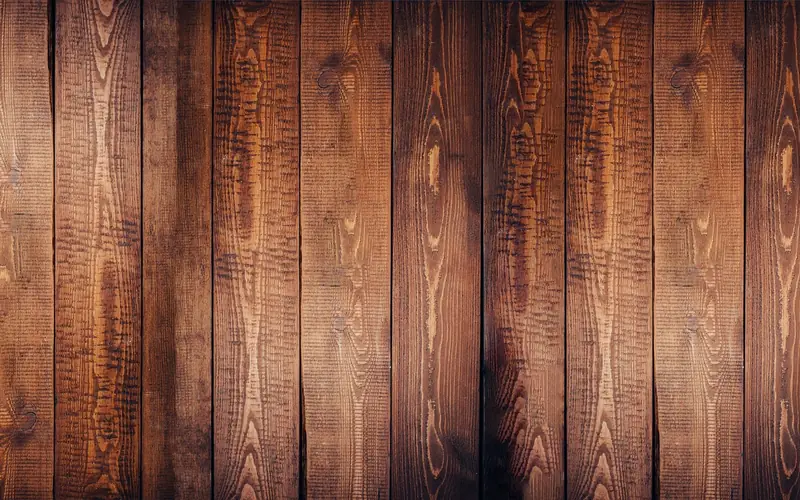
Grade is a lumber classification that ranks how many knots, how tight the grain, and how consistent the appearance of a cedar board is. It has nothing to do with structural strength — a knotty-grade board is just as strong as a clear-grade one — but it changes both price and how formal the finished deck looks.
| Grade | Knots | Price vs. Base | Best For |
|---|---|---|---|
| Clear / Clear VG | None | +40–60% | Formal, high-end decks where a smooth, uniform surface matters |
| Architect / A Grade | Very few, small | +20–30% | Visible decking that still needs a clean look without clear-grade pricing |
| Select Tight Knot (STK) | Small, tight knots | Baseline | Most residential decks — the grade actually stocked at most yards |
| Knotty / Construction | Larger, looser knots | -15–25% | Budget builds, rustic look, structural framing not meant to be seen |
Select Tight Knot is what most homeowners end up buying whether they planned to or not — it’s the grade big-box stores and regional yards stock by default. If you want true clear-grade cedar, expect to special-order it from a lumber yard that carries architectural-grade stock.
How Much Do Cedar Deck Boards Cost in 2026?
Materials alone run $5 to $10 per square foot for Western Red Cedar, depending on grade and region — this differs from broader cedar lumber pricing by board foot, which covers cedar used in framing and furniture, not just decking-grade stock. Once you add labor, fasteners, and structural support, installed cost runs $30 to $50 per square foot.
| Material | Cost/Sq Ft (Materials) | Durability | Maintenance |
|---|---|---|---|
| Western Red Cedar | $5.00 – $10.00 | 15 – 20 yrs | Reseal every 1–2 yrs |
| Composite | $4.00 – $6.00 | 25 – 30 yrs | Occasional wash |
| Pressure-Treated Pine | $1.50 – $3.00 | 10 – 15 yrs | Reseal yearly, more prone to warping |
Cedar sits in the middle: pricier than pressure-treated pine up front, cheaper than composite per square foot but shorter-lived, and the only one of the three that actually looks better as it weathers if you let it silver naturally instead of sealing it. Composite wins on lifespan; cedar wins on repairability — a damaged cedar board unscrews and replaces for the cost of one board, where composite often means matching a discontinued color run. Pressure-treated wood’s own lifespan depends heavily on ground contact and sealing, similar to cedar.
Installing Cedar Deck Boards: Spacing and Fastening
Cedar deck board spacing depends on how wet the lumber was when you installed it, not on the grade. Kiln-dried cedar is installed with a 1/8″ to 3/16″ gap since it’s already near its final size; green or air-dried cedar shrinks as it dries in place, so it goes down nearly tight and opens up to the right gap on its own over the first season.
- Check the moisture content: a moisture meter reading under 19% means the board is kiln-dried and should be spaced 1/8″-3/16″ at install.
- Use stainless or ceramic-coated deck screws: cedar’s natural tannins react with electro-galvanized or plain carbon-steel fasteners and leave black streaking around every screw head within a year.
- Pre-drill near board ends: cedar splits more easily than pressure-treated pine at the last 2 inches of a board — pre-drilling prevents the split before it starts.
- Leave a 1/4″ gap at the house band board: this lets water drain away from siding instead of wicking up against it.
Sealing and Maintaining Cedar Deck Boards
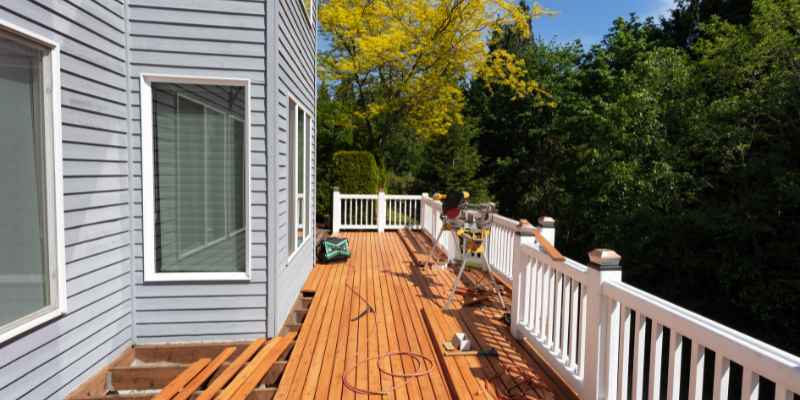
Cedar’s natural oils give it real rot resistance, but that resistance doesn’t stop UV graying or protect against standing water in a shaded, poorly-drained spot. A semi-transparent penetrating stain-sealer reapplied every 1-2 years keeps the color and adds real protection — cedar takes stain better than most softwoods because of its open, even grain.
- Wash the deck 1-2 times a year with a wood-safe deck cleaner — not a pressure washer above 1,200 PSI, which will fuzz cedar’s soft grain.
- Reseal every 1-2 years with a penetrating semi-transparent stain-sealer, not a film-forming product that will peel.
- Inspect board ends and any spot near planters or grills each spring — these are the first places mildew shows up.
How Long Do Cedar Deck Boards Actually Last?
You’ll see “cedar lasts 30 years” repeated across a lot of decking sites, and it’s not quite accurate for a typical build. A Select Tight Knot Western Red Cedar deck that’s sealed on schedule realistically lasts 15-20 years. The 25-30 year figure applies specifically to clear-heartwood cedar, kept sealed without gaps, in a dry climate — not the STK-grade lumber most people actually install. Cedar does still rot if water sits against the grain at fastener holes or board ends without a sealed edge.
“The decks that actually hit 25+ years almost always have one thing in common — the owner sealed the end grain at every cut when they built it, not just the top face after the fact. End grain drinks up water ten times faster than the face of the board, and that’s where rot starts on almost every cedar deck I’ve seen fail early.”
Common Mistakes to Avoid With Cedar Decking
Most cedar deck problems trace back to one of four decisions made during the build, not to the wood itself failing.
- Mixing fastener metals: carbon-steel or electro-galvanized screws react with cedar’s tannins and leave black streaks within months — stainless steel or ceramic-coated screws avoid this entirely.
- Buying the wrong grade for ground contact: cedar’s rot resistance is in the heartwood; sapwood-heavy knotty-grade boards near soil or a low-clearance area need a ground-contact-rated product instead, not standard decking-grade cedar.
- Skipping end-grain sealer at cuts: every field cut exposes fresh end grain that absorbs water far faster than the milled face — leaving it unsealed is the single most common cause of early deck rot at board ends.
- Ignoring seasonal movement: spacing that looks right on a humid installation day can close up tight by winter — kiln-dried lumber needs its gap set at install, not adjusted after the fact.
Cedar vs. Composite Decking: Which Should You Choose?
Composite decking costs less per square foot in materials, lasts longer with almost no maintenance, and never needs resealing — but it costs more to repair (a damaged board often means sourcing a matching, sometimes discontinued color) and it doesn’t develop the natural, silvered patina that draws most buyers to real wood in the first place. Cedar is the better choice if you want a board you can sand, restain, or replace individually for a few dollars. Composite is the better choice if you want to never touch the deck again for two decades.
Frequently Asked Questions
What size are cedar deck boards?
Cedar deck boards are sold in nominal sizes — 5/4×6, 2×6, 2×8, 2×10, and 2×12 — that measure smaller after milling. A nominal 2×6 actually measures 1-1/2″ x 5-1/2″. The 5/4×6 profile (actual 1″ x 5-1/2″) is the most common decking size, sized for standard 16″ joist spacing.
How much do cedar deck boards cost?
Materials cost $5 to $10 per square foot for Western Red Cedar in 2026, depending on grade and region. Installed cost, including labor and structural support, runs $30 to $50 per square foot. Northern White Cedar runs cheaper at $4 to $8 per square foot but is softer and dents more easily.
How long do cedar deck boards last?
A typical Select Tight Knot cedar deck lasts 15-20 years with sealing every 1-2 years. Clear-grade heartwood cedar, kept sealed without gaps in a dry climate, can reach 25-30 years — but that’s the upper limit for premium-grade wood, not the average for standard decking-grade cedar.
Do you need to seal cedar deck boards?
Cedar’s natural oils provide some rot resistance without sealing, but unsealed cedar will gray from UV exposure within a single season and lose protection at fastener holes and board ends faster. A penetrating semi-transparent sealer reapplied every 1-2 years keeps both the color and the added protection.
Is cedar or composite better for decking?
Cedar costs less upfront, is cheaper and easier to repair board-by-board, and develops a natural patina. Composite costs more upfront but lasts 25-30 years with almost no maintenance. Choose cedar if you want a wood deck you’ll maintain and repair yourself; choose composite if you want to avoid maintenance entirely.
What grade of cedar is best for a deck?
Select Tight Knot (STK) is the grade most residential decks use — it’s what most yards stock by default, has small tight knots, and costs less than clear grade. Clear or Architect Clear grade costs 20-60% more and is worth it only for a formal, knot-free appearance.
Cedar deck boards remain one of the few decking materials you can size, grade, and repair a la carte — the sizing chart and grade table above are what actually determine cost, not the species name alone. Match the grade to how visible the deck surface will be, budget for resealing every 1-2 years, and seal every field-cut end grain the day you cut it.
Sponsored / affiliate links. As an Amazon Associate I earn from qualifying purchases. I may earn additional commission from eligible campaigns.