How Many Kinds of Maple Trees Are There A Genius Guide
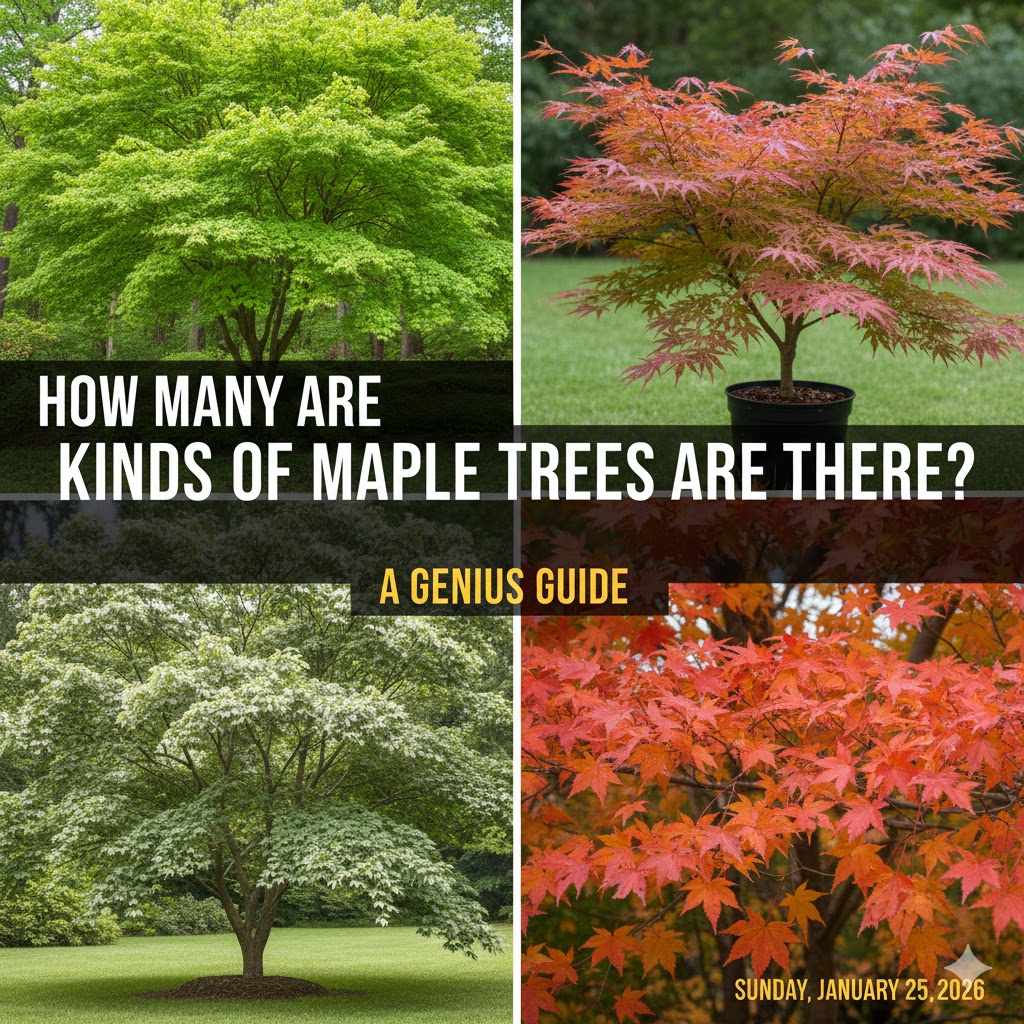
There are over 128 species of maple trees worldwide, all belonging to the Acer genus. While this number is impressive, North America is home to 13 of these native species. The most well-known for woodworking and syrup are the Sugar Maple, Red Maple, and Silver Maple, which fall into the “hard” or “soft” maple categories.
Hello there! I’m Md Meraj. In my workshop, I get a lot of questions about wood. But one question comes up more than you’d think, especially when we talk about iconic North American trees. How many kinds of maple trees are there, really?” It sounds simple, but the answer can feel a bit overwhelming. You see the classic maple leaf everywhere, but is that a Sugar Maple? A Red Maple? Something else entirely?
It’s easy to get confused. Don’t worry, though. I’m here to clear it all up for you. We’ll walk through this together, breaking down the huge maple family into easy-to-understand groups. We’ll look at the big picture, focus on the maples you’ll find in your backyard or lumberyard, and even learn how to tell them apart. Let’s get started and turn that confusion into confidence.
What Exactly Makes a Tree a “Maple”?
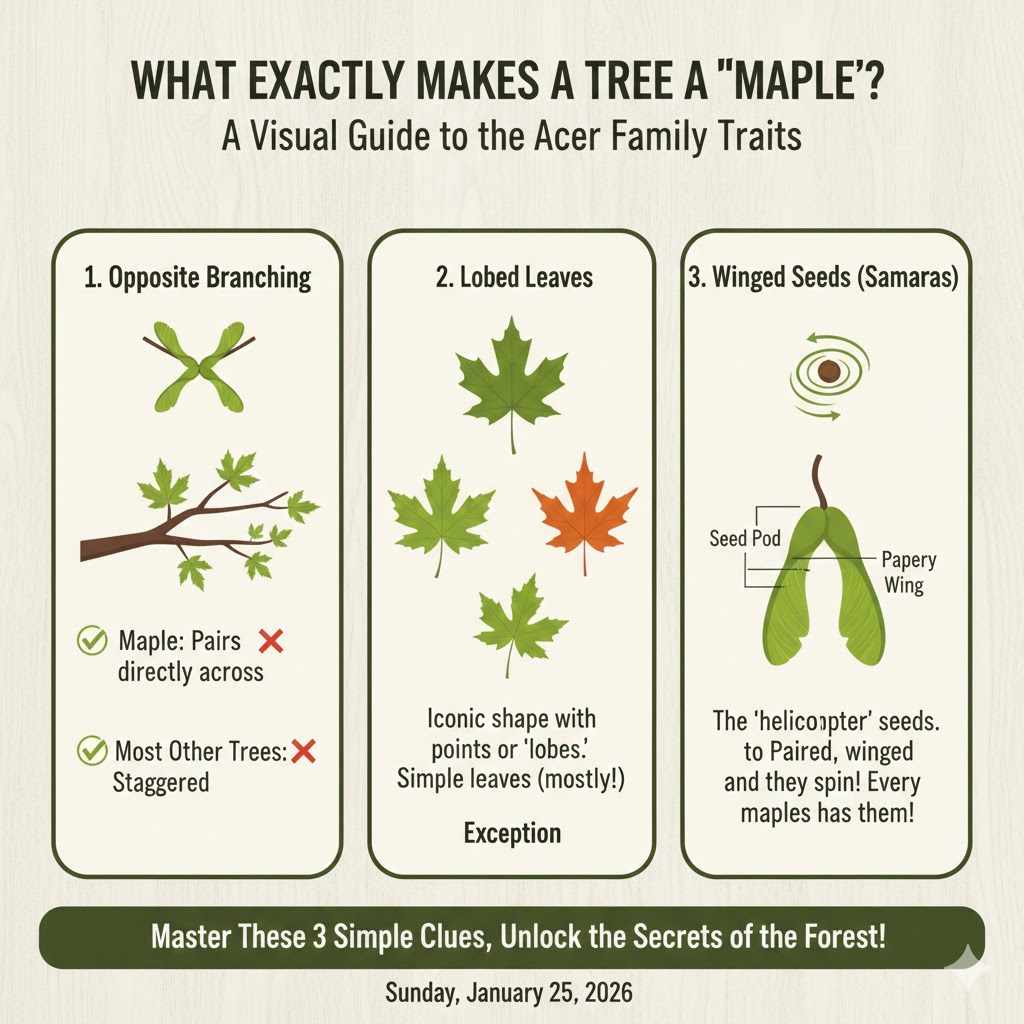
Before we can count them, it helps to know what we’re looking for! All maple trees belong to a large family, or genus, called Acer. This is their scientific family name. Think of it like a last name for trees. While they have different “first names” like “rubrum” for Red Maple (Acer rubrum) or “saccharum” for Sugar Maple (Acer saccharum), they all share a few key family traits.
Here are the three main clues that you’re looking at a maple:
- Opposite Branching: This is a big one. Look at how the smaller branches and leaves grow from a larger branch. On a maple tree, they will grow in pairs directly opposite each other. Many other trees have alternate branching, where twigs stagger up the branch.
- Lobed Leaves: Most maples have that iconic leaf shape: a simple leaf with distinct points or “lobes.” The number of lobes is often three or five. While the exact shape and size vary, this general pattern is a great clue. (There’s one big exception, the Boxelder, which we’ll cover!)
- Winged Seeds (Samaras): You definitely know these! They are the “helicopter” seeds that spin to the ground in late summer or fall. Every single maple tree produces these paired, winged seeds. No other tree has them quite like a maple.
The Big Picture: Maples Around the Globe
So, to answer the main question: botanists have identified around 128 to 132 different species of maple trees across the globe. The exact number can vary slightly depending on how experts classify certain subspecies, but it’s safe to say there are well over 100 kinds.
Most of these maple species are native to Asia. Countries like China and Japan are hotspots for maple diversity, with many unique and beautiful species you won’t find anywhere else. Europe and North Africa also have their own native maples. However, for most of us here in North America, we’re really concerned with a much smaller, more manageable number.
Of that big global number, only 13 maple species are native to North America. These are the trees you’ll see in forests, city parks, and your own neighborhood. It’s this group of 13 that we’ll focus on, because they are the ones that matter for our local woodworking, landscaping, and, of course, delicious maple syrup.
Meet North America’s Native Maples
Let’s get to know the key players in our local forests. While we won’t detail all 13, we’ll cover the most common and important ones you are likely to encounter. These are the trees that provide the lumber for our projects and the beauty of fall colors.
The “Big Three”: The Most Common Maples
These three species are widespread, economically important, and have very distinct personalities.
1. Sugar Maple (Acer saccharum)
- Leaves: The classic Canadian flag leaf. It has five distinct lobes with smooth, U-shaped valleys (called sinuses) between them. The points are sharp, but the edges are not serrated or “toothy.”
- Bark: On young trees, the bark is smooth and gray. As it ages, it becomes thick, deeply furrowed, and often peels away in long, vertical plates or strips.
- Best Known For: It’s the undisputed king of maple syrup due to the high sugar content in its sap. It is also the primary source of “Hard Maple” lumber, prized for its durability. Its fall colors are spectacular, ranging from brilliant yellow to vibrant orange and deep red.
2. Red Maple (Acer rubrum)
- Leaves: Have three major lobes (sometimes five, but the bottom two are small). The valleys between the lobes are sharp and V-shaped, and the edges of the leaf are coarsely serrated or “toothy.”
- Bark: Young bark is smooth and light gray. Older bark becomes shaggy, breaking into long, narrow plates that are easily peeled off.
- Best Known For: As its name suggests, this tree has red features nearly year-round—red buds in winter, red flowers in spring, red leaf stalks in summer, and a fiery red color in the fall. It’s one of the most abundant native trees in eastern North America and is a primary source of “Soft Maple” lumber. According to the U.S. Forest Service, it can grow in a wider range of conditions than any other tree in the region.
3. Silver Maple (Acer saccharinum)
- Leaves: Deeply cut with five lobes. The valleys are very deep, almost reaching the center of the leaf, giving it a delicate, lacy appearance. The underside of the leaf is a distinct silvery-white, which flashes in the wind.
- Bark: Young bark is smooth and silvery-gray. Older bark becomes very shaggy, separating into long, thin strips that peel off from the top and bottom.
- Best Known For: Its incredibly fast growth rate. This makes it a popular shade tree, but it comes with a downside—its wood is brittle and prone to breaking in storms. It’s also a “Soft Maple.” It loves to grow near water, along streams and in wetlands.
The “Oddball”: The Maple That Hides in Plain Sight
4. Boxelder (Acer negundo)
- Leaves: This is the exception to the rule! The Boxelder is a true maple, but it has compound leaves. Instead of one single lobed leaf, it has a leaf made up of three to five separate leaflets. It looks more like a poison ivy leaf or an ash leaf, which causes a lot of confusion.
- Bark: On young trees, it’s smooth and greenish. As it gets older, it becomes pale gray or light brown with interlacing ridges.
- Best Known For: Being the most widespread maple in North America. It’s a tough, adaptable tree that can grow almost anywhere. While its wood is considered a “Soft Maple,” it is known for sometimes developing beautiful red streaks caused by a fungus, making it a favorite for decorative woodturning projects.
How to Tell Maples Apart: A Simple Guide for Beginners
Okay, so you’ve found a tree with opposite branching and helicopter seeds. How do you know which maple it is? Don’t worry, you just need to play detective and look for a few simple clues.
Step 1: Look at the Leaves (The Easiest Clue)
The leaves are your number one tool for identification. Pay attention to two things:
- The Lobes: How many lobes are there? Are they deep and dramatic like a Silver Maple, or simple and classic like a Sugar Maple?
- The Edges (Margins) and Valleys (Sinuses): Are the edges of the lobes smooth or “toothy”? Are the valleys between the lobes rounded (U-shaped) or sharp (V-shaped)?
Let’s put this into a simple table to make it even easier:
| Maple Type | Number of Lobes | Leaf Edges | Valleys (Sinuses) |
|---|---|---|---|
| Sugar Maple | 5 | Smooth | Rounded, U-Shaped |
| Red Maple | 3 to 5 (mostly 3) | Serrated / Toothy | Sharp, V-Shaped |
| Silver Maple | 5 | Serrated / Toothy | Very Deep, V-Shaped |
| Boxelder | N/A (Compound) | Serrated / Toothy | N/A (Separate Leaflets) |
Step 2: Check the Bark
Bark can be tricky because it changes as a tree gets older, but it’s still a helpful clue. Think of it like this:
- Smooth and Gray? It’s probably a young maple. Young Red, Silver, and Sugar maples all start this way.
- Shaggy and Peeling in Strips? It’s likely an older Silver or Red Maple.
- Thick, Furrowed, and Plated? This is the signature of a mature Sugar Maple. The bark is tough and rigid.
Step 3: Consider the Location
Where is the tree growing? A tree’s location can tell you a lot.
- Near a river, stream, or in a wet, swampy area? There’s a very good chance it’s a Silver Maple or a Red Maple. They love having “wet feet.”
- In a well-drained, upland forest alongside oaks and hickories? That’s prime territory for a Sugar Maple.
Hard Maple vs. Soft Maple: A Woodworker’s Guide
Now let’s get into the workshop! As woodworkers, we don’t talk about 13 different kinds of maple. We simplify things. We group them into just two categories: Hard Maple and Soft Maple.
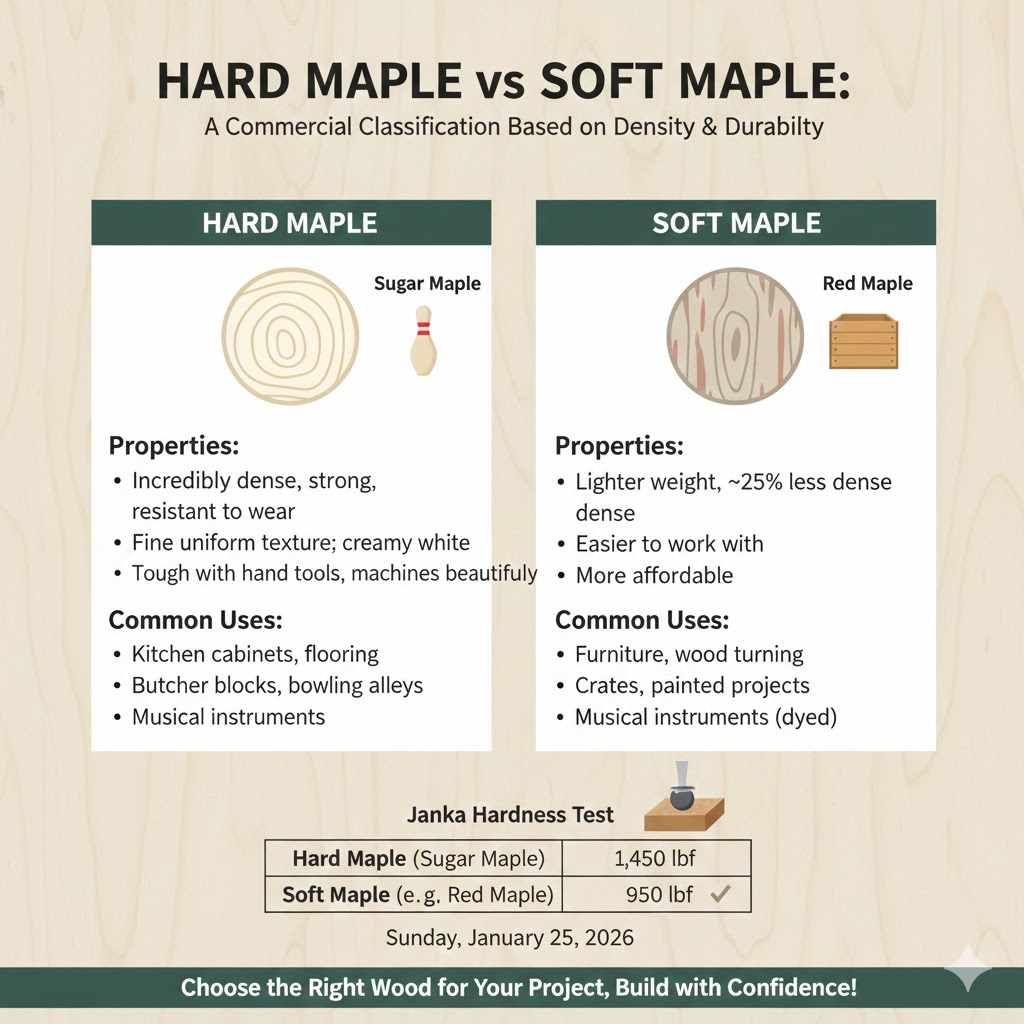
This is probably the most practical way for a DIY enthusiast to think about maple. It’s not a strict scientific classification but a commercial one based on the wood’s density and durability.
What is Hard Maple?
When someone says “Hard Maple,” they are almost always talking about one species: the Sugar Maple (Acer saccharum). Sometimes, the very similar Black Maple (Acer nigrum) is included.
- Properties: This wood is incredibly dense, strong, and resistant to wear and tear. It has a fine, uniform texture and a creamy white color, though the heartwood can be a reddish-brown.
- Common Uses: Because of its durability, it’s the top choice for things that take a beating. Think kitchen cabinets, hardwood flooring, bowling alleys, butcher blocks, and musical instruments like violins and guitars. It can be a bit tough to work with hand tools because of its density, but it machines beautifully and holds a sharp edge.
What is Soft Maple?
The “Soft Maple” category is a group of several maple species. It’s important to remember that “soft” is a relative term. Soft maple is still a hardwood and is much more durable than something like pine or cedar. It’s just not as dense as Hard Maple.
The primary species in this group are:
- Red Maple (Acer rubrum)
- Silver Maple (Acer saccharinum)
- Boxelder (Acer negundo)
- Bigleaf Maple (Acer macrophyllum) – a common species on the West Coast
Its properties and uses are a bit different. It’s lighter in weight and about 25% less dense than Hard Maple. This makes it easier to work with, both with machines and by hand. It also tends to be more affordable.
For a clear look at the difference, the Janka Hardness Test measures how much force it takes to embed a steel ball into a piece of wood. A higher number means harder wood. According to data from The Wood Database, the difference is clear.
| Feature | Hard Maple (Sugar Maple) | Soft Maple (e.g., Red Maple) |
|---|---|---|
| Janka Hardness | 1,450 lbf | 950 lbf |
| Density | High | Medium |
| Grain & Color | Fine, uniform grain; creamy white | Can have wider grain; white with gray or red streaks |
| Common Uses | Flooring, cabinets, butcher blocks, workbenches | Furniture, wood turning, crates, musical instruments (dyed) |
| Cost | More expensive | Generally more affordable |
Frequently Asked Questions (FAQ)
What’s the easiest way to identify a maple tree?
Look for two key things: opposite branching (twigs and leaves grow in pairs) and the distinctive winged seeds often called “helicopters” or “samaras.” If you find those two features, you can be almost certain you’re looking at a maple.
Can I make syrup from any maple tree in my yard?
Technically, yes. All maple species produce a sugary sap. However, the Sugar Maple is preferred because its sap has the highest sugar content (around 2-3%). You’d need to boil much more sap from a Red or Silver Maple to get the same amount of syrup.
How can I tell a Sugar Maple from a Norway Maple?
The Norway Maple is a non-native tree often planted in cities. It looks very similar to a Sugar Maple, but there’s an easy trick. Break off a leaf at the stem. If the sap that oozes out is a milky white color, it’s a Norway Maple. If the sap is clear and watery, it’s a Sugar Maple.
How long do maple trees live?
It varies widely by species. Fast-growing trees like the Silver Maple have shorter lifespans, typically around 100-130 years. Slower-growing species like the Sugar Maple are incredibly long-lived and can survive for 300 to 400 years under the right conditions.
Is maple a good choice for firewood?
Yes, especially Hard Maple. Because it’s so dense, it burns for a long time and produces a lot of heat with minimal smoke and sparks. Soft maples are also decent firewood, but they burn faster and produce less heat than Hard Maple.
Are any parts of a maple tree poisonous?
For humans, maple trees are generally safe. However, the wilted leaves of the Red Maple (Acer rubrum) are highly toxic to horses if they eat them. This is a crucial safety note for anyone who owns horses and has Red Maples on their property.
Putting It All Together
So, there you have it. The next time someone asks, “how many kinds of maple trees are there?” you can confidently say there are over 125 worldwide, but only 13 call North America home. More importantly, you now have the tools to start identifying the most common ones you’ll see every day.
From the mighty Sugar Maple that gives us syrup and strong lumber, to the fast-growing Silver Maple flashing its leaves in the wind, each species has its own story and purpose. For us in the workshop, understanding the simple difference between Hard and Soft Maple is a game-changer. It helps us choose the right material for our project, ensuring it will be strong, beautiful, and last for years to come.
Next time you take a walk, I hope you’ll look at the trees a little differently. Notice the branching, inspect the leaves, and see if you can spot a familiar maple friend. The world of woodworking is all about understanding our materials, and that journey starts in the forest. Happy building!