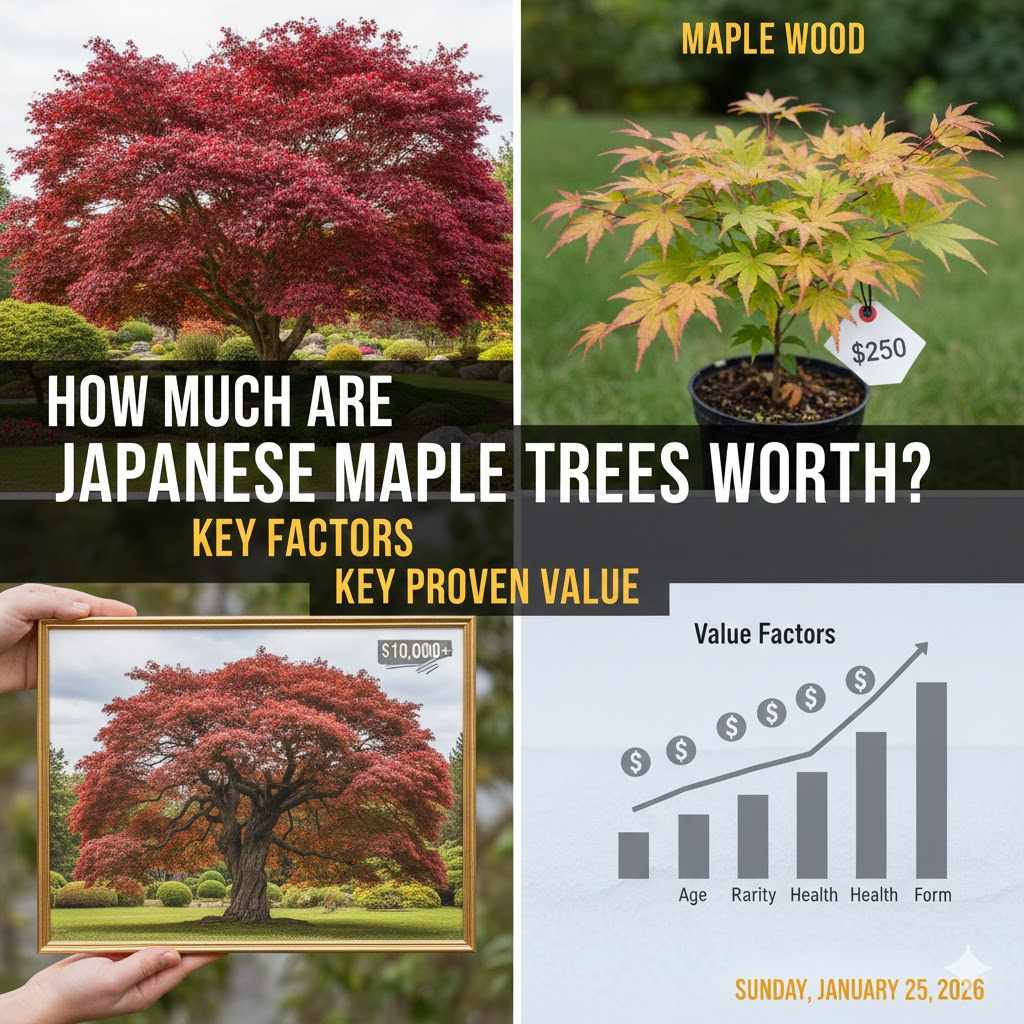
How Much Are Japanese Maple Trees Worth? Key Proven Value
A Japanese maple tree’s value ranges from $50 for a small, common sapling to over $20,000 for a rare, mature, or artfully sculpted specimen. The key factors that determine its worth are its age, size, specific variety (cultivar), overall health, and unique shape. A well-placed mature tree can significantly increase your property value.
Hello, I’m Md Meraj. In my workshop, I often talk about how the right piece of wood can make a project special. But sometimes, the value comes from the living tree itself, right in your yard. Many homeowners ask me, “How much is my Japanese maple tree actually worth?” It’s a great question. You see this beautiful tree every day, but its value can feel like a mystery.
Thinking about a tree’s worth can be confusing. You might see small ones at the store for under a hundred dollars, then hear stories about rare ones selling for thousands. It’s hard to know where your tree fits in. But don’t worry. Understanding its value is easier than you think.
Today, I’m going to walk you through everything that gives a Japanese maple its value, from its size and age to its unique color and shape. We’ll break it down step-by-step, so you can feel confident knowing what makes your tree a true treasure. Let’s get started.
Understanding the Basics: What Makes a Japanese Maple So Valuable?
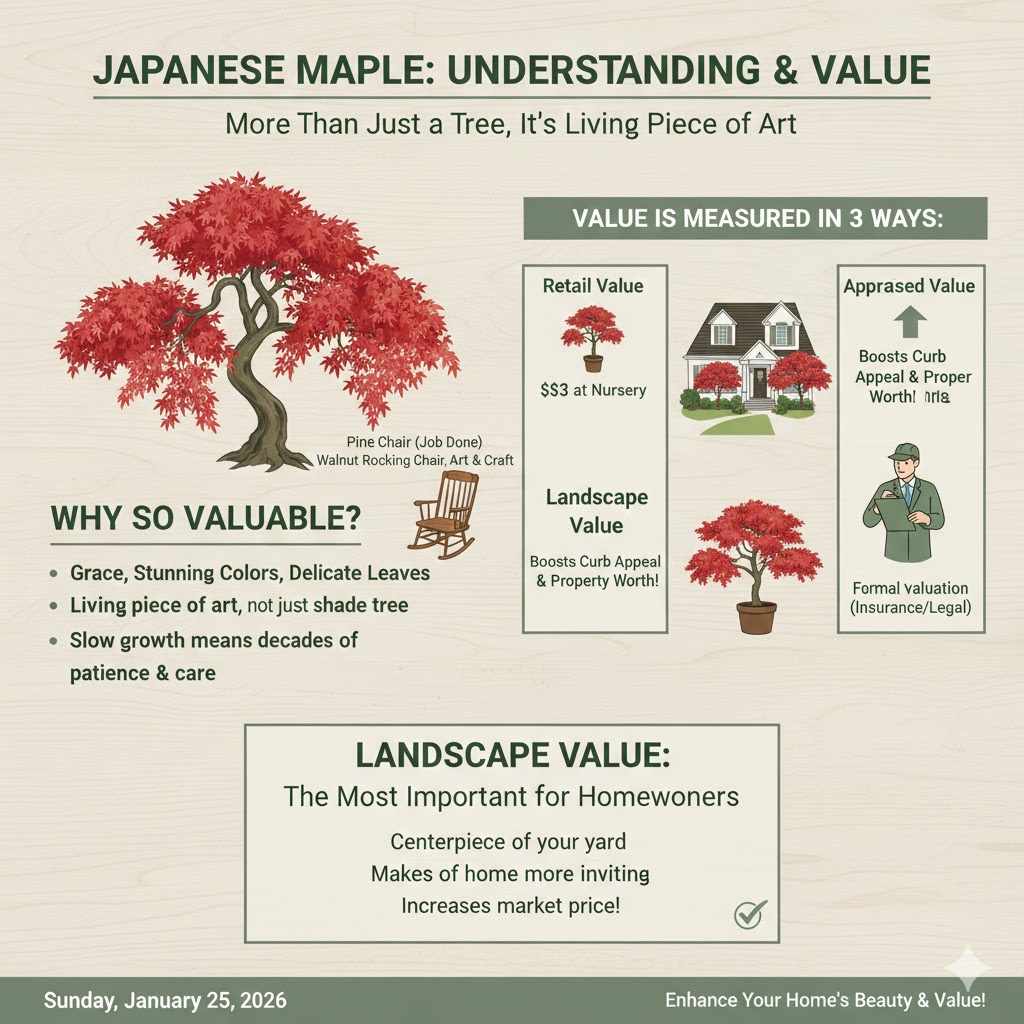
Before we jump into dollar signs, let’s talk about why these trees are so special. Unlike a simple shade tree, a Japanese maple is often seen as a living piece of art. For centuries, they have been prized in landscape design for their grace, stunning colors, and delicate leaves. Their value isn’t just about their size; it’s about their beauty and the atmosphere they create.
Think of it like a piece of fine furniture. A simple pine chair does its job, but a handcrafted walnut rocking chair has a different kind of value. It has character, history, and craftsmanship. Japanese maples are the handcrafted rocking chairs of the tree world. Their slow growth means a large, mature tree represents decades of patience and care. This inherent beauty and slow journey to maturity are the foundations of their worth.
This value can be measured in three main ways:
- Retail Value: This is the price you’d pay for a tree at a nursery or garden center.
- Landscape Value: This refers to how much the tree adds to your property’s overall worth and curb appeal.
- Appraised Value: A formal valuation done by a professional arborist, often for insurance or legal purposes.
For most homeowners, the landscape value is the most important. A gorgeous, healthy Japanese maple can be the centerpiece of your yard, making your home more inviting and increasing its market price.
Key Factors That Determine a Japanese Maple’s Price
Not all Japanese maples are priced the same. Several key ingredients come together to determine a specific tree’s worth. Let’s look at each one, so you can learn to see your tree like a professional would.
Age and Size: Maturity is King
This is the biggest factor. Simply put, older and larger trees are worth more. Why? Because Japanese maples grow very slowly. A tree that stands 15 feet tall might be 20 to 30 years old. That height represents decades of care, watering, and proper pruning. You are paying for time.
Someone buying a mature tree gets an instant “wow” factor that would otherwise take a lifetime to grow. Nurseries invest significant resources in caring for these older specimens, which is reflected in their price. A small sapling you can carry in one hand is an affordable project, while a mature tree that requires a crane to move is a serious investment.
| Size / Age | Typical Price Range | Description |
|---|---|---|
| Small Sapling (1-3 years old) | $50 – $200 | Young, small tree, usually 1-4 feet tall. Easy to plant yourself. |
| Medium Tree (5-10 years old) | $200 – $1,500 | More established, often 5-8 feet tall. Starts to show its mature form. |
| Large, Mature Tree (15+ years old) | $1,500 – $10,000+ | A significant landscape feature, 10+ feet tall. Its price rises steeply with size. |
| Specimen Tree (30+ years old) | $10,000 – $25,000+ | Extremely large, rare, or perfectly shaped. Often requires professional transport. |
Cultivar and Rarity: Not All Maples are Created Equal
The word “cultivar” is just a fancy term for a specific variety of a plant that was bred for certain traits. There are over 1,000 different cultivars of Japanese maples! Some are very common, while others are incredibly rare and sought after by collectors.
- Common Cultivars: Varieties like ‘Bloodgood’ or ‘Emperor I’ are popular, beautiful, and widely available. They are known for their reliable red color and hardiness. Because they are easier to grow and find, their price is generally lower.
- Rare or Desirable Cultivars: Others, like the ‘Sango Kaku’ (Coral Bark Maple) with its bright red winter bark, or weeping varieties like ‘Viridis’ with its lace-like green leaves, are more unique. Extremely rare cultivars, especially those with unique color combinations, leaf shapes, or growth habits, can command very high prices.
If you know your tree’s cultivar, a quick online search can give you a clue about its rarity and general price point. For help identifying your tree, check out resources from horticulture programs like the one at Clemson University, which provide detailed descriptions of common types.
Health and Condition: A Strong Tree is a Valuable Tree
Just like a used car, a tree’s condition is crucial to its value. A healthy, vibrant tree is always worth more than one that’s struggling. When assessing a tree’s health, look for these signs:
- Lush, Full Leaves: The leaves should have rich color (for that variety) and be free of large spots, holes, or withered brown edges.
- Strong Branch Structure: The branches should look sturdy, without large cracks or dead sections.
- Smooth Bark: The trunk should be free from large wounds, gashes, or signs of disease or pests, like peeling bark or oozing sap.
- Good Overall Vigor: The tree should simply look alive and energetic.
A tree that has been damaged by storms, neglected, or is suffering from disease will have a significantly lower value and may even cost money to have removed.
Form and Shape: The Artistry Factor
This is where the beauty comes in. A Japanese maple with a graceful, pleasing shape is far more desirable. A well-balanced form, whether it’s an elegant upright tree or a cascading weeping variety, is a sign of good genetics and often, skillful pruning over many years.
Trees that have been thoughtfully shaped to enhance their natural structure are worth more. An unbalanced tree with awkward branches or a lopsided canopy is less valuable. This is why some bonsai enthusiasts and landscape artists will pay a premium for a tree with a unique and beautiful natural form—it gives them a fantastic starting point for their art.
Trunk Caliper: The Professional’s Measurement
At a nursery, you might hear the term “trunk caliper.” This is the diameter of the tree’s trunk measured about six inches above the soil line. It’s a standard way professionals measure the size and maturity of a tree. A larger caliper means a more established, and therefore more valuable, tree. While you probably won’t use this measurement for a tree already in your yard, it’s the primary metric used in the nursery industry to set prices for new trees.
Japanese Maple Value by Type: A Quick Breakdown
Japanese maples come in several main forms. Understanding which type you have can help you narrow down its potential value. The three most common shapes are upright, weeping, and dwarf.
The table below gives a rough idea of how these different forms are valued at various stages of growth. Remember, these are just estimates—rarity and condition can change the price dramatically.
| Tree Type | Small (1-3 Gallon Pot) | Medium (10-15 Gallon Pot) | Large / Mature (In-Ground) |
|---|---|---|---|
| Upright Varieties (e.g., ‘Bloodgood’, ‘Emperor I’) | $75 – $250 | $300 – $800 | $1,200 – $7,000+ |
| Weeping Varieties (e.g., ‘Viridis’, ‘Crimson Queen’) | $100 – $350 | $500 – $1,800 | $2,000 – $15,000+ |
| Dwarf Varieties (e.g., ‘Mikawa yatsubusa’, ‘Sharp’s Pygmy’) | $60 – $200 | $250 – $700 | $1,000 – $5,000+ |
How Japanese Maples Add Real Value to Your Property
So far, we’ve talked about what a tree might sell for. But for most of us, the real value is what the tree does for our home. A mature, well-cared-for Japanese maple isn’t just a plant; it’s a major upgrade to your property.
Curb Appeal and First Impressions
First impressions matter. A stunning Japanese maple in the front yard can transform the entire look of a house. Its unique shape and vibrant color draw the eye, making the property look more established, well-maintained, and expensive. It’s the kind of feature that makes people slow down as they drive by. This powerful curb appeal is a direct contributor to your home’s value.
Increasing Your Home’s Resale Value
Believe it or not, landscaping is an investment with a real return. According to landscaping experts and real estate agents, mature landscaping can increase a property’s value by as much as 15% to 20%. While it’s hard to put a number on a single tree, a spectacular Japanese maple is often a key feature that contributes to that increase.
Buyers often make emotional decisions. A yard with a beautiful, peaceful focal point like a mature maple can make them feel more connected to the home, making them more likely to make a strong offer. According to the Arbor Day Foundation, mature trees on a property don’t just add beauty; they are a sign of an established neighborhood and can increase property values.
Creating a Peaceful and Beautiful Outdoor Space
Finally, there’s the value that you can’t put a price tag on. A Japanese maple can create a sense of peace and tranquility in your backyard. It can be a shady spot for reading, a beautiful view from your kitchen window, or a changing work of art that marks the seasons with its fiery fall colors. This improvement in your quality of life is, for many, the most valuable part of owning one.
A Simple Guide to Estimating Your Tree’s Value
Ready to get a rough idea of your tree’s worth? You don’t need to be a professional arborist. Just follow these simple steps to make an educated guess.
- Identify Your Tree’s Cultivar: Try to figure out which variety you have. Look at the leaf shape, color (in summer and fall), and overall form (upright or weeping). Use online resources or apps to help you. Knowing if you have a common ‘Bloodgood’ or a rarer ‘Sango Kaku’ is a big first step.
- Measure Its Size: Use a tape measure to get the tree’s approximate height. For the trunk, measure the circumference (the distance around it) about six inches from the ground, then divide that number by 3.14 to get a rough diameter (caliper). A larger size almost always means higher value.
- Assess Its Health and Form: Be honest. Does your tree look healthy and vibrant? Are there dead branches or signs of disease? Is its shape balanced and graceful, or is it a bit lopsided? A perfect-looking tree will always be at the top of the price range for its size.
- Research Local Prices: Call a few high-quality local nurseries (not big-box stores) and ask them for a price on a Japanese maple with the same cultivar and size as yours. This is the best way to understand its current retail replacement value in your area.
- Consider Professional Appraisal for High-Value Trees: If you have a very large, old, and perfectly shaped tree, and you need a formal valuation for insurance purposes or a real estate transaction, it might be worth hiring a certified arborist. They can provide a detailed report on the tree’s monetary value.
Buying vs. Growing: Which Option Offers the Best Value?
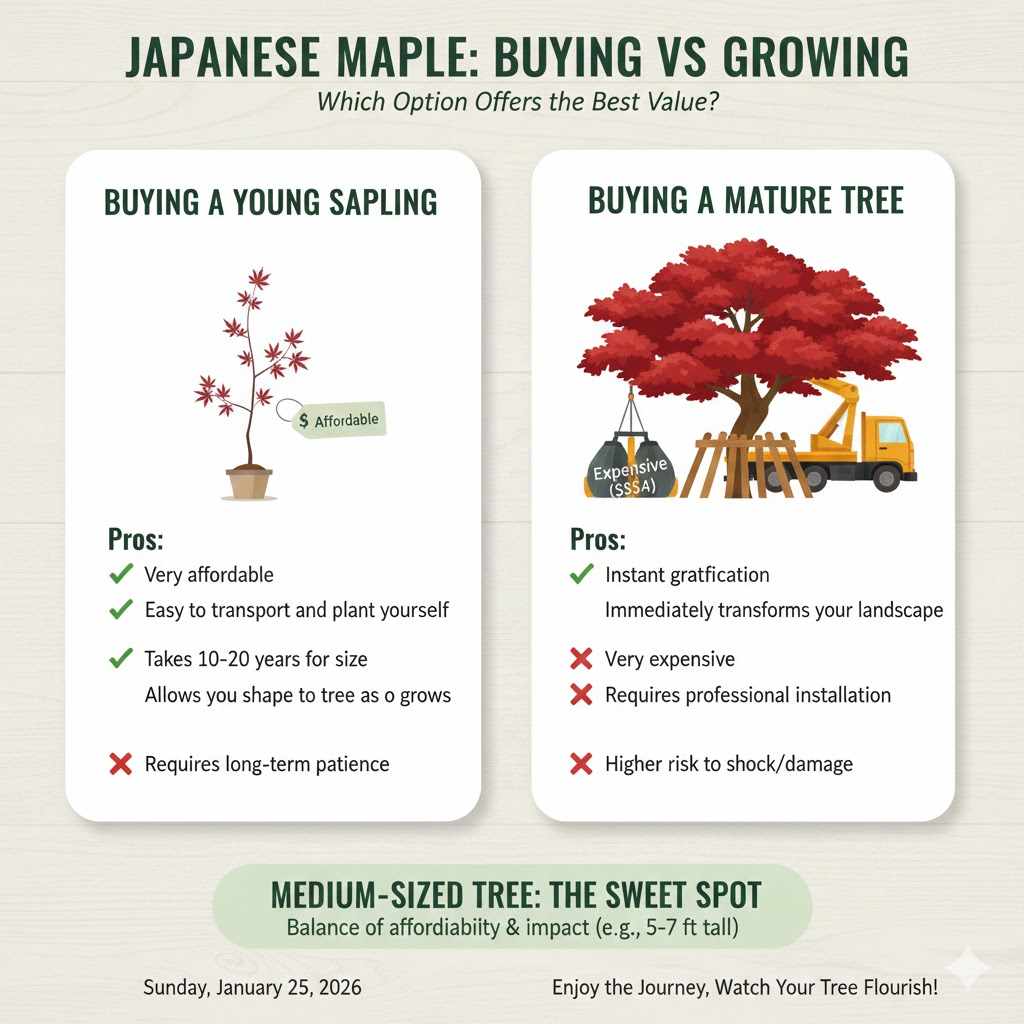
If you’re thinking about adding a Japanese maple to your yard, you have a choice: buy a small, young tree and wait, or invest in a larger, more mature one for instant impact. Here’s a quick look at the pros and cons of each.
Buying a Young Sapling
- Pros: Very affordable, easy to transport and plant yourself, allows you to shape the tree as it grows.
- Cons: It can take 10-20 years to achieve the size and impact of a mature tree. It requires long-term patience.
Buying a Mature Tree
- Pros: Instant gratification. You get a beautiful, established tree that immediately transforms your landscape.
- Cons: Very expensive (thousands of dollars), requires professional transportation and installation, and has a higher risk of shock or damage during the move.
For most homeowners, starting with a medium-sized tree (maybe 5-7 feet tall) offers the best balance of affordability and impact. It already has some size, but you won’t break the bank, and you’ll still get to enjoy watching it mature over the years.
Frequently Asked Questions (FAQ)
1. Can I sell a mature Japanese maple tree from my yard?
Yes, it is possible, but it can be difficult. You would need to find a buyer, often a landscape company or a private collector, who is willing to pay for both the tree and the expensive, specialized process of safely digging it up and transporting it. It’s most common for extremely large or rare specimen trees.
2. What is the most expensive type of Japanese maple?
Extremely old, masterfully pruned specimen trees, often those resembling large-scale bonsai, are the most expensive. Rare cultivars with unique variegation or colors can also fetch high prices. There isn’t one single “most expensive” cultivar, as the value depends heavily on the individual tree’s age, size, and artistry.
3. How long does it take for a Japanese maple to mature and add value?
Japanese maples are slow growers. A tree will start to become a significant landscape feature after about 10-15 years. Its monetary and aesthetic value will continue to increase as it grows over many more decades. True maturity, where growth slows dramatically, might take 30 years or more.
4. Does pruning increase a Japanese maple’s value?
Yes, proper pruning does. Skillful pruning that enhances the tree’s natural shape, removes dead wood, and maintains its health can significantly increase its value. However, bad pruning that damages the tree or creates an unnatural shape can drastically lower its worth.
5. Is my Japanese maple valuable for its wood?
While the wood of maple trees is used in furniture and woodworking, Japanese maples are almost never harvested for their timber. Their value comes from their beauty as a living landscape tree. The trunk is typically too small and twisted to be useful for lumber.
6. Can a dead Japanese maple have any value?
Unfortunately, once a Japanese maple dies, it has no monetary value and becomes a liability. It will cost money to have it professionally removed. Its worth is entirely tied to it being a healthy, living plant.
Conclusion: A Treasure in Your Own Backyard
So, how much are Japanese maple trees worth? As we’ve seen, the answer is a lot more interesting than just a single number. The value is a blend of its age, size, variety, and health. A small tree might be an affordable weekend project, while a majestic, decades-old specimen is a serious investment that can add thousands of dollars to your home’s value.
But beyond the money, the real value comes from the daily enjoyment it brings. It’s a source of beauty that changes with every season, a quiet companion in your garden, and a living piece of art. Whether your tree is a small sapling just starting its journey or a mature giant that has graced your yard for years, it’s a valuable part of your home.
I hope this guide has helped you see your Japanese maple in a new light. Take a moment today to go outside and appreciate its unique form and color. You have a real treasure right there in your own backyard.