How Much Does a Glue Gun Cost: An Essential Guide
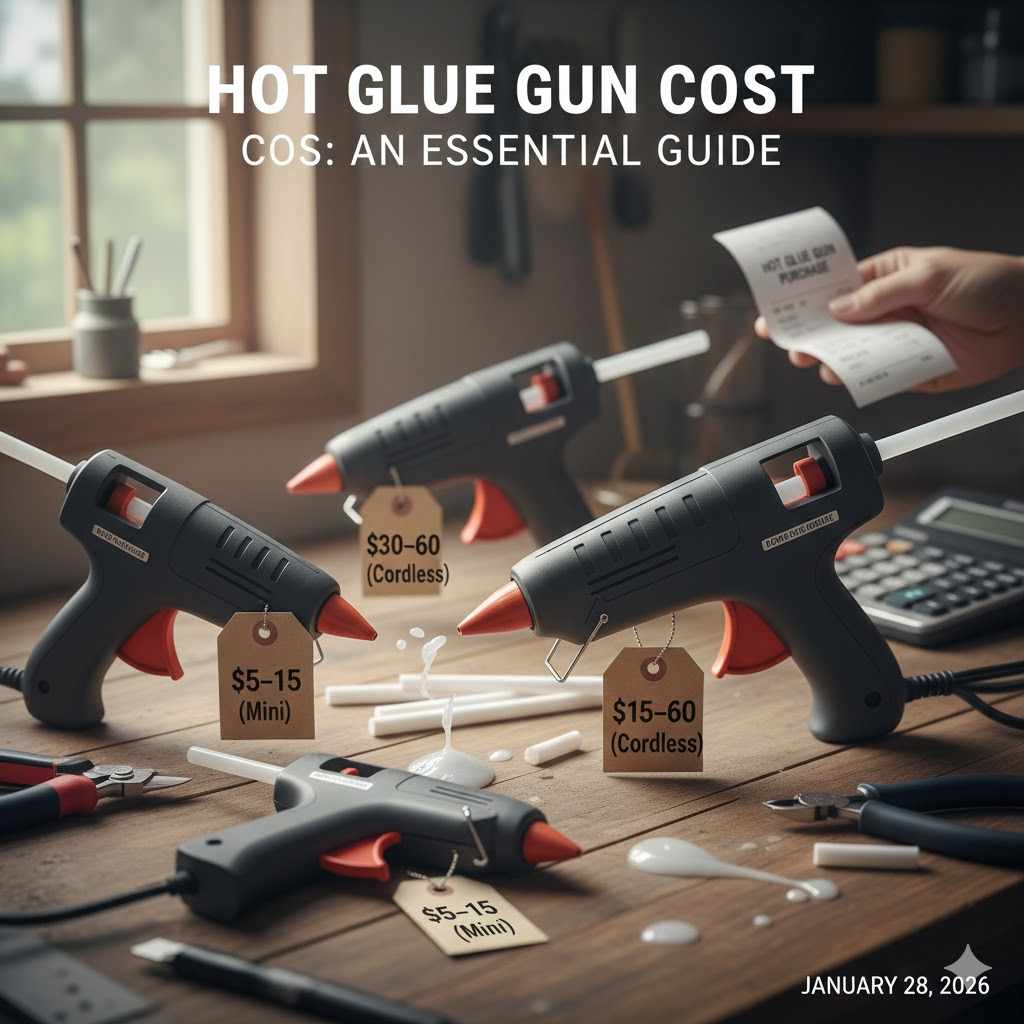
A glue gun can cost anywhere from $5 for a basic, mini craft model to over $100 for a professional-grade, cordless, industrial tool. Most DIYers and homeowners will find an excellent, reliable glue gun that meets all their needs in the $15 to $40 price range.
Hello there! It’s Md Meraj, your friendly guide in the workshop. One question I hear all the time from folks starting out is about tools. And a tool that causes a surprising amount of confusion is the humble glue gun. You see them everywhere, from craft stores to big hardware aisles. The prices are all over the place, and it’s easy to wonder if you’re buying the right one. Are you paying too much? Or is that cheap one going to fail on your first project? Don’t you worry. We’re going to clear all that up today. I’ll walk you through everything you need to know to find the perfect glue gun for your projects and your budget.
A glue gun is one of the most versatile tools you can own. It’s a go-to for quick repairs, crafting, woodworking joinery, and so much more. But when you’re ready to buy one, the number of options can feel overwhelming. You see tiny guns for a few dollars next to bulky, cordless models with a hefty price tag. The key is understanding that the price isn’t random; it reflects the tool’s features, power, and intended use. Let’s break down what actually goes into the cost of a glue gun, so you can make a choice you feel great about.
Understanding the Basics: What Drives Glue Gun Prices?
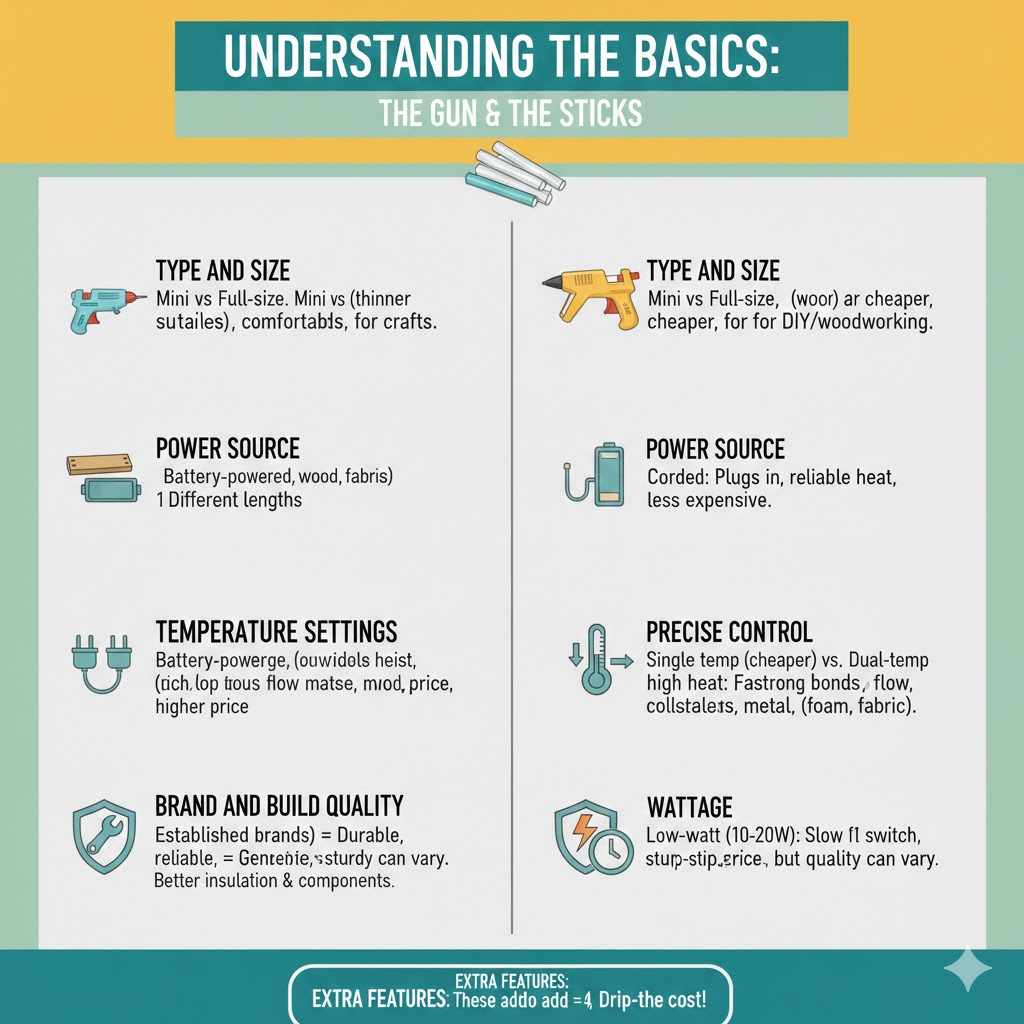
Several key factors determine how much you’ll pay for a glue gun. Knowing these will help you spot a good value and avoid paying for features you simply don’t need.
- Type and Size: Glue guns come in two main sizes. Mini glue guns are small, use thin glue sticks, and are great for delicate crafts. Full-size glue guns are larger, use thicker sticks, and deliver more glue for bigger projects like woodworking or home repairs. As you’d expect, mini guns are usually cheaper.
- Power Source: A corded glue gun plugs into the wall. They are reliable and offer consistent heat, and they are generally less expensive. Cordless glue guns run on batteries, giving you freedom to move around without being tethered to an outlet. This convenience comes at a higher price, and you have to think about battery life.
- Temperature Settings: Some guns operate at a single temperature. More versatile models are dual-temperature, letting you switch between high and low heat. Low heat is safer for delicate materials like foam or fabric. High heat creates a stronger bond for materials like wood, metal, and plastic. Industrial guns might have adjustable temperature dials for precise control, which adds to the cost.
- Wattage: Wattage tells you how quickly the glue gun can heat up and melt glue. A low-wattage gun (10-20 watts) is fine for occasional, small projects. A high-wattage gun (60 watts or more) heats up faster and can keep up with continuous use on big jobs without you having to wait for the glue to melt. Higher wattage usually means a higher price.
- Brand and Build Quality: Established brands like Arrow, Gorilla, Surebonder, and DeWalt often cost more because of their reputation for durability and performance. Cheaper, generic brands can be a bit of a gamble on quality and lifespan. Better build quality means better insulation to protect your hands and more durable components that will last for years.
- Extra Features: Bells and whistles always add to the cost. Look out for things like interchangeable nozzles, an on/off switch (a surprisingly helpful feature!), a sturdy stand, an auto-shutoff safety feature, or a “drip-less” tip.
The Three Main Price Tiers of Glue Guns
To make it simple, we can group glue guns into three general price categories. Thinking about which group fits your needs is the easiest way to narrow down your options and find the perfect tool.
| Price Tier | Typical Price Range | Best For | Common Features |
|---|---|---|---|
| Budget-Friendly | $5 – $15 | Light crafts, kids’ projects, occasional quick repairs. | Mini size, low wattage, single temperature, corded. |
| Mid-Range / DIYer’s Choice | $15 – $40 | General DIY, woodworking, frequent crafting, home repairs. | Full-size, dual-temperature, higher wattage, some cordless options. |
| High-End / Professional | $40 – $100+ | Contractors, serious woodworkers, industrial use, demanding projects. | Cordless with long-life battery, adjustable temperature, heavy-duty build, fast heating. |
Budget-Friendly Glue Guns (Under $15)
This is where most people start, and for good reason! These glue guns are perfect for dipping your toes into crafting or for having on hand for that once-in-a-while repair job. They are typically small, simple, and get the job done for light-duty tasks.
In this price range, you’ll mostly find mini glue guns that use 0.28-inch (7mm) glue sticks. They usually have a lower wattage, meaning they take a few minutes to heat up and might struggle to keep the glue flowing if you’re working quickly. Most are single-temperature, operating at either a low or high heat setting. They almost always have a power cord and a small, sometimes flimsy, wire stand.
Who should buy a budget glue gun?
- Parents who need one for their kids’ school projects.
- Occasional crafters working with paper, fabric, or foam.
- Anyone who just wants a simple tool in a drawer for fixing a loose piece of trim or a broken toy.
Pros: Very affordable, lightweight, and easy to store.
Cons: Slow to heat up, less durable, can drip glue, not suitable for large or heavy-duty projects.
Mid-Range Glue Guns ($15 – $40)
This is the sweet spot for most DIY enthusiasts and homeowners. For a bit more money, you get a significant upgrade in performance, features, and durability. These guns are versatile workhorses that can handle a wide variety of tasks around the house and in the workshop.
Guns in this category are usually full-size and use the standard 0.44-inch (11mm) glue sticks. This size provides a much greater glue output, which is essential for woodworking or larger repairs. Many have dual-temperature settings, giving you the flexibility to work with delicate materials on low heat or create strong bonds on high heat. You’ll also find higher wattage here (40W-100W), so they heat up fast and are ready to work when you are. Some entry-level cordless models even start appearing in this price range, offering more freedom of movement.
Who should buy a mid-range glue gun?
- Hobbyist woodworkers who need it for assemblies or template making.
- Serious crafters and DIYers who use a glue gun regularly.
- Homeowners who want a reliable, all-purpose tool for repairs and projects.
Pros: Great value for the money, versatile dual-temp settings, fast heat-up times, more durable than budget models.
Cons: Corded models can be restrictive; cordless models at this price might have shorter battery life.
High-End & Professional Glue Guns ($40+)
When your projects demand power, precision, and performance without compromise, you step up to the professional tier. These glue guns are built for heavy-duty, all-day use. They are common on construction sites, in professional woodworking shops, and in industrial settings.
The biggest feature in this category is advanced cordless technology. Brands like DeWalt, Ryobi, or Milwaukee offer glue guns that run on the same powerful lithium-ion battery packs as their drills and saws, providing hours of runtime and incredible heat output. You’ll also find industrial corded models with very high wattage (200W+) and adjustable temperature controls for working with specialty adhesives. They are built tough with robust housings, comfortable ergonomic grips, and features designed for safety and efficiency, like integrated stands and auto-shutoff timers. For critical work where reliability is key, these tools are worth the investment. It’s also important to follow safety guidelines, like those recommended by the U.S. Consumer Product Safety Commission, especially with high-heat tools.
Who should buy a high-end glue gun?
-
- Professional contractors and tradespeople.
- Dedicated woodworkers and furniture makers.
Anyone who uses a glue gun for hours at a time or for critical applications.
Pros: Superior performance and power, excellent battery life on cordless models, highly durable, advanced safety and convenience features.
Cons: Expensive, can be overkill for the average DIYer, may be heavier and bulkier.
Don’t Forget the Glue Sticks! The Cost of Consumables
Your glue gun is only half of the equation! The glue sticks you use are just as important. The cost of glue sticks can add up over time, so it’s wise to factor them into your budget. Like the guns themselves, glue sticks come in different types and prices.
For most projects, general-purpose, all-temperature sticks are perfect and very affordable. But for specific tasks, you might need specialty sticks. For example, there are sticks made specifically for wood that are tinted to blend in, extra-strong formulas for bonding metal, or flexible formulas for fabrics. These specialty sticks will cost more per stick.
| Glue Stick Type | Approximate Cost (per pack of 20-50) | Best For |
|---|---|---|
| General Purpose (All-Temp) | $5 – $10 | Crafts, paper, fabric, light repairs, general DIY. |
| Woodworking / Construction Grade | $10 – $20 | Stronger bonds on wood, plastic, metal. Less dripping formula. |
| Specialty (e.g., Fabric, Glitter, Colored) | $8 – $15 | Decorative crafts, specific material bonding like fabrics that need flexibility. |
| Bulk Packs (100+ sticks) | $15 – $30+ | Frequent users who want the best price per stick. A great long-term value. |
A quick tip: Always match the glue stick diameter to your gun! Using a mini stick in a full-size gun won’t work, and vice-versa. It’s a common mistake, so double-check the packaging.
Which Glue Gun is Right for You?
Okay, we’ve covered a lot of ground. Now for the most important part: choosing the right tool for your specific needs. Forget about finding the “best” glue gun overall and focus on finding the “best” glue gun for you. Ask yourself these questions:
- What kind of projects will I be doing? If you’re mostly doing paper crafts or decorating, a simple mini glue gun is perfect. If you’re building birdhouses, fixing furniture, or installing trim, you’ll need the power and glue output of a full-size gun.
- How often will I use it? If it’s for a single project or something you’ll pull out once a year, an inexpensive budget model makes sense. If you’re in the workshop or craft room every weekend, investing in a comfortable, durable mid-range model will pay off in the long run.
- Where will I be working? If you’re always working at a bench right next to an outlet, a corded model is reliable and cost-effective. But if you need to work on a ladder, in the garden, or on a large project where a cord would get in the way, the freedom of a cordless gun is a game-changer.
- What’s my budget? Be realistic about your budget, but also think about value. Sometimes spending an extra $10 for a dual-temperature model or a more reliable brand can save you a lot of frustration and make your projects more successful.
Where to Buy a Glue Gun: Finding the Best Deals
You can find glue guns in many places, both online and in-person. Each has its pros and cons:
- Big Box Home Improvement Stores (Home Depot, Lowe’s): A great place to see and hold different models. They have a good selection from budget to mid-range professional brands. You can compare different tools side-by-side.
- Craft Stores (Michaels, JOANN): The best selection of mini glue guns and specialty craft sticks (like glitter or colored glue). Often have great coupons and sales.
- Online Retailers (Amazon, Walmart): The widest selection and competitive pricing. Reading user reviews can be incredibly helpful for spotting quality products and avoiding duds. Just be sure you’re buying the right size sticks to go with it!
- Hardware Stores (Ace, True Value): Your local hardware store is a fantastic resource. They may not have a huge selection, but the staff can offer practical, hands-on advice.
Safety First: A Quick Reminder
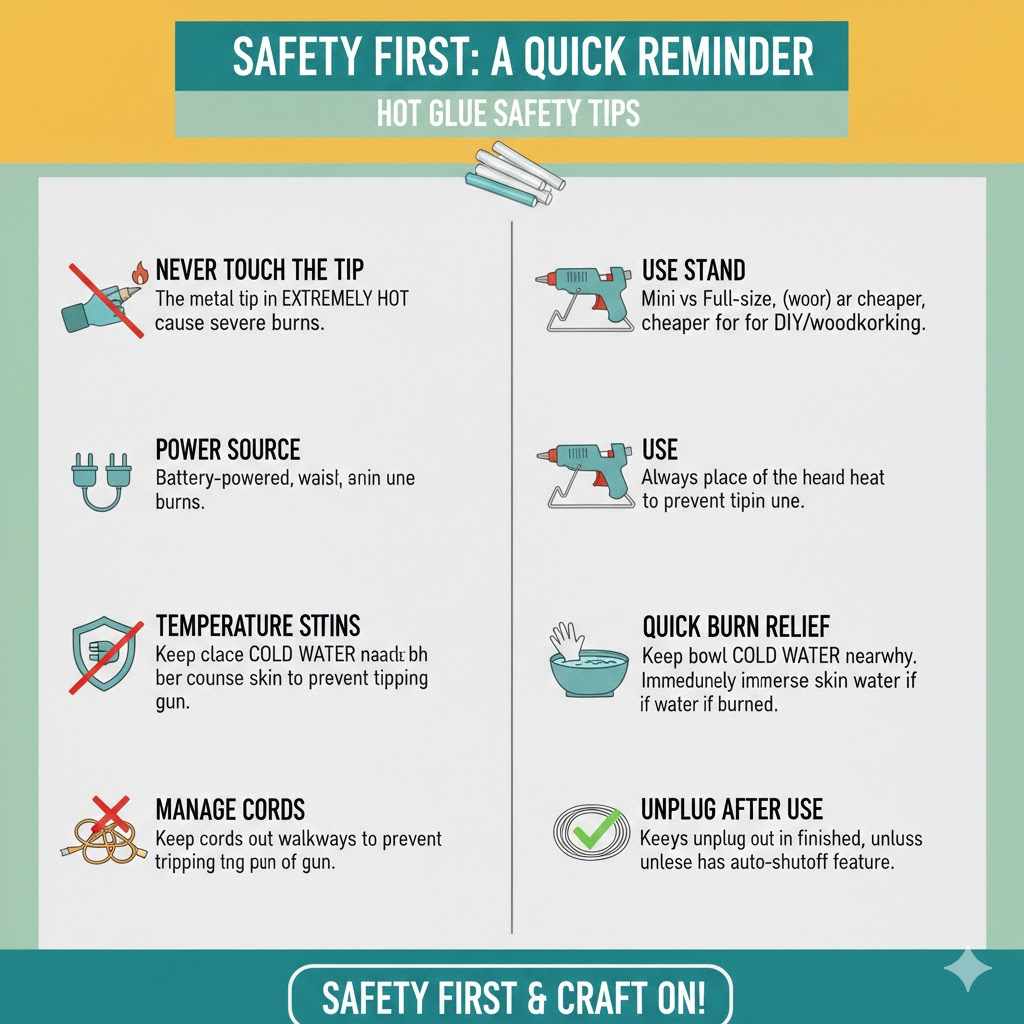
No matter which glue gun you buy, please always put safety first. Hot glue is… well, hot! It can cause nasty burns if you’re not careful. Always remember:
- Never touch the metal tip of the gun.
- Always rest the gun on its stand when you’re not holding it.
- Keep a bowl of cold water nearby just in case you get hot glue on your skin. Immediately immerse the burn in the water.
- Keep cords out of the way to prevent tripping.
- Unplug the gun when you are finished using it, unless it has an auto-shutoff feature.
Frequently Asked Questions
What’s the main difference between a high-temp and low-temp glue gun?
A high-temperature glue gun melts glue at around 380°F (193°C), creating a very strong bond that’s great for wood, plastic, and metal. A low-temperature gun melts glue around 250°F (121°C), which is safer for delicate materials like foam, ribbon, and fabric that could be damaged by high heat. A dual-temperature gun gives you the best of both worlds.
Are more expensive glue guns really worth it?
It depends entirely on your needs. For a professional who uses a glue gun daily, an expensive, durable, and powerful cordless model is absolutely worth it for its efficiency and reliability. For someone who only uses it a few times a year for light crafts, a $10 model is a much smarter purchase.
Can I use any brand of glue stick in my gun?
For the most part, yes, as long as the diameter is correct. A mini glue gun needs mini sticks (usually 0.28″ or 7mm), and a full-size gun needs full-size sticks (usually 0.44″ or 11mm). While brands often say their sticks work best, any quality glue stick of the right size should work just fine.
How long does a cheap glue gun usually last?
With gentle, occasional use, a cheap glue gun can last for several years. However, their heating elements and triggers are more prone to failing, especially with frequent or heavy use. They are not built for demanding, long-term work.
What is the most important feature to look for in a glue gun?
For a beginner or general DIYer, the most valuable feature is a dual-temperature setting. It dramatically increases the versatility of the tool, allowing you to work on a wider range of projects with a single gun. For a heavy user, the most important feature might be cordless convenience or high wattage for fast heating.
Does a higher wattage mean the glue bond is stronger?
No, wattage is not directly related to the strength of the bond. Wattage affects how quickly the gun heats up and how consistently it can melt glue during continuous use. The strength of the bond is determined by the glue stick formula and the temperature at which it’s applied (high-temp generally creates stronger bonds).
Why does my glue gun drip so much?
Dripping is a common issue, especially with older or cheaper glue guns. It happens when the heating chamber melts more glue than is being used, and the pressure pushes it out of the nozzle. Some newer, higher-quality guns have check-valve nozzles designed to minimize dripping, but a little bit is normal for most models. Placing a scrap piece of cardboard or a silicone mat under the tip is an easy fix.
Choosing Your Perfect Partner in Glue
So, how much does a glue gun cost? As we’ve seen, the answer is “it depends.” But now, you have all the information you need to answer that question for yourself. The real price isn’t just the number on the tag; it’s about finding the tool that provides the best value for the work you do.
Don’t get caught up in thinking you need the most expensive model. For most of us, a solid, reliable gun from that $15 to $40 mid-range tier is the perfect workshop companion. It will be ready for almost any project you can dream up, from fixing a wobbly chair leg to creating beautiful holiday decorations. The most important thing is to get a tool that makes you feel confident and excited to start building, fixing, and creating. Now go on, find the one that’s right for you and get to work!