Painters Putty vs Wood Filler: What’s Actually Different
Painter’s putty and wood filler solve different problems: painter’s putty is an oil-based paste for tiny nail holes and cracks on already-primed or painted surfaces, applied by hand and never sanded aggressively. Wood filler is a broader family of products (latex, epoxy, or wood-fiber based) built to fill larger gouges and gaps in bare or finished wood, and some formulations can even be stained to match. Use putty for cosmetic touch-ups right before you paint; use filler for actual structural or size repairs.
The mix-up matters because putty and filler behave differently on raw wood — one of them will cause a visible problem if you use it in the wrong spot. Here’s what’s actually in each one, and how to tell which your repair needs.
What Each One Is Actually Made Of
Best For Repairs You Plan To Stain
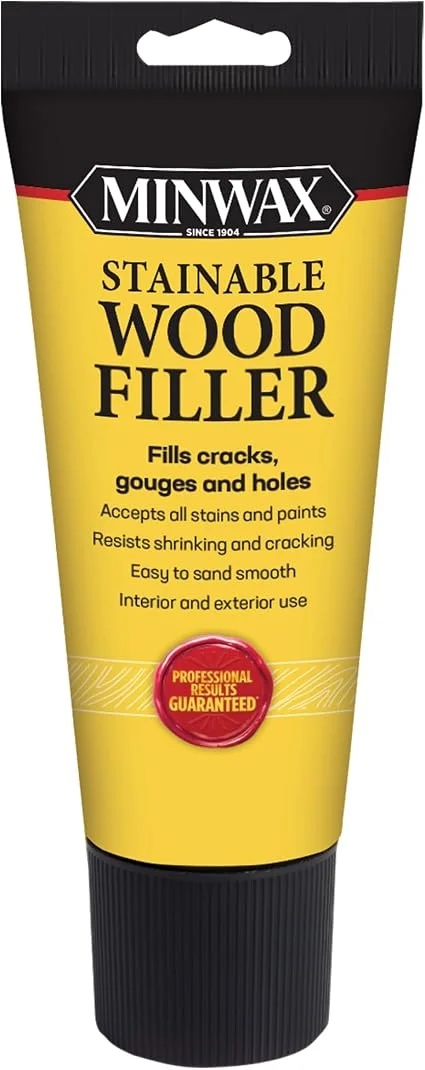 |
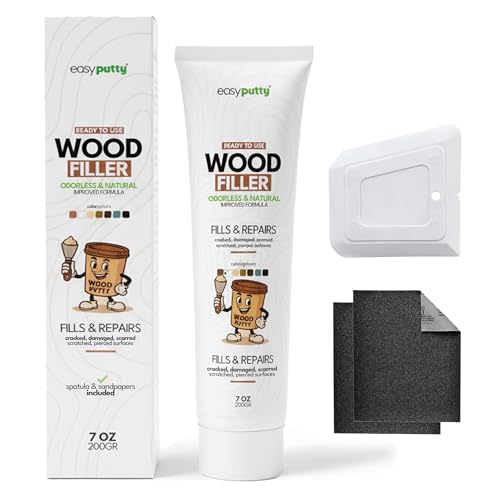
Minwax Stainable Wood Filler – $8.88 Unlike painter’s putty, this is formulated to actually accept wood stain, not just paint — the fix for repairs on stained furniture or trim.
|
Painter’s putty (sometimes called glazing putty) is made from linseed oil and calcium carbonate, sometimes with other oils blended in for workability. It never fully hardens the way filler does — it stays slightly soft and pliable even when cured, which is exactly why it should never be sanded hard: sandpaper just gums up against the oil rather than cutting it flush. This same oil base is also why it only belongs on primed or painted wood — on bare wood, the oil bleeds into the surrounding grain and leaves a visible stain ring that no amount of sanding removes.
Wood filler isn’t one formula but a category: latex-based fillers (like the stainable one above), epoxy-based fillers for structural gap-filling, and wood-fiber fillers bulked with real sawdust for the closest color match. Unlike putty, standard wood filler dries hard enough to be sanded flush and, depending on the formulation, can go over bare wood, primed wood, or finished wood alike.
Note that “painter’s putty” and “wood putty” aren’t quite the same thing, even though the names get used interchangeably. Painter’s putty (covered here) is the oil-based, never-fully-hardens paste discussed above. “Wood putty” more often refers to a stick-form or tub product meant for raw or finished wood touch-ups rather than pre-paint prep — see our wood putty vs. wood filler comparison if that’s the product you actually have on hand.
When to Use Painter’s Putty
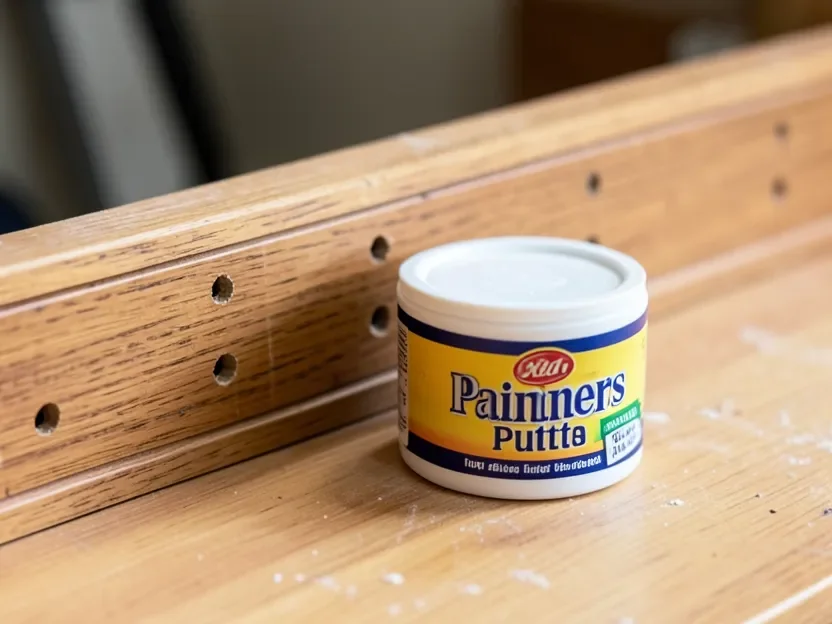
Reach for painter’s putty on small nail holes and hairline cracks in trim, baseboard, or door casing that’s already primed and about to be painted — never bare wood, and never a surface you plan to stain. Press a small amount into the hole with your finger or a putty knife, wipe the surface flush, and let it firm up (usually a few hours, longer for a thick fill) before painting over it. Skip sanding it smooth; if it’s proud of the surface, scrape the excess with a putty knife edge instead.
When to Use Wood Filler
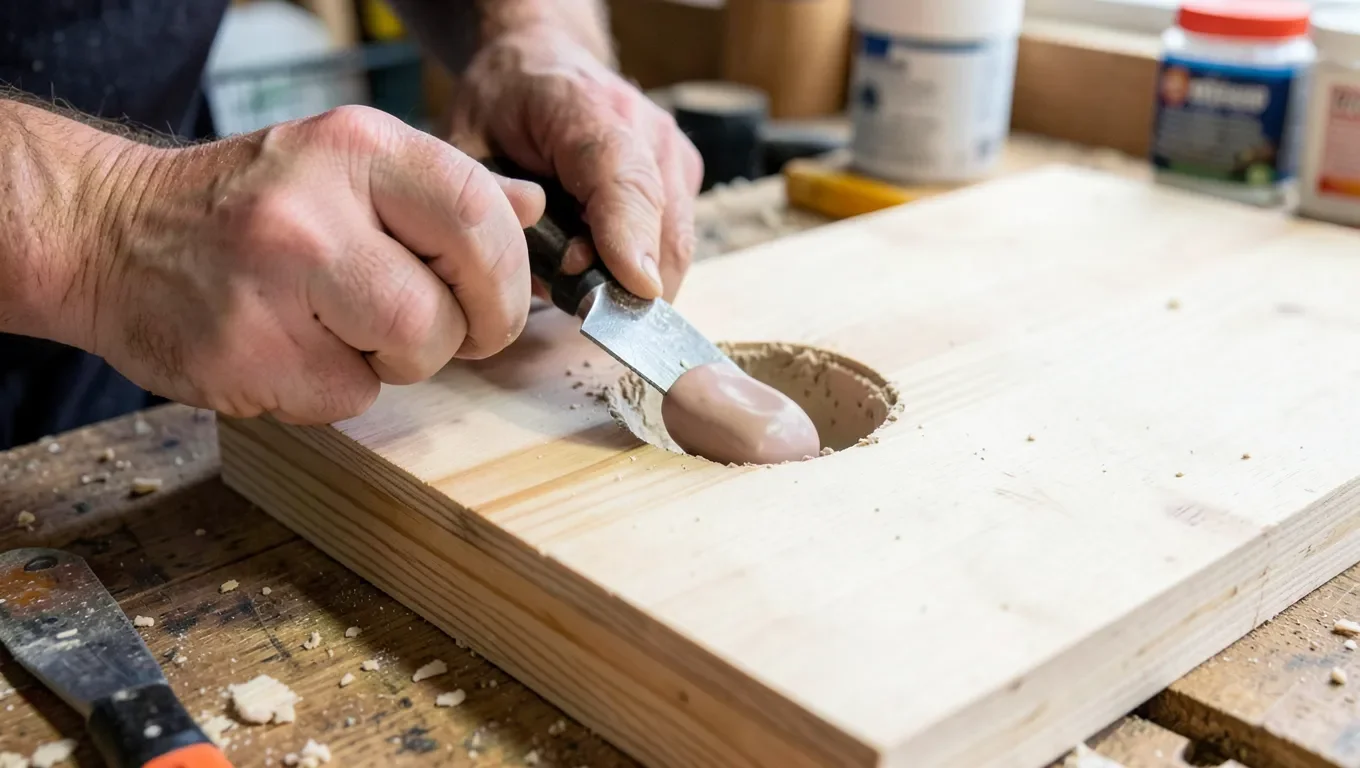
Use wood filler for larger holes, deep gouges, chipped edges, or any repair on bare or stained wood. Scoop it onto a putty knife, press it firmly into the damage so there are no air pockets, mound it slightly proud of the surface, and let it cure fully — most latex fillers set in 15-30 minutes, but deep fills need longer all the way through, not just on the surface. Sand flush once hard, and if you’re staining rather than painting, test the filler’s stain uptake on a scrap piece first — even “stainable” formulas rarely match surrounding wood exactly.
Drying Time and Outdoor Durability
Painter’s putty stays workable far longer than filler — full cure can take up to 24 hours depending on layer thickness and room temperature, and because it never fully hardens, it’s not a good match for outdoor exposure; sun and repeated wet-dry cycles will eventually crack a putty repair. Wood filler cures faster (often 15-30 minutes for a latex formula, longer for epoxy) and, once hard, holds up far better outdoors — look for a filler labeled “exterior” or “indoor/outdoor” if the repair will see weather.
Cost Comparison
A small tub of painter’s putty typically runs $3-$8. Wood filler costs a bit more, usually $6-$15 for a standard tub, with epoxy-based or specialty stainable formulas running higher. Given how small a repair job usually needs, the price difference rarely matters — buy based on which one the surface actually calls for, not which one is cheaper.
Common Mistakes to Avoid
- Using painter’s putty on bare wood. The oil base bleeds into unprimed wood grain and leaves a permanent stain ring.
- Sanding painter’s putty hard. It never fully hardens, so aggressive sanding just smears it and gums up sandpaper — scrape excess instead.
- Using standard wood filler for a big structural gap. Most latex fillers are meant for cosmetic repairs; deep structural gaps need an epoxy-based wood filler or consolidant instead.
- Staining over unlabeled filler and expecting a match. Only fillers explicitly labeled stainable will take stain evenly, and even those need a test patch first.
Frequently Asked Questions
What Is the Difference Between Painters Putty and Wood Filler?
Painter’s putty is an oil-based paste for small nail holes and cracks on already-primed or painted surfaces, and it stays soft rather than hardening. Wood filler is a broader category of latex, epoxy, or wood-fiber products that dry hard enough to sand flush, and can go on bare, primed, or stained wood depending on the formula.
Can You Paint Over Wood Filler?
Yes. Once the filler is fully cured and sanded flush, prime the repaired spot before painting — bare filler often absorbs paint differently than the surrounding wood, and a coat of primer evens that out so the repair doesn’t show through as a dull or shiny patch.
Is Painters Putty Waterproof?
No. Painter’s putty is designed for interior, painted surfaces and isn’t rated for direct water exposure or high humidity. For anything outdoors or in a wet area, use an exterior-rated wood filler instead, and seal the repair with paint once it’s cured.
Which Is Better for Outdoor Repairs?
Wood filler, specifically a formula labeled for exterior or indoor/outdoor use. It hardens fully and resists weather far better than painter’s putty, which stays soft and will eventually crack under repeated sun and moisture exposure.
Conclusion
The real dividing line isn’t cost or brand — it’s surface and size. Painter’s putty is strictly for small cosmetic fills on primed, soon-to-be-painted surfaces; wood filler handles everything bigger, on bare or finished wood, and is the only one of the two suited to staining or outdoor exposure. Match the product to the surface first, and the repair itself is straightforward either way.
Sponsored / affiliate links. As an Amazon Associate I earn from qualifying purchases. I may earn additional commission from eligible campaigns.