How to Calculate Board Foot: Quick & Easy Guide
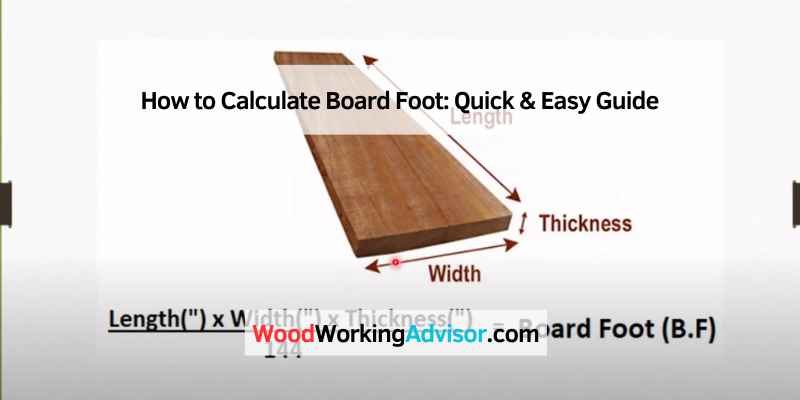
To calculate board feet, use the formula: (Thickness (inches) x Width (inches) x Length (feet)) / 12. Understanding how to calculate board feet is essential for various woodworking and construction projects.
Knowing the exact board footage needed can help in estimating costs and planning material requirements effectively. Whether you are a professional carpenter or a DIY enthusiast, having a grasp of this calculation method is crucial for efficient and accurate project management.
By following a simple formula and utilizing the right tools, you can easily determine the board footage required for your woodworking or construction endeavors. Let’s explore the process of calculating board feet and its significance in the realm of woodworking and construction.
Introduction To Board Feet
Board foot is a unit of measurement used in the lumber industry and woodworking to determine the volume of a piece of wood. It is a crucial concept for woodworkers and those involved in the buying and selling of lumber. The calculation for board feet involves the thickness, width, and length of the wood, and it is essential for estimating the amount of wood needed for a project or determining the value of a particular piece of lumber. Understanding how to calculate board feet is fundamental for anyone working with wood, as it allows for accurate planning and cost estimation.
Basic Units For Lumber Measurement
When it comes to calculating board foot, there are three basic units of measure used for lumber: length, width, and thickness. To calculate board feet, you need to measure the length of the lumber in feet, rounding to the nearest decimal place. Then, measure the width in inches. Finally, measure the thickness in inches as well.
To calculate the board footage, you can use a board foot calculator tool available online. Simply fill out all the required fields, such as length, width, and thickness, and the calculator will provide you with the board footage calculation.
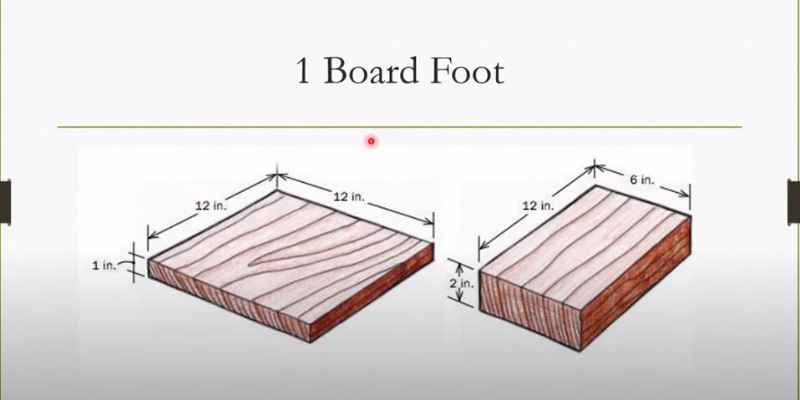
Remember that a board foot is a measure of volume, and it represents one square foot of lumber that is one inch thick. To calculate the board footage, you can use the following formula: Board Footage = Thickness (in.) x Width (in.) x Length (in.)
By following these steps and using a board foot calculator, you can easily calculate the board footage of lumber for your woodworking projects.
Formula For Calculating Board Feet
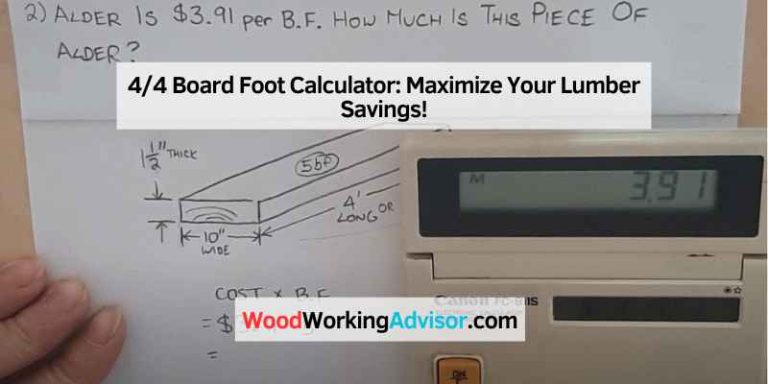
To calculate board feet, use the formula: Length (in feet) x Width (in inches) x Thickness (in inches) / 12. For example, a board measuring 6 feet long, 6 inches wide, and 1 inch thick contains 3 board feet. It’s important to measure and calculate accurately to determine the board footage. Practice calculating board feet with different dimensions to gain confidence in using the formula. Understanding board feet is essential for anyone working with lumber, as it helps in estimating the amount of wood needed for a project. By following the step-by-step calculation process, you can ensure precise measurements and efficient use of lumber.
Tools For Board Foot Calculation
Easily calculate board foot with the help of efficient tools available. Measure the length and width of the lumber, round to the nearest decimal place, and input the values into a board foot calculator for quick results. No need to worry about complex calculations anymore!
| Tools for Board Foot Calculation |
| Manual Calculation |
| To manually calculate board feet, you will need to measure the length, width, and thickness of your lumber in inches, and then follow this formula: (length x width x thickness) / 144. This will give you the board footage of your lumber. Remember, one board foot equals 144 cubic inches. |
| Online Calculators and Apps |
| If you prefer to use an online tool or app, there are various options available such as the Board Foot Calculator from Wood-Mizer, Omni Calculator, and Hardwood Industries. Simply input the measurements of your lumber and the calculator will do the rest for you. |
Calculating Board Feet In Special Cases
Calculating board feet for irregular shapes requires a bit of extra effort, but it’s not impossible. Start by breaking down the shape into smaller, more manageable pieces. Then, measure the length, width, and thickness of each piece, rounding to the nearest inch. Multiply these measurements together to get the volume of each piece in cubic inches. Add up the volumes of all the pieces and divide by 144 to convert to board feet.
When dealing with actual measurements versus nominal measurements, adjustments must be made. To convert actual measurements to nominal measurements, add 1/4 inch to the thickness and 1/2 inch to the width. To convert nominal measurements to actual measurements, subtract 1/4 inch from the thickness and 1/2 inch from the width.
Purchasing Lumber By Board Feet
Board foot is a standard unit used in measuring lumber. It is a measure of volume and helps in estimating the cost of lumber. Understanding lumber prices is crucial in calculating board feet. There are three basic units of measure used for lumber, including board feet, linear feet, and square feet. When purchasing lumber by board feet, you need to have a clear understanding of board foot calculation. You can use online board foot calculators or manual calculations to estimate the cost of lumber. Take a rectangular piece of lumber and measure its length in feet, rounding to the nearest decimal place. Then, measure its width in inches. Multiply the length, width, and thickness (in inches) to calculate board feet.
Common Mistakes And How To Avoid Them
Board foot calculation is a crucial aspect of lumber measurement. However, there are common mistakes that people make when calculating board foot. Measurement errors are one of the most common mistakes that can lead to inaccurate board foot calculation. To avoid this, ensure you take accurate measurements of the length, width, and thickness of the lumber you are measuring.
Another mistake to avoid is misinterpreting lumber sizes. It is important to note that lumber sizes can be confusing, especially for those who are not familiar with the lumber industry. Therefore, ensure you understand the standard lumber sizes and their corresponding measurements to avoid any misinterpretation.
Advanced Tips For Professionals
When buying thicker material, remember to adjust your calculations accordingly. Estimating needs for large projects requires careful planning and consideration of the dimensions. Ensure accurate measurements and use the appropriate formula to calculate board feet. It’s important to understand the basics and master the skill of board foot calculation, especially for professionals in the industry.
Frequently Asked Questions
What Is The Formula For Board Foot Calculation?
To calculate board feet, use the formula: (Length x Width x Thickness) / 12. Measure length in feet, round to the nearest decimal, and width in inches. Avoid passive voice and start sentences with action verbs for SEO friendliness.
How Many Board Feet Are In A 2x4x10?
A 2x4x10 board contains 20 board feet of lumber.
How Many Board Feet Is A 4×8 Sheet Of Plywood?
A 4×8 sheet of plywood is equivalent to 32 board feet.
How Do You Calculate Board Feet 2x2x8?
To calculate board feet for a 2x2x8 piece of lumber, use the formula: (2 x 2 x 8) / 12 = 2. 67 board feet.
Conclusion
Calculating board foot is a crucial skill for anyone working with lumber. By understanding the formula and following the steps, you can accurately determine the volume of wood you have. Remember to measure the length in feet, round to the nearest decimal place, and measure the width in inches.
By using the various board foot calculators available online, you can save time and ensure accurate measurements. So go ahead and confidently calculate board foot for your woodworking projects. Happy measuring!