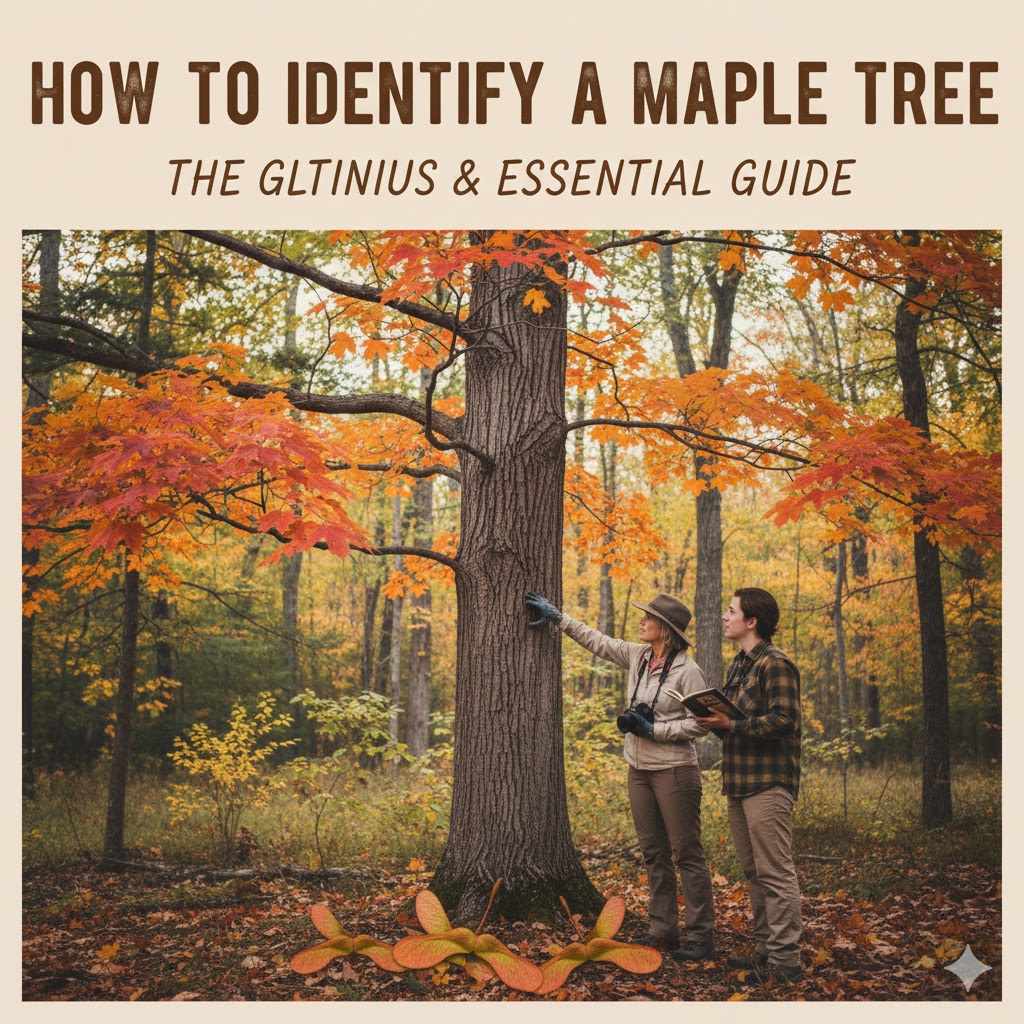
How to Identify a Maple Tree: The Genius & Essential Guide
To identify a maple tree, look for three key features: leaves with pointed lobes (like a star), branches that grow directly opposite each other, and winged seeds called “helicopters” that spin as they fall. Check for these simple clues, and you’ll spot a maple tree with confidence.
Hello there, fellow maker! Have you ever stood in your backyard or a local park, looked up at a beautiful tree, and wondered, “Is that a maple?” You’re not alone. Telling one tree from another can feel like a secret code. For woodworkers, knowing your trees is especially important. The beautiful grain of a Sugar Maple is very different from the softer wood of a Silver Maple.
But don’t worry, you don’t need to be a botanist to figure this out. Identifying a maple tree is much easier than you think. In this guide, I’ll walk you through a few simple, can’t-miss signs. We’ll skip the confusing jargon and focus on what you can see and touch. Together, we’ll turn you into a confident tree detective.
Why Identifying Maple Trees Matters for Woodworkers
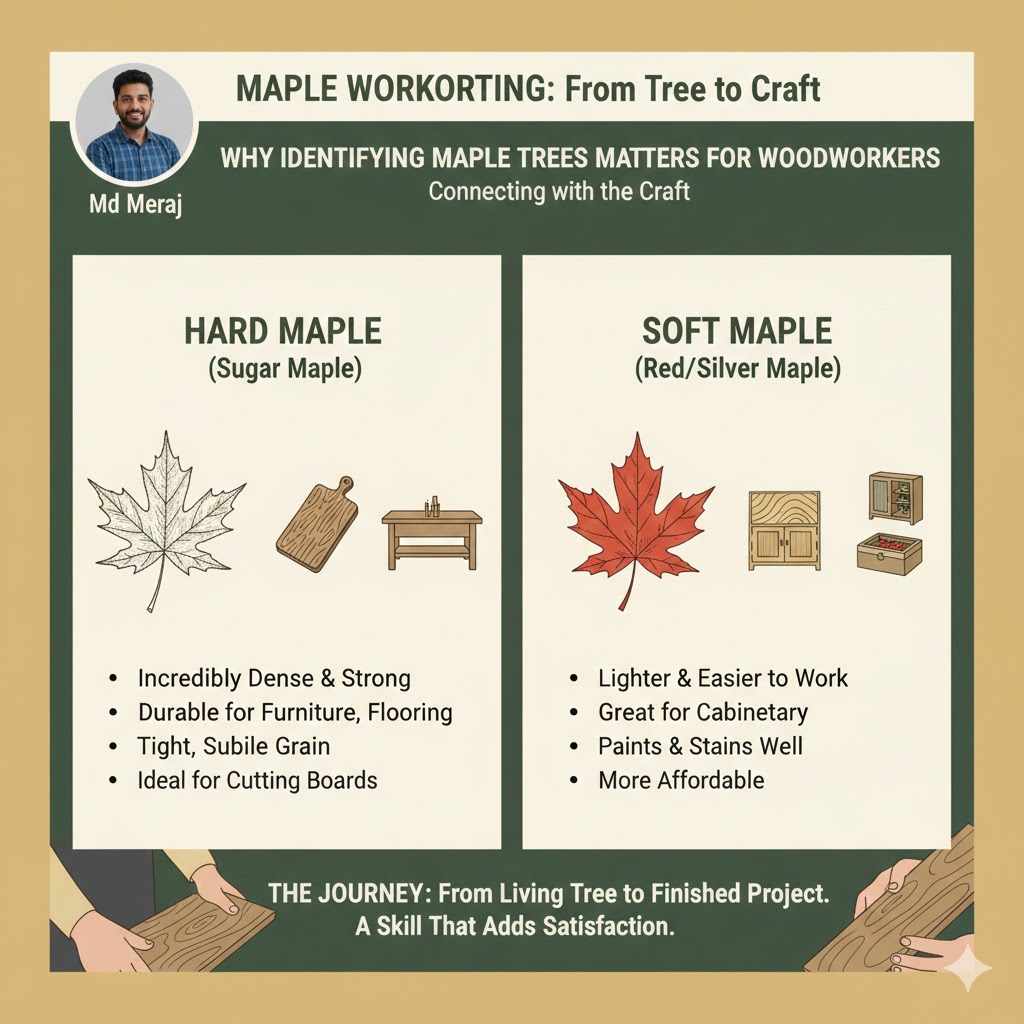
As a woodworker, knowing your wood starts long before it reaches your workshop. Identifying a maple tree in your yard or community helps you understand the material you might one day work with. Different maple species have very different properties.
- Hard Maple (like Sugar Maple): This wood is incredibly dense, strong, and durable. It’s perfect for cutting boards, workbenches, flooring, and fine furniture. Its tight, subtle grain is a classic look.
- Soft Maple (like Red or Silver Maple): This wood is lighter and easier to work with. It’s great for painted furniture, cabinetry, and smaller decorative projects. It’s also often more affordable.
Recognizing the tree helps you appreciate the wood. It connects you to the entire process, from a living tree to a finished project. It’s a skill that adds a new layer of satisfaction to our craft.
The Three Golden Rules of Maple Identification
If you remember just three things from this guide, make it these. These are the simplest, most reliable ways to spot a maple tree in any season. Think of it as a quick checklist you can use anywhere.
Rule #1: Check the Leaves – Your First Clue
The maple leaf is so iconic it’s on the Canadian flag! This is your best and easiest clue, especially in the spring and summer.
Look for leaves that are:
- Lobed: The leaf should have several distinct points or “lobes” sticking out, almost like fingers on a hand or points on a star. Most common maples have 3 or 5 lobes.
- Pointed: The tips of these lobes are usually pointy, not rounded. The valleys between the lobes, called sinuses, can be sharp and V-shaped or more rounded and U-shaped.
- Simple, Not Compound: One single leaf blade is attached to a stalk (petiole) which then attaches to the twig. There is one exception we’ll cover, the Boxelder maple, but for now, focus on this classic simple leaf shape.
Take a leaf and flatten it in your hand. Does it have that classic star shape? If so, you’re very likely looking at a maple.
Rule #2: Examine the Branches – An Unbeatable Trick
This next clue is a secret weapon, and it works even in the dead of winter when all the leaves are gone. Look at how the smaller branches and twigs attach to the larger branches.
On a maple tree, the branches grow in pairs, directly opposite each other. If you find one twig coming off a branch, you will find another one growing from the exact opposite side, like a perfect mirror image.
This is called opposite branching. Very few trees do this! A helpful way to remember the most common trees with opposite branching is the acronym MAD Horse:
- Maple
- Ash
- Dogwood
- Horse Chestnut
If you see opposite branching, you have narrowed your search down to just a few types of trees. Combine this clue with the leaf shape, and you can be almost certain you have a maple.
Rule #3: Look for “Helicopters” – The Telltale Seeds
Remember throwing those spinning seeds into the air as a kid? Those are from a maple tree! These seeds are technically called “samaras,” but everyone knows them as helicopters, whirlybirds, or spinners.
They grow in paired, winged clusters that look like a little propeller. When they fall from the tree, they spin, allowing the wind to carry them further away. You can find them on the tree in late spring and summer, or scattered on the ground beneath it in the fall and winter. If you see these distinctive seeds, you’ve found a maple. It’s a guaranteed giveaway.
A Deeper Look: Twig and Bud Clues
Once you’ve mastered the three golden rules, you can look a little closer for even more confirmation. The twigs and buds of a maple tree offer excellent clues, especially in the winter months.
Grab a small branch and look at the very tip. Maple trees have a sharp, pointed bud at the end of the twig called a terminal bud. On either side, you will find two smaller buds, staying true to the opposite branching rule.
The twigs themselves are often slender and can range in color from gray-brown to a vibrant red, depending on the species and time of year. For example, the Red Maple often has distinctly reddish twigs, giving it its name. The terminal bud of a Sugar Maple is very sharp and dark brown, looking almost like a tiny spearhead. These small details can help you start telling different maples apart.
Common Maple Species You’ll Encounter
Not all maples are created equal! Here in North America, you’re most likely to come across a few common species. Knowing the difference is key for woodworking projects. Here’s a simple table to help you compare them.
| Maple Species | Leaf Shape | Bark | Seeds (Samaras) | Woodworking Notes |
|---|---|---|---|---|
| Sugar Maple (Hard Maple) | 5 distinct lobes with smooth U-shaped valleys (sinuses). The classic Canadian flag leaf. | Young bark is smooth and gray. Older bark is gray-brown with deep vertical grooves and thick, irregular plates or ridges. | Wings form a “U” shape and drop in the fall. | Very hard, heavy, and strong. Prized for furniture, flooring, and cutting boards. Can have stunning figured patterns like birdseye or curly maple. |
| Red Maple (Soft Maple) | 3-5 lobes with sharp, V-shaped valleys (sinuses) and a serrated or “toothy” edge. | Young bark is light gray and smooth. Older bark is darker with shaggy plates or long, narrow ridges. | Wings form a narrow “V” shape and drop in late spring/early summer. Often have a reddish tint. | Softer and lighter than Sugar Maple. Easy to work with. Great for painted furniture, cabinets, and utility items. |
| Silver Maple (Soft Maple) | 5 lobes with very deep, sharp V-shaped valleys, almost cutting the leaf into separate parts. The underside of the leaf is a shimmery, silvery-white. | Young bark is smooth and silver-gray. Older bark becomes very shaggy, separating into long, thin strips that peel off at the ends. | Very large wings, the biggest of the common maples. Drop in late spring. | The softest of these maples. Very fast-growing. The wood is brittle but can be used for pulp, boxes, and some furniture if well-selected. |
| Boxelder (Ash-leaved Maple) | The exception! It has compound leaves with 3-5 separate leaflets, looking more like an ash tree or poison ivy leaf. | Young bark is greenish and smooth. Older bark is pale gray or light brown with shallow, intersecting ridges. | Long, drooping clusters of V-shaped samaras that hang on well into winter. | Very soft and weak wood. Not typically used for fine woodworking, but can have beautiful red streaks (“flame”) that make it popular for turning pens or bowls. |
When to Identify Maple Trees: A Seasonal Guide
You can identify a maple any time of year if you know what to look for. Each season offers a different set of clues.
- Spring: The tree will begin to bud out. Red Maples are famous for their tiny red flowers that appear before the leaves, giving the whole tree a reddish haze. Shortly after, the leaves will unfurl and the samaras will start to form.
- Summer: This is the easiest season. The leaves are fully grown, lush, and green, making the classic leaf shape simple to spot. You can also clearly see the opposite branching pattern.
- Fall: Maples are the stars of the autumn show! Their leaves turn brilliant shades of yellow, orange, and red. A fall foliage map can even show you when colors are peaking in your area. This is a dead giveaway. Sugar Maples are known for their spectacular mix of colors, while Red Maples turn a consistently deep, beautiful red.
- Winter: With the leaves gone, your best clues are the branching pattern and the bark. Stand back from the tree and look at its silhouette against the sky. The opposite branching should be easy to see. Look at the tips of the twigs for the sharp terminal buds. You might also find old, dried samaras still clinging to the tree or scattered on the snow below.
Common Look-Alikes and How to Tell Them Apart
Sometimes, other trees can try to fool you. They might have similar leaves, but they will always be missing one of the other key maple features. Here’s how to tell them from the real deal.
| Look-Alike Tree | Why It’s Confusing | How to Tell It’s NOT a Maple |
|---|---|---|
| Oak | Large, lobed leaves. | Oak leaves have rounded lobes, not pointed ones. More importantly, oaks have alternate branching (branches are staggered, not opposite) and they produce acorns, not helicopters. |
| Sweetgum | Star-shaped leaves with 5-7 pointed lobes. | Sweetgum trees have alternate branching. Their “gotcha” clue is their seed pods: they produce spiky, round gumballs, not winged samaras. The leaves also have a unique fragrance when crushed. |
| Sycamore | Broad leaves with 3-5 shallow, pointed lobes. | Sycamores have alternate branching. Their bark is the biggest giveaway—it’s a distinctive mottled or camouflage pattern of white, tan, and gray as the outer bark peels away. |
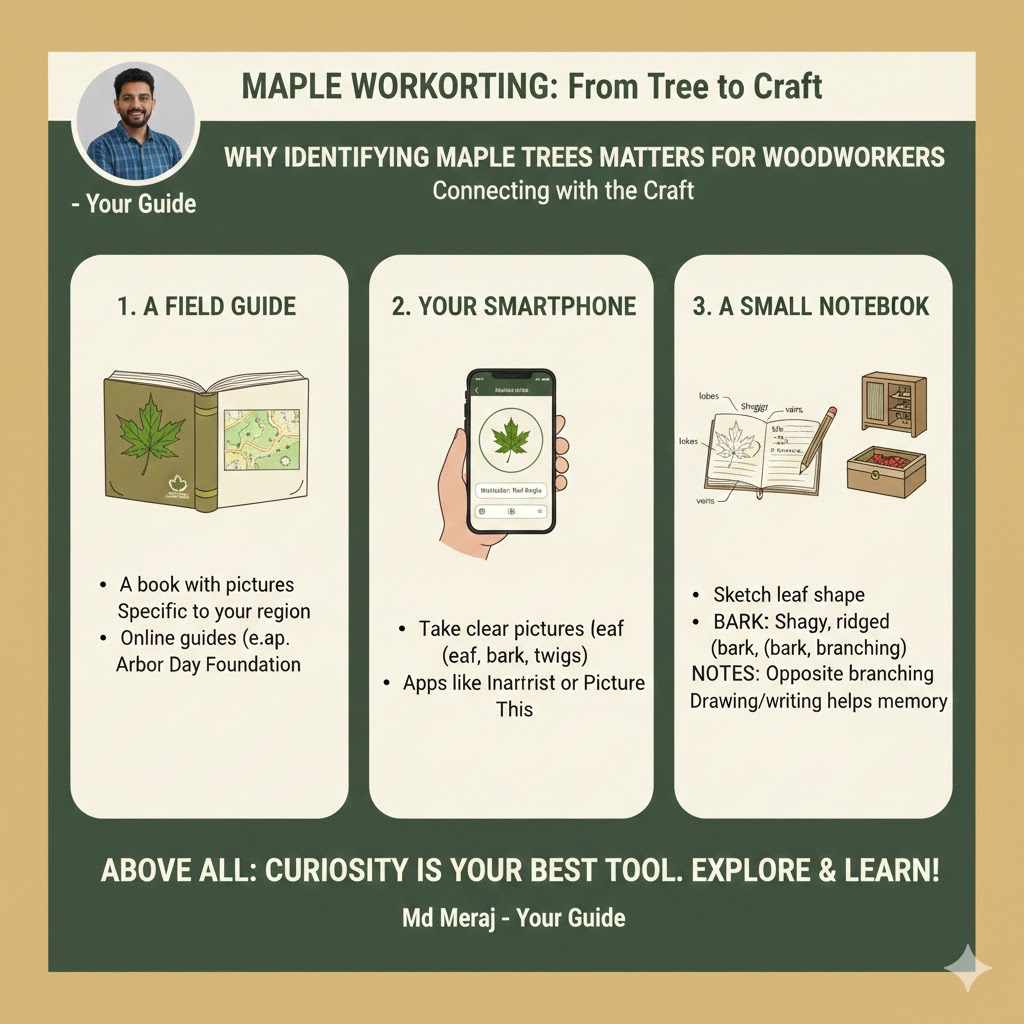
Helpful Tools for Your Identification Journey
You don’t need much to become a tree expert, but a few simple tools can make it even easier and more fun.
- A Field Guide: A good book with pictures and descriptions is invaluable. Look for one specific to your region. The Arbor Day Foundation’s online guide is a great digital resource.
- Your Smartphone: Use your phone’s camera to take clear pictures of the leaf, bark, and twigs. There are also fantastic apps like iNaturalist or Picture This that can help you identify a tree from a photo.
- A Small Notebook: Sketch the leaf shape or jot down notes about the bark and branching. The act of drawing or writing helps lock the features into your memory.
Above all, the best tool is your own curiosity. The more you look, the more you’ll see. Every walk in the park can become a fun identification challenge.
Conclusion: You’re Now a Maple Tree Detective!
And there you have it! Identifying a maple tree doesn’t have to be a mystery. By following these simple steps, you can walk outside today and spot one with confidence. Just remember the three golden rules: look for the iconic lobed leaves, the perfect mirror image of opposite branching, and the classic “helicopter” seeds.
This skill is more than just a party trick; it connects you to the natural world and deepens your appreciation for the materials we use in our woodworking craft. The next time you see a beautiful piece of figured maple, you’ll have a newfound respect for the magnificent tree it came from. So get outside, practice your new skills, and have fun exploring!
Frequently Asked Questions (FAQ)
1. What is the easiest way to identify a maple tree?
The easiest way is to look for two things at once: leaves with multiple pointed lobes (the classic star shape) and branches that grow directly opposite each other on the stem. If you see both, you can be very confident it’s a maple.
2. Do all maple leaves have 5 points?
No, not all of them. While the 5-lobed leaf of the Sugar Maple is the most famous, many maples, like the Red Maple, commonly have just 3 lobes. The key is the overall pointed, lobed shape, not the exact number of points.
3. How can I identify a maple tree in winter with no leaves?
In winter, your best clue is the branching pattern. Stand back and look at the tree’s silhouette. Maple branches and twigs grow in opposite pairs. Also, check the ground for old, dried “helicopter” seeds and look for sharp, pointed buds at the tips of the twigs.
4. What’s the difference between a Sugar Maple and a Red Maple?
The easiest way to tell them apart is by the leaves. A Sugar Maple leaf has smooth edges between the points (lobes), while a Red Maple leaf has jagged, “toothy” edges. Sugar Maple buds are also much sharper and darker brown than the rounded, reddish buds of a Red Maple.
5. Is Boxelder really a maple tree?
Yes, it is! Boxelder (Acer negundo) is a type of maple, but it’s the “oddball” of the family because it has compound leaves (multiple leaflets) instead of the single, simple leaf of other maples. It still has opposite branching and produces helicopter seeds, which confirm its identity as a maple.
6. Can I identify a maple tree just from its bark?
It can be tricky, but sometimes you can. Young maples have smooth, gray bark. Older maples vary: Sugar Maple bark is thick and grooved, while Silver Maple bark is very shaggy and peels in long strips. However, using bark alone is an advanced skill; it’s always best to look for other clues like branching or seeds to be sure.
7. What are the helicopter seeds from a maple tree called?
The correct botanical name for the winged seeds is “samara.” They always grow in pairs on maple trees. But “helicopters” or “whirlybirds” are perfectly fine names to use—everyone will know what you mean!