What Does an Ash Tree Look Like? Bark, Leaves & EAB Signs
Ash trees have compound leaves with 5 to 9 oval leaflets, branches and buds set directly opposite each other, and mature bark ridged into a tight diamond pattern — three traits no maple or oak shares at once. Getting the ID wrong matters: the emerald ash borer has killed tens of millions of ash trees in North America since 2002, and a misidentified tree can go untreated until it’s too late. This guide covers the exact bark, leaf, and seed features to check, the fastest branching test arborists use, and how to spot early emerald ash borer damage.
Quick Answer
An ash tree has compound leaves (5–9 leaflets), branches growing in exact opposite pairs, diamond-patterned gray bark, and paddle-shaped winged seeds called samaras. The opposite-branching pattern is the fastest test — only maple, ash, and dogwood share it, so if the branches alternate instead of pairing up, it isn’t an ash.
Identifying Features: Bark, Leaves, and Branches
Best Tree ID Field Guide Pick
A Peterson Field Guide to Eastern Forests: North America – $19.41
Peterson’s field guide to eastern forest ecosystems, covering tree species identification alongside the habitats they grow in — useful for confirming White, Green, and Black Ash against the other species you’ll run into on the same walk.
- Best for: Identifying ash and other eastern hardwoods in the context of the forest they’re growing in
- Why we picked it: Peterson’s trusted illustrated identification system, covering the same leaf/bark/seed traits this article walks through
- Main drawback: Focused on eastern forests, so it’s less useful if you’re identifying trees out west
Compare more tree ID tools
 Option 1 Trees of North America Golden Field Guide – $11.17
|
 Option 2 Audubon Trees of North America – $22.49
|
 Option 3 10X Illuminated Loupe – $9.99
|
As an Amazon Associate we earn from qualifying purchases.
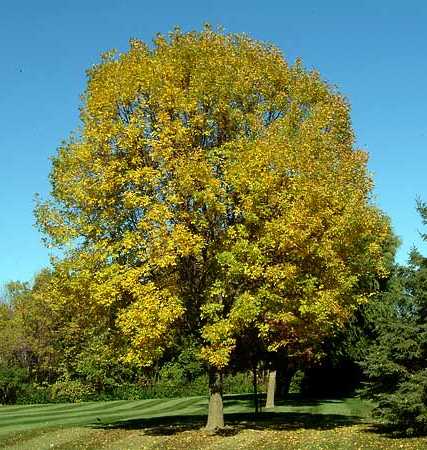
An ash tree is a deciduous hardwood in the Fraxinus genus that is identified by its compound leaves, opposite branching, and diamond-ridged bark — features that together rule out nearly every other common shade tree. Most mature ash trees reach 50 to 80 feet tall with a spread around 50 feet, giving them a tall, straight trunk topped by a rounded to pyramidal crown.
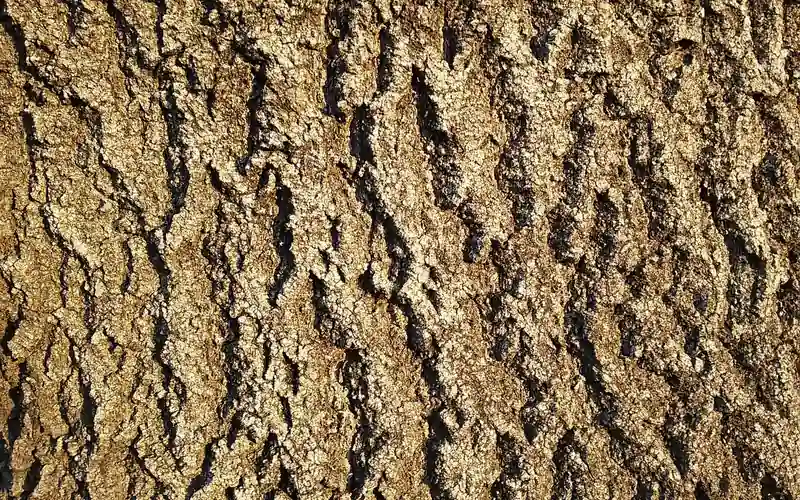
Bark starts gray and smooth on young trees. As the tree matures, it develops narrow ridges that interlace into a distinct diamond pattern — the single most reliable bark test for ash. Run a hand across it and the ridges feel tightly woven rather than the flat plates of an oak or the shaggy strips of a hickory.
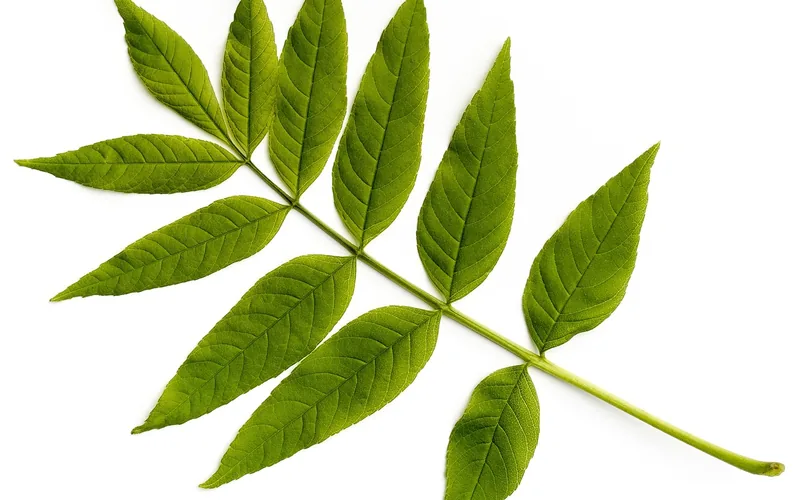
Ash leaves are pinnately compound, meaning 5 to 9 leaflets branch off a single central stem instead of one leaf growing alone. The leaflets are oval, pointed at the tip, and sit opposite one another on the stalk. In fall, the whole compound leaf turns yellow (sometimes with hints of orange or purple) and drops as one unit rather than leaflet by leaflet.
The Fastest Test: Opposite Branching (MADCap Horse)
Before checking leaves or bark, look at how the twigs and branches attach to the stem. Ash branches grow in exact opposite pairs — directly across from each other, not staggered. This is genuinely rare: foresters use the mnemonic “MAD Horse” (Maple, Ash, Dogwood, Horse Chestnut) because those are essentially the only common North American trees with true opposite branching. Every other tree you’ll walk past — oaks, elms, birches, cherries — branches alternately. If a tree has opposite branching and compound leaves, maple and horse chestnut are eliminated (their leaves aren’t compound), which narrows it to ash or dogwood in one step.
The where ash trees grow and thrive matters for this test too — ash prefers open woodlands and riverbanks with full sun, so a tree showing opposite branching along a stream bank is very likely ash rather than a landscaped dogwood.
| Species | Bark | Leaflets | Best For |
|---|---|---|---|
| White Ash | Gray, deep diamond ridges | 7 (occasionally 5–9) | Forests, parks, fast growth |
| Green Ash | Smoother, shallower ridges | 7–9, glossy bright green | Urban streets, wide soil tolerance |
| Black Ash | Dark, corky, spongy | 7–11, smaller | Wet soil, stream banks, swamps |
If you’re identifying trees on a regular walk or property survey, a compact field guide makes the bark, leaf, and seed comparisons above much faster to run on-site.
Ash Tree Seeds and Seasonal Changes
Female ash trees produce samaras — single-winged, paddle-shaped seeds that hang in dense clusters from late summer through winter. A samara starts pale green, shifts to tan, and finishes dark brown as it matures, and the clusters are often the easiest identifying feature to spot from a distance on a bare winter tree, since the seeds persist long after the leaves fall.
- Spring: Small purple or white flower clusters appear before the leaves fully emerge.
- Summer: Compound leaves fill out dark green and provide dense shade.
- Fall: Leaves turn yellow (occasionally reddish-purple) and drop as whole compound leaves; samara clusters hang on.
- Winter: Bare branches show off the opposite-pair structure and diamond bark most clearly — the easiest season to confirm an ID.
Ash trees grow fast for a hardwood — up to 24 inches a year while young, slowing as they mature — and healthy trees can live well over 100 years in good soil. They need well-drained, nutrient-rich soil and struggle in standing water except for Black Ash, which is adapted to wet ground.
How to Tell If an Ash Tree Has Emerald Ash Borer
The emerald ash borer (EAB) is a metallic-green invasive beetle from Asia that has killed tens of millions of ash trees across North America since it was first detected in 2002. Larvae feed under the bark, cutting off the tree’s ability to move water and nutrients, which is what actually kills the tree — not the adult beetles themselves.
- D-shaped exit holes: About 1/8 inch wide, left in the bark when adult beetles emerge in June and July — the single most distinctive sign, since almost nothing else leaves a flat-bottomed D shape.
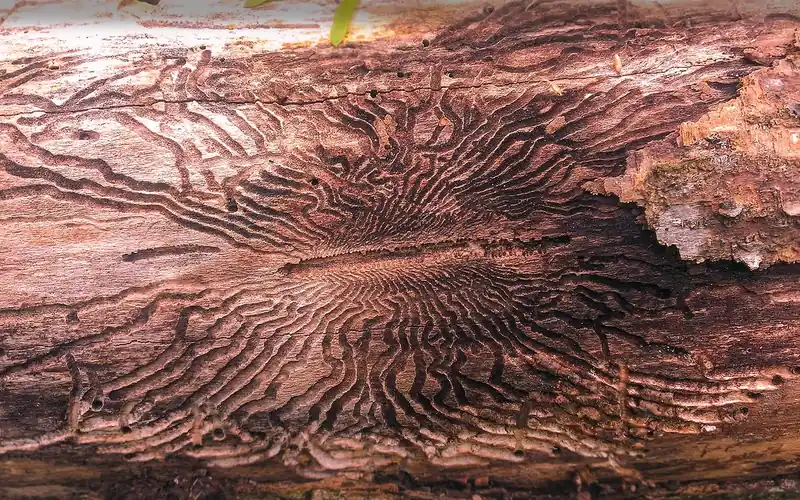
- S-shaped galleries: Winding, serpentine tunnels packed with sawdust-like frass, visible where bark has split or been pecked away.
- Vertical bark splitting: The tree grows callus tissue around larval damage, which pushes outward and splits the bark in long cracks.
- Canopy dieback and epicormic sprouting: Thinning at the top of the crown, followed by clusters of small shoots sprouting low on the trunk as the tree tries to compensate.
- Increased woodpecker activity: Woodpeckers target EAB larvae specifically, leaving patches of stripped, lighter-colored bark (“blonding”) that stand out from a distance.
📊 The emerald ash borer has killed tens of millions of ash trees across at least 38 U.S. states since it was first detected in Michigan in 2002. — Source: USDA APHIS, Emerald Ash Borer Program
“Branches and buds on ash trees are located directly across from each other, which is fairly rare among trees — regarding the bark, more advanced ash trees tend to have distinct diamond patterns.”
If you’ve confirmed opposite branching and diamond bark but the tree looks stressed, it’s worth reading how to tell if an ash tree is dying before deciding whether it needs removal or can be treated.
Caring for and Protecting Ash Trees
Once you’ve confirmed a tree is ash, watch it for EAB signs at least once a year, especially from late spring through summer when adult beetles are active. Conservation groups and municipal foresters treat high-value ash with systemic insecticide on a 1–2 year cycle, while widespread forest ash is often left to natural resistance or replaced with diverse species to avoid repeating the same monoculture risk. Healthy soil, regular watering during drought, and avoiding root damage near the trunk all help an ash tree resist stress that makes it more vulnerable to both pests and disease.
Frequently Asked Questions
How do I identify an ash tree?
Check three things together: compound leaves with 5 to 9 oval leaflets, branches growing in exact opposite pairs, and gray bark with a diamond-ridge pattern on mature trunks. Winged, paddle-shaped seed clusters (samaras) confirm it on female trees. No other common North American tree shares all three traits at once.
What is the fastest way to tell if a tree is an ash?
Look at the branching pattern first. If twigs and branches grow in exact opposite pairs rather than staggered (alternate), you’ve narrowed it to maple, ash, dogwood, or horse chestnut — the “MAD Horse” group. Compound leaves then rule out maple and horse chestnut, leaving ash or dogwood, and diamond bark confirms ash.
How do you tell if an ash tree has emerald ash borer?
Look for D-shaped exit holes about 1/8 inch wide in the bark, S-shaped tunnels visible under split or peeling bark, thinning at the top of the canopy, and small shoots sprouting low on the trunk. Increased woodpecker activity stripping patches of bark is often the earliest visible sign, since woodpeckers target the larvae before other symptoms appear.
What are the disadvantages of an ash tree?
Ash trees are highly susceptible to the emerald ash borer, which has killed tens of millions of trees since 2002. They drop seed clusters and small branches that need regular cleanup, and surface roots can lift sidewalks or driveways near the trunk. In areas with active EAB infestations, planting new ash is generally discouraged.
What is another name for the ash tree?
Fraxinus is the botanical genus name for all ash species, including White Ash (Fraxinus americana), Green Ash (Fraxinus pennsylvanica), and Black Ash (Fraxinus nigra). Ash wood itself is prized for strength and flexibility, commonly used in tool handles, baseball bats, and furniture.
Conclusion
The quickest confirmation for an ash tree is stacking three checks: opposite branching, compound leaves with 5 to 9 leaflets, and diamond-ridged gray bark. Once you can identify one confidently, checking it yearly for emerald ash borer signs — D-shaped exit holes, S-shaped galleries, and canopy thinning — is what actually protects it. Ash wood’s strength has made it a woodworking staple for generations, which is one more reason it’s worth learning to spot the tree correctly before it’s gone. Browse more ash tree and ash wood guides to keep exploring the species.
Sponsored / affiliate links. As an Amazon Associate I earn from qualifying purchases. I may earn additional commission from eligible campaigns.