How to Making a Tabletop from Plywood: Easy DIY Guide
To make a tabletop from plywood, start by measuring and cutting the plywood to your desired dimensions. Then, sand the edges and surface for a smooth finish.
Creating a plywood tabletop is an accessible DIY project that enhances your space. Whether you need a sturdy desk, a dining table, or a craft surface, plywood offers durability and versatility. This material is cost-effective and easy to work with, making it ideal for beginners and experienced crafters alike.
With a few basic tools and materials, you can create a custom tabletop that suits your style and needs. This guide will walk you through the necessary steps and tips to achieve a beautiful, functional tabletop that fits perfectly in your home. Let’s get started on crafting your unique piece!
Choosing The Right Plywood
Choosing the right plywood is essential for a sturdy tabletop. Several types of plywood are available. Softwood plywood is lightweight and easy to work with. Hardwood plywood is durable and great for high-quality projects.
Thickness matters when selecting plywood. Common thicknesses are 1/4 inch, 1/2 inch, and 3/4 inch. Thicker plywood offers more strength. Thinner plywood is lighter but less sturdy.
| Type of Plywood | Best Use |
|---|---|
| Softwood Plywood | General projects |
| Hardwood Plywood | Furniture and cabinets |
| Marine Plywood | Wet areas |
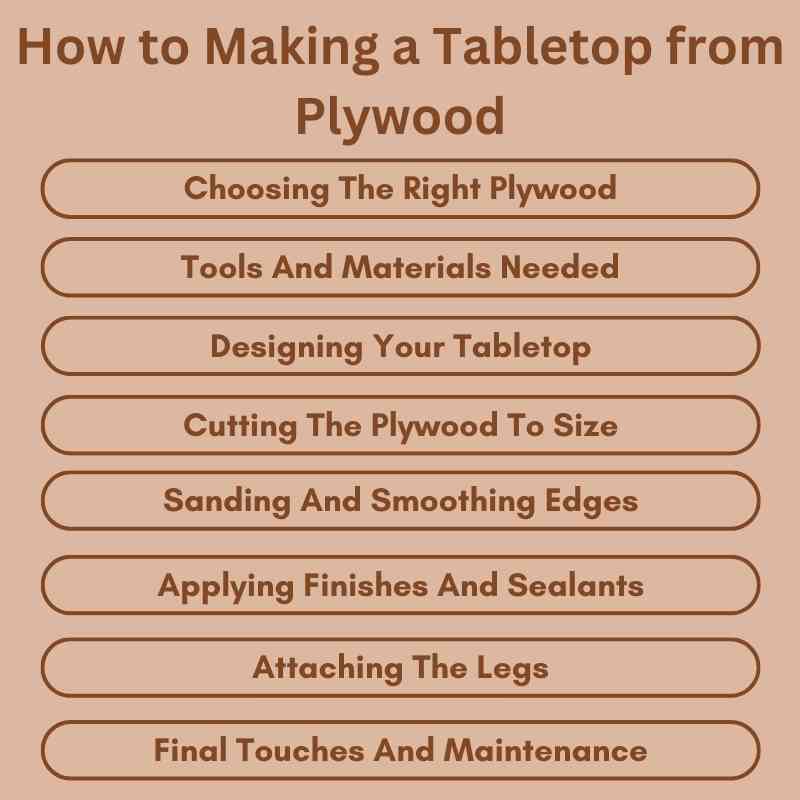
Tools And Materials Needed
Creating a plywood tabletop requires specific tools and materials. Essential items include plywood sheets, a saw, sandpaper, wood glue, and clamps. Be sure to gather screws and a drill for added stability, ensuring a durable and attractive finish for your project.
Essential Tools
- Measuring tape: For accurate measurements.
- Jigsaw: To cut the plywood easily.
- Screwdriver: For assembling parts.
- Sandpaper: To smooth rough edges.
- Clamps: To hold pieces together while working.
Additional Supplies
- Plywood: The main material for the tabletop.
- Wood glue: To bond pieces securely.
- Wood finish: To protect and enhance appearance.
- Paintbrush: For applying wood finish.
Designing Your Tabletop
Choosing the right size and shape is essential for your tabletop. Measure your space carefully. Think about how many people will use the table.
Common shapes include rectangle, square, and round. Each shape fits different spaces. A round table is great for smaller areas.
Consider functional features like built-in storage or extension leaves. These features add versatility. They make the table useful for various activities.
| Shape | Best Use |
|---|---|
| Rectangle | Long gatherings or family dinners |
| Square | Smaller spaces or game nights |
| Round | Intimate meals and conversations |
Cutting The Plywood To Size
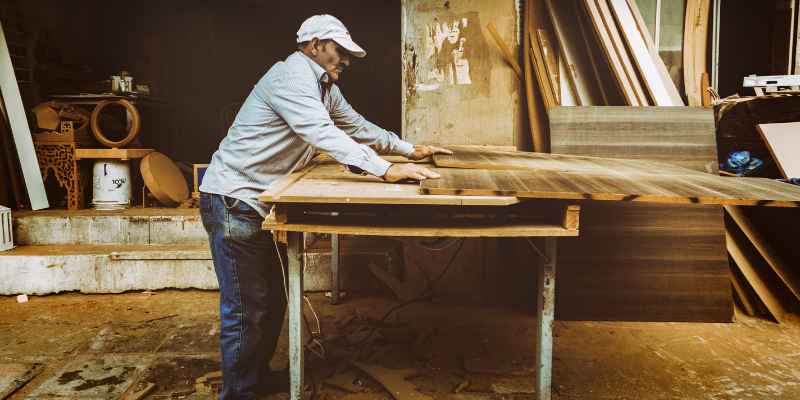
Start by measuring the plywood carefully. Use a tape measure for accuracy. Mark the dimensions with a pencil. Ensure the marks are clear and visible. This step is crucial for a good fit.
Next, set up your circular saw. Adjust the blade depth to suit the plywood thickness. Always wear safety goggles and gloves for protection. Place the plywood on a stable surface to avoid accidents.
Align the saw with your marked line. Cut slowly and steadily for a clean edge. If needed, use a straight edge as a guide. This will help keep your cuts straight and precise.
Sanding And Smoothing Edges
Start with a coarse grit sandpaper, like 60 or 80. This removes rough spots quickly. Next, move to a medium grit of 120 or 150. This smooths the surface better.
For a fine finish, use 220 grit sandpaper. This makes the tabletop very smooth. Always sand in the direction of the wood grain.
| Grit Type | Use |
|---|---|
| 60-80 | Remove rough spots |
| 120-150 | Smooth surface |
| 220 | Final smooth finish |
For edge finishing, use a router for clean, rounded edges. This helps prevent splinters. A file can also smooth edges if a router isn’t available.
Use a wood stain or sealer for added protection. These options enhance the beauty of the plywood. Always follow the product instructions for the best results.
Applying Finishes And Sealants
Choosing the right finish for your plywood tabletop is essential. Options include varnish, polyurethane, and oil. Each offers different levels of protection and appearance. Varnish gives a hard surface. Polyurethane is very durable. Oil enhances the wood’s natural look.
Application tips are crucial for a smooth finish. Always start with a clean surface. Sand the wood to remove any rough spots. Use a brush or roller for even application. Apply multiple thin layers instead of one thick coat. Allow each layer to dry completely before adding more.
Attaching The Legs
Choose the right leg style for your tabletop. Options include straight, curved, or foldable legs. Each style has its own look and function.
Straight legs provide a modern look and stability. Curved legs add elegance and style. Foldable legs are great for saving space.
| Leg Style | Benefits |
|---|---|
| Straight | Modern design and solid support |
| Curved | Adds elegance and visual interest |
| Foldable | Space-saving and portable |
Pick a style that matches your tabletop’s design. Consider the functionality and aesthetics of each option.
Final Touches And Maintenance
To install hardware on your plywood tabletop, gather the necessary tools. Use a drill to make holes for screws. Choose sturdy hardware like hinges or brackets. This ensures the tabletop stays secure.
Regular care keeps your tabletop looking good. Clean it with a soft cloth. Avoid harsh chemicals that can damage the wood. Apply a wood polish every few months. This adds shine and protects the surface.
Check for any loose screws or hardware. Tighten them as needed to maintain stability. If the surface gets scratched, sand it lightly and apply a matching finish.
Frequently Asked Questions
How Do I Choose Plywood For A Tabletop?
Choosing the right plywood is essential for durability. Look for high-quality plywood with a smooth surface. Consider thickness; a minimum of ¾ inch is ideal. Also, select a type that matches your desired finish, such as birch or oak for a natural look.
What Tools Do I Need To Make A Tabletop?
To make a tabletop, you’ll need a few essential tools. A circular saw or table saw will help you cut the plywood. Additionally, a drill, clamps, and sandpaper are necessary for assembly and finishing. Don’t forget wood glue for added strength.
How Do I Finish My Plywood Tabletop?
Finishing your plywood tabletop enhances its appearance and durability. Start by sanding the surface to remove any imperfections. Apply a wood stain or paint for color, followed by a clear sealant for protection. Allow adequate drying time between coats for the best results.
Can I Use Plywood For Outdoor Tables?
Yes, you can use plywood for outdoor tables, but precautions are necessary. Opt for marine-grade plywood, which is designed to withstand moisture. Additionally, ensure you apply a weather-resistant finish to protect against the elements. Regular maintenance will prolong its lifespan outdoors.
Conclusion
Creating a tabletop from plywood is a rewarding project. It enhances your space while showcasing your craftsmanship. Follow the steps outlined, and you’ll have a beautiful, functional piece in no time. Embrace your creativity and enjoy the process. A custom tabletop can transform any room and serve as a lasting centerpiece.