Best Hardwood Lumber Suppliers in Phoenix AZ (+ Buying Guide)
Phoenix’s top hardwood suppliers — Spellman Hardwoods, Peterman Lumber, and Hardwoods Inc. — stock domestic and exotic species year-round, but each yard specializes differently. Arizona’s desert climate (30-50% RH) means freshly delivered lumber needs 5-7 days of indoor acclimation, not the 3-4 days recommended for humid climates. This guide covers which Phoenix supplier carries what species, how to read FAS vs. Common grades, and current price ranges per board foot.
Quick Answer
Spellman Hardwoods (Phoenix, 50+ years) is the best overall pick for woodworkers and cabinet shops — they carry FAS-grade domestic and exotic species and offer custom milling. Peterman Lumber is better for architectural-grade sheet goods and mouldings. Hardwoods Inc. is the go-to for next-day delivery on commercial orders. All three are open Mon-Fri only; no walk-in retail on weekends.
Top Hardwood Lumber Suppliers in Phoenix AZ
Best Wood Moisture Meter Pick
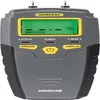
General Tools MMD4E Moisture Meter
Pin-type meter that reads moisture content in wood, drywall, and masonry — essential for checking lumber before purchase or after delivery to confirm it’s ready to work.
- Best for: Woodworkers buying lumber from Phoenix suppliers and needing to verify MC before starting a project
- Why we picked it: Trusted brand with clear LED readout; measures 6-40% range covering the critical 6-9% target for furniture wood
- Main drawback: Pin-type leaves small holes; not ideal for checking finished or delicate surfaces
Compare more wood moisture meter options
 Option 1 Dr.meter 2-in-1 Pin & Pinless Moisture Meter
|
 Option 2 TopTes TS-630 Handheld Wood Moisture Meter
|
 Option 3 Povlen Pinless Digital Moisture Meter
|
As an Amazon Associate we earn from qualifying purchases.
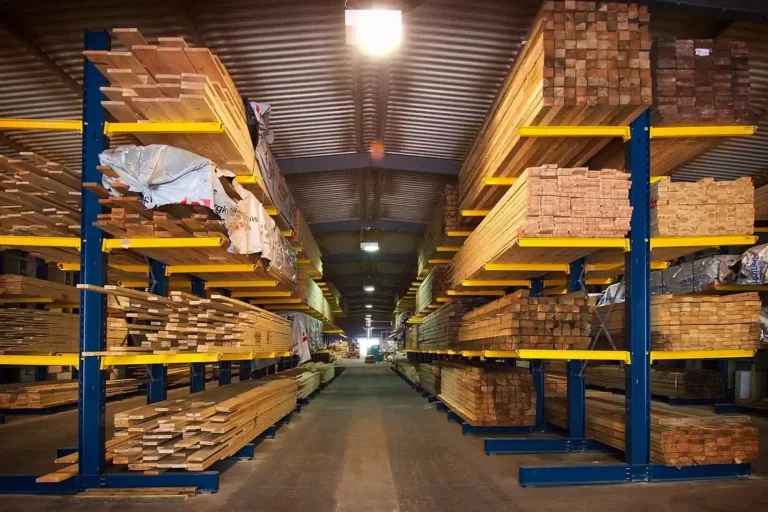
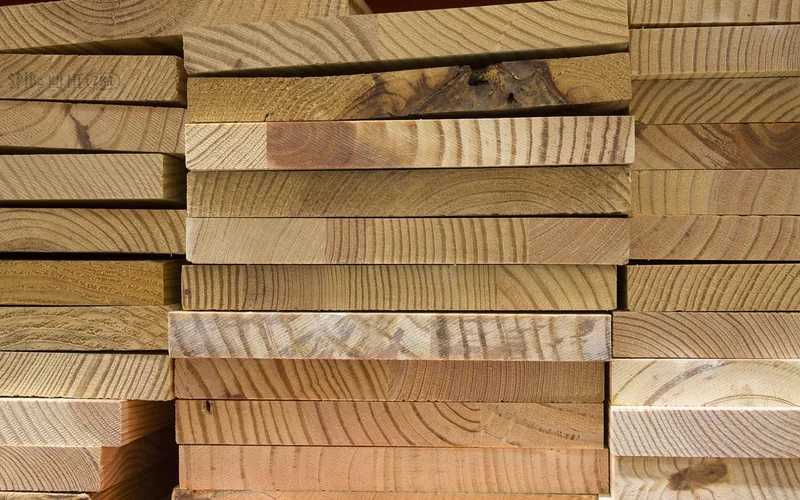
Four specialized hardwood yards serve the Phoenix metro — each with a different focus. Walk-in woodworkers are usually best served by Spellman or Peterman; commercial cabinet shops and millwork operations lean on Hardwoods Inc. for volume and next-day service. Here’s how they compare side by side:
| Supplier | Best For | Species Highlights | Custom Services | Hours |
|---|---|---|---|---|
| Spellman Hardwoods 4645 N 43rd Ave, Phoenix |
Woodworkers, cabinet shops, furniture makers | Red & White Oak, Walnut, Soft Maple, Exotics | Custom milling, edge banding, planing | Mon-Fri 6am-2:30pm |
| Peterman Lumber Multiple Phoenix/Scottsdale locations |
Architectural sheet goods, mouldings, trim | Arch-grade plywood, hardwood boards, TFL | Delivery, large-order fulfillment | Mon-Fri business hours |
| Hardwoods Inc. Phoenix branch |
Commercial volume, decorative surfaces | Veneers, TFL, HPL, domestic & imported lumber | Next-day delivery on most orders | Mon-Fri business hours |
| A to Z Exotic Hardwood Phoenix area |
Exotic and rare species | Mesquite, Purpleheart, Padauk, Zebrawood | Custom slabs, turning blanks | Call ahead |
Note: big-box stores (Home Depot, Lowes) in Phoenix carry construction-grade pine and Douglas fir but do not stock FAS hardwood boards. For furniture-grade oak, walnut, cherry, or maple, you need one of the specialty yards above. For a broader look at types of wood and their uses, the linked guide covers all major species in depth.
Best Hardwood Species Available at Phoenix Lumber Yards
Phoenix suppliers typically stock domestic hardwoods year-round and rotate exotic species based on availability. Domestic species are measured and priced by the board foot (1 BF = 12″ x 12″ x 1″). Current typical price ranges in the Phoenix market:
| Species | Janka Hardness | Typical Price (per BF) | Best Use |
|---|---|---|---|
| Red Oak | 1,290 lbf | $4 – $6 | Flooring, cabinets, furniture |
| White Oak | 1,360 lbf | $5 – $7 | Flooring (Phoenix climate), wine barrels |
| Hard Maple | 1,450 lbf | $5 – $8 | Butcher blocks, workbenches, floors |
| Black Walnut | 1,010 lbf | $8 – $15 | Fine furniture, gun stocks, turning |
| Cherry | 950 lbf | $6 – $10 | Furniture, cabinets, millwork |
| Mesquite (local) | 2,345 lbf | $6 – $12 | Flooring, cutting boards, decor |
Mesquite is Arizona’s signature hardwood — extremely dense (Janka 2,345 vs white oak’s 1,360) and naturally resistant to the dry desert climate. A to Z Exotic Hardwood and some Spellman locations carry locally-sourced mesquite slabs and dimensional boards.
Understanding Hardwood Lumber Grades
Hardwood lumber grade is a standardized quality classification set by the National Hardwood Lumber Association (NHLA) that tells you what percentage of a board’s face is clear (defect-free). Grade determines how much usable wood you can cut from each board — and directly controls price. Phoenix suppliers sell by NHLA grade, so knowing the basics saves money.
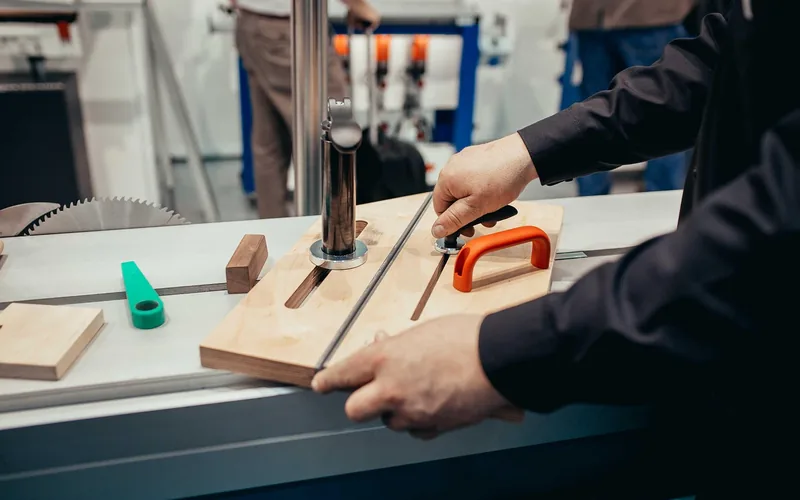
FAS (Firsts and Seconds) — Highest Grade
FAS boards are at least 6″ wide and 8′ long with 83% clear face cuttings. This is the grade to use for tabletops, cabinet faces, and furniture where both sides must look perfect. It’s also the most expensive — expect to pay a premium of 20-40% over #1 Common for the same species. Spellman Hardwoods stocks FAS in red oak, white oak, walnut, and soft maple year-round.
Select Grade — Best Value for Single-Face Work
Select grade has an FAS face and a #1 Common back — 83% clear on the show face only. It works perfectly for drawer fronts, cabinet doors, and chair backs where only one side is visible. Select runs 10-20% cheaper than FAS and is often the smartest buy for furniture-grade projects. Ask for it specifically at the counter — not all yards display it separately.
#1 Common — Best Value for Furniture Parts
#1 Common yields 66% clear cuttings from boards 3″ wide and 4′ long. It’s the grade most furniture shops actually buy — you can cut clear parts from around the defects, and the shorter, narrower boards work perfectly for drawer sides, stretchers, and frame parts. At $4-$6/BF for red oak, it offers the best cost-per-usable-inch for most furniture applications.
How to Buy Hardwood Lumber by the Board Foot
Hardwood is sold by the board foot (BF), not by linear foot or piece. One board foot equals 144 cubic inches: a 1″ thick, 12″ wide, 12″ long board. Thickness is expressed in quarter-inch increments — 4/4 (four-quarter) is 1″ rough, which planes down to 13/16″. 8/4 is 2″ rough, planing to 1-3/4″. Here’s the formula:
- Measure thickness in quarters: 4/4 = 1″, 6/4 = 1.5″, 8/4 = 2″
- Calculate board feet: (thickness in inches x width in inches x length in inches) / 144
- Example: A 4/4 board, 6″ wide, 8′ (96″) long = (1 x 6 x 96) / 144 = 4 BF
- Add 20-25% waste factor for defect-cutting in #1 Common and lower grades
- Check moisture content before purchase — target 6-9% for furniture wood in a Phoenix home (low AZ humidity pulls wood drier than most national targets assume)
Phoenix Climate: Why Lumber Acclimation Takes Longer Here
This is the one thing most online guides miss for Arizona buyers. Phoenix averages 30-50% relative humidity (vs. 50-70% in the Midwest where most lumber is kiln-dried and stored). Wood shipped from out-of-state arrives at a higher MC than it will stabilize to in a Phoenix home. If you start machining immediately, the wood will continue drying and moving — causing gaps in joints, warping in panels, and cupped boards.
Practical rule for Phoenix woodworkers: acclimate lumber in your shop (not garage) for at least 5-7 days, with a moisture meter reading taken on day 1 and day 5. Stop when readings stabilize within 0.5% of each other. For flooring installation in Phoenix, the Wood Floor Covering Association recommends a final MC of 6-9%, but local conditions vary — check with your specific installer. This is also why a moisture meter (see product box above) is not optional in Arizona — it’s essential.
“In our shop in the Phoenix metro, we’ve learned to let any new oak or walnut sit for at least a week before flattening it. Boards that read 8% at the lumber yard often drop to 5-6% after a week in the shop — and that 2% difference shows up as cupping if you don’t wait.”
Plywood Options at Phoenix Lumber Yards
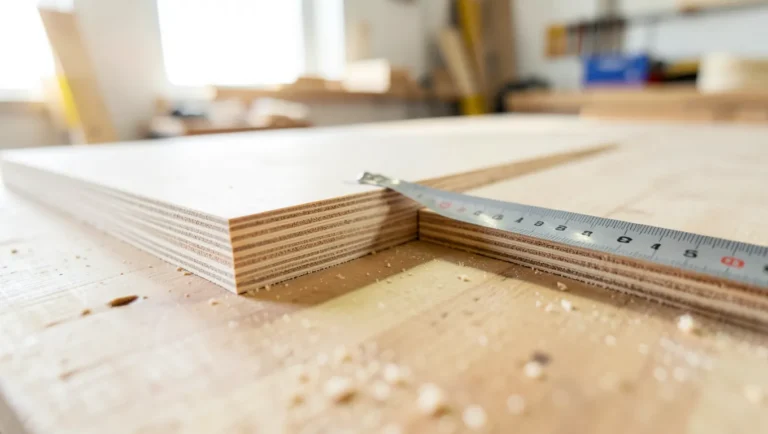
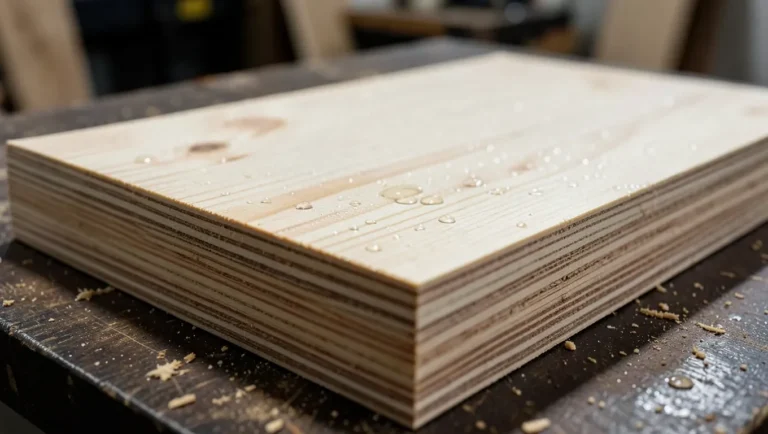
For plywood flooring and furniture sheet goods, Phoenix specialty yards stock grades you won’t find at Home Depot. Peterman Lumber and Hardwoods Inc. both stock architectural-grade panels in:
- Hardwood veneer plywood (A-1, A-2 grades) — furniture and cabinet faces; domestic species like oak, maple, cherry, birch
- TFL (Thermally Fused Laminate) — melamine-faced panels for cabinet boxes and shelving, no finishing required
- HPL (High Pressure Laminate) — commercial-grade surfaces for countertops and high-wear applications
- Architectural grade plywood — clear face veneers, available in 4×8 and oversize panels
- Import birch — 13-ply BB/BB grade for furniture and jigs; often $10-$15/sheet cheaper than domestic birch
For standard CDX, OSB, and treated plywood, Home Depot and Lowes in Phoenix carry full stock and usually offer cut-to-size service. For project planning, the complete guide to wood types covers how plywood grades compare to solid wood for specific applications.
Hardwood Floor Installation Tips for Phoenix Homes
Once you’ve purchased and acclimated your hardwood, proper installation in a Phoenix home requires a few Arizona-specific adjustments:
- Install a whole-house humidifier: Phoenix indoor air drops below 20% RH in winter months. Without humidity control, even properly acclimated hardwood will shrink and gap. Target 35-45% RH year-round.
- Verify subfloor moisture: Concrete slabs are common in Phoenix homes. Test slab moisture with a calcium chloride test before any hardwood installation — slabs in the Valley can transmit ground moisture even in dry seasons.
- Use a floating or glue-down installation: For slab-on-grade foundations common in Phoenix, nail-down installation is not recommended without a wood sleeper system. Glue-down engineered hardwood or floating installation over a vapor barrier is the standard approach.
- Choose wider planks carefully: Wider planks (5″+) show more movement with humidity swings. In Phoenix, narrower planks (2.25-4″) handle the dry-wet seasonal swings with fewer visible gaps.
- Leave expansion gaps: Even in a climate-controlled Phoenix home, plan for 3/4″ perimeter gap against all walls for seasonal movement.
Frequently Asked Questions About Buying Hardwood in Phoenix AZ
What is the best hardwood lumber supplier in Phoenix AZ?
Spellman Hardwoods (4645 N 43rd Ave, Phoenix) is the top choice for woodworkers and cabinet shops — they’ve been in business 50+ years, carry FAS-grade domestic and exotic species, and offer custom milling and edge banding services. Peterman Lumber is better for architectural sheet goods and mouldings. For commercial volume with next-day delivery, Hardwoods Inc. is the strongest option.
How much does hardwood lumber cost per board foot in Phoenix?
Phoenix hardwood lumber typically runs $4-$8 per board foot for domestic species (red oak, white oak, hard maple) and $8-$15 per board foot for figured species and exotics (walnut, cherry, mesquite). Softwoods run $2.50-$4 per board foot. Prices vary by grade: FAS runs 20-40% more than #1 Common in the same species. Call ahead for current pricing — Phoenix yards update their rates with market fluctuations.
What hardwood species are available at Phoenix lumber yards?
Most Phoenix specialty yards stock red oak, white oak, hard maple, soft maple, black walnut, cherry, hickory, poplar, and birch year-round. Spellman and A to Z Exotic Hardwood carry specialty species including local mesquite, purpleheart, padauk, and zebrawood depending on availability. Call ahead before visiting to confirm stock on specific species or dimensions.
Is FAS grade hardwood always the best choice?
No. FAS is the highest grade and has the most clear wood, but it’s only worth the premium when both faces of the board will be visible in the finished piece. For most furniture parts — drawer sides, chair rungs, cabinet box parts, small components — #1 Common delivers the same structural performance at 20-40% lower cost. Experienced woodworkers typically buy FAS only for tabletops and highly-visible cabinet faces.
Do Phoenix lumber yards offer wood cutting services?
Yes. Spellman Hardwoods offers custom milling, planing, and edge banding services. Peterman Lumber provides cutting for sheet goods. For board-level cuts (ripping and crosscutting hardwood lumber to project dimensions), most specialty yards in Phoenix can accommodate requests — call ahead to ask about capacity and lead times. Cutting fees are typically charged per cut or per hour of machine time.
Conclusion
Finding quality hardwood in Phoenix means going to the right yard for your project type — Spellman for fine woodworking and furniture-grade lumber, Peterman for architectural sheet goods, and Hardwoods Inc. for commercial volume orders. Before any project, understand the NHLA grade system (FAS vs. Select vs. #1 Common) and account for Phoenix’s dry desert climate by acclimating lumber for 5-7 days and using a moisture meter to verify readiness. With the right supplier and a basic understanding of grades and moisture content, you’ll spend less and waste less on every project.
Sponsored / affiliate links. As an Amazon Associate I earn from qualifying purchases. I may earn additional commission from eligible campaigns.