How to Tell If Termites Are in Wood and Protect Your Home
Figuring out How to Tell If Termites Are in Wood can seem tricky, especially if you’re new to home care. It’s a common problem that lots of homeowners face. Don’t worry, it doesn’t have to be hard! This post will walk you through easy steps to spot termite activity and keep your home safe. We’ll cover everything from what to look for, to what actions you can take. Let’s begin!
What Are Termites and Why Are They a Problem?
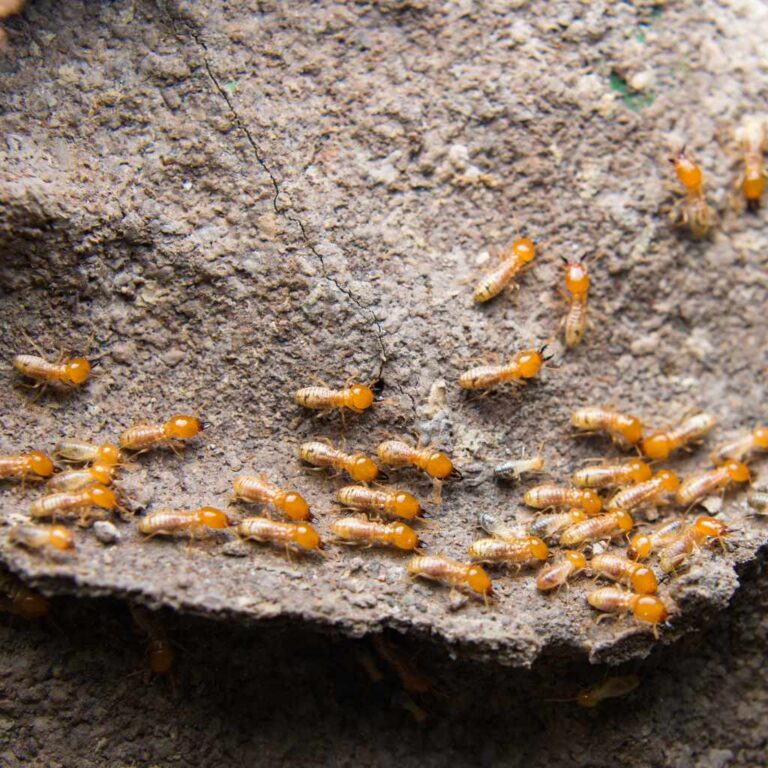
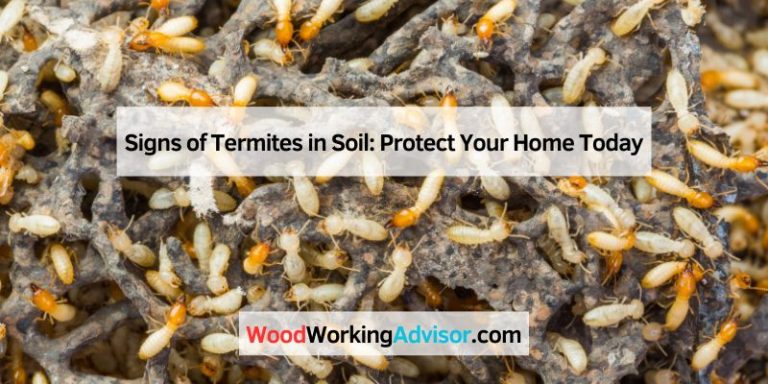
Termites are small insects, often mistaken for ants, that live in colonies and eat wood. They’re a significant threat to homes because they can cause a lot of damage, slowly and secretly. These tiny pests consume wood from the inside out, weakening structures without obvious signs at first. Different types of termites exist, each with varying behaviors and habitats, but all share a common appetite for wood and cellulose-based materials. They can be found worldwide, with some species thriving in warmer climates while others are adapted to cooler areas.
Termites are social insects, meaning they live in groups with different roles. There are workers, soldiers, and reproductives (kings and queens). The workers are the ones munching on wood. The soldiers protect the colony. The reproductives’ job is, well, to reproduce! Colonies can grow to massive sizes, increasing the damage potential. Termites don’t just eat wood in your home; they can also feed on paper, books, and even drywall. The hidden nature of their work makes termite detection a challenge for homeowners.
Types of Termites and Their Habits
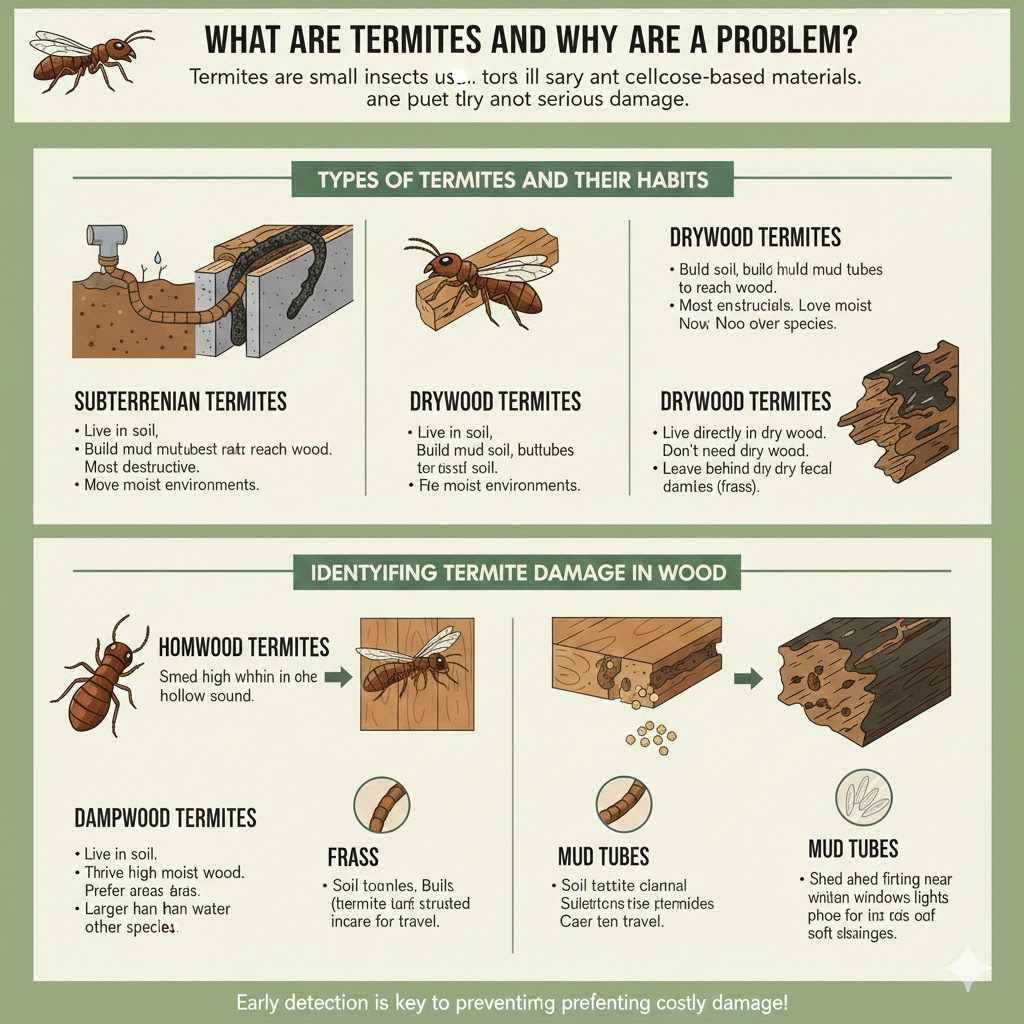
Knowing the type of termite helps in recognizing their damage patterns. Each type has unique characteristics. Here’s a brief look at some common ones:
Subterranean Termites: These are the most destructive type in North America. They live in soil and build mud tubes to reach wood. These tubes are how you know they are around. They’re the most common and cause the most significant structural damage. They love moist environments.
Subterranean termites require soil contact for moisture. They create mud tubes for travel between their underground colonies and food sources, such as wood. These mud tubes act like highways, carrying workers from the colony to your home and back. These tubes can be found along foundation walls, on exposed wooden structures, and other areas where termites can reach wood. Their presence is a sign of termite activity.
Drywood Termites: Unlike subterranean termites, drywood termites live directly within the wood they eat. They do not need contact with the soil. They are often found in warmer climates and leave behind small, dry fecal pellets, which you can see. They often infest furniture, structural timbers, and other wooden objects.
Drywood termites can be recognized by their fecal pellets, which they kick out of small holes in the wood. These pellets look like tiny, sand-like granules, often found near termite-infested areas. You don’t need to look for mud tubes. These termites are harder to detect early on because they don’t leave any obvious signs. You might not see them until the damage is significant.
Dampwood Termites: These termites thrive in moist wood. They prefer areas with high moisture. They are often found in areas with water damage or wood in contact with the ground. They are usually larger than subterranean termites, and their presence suggests a problem with moisture.
Dampwood termites are attracted to wood with excessive moisture. They are less common in homes. They are mostly found in coastal regions. Their colonies are often smaller compared to other types. Identifying and getting rid of the source of the moisture is crucial to control these termites.
Identifying Termite Damage in Wood
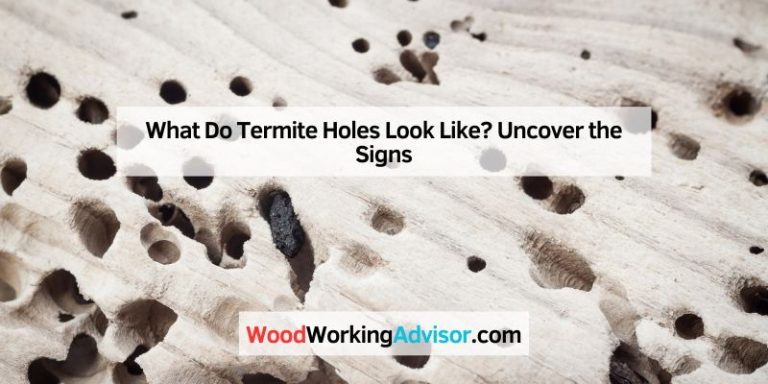
When searching for termites, you need to understand the damage they cause. Damage varies depending on the termite type. Visual inspections are critical. Termite damage might be mistaken for other problems if you’re not careful. Knowing the warning signs allows you to quickly recognize if there is a problem. The sooner you find them, the less damage they’ll cause.
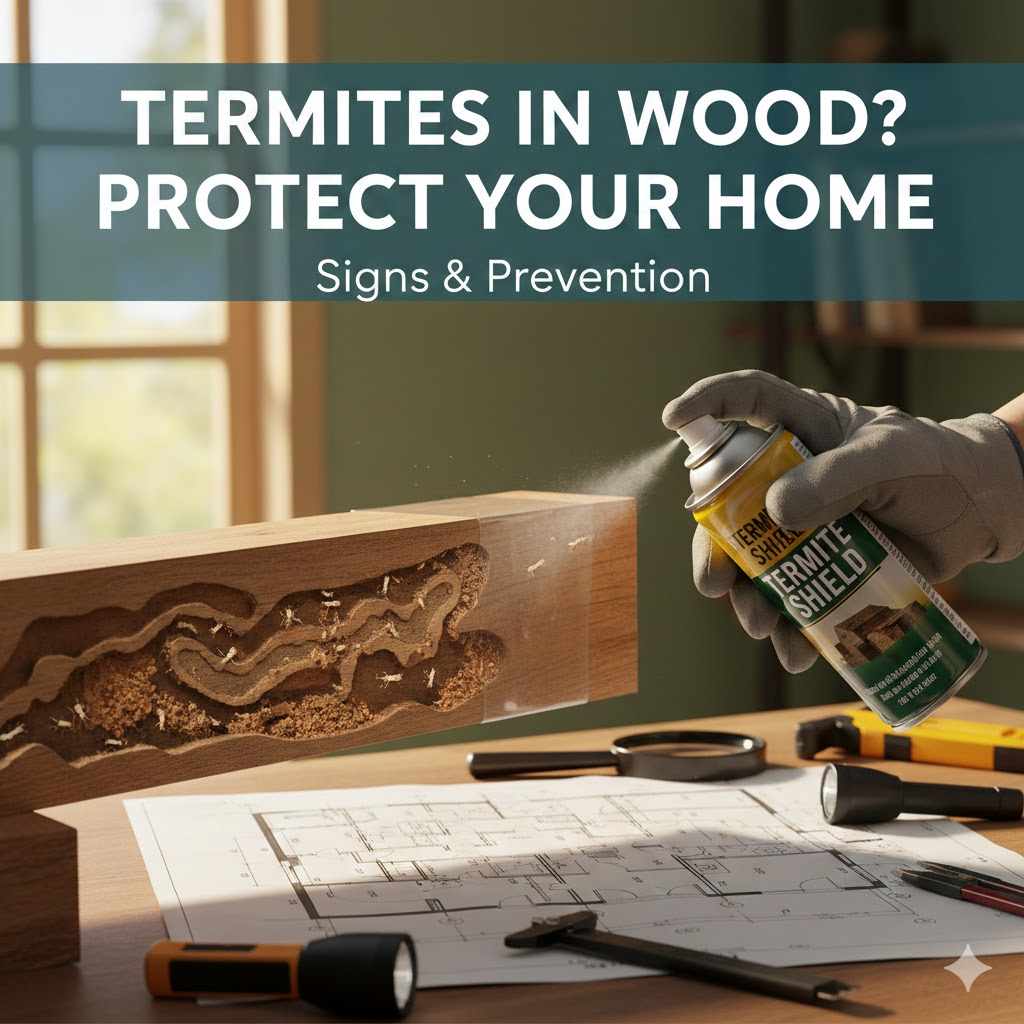
Hollow Sounding Wood: Tap wood surfaces with a screwdriver or a similar tool. If the wood sounds hollow, it could mean that termites have eaten away the inside. This is a primary sign of termite activity.
Termites eat the wood from the inside out, leaving the outer layer intact. This creates hollow cavities that weaken the structure. You can locate hollow spots by gently tapping on wood beams, door frames, or other wooden parts. Any difference in sound indicates potential termite damage.
Frass (Termite Droppings): Drywood termites leave behind small, dry, pellet-like droppings called frass. Finding this near wood surfaces is a sign of an infestation. The presence of frass is one of the more obvious signs.
Drywood termites create small holes to remove waste. This frass usually collects in piles near the infested wood or surfaces below. The appearance of these droppings is a clear indication that drywood termites are present. Remove these to know if new droppings appear. This can help monitor the activity and identify the source.
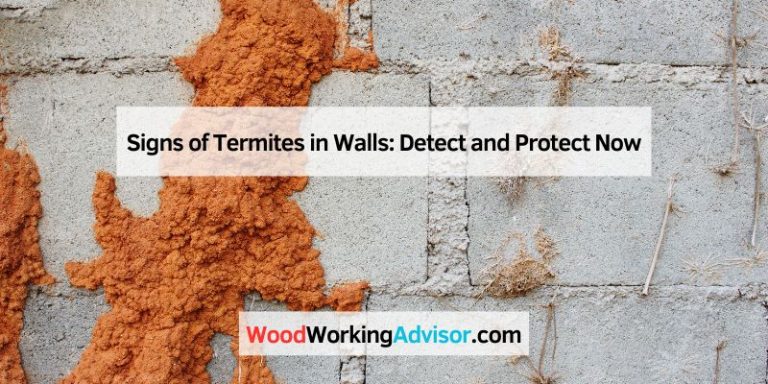
Mud Tubes: Subterranean termites build mud tubes to travel between their colonies in the soil and their food source in the wood. These are a clear sign of subterranean termite presence. Check the foundations of your home, walls, and any wooden structures.
Mud tubes are typically made of soil, wood, and termite saliva. These tubes serve as a pathway. They protect the termites from open air and predators. They are also sources of moisture. These tubes look like small, thin, brown trails. Their presence shows that termites have access to your home.
How to Tell If Termites Are in Wood: Inspection Techniques
Conducting an inspection to spot termites in wood means taking a closer look. You can often find early signs yourself if you know where and how to look. Having a plan is key to a good inspection. Regular inspections can help you find termite problems before they cause significant damage.
Conducting a Visual Inspection
A good visual inspection involves looking at different areas of your home. Focus on areas where termites like to live, and check for the signs mentioned earlier. Take your time, look closely, and cover everything.
Inside Your Home: Start inside. Look at baseboards, door frames, window sills, and any wood near the ground. Use a flashlight to check dark areas like crawl spaces and attics. Pay close attention to wood near water sources like sinks or bathrooms, as these spots have moisture.
Inside the house, termites often attack the wood nearest the ground. Look for visible damage, such as blistering or peeling paint. A flashlight can help in inspecting dark corners and hidden spaces. Check for mud tubes, droppings, and any signs of hollow wood. Any slight change in the wood can be a sign.
Outside Your Home: Step outside and look at the foundation, siding, and any wooden structures near the ground, such as decks and fences. Check the area where the foundation meets the soil. See if any wood is touching the ground.
Outside inspections need you to check the outside of your home. Search for mud tubes along the foundation. Check for any signs of damage on wood, such as decks or fences. Watch out for any areas of standing water, which might attract termites. Inspect areas with high moisture. Keep the soil away from the siding. This helps prevent termite access.
Using Probes and Tools: Use tools, such as a screwdriver or a knife, to check suspicious wood areas. Gently poke the wood to see if it feels soft or if you find any hollow spaces. This helps you identify hidden damage.
A screwdriver or a similar tool can help you identify termite damage that may not be visible. Gently probe the wood, especially in areas you suspect. Softness or hollow areas might be a clue that termites are present. Always be careful when using these tools to prevent any damage to your home.
Spotting Termites Through Their Activity
Beyond looking for the physical signs of termites, look for other clues. These clues will help confirm or add to your suspicions.
Swarming Termites: Swarming termites are the reproductive members of a colony. They’ll fly out to start new colonies. Finding swarms near your home can be a sign of a termite problem. Swarming termites look like flying ants.
Swarming termites look for new places to establish colonies, often after rainfall. If you see them, that means a termite colony is nearby. Pay special attention to swarms in the spring. If you see swarmers, it is a sign that termites might be active in your home. This needs to be inspected immediately.
Discarded Wings: After the swarming, termites shed their wings. These are small, translucent wings. Finding these near windowsills or doors is a sign of termite presence.
Termites shed their wings after they find a place to nest. If you spot piles of discarded wings, it is a clear indication that swarmers have been in your home. These wings are easy to spot. They’re a sign that termites are nesting close to where you found them.
Unexplained Paint Bubbling: Termites can damage wood beneath the paint. This might cause the paint to bubble or peel. Take notice if you see unusual paint issues, such as those that you can’t explain.
Termite damage can create moisture buildup beneath the paint. This leads to paint bubbling. Bubbling paint often appears in spots where termites are actively feeding on the wood. This is a subtle clue. It is always a good idea to investigate any new paint issues.
Taking Action: What to Do If You Find Termites
Finding termites can be stressful. But, there are steps you can take. Your response will depend on how serious the infestation is. It’s often best to call a professional. Early detection lets you minimize damage and protect your home.
Contacting a Professional Pest Control Company
When you suspect termites, calling a pest control expert is the best action. Professionals can confirm the type of termite, assess the damage, and suggest a treatment. They have the knowledge, tools, and experience to control the infestation.
Choosing a Qualified Company: Select a pest control company with a good reputation, license, and experience with termite control. Read online reviews. Ask for recommendations. Check for guarantees.
Select a pest control company with the right training and tools. Confirm the company has all the necessary licenses and insurance. Check online reviews and ask for recommendations from friends, family, or neighbors. Choose a company that offers a guarantee on its work. This guarantees your peace of mind. Check for customer reviews.
The Inspection Process: A professional termite inspection involves a detailed assessment of your home. They look for termite activity. They examine potential entry points, like foundations. They use specialized tools to detect termites.
An inspection usually includes checking areas inside and outside your home. The inspector will check for termite signs. They will use specialized tools to see inside walls and wood. After the inspection, they provide a report with findings and suggest treatment options.
Treatment Options: Pest control companies provide a variety of treatment methods. This includes chemical treatments like liquid termiticides, bait systems, and fumigation. The best treatment depends on the termite type and degree of infestation.
Treatment methods are customized. Chemical treatments, such as liquid termiticides, are applied to the soil around your home. Bait systems are another option. They lure termites to feed on the bait. These systems will eradicate the colony. Fumigation is used in serious situations. The method chosen depends on the termite type.
DIY Termite Prevention
You can also do things around your home to prevent termites. These steps can reduce the risk of future infestations. By combining professional treatments with your efforts, you create a good defense for your property.
Reduce Moisture: Termites love moisture. Reduce moisture around your home by fixing leaky pipes, improving drainage, and ensuring proper ventilation in crawl spaces. This helps make the environment less inviting for termites.
Excess moisture attracts termites. Keeping your home dry will reduce the chances of termite activity. Ensure your gutters are working well. Divert water from your foundation. Make sure crawl spaces are well-ventilated. Using a dehumidifier in damp areas can also help.
Remove Wood-to-Soil Contact: Wood in contact with the soil acts like an open door for termites. Keep wood piles, mulch, and other wood debris away from your foundation. Raise wooden structures, like decks, at least six inches above the ground.
Termites can easily move from the soil to the wood if they are in contact. Keeping wood away from the soil cuts off the termite’s path. Move firewood and wood piles away from the house. Make sure decks and fences are not touching the ground.
Regular Inspections: Regular inspections, whether done by you or a professional, are an excellent part of preventative care. This means checking your home for early signs of termites. This early detection is key for preventing extensive damage.
Regular inspections allow you to catch termite issues early. Inspect your home at least once per year. Make regular checks for the signs of termite activity. If you find something, act right away. This will help you minimize damage and keep your home safe from pests.
Advanced Methods of Termite Control
While the steps above are helpful, more advanced solutions exist. These techniques are often applied by professionals and can be effective. Advanced techniques also include monitoring systems. These tools help prevent and manage termites. They are a good addition.
Chemical Treatments and Barriers
Chemical treatments and barriers are the core of termite control. These methods involve using termiticides to kill termites. This protects the wood around your home. It’s best to have a professional handle these methods. This ensures safe and effective application.
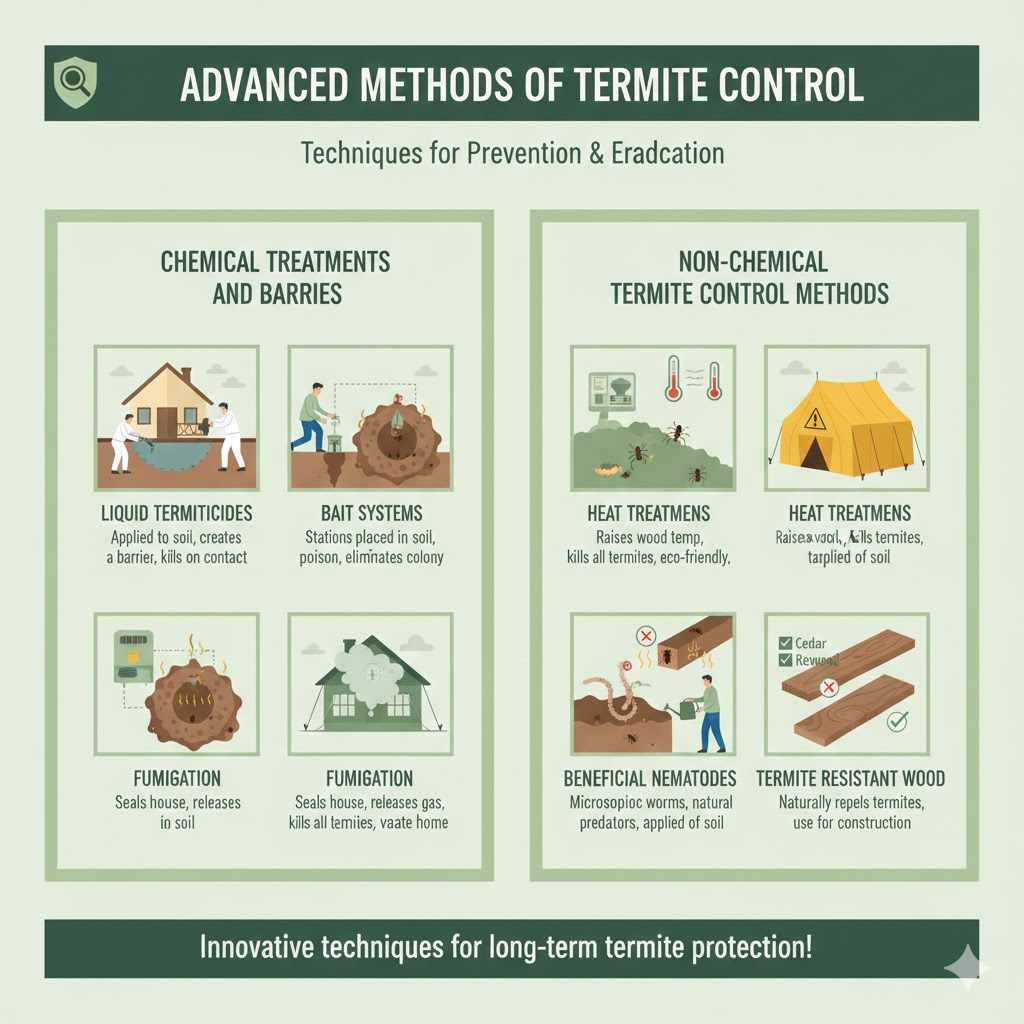
Liquid Termiticides: Applied to the soil around your home. They act as a barrier to prevent termites from entering. The chemicals kill termites when they come in contact with them.
Liquid termiticides are applied by creating a barrier around the foundation of your home. The treatment involves trenching and injecting the termiticide into the soil. Termites that try to cross this barrier will be killed. These treatments are very effective. They can protect your home for many years.
Bait Systems: Bait stations are placed around the perimeter of your home. They contain a slow-acting poison that termites eat and carry back to their colony. The bait is designed to eliminate the entire colony.
Bait stations are placed in the ground, close to your home. They contain bait that termites find and eat. This bait has a slow-acting poison that kills the termites over time. The workers take the bait back to their colony. This eliminates the colony. This provides long-term protection against termites.
Fumigation: Used in severe infestations. Fumigation involves sealing the house and releasing a gas that penetrates all areas. It kills all termites, but you must leave your home during this process.
Fumigation is the most drastic treatment method. It is used in cases of extreme infestation. The house is sealed and filled with a fumigant gas. This gas kills termites in every part of the house. Because of the use of gas, this method demands that the home is vacated during the process. This is the last resort.
Non-Chemical Termite Control Methods
Some solutions that don’t involve chemicals are available. These methods are eco-friendly. They help minimize the use of pesticides. These alternatives are also helpful to use in combination.
Heat Treatments: This method involves raising the temperature in infested wood to a level that kills termites. Heat treatments are effective. They are a good choice when you want to avoid chemicals.
Heat treatments work by raising the temperature of infested areas to a level that termites can’t survive. Professionals use special equipment to control the temperature carefully. The process is effective for killing termites in the wood. It is also an environmentally friendly choice.
Beneficial Nematodes: Beneficial nematodes are microscopic worms that hunt and kill termites. They are applied to the soil and actively seek out termites. These are natural predators, which is a great option.
Beneficial nematodes are a natural pest control tool. They feed on termites. These worms are harmless to humans and pets. They can be applied to the soil around your home. This helps you reduce the termite population and offers a natural pest control option.
Termite Resistant Wood: Using termite-resistant wood, like cedar or redwood, can help prevent infestations. The wood is a natural repellent for termites. This helps to make your home less inviting to termites.
Choosing termite-resistant wood for building or renovation projects is a good preventative measure. Certain wood types, like cedar and redwood, have natural properties that repel termites. This makes your home less attractive to these pests. This will help you make your home resistant. This will make future infestations less likely.
Frequently Asked Questions
Question: What do termite droppings look like?
Answer: Termite droppings from drywood termites look like small, dry, and pellet-shaped granules, similar to coarse sand or tiny pepper flakes. They are often found near termite activity.
Question: How often should I have my home inspected for termites?
Answer: You should have your home inspected for termites at least once a year. If you live in an area with a high risk of termites, more frequent inspections are wise.
Question: What are mud tubes?
Answer: Mud tubes are tunnel-like structures created by subterranean termites. They use these tubes to travel from their underground colonies to wood sources, protecting themselves from predators and the open air.
Question: Can I treat termites myself?
Answer: While there are some DIY termite control products, professional treatment is generally recommended for effective results. Professionals have the training and tools to assess and treat infestations properly.
Question: What is the best type of wood to use in home construction to avoid termites?
Answer: Termite-resistant woods like cedar, redwood, and pressure-treated lumber are the best choices to prevent termite infestations.
Final Thoughts
Knowing How to Tell If Termites Are in Wood is key to protecting your property. You’ve learned about the different types of termites, the signs they leave behind, and how to spot them. Remember that regular inspections and early detection can save you from costly repairs. Don’t hesitate to reach out to a professional pest control company if you find any signs of termites.
Taking quick action will stop termites from causing too much damage. Keeping your home protected is an ongoing process. Stay vigilant, inspect regularly, and take action. You can keep termites away and enjoy peace of mind!