How To Tell Teak Wood: Proven Essential Signs
To tell genuine teak wood, look for its deep golden-brown color, noticeable oily feel, fine straight grain, prominent pores, and distinctive leathery scent. Testing its weight and water resistance will also confirm you have high-quality, authentic teak.
Buying beautiful furniture or lumber can be tough, especially when you want the very best like teak. You hear about its amazing durability, but how do you know you are getting the real deal and not a cheaper imitation? It’s easy to feel unsure when looking at different woods! Don’t worry, because identifying true teak is much easier than you might think once you know what to look for. We are going to walk through simple, hands-on checks so you can spot real teak every time. Get ready to gain confidence in your wood purchases!
The Beginner’s Guide to Spotting Authentic Teak Wood
Teak (Tectona grandis) is often called the “King of Woods,” and for good reason. It’s famous for lasting decades, even outdoors, without rotting or warping. This high value means many less-quality woods get passed off as teak. As a DIYer, you need to protect your investment and your project’s integrity. Learning these key identification markers is essential for quality craftsmanship.
Why Identifying Real Teak Matters So Much
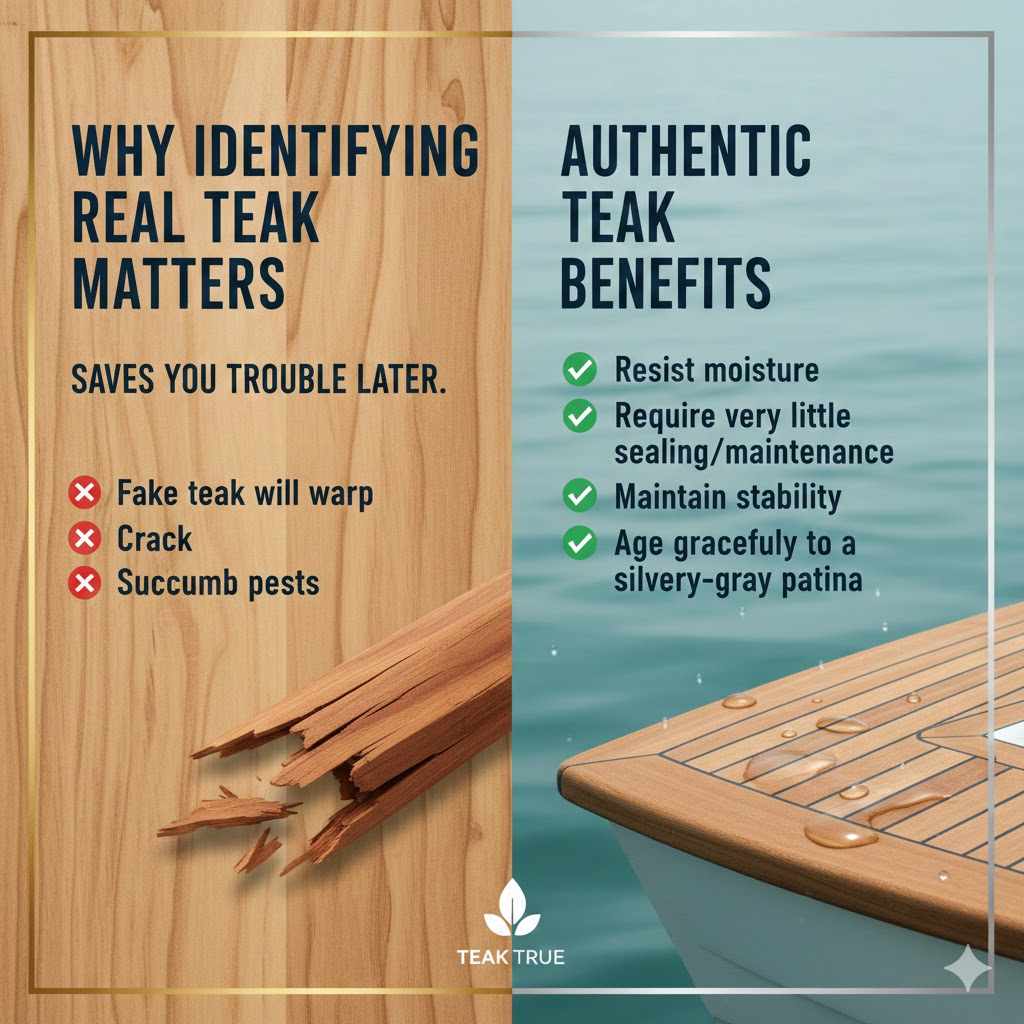
Why spend time learning these tips? Because using real teak saves you trouble later. Fake teak will warp, crack, or succumb to pests much faster than the real thing. When you confirm you have authentic teak, you know it will:
- Resist moisture, ideal for outdoor furniture or boat decks.
- Require very little sealing or maintenance.
- Maintain its stability regardless of humidity changes.
- Age gracefully to a beautiful silvery-gray patina.
The Five Essential Sensory Tests for Teak Identification
The best way to tell teak wood is by using your senses—sight, touch, smell, and even an understanding of its weight. Professional woodworkers rely on these immediate, on-site checks.
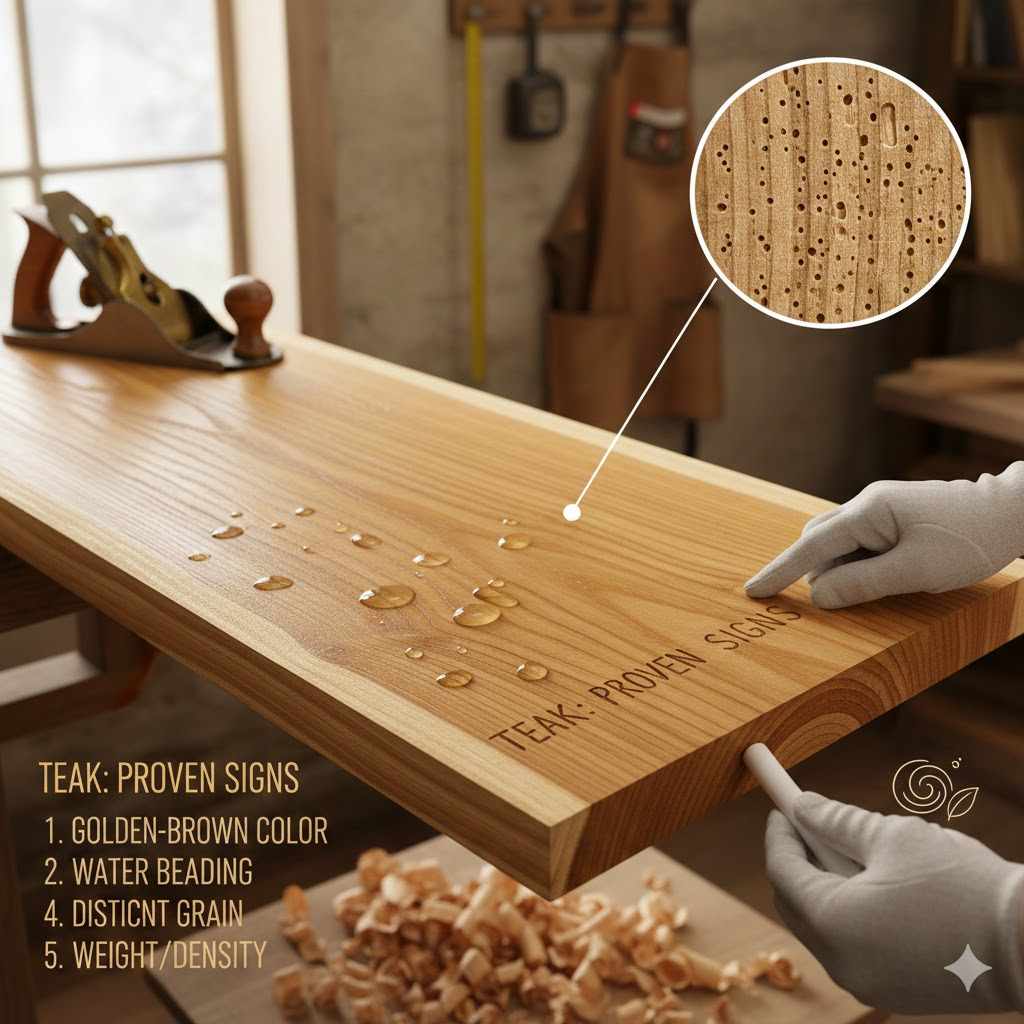
1. Examine the Color: Golden Hues and Grain Pattern
Color is usually the first thing you notice. Genuine teak wood isn’t a single color; it changes over time, but new, fresh-cut lumber has a distinct appearance.
Freshly Cut vs. Aged Teak
When teak is first cut, its heartwood—the strong, central part of the tree—shows a beautiful, rich color.
- Heartwood: Look for a medium to deep golden-brown color. Sometimes it can have a slightly olive or amber tone. It should look rich and substantial, not pale or yellowish like pine.
- Sapwood: The outer wood (sapwood) is usually lighter, almost white or pale yellow. Good quality teak furniture will almost exclusively use heartwood, but check the underside or unseen joints to see if sapwood is present—too much is a red flag.
- The Aging Effect: If you are looking at outdoor furniture, true teak will weather naturally. Over time, when exposed to sunlight and rain, it turns a distinguished silvery-gray. If the wood is darkening to a murky brown or developing white spots, it might not be teak, or it hasn’t been cared for correctly.
Understanding the Grain
Teak has a very distinctive grain pattern that is hard for imitators to replicate perfectly. This pattern is key to its stability.
- Straight and Even: Teak typically has a straight, rather coarse grain. It usually runs quite evenly along the length of the board.
- Visible Pores: If you look closely, especially when the wood is cut across the grain, you should see small, distinct open pores (the tubes that once carried water). These pores are slightly larger than those in woods like maple or oak, making teak look slightly “open-grained.”
- Distinct Lines: Sometimes, especially in quarter-sawn lumber, you will see mineral streaks or darker lines running parallel to the main grain.
2. The Touch Test: Checking for Natural Oils
This is one of the easiest and most telling physical checks for teak. Teak wood contains high levels of natural oils and silica (natural rubber). These oils act as nature’s own preservative against moisture and pests.
To check for this:
- Gently rub a section of the wood surface with your finger or palm.
- What to feel for: Real teak will feel subtly slick, smooth, and noticeably “oily” or waxy to the touch. It won’t feel dry and fuzzy like common pine or rough like some oaks.
- If the wood is sealed or painted, try to find an unfinished edge, like under a joint or a foot, to perform this check. If it feels bone dry, it is likely not genuine teak.
3. The Weight Factor: Density Matters
Weight is an excellent indicator of density, which contributes directly to teak’s legendary durability. Genuine teak heartwood is heavy and dense. If a piece of outdoor furniture feels surprisingly light, be skeptical.
While it’s impossible to give an exact weight without a scale, compare the item you are testing to a known, similar piece of solid wood furniture you already own.
Quick Comparison Guide:
| Wood Type | Relative Density (Heft) | Notes |
|---|---|---|
| Genuine Teak | Heavy and Substantial | High density means excellent resistance to decay. |
| White Oak (Good Wood) | Medium-Heavy | Slightly lighter than true teak heartwood. |
| Pine or Fir (Imitation) | Light | Very easy to pick up; significantly less dense. |
If you are buying large pieces of teak decking or large planks, a density check helps ensure you are paying for high-value material and not cheaper, less dense substitutes like Shorea, which sometimes look similar.
4. Identifying the Scent: That Unique Teak Aroma
Many wood species have a smell, but teak possesses a highly unique, persistent fragrance, especially when freshly sanded or if the wood has been freshly exposed (not painted or heavily aged outdoors).
- The Aroma: Real teak emits a distinct, somewhat strong, leathery, or faintly spicy scent. Some people compare it to strong leather or curry spices.
- Testing: If the wood smells like nothing at all (like MDF or common particleboard) or has a sharp, chemical scent (suggesting heavy sealing or varnish), it warrants closer inspection.
5. Testing Water and Oil Resistance (The Practical Check)
Teak’s natural oils give it superior resistance to water absorption—this is why it’s perfect for boats and wet climates. If you can safely test a small, inconspicuous area, this check is highly conclusive.
- Find a small, unsealed area, perhaps the bottom edge of a piece of wood.
- Place one small drop of plain water onto the surface.
- Observe: If the wood is genuine teak, the water will bead up slightly and sit on the surface for several minutes before soaking in slowly. If it soaks in almost immediately (within seconds), it suggests the wood lacks the natural protective oils of true teak.
This superior water resistance is closely monitored in the lumber industry, as outlined by standards related to wood durability in construction, such as those referenced in some international standards organizations dealing with durable woods for infrastructure projects.
Differentiating Teak from Common Teak Substitutes
Many woods look superficially like teak but lack its longevity and prized oils. Knowing the difference saves you from investing heavily in inferior materials. Here are the most common imposters and how to tell them apart.
Teak vs. Acacia and Mango Wood
Acacia and Mango woods are often sold as affordable “tropical hardwoods” that mimic teak’s color.
- Acacia: Generally has a much more varied, less uniform color pattern. It often shows swirls or extreme color changes across a single board. It also lacks the distinct oily feel.
- Mango Wood: Can look nice, but it often displays very erratic grain patterns, sometimes featuring blotches of black, gray, or green due to mineral staining. It will also be much lighter in weight than teak.
Teak vs. Shorea (Yellow Balau)
Shorea is one of the most common substitutes, especially for outdoor furniture, as it has better resistance than standard hardwoods.
Key Difference Table: Shorea vs. Teak
| Feature | Genuine Teak | Shorea Substitute |
|---|---|---|
| Color (Fresh) | Golden brown, warm olive undertones | More yellow-brown to reddish-brown; can be brassier |
| Oil Content | Very High (Slick feel) | Low to moderate (Drier feel) |
| Pore Structure | Easily visible, prominent | Often finer or less distinct |
| Durability/Longevity | Exceptional (Decades outdoors) | Good, but often requires more sealing |
Teak vs. Iroko (African Teak)
Iroko is sometimes marketed as “African Teak.” While it’s durable, it is chemically different from true Asian teak.
- Color: Iroko tends to look more yellow-brown or pale golden, often darkening unevenly.
- Feel and Smell: Iroko does not have the same slick, oily feel as true teak. Its scent is usually less pronounced or simply different, often described as mild or earthy rather than spicy/leathery.
Identifying Teak Through Documentation and Price
For beginners, physical tests are crucial, but sometimes you can use context clues, especially when buying from reputable dealers.
The Role of Certification and Sourcing
Due to environmental concerns, sustainably harvested teak is vital. Reputable suppliers will provide documentation proving the wood’s origin.
Look for:
- FSC Certification: Certification from organizations like the Forest Stewardship Council (FSC) confirms the wood was harvested legally and sustainably, often associated with high-quality lumber sources.
- Documentation of Age: Truly high-quality, stable teak comes from mature trees (often 50+ years old). If a dealer provides traceability regarding the tree’s age and source (e.g., Indonesian or Burmese teak plantations), this is a huge trust indicator.
Price as a General Indicator
While not a direct identification test, price often reflects the difficulty of acquiring genuine, dense teak heartwood.
If you find teak that is drastically cheaper than other high-end tropical hardwoods (like Mahogany or Wenge), you should be very cautious. Teak is expensive because it grows slowly and its desirable heartwood is only a fraction of the tree. Extremely low prices usually mean:
- It’s a substitute wood (like Shorea or rubberwood treated to look like teak).
- It is primarily the much lighter, less durable sapwood.
- It is plantation-grown wood harvested too young, meaning less density and oil content.
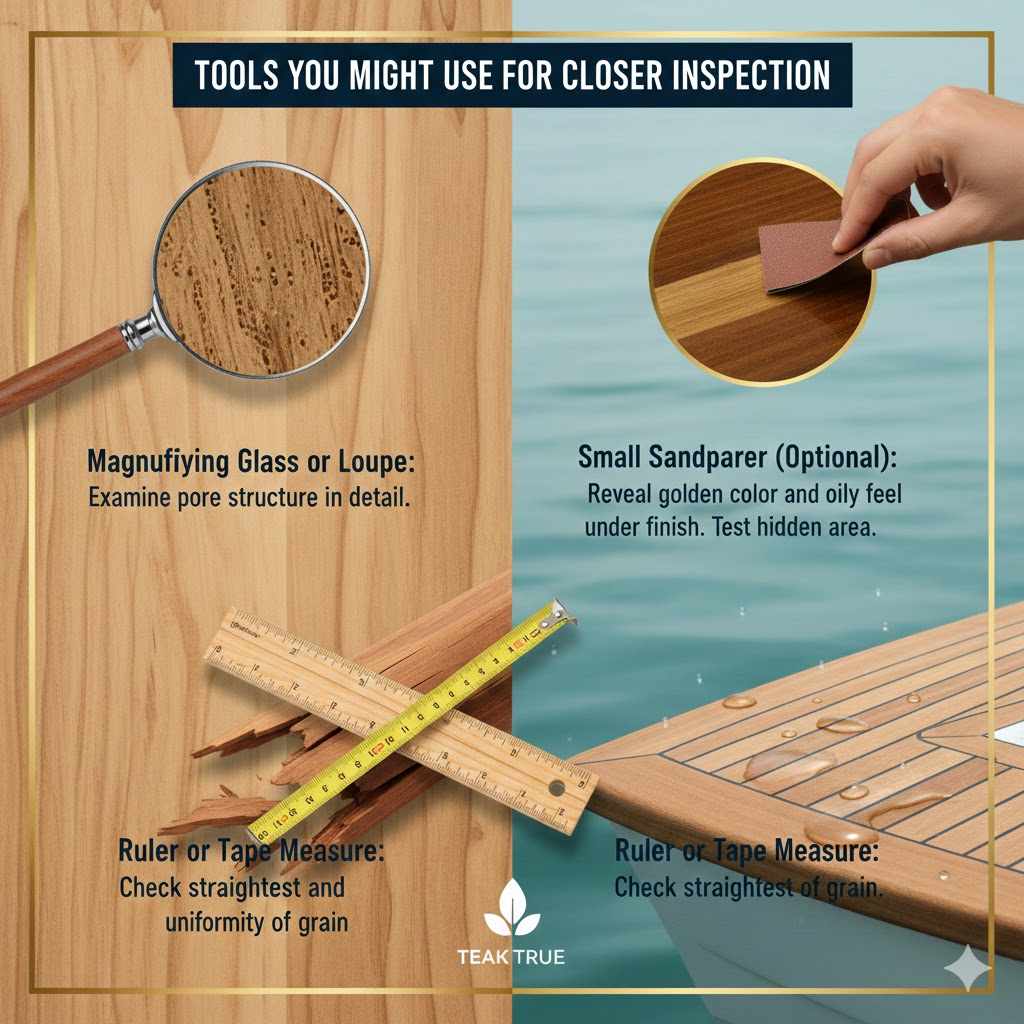
Tools You Might Use for Closer Inspection
You don’t need a full woodworking shop to identify teak, but a few simple tools can help confirm your suspicions:
- Magnifying Glass or Loupe: Essential for examining the pore structure in detail. You can clearly see the characteristic pores that aren’t as visible to the naked eye.
- Small Sandpaper (Optional): If you suspect a thin varnish is hiding the wood, carefully scuff a tiny, hidden area. If a beautiful golden color and oily feel emerge after sanding away the finish, you have a winner. Always test in an inconspicuous spot first!
- Ruler or Tape Measure: Useful for checking the straightness and uniformity of the grain lines compared to wildly patterned substitutes.
Beginner FAQs About Telling Teak Wood
1. Can painted or heavily stained teak still be identified?
It is much harder! If the finish is thick, you must rely on weight, the sound it makes when tapped (solid wood sounds different from composite board), and checking unfinished areas like inside screw holes or underneath feet for the underlying color and texture.
2. Is there a chemical test to check for teak oil?
For home use, no safe, quick chemical test exists. You should stick to the sensory tests: look for the slick feel, the distinct golden color, and the leathery smell. Reliable dealers won’t mind if you perform these simple tactile checks.
3. Should I avoid teak that looks gray outdoors?
No, that silvery-gray color is normal weathering for outdoor teak! It means the surface layer has oxidized. This gray layer protects the strong wood underneath. Many people sand it down to restore the golden look or simply leave it as the patina.
4. Is the wood density difference noticeable for small items like picture frames?
For very small, thin items, the weight difference between teak and light substitutes might be subtle. For small items, prioritize the feel—it should still feel surprisingly heavy for its size and should not feel fuzzy when rubbed.
5. If the wood smells strongly of chemicals, is it fake teak?
It is almost certainly not real teak, or at least not high-quality heartwood. Real teak has its own scent. A strong chemical odor usually indicates heavy, low-quality preservatives or stains were used to mask an inferior wood underneath.
6. Where can I check if I suspect the teak is sourced poorly?
Always ask the seller or manufacturer for FSC (Forest Stewardship Council) documentation or proof of certified plantation sourcing. This documentation shows you the wood was legally and responsibly harvested.
Conclusion: Confidently Choosing Your Teak
Now you have the essential toolbox for telling genuine teak wood from imitations. Remember, quality wood reveals itself through a combination of factors—it’s rarely just one thing. Always look for the combination of the golden heartwood color, the fine straight grain, that unique oily feel on your fingertips, and that distinct leathery aroma. Combine these sensory checks with an evaluation of the wood’s surprising heft, and you’ll be spotting authentic teak like an expert woodworker!
Woodworking is all about making smart material choices that stand the test of time. With these tips in hand, you can approach any purchase—whether it’s a stunning new dining set or rugged lumber for a dock repair—with confidence, knowing you are securing true, durable craftsmanship for years of enjoyment.