Teak Wood Furniture Ideas for Every Room: Why It Actually Works
Teak turns up everywhere from budget Scandinavian-style furniture lines to $3,000 outdoor dining sets, and there’s a real reason it spans that whole price range: unlike most decorative hardwoods, teak’s water and rot resistance isn’t a finish you apply — it’s built into the wood itself. Below is a room-by-room look at where teak furniture actually earns its reputation, why the wood behaves the way it does, and how to keep it looking the way you want.
Why Teak Furniture Actually Works in Every Room
Most “why teak” explanations stop at “it looks nice” and skip the mechanism. Teak trees (Tectona grandis) produce unusually high levels of natural oils and silica in their heartwood. Those oils repel water and inhibit the fungi and insects that rot ordinary hardwoods, while the silica gives the grain a slightly gritty density that resists denting and scratching better than softer woods like pine or acacia. That combination is exactly why 19th- and 20th-century shipbuilders lined deck surfaces with it: teak decking could sit in salt water and direct sun for years without swelling, cupping, or rotting, and it’s still the default decking material on high-end yachts today.
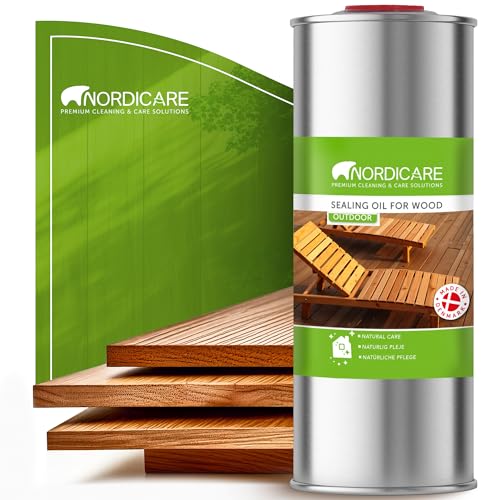
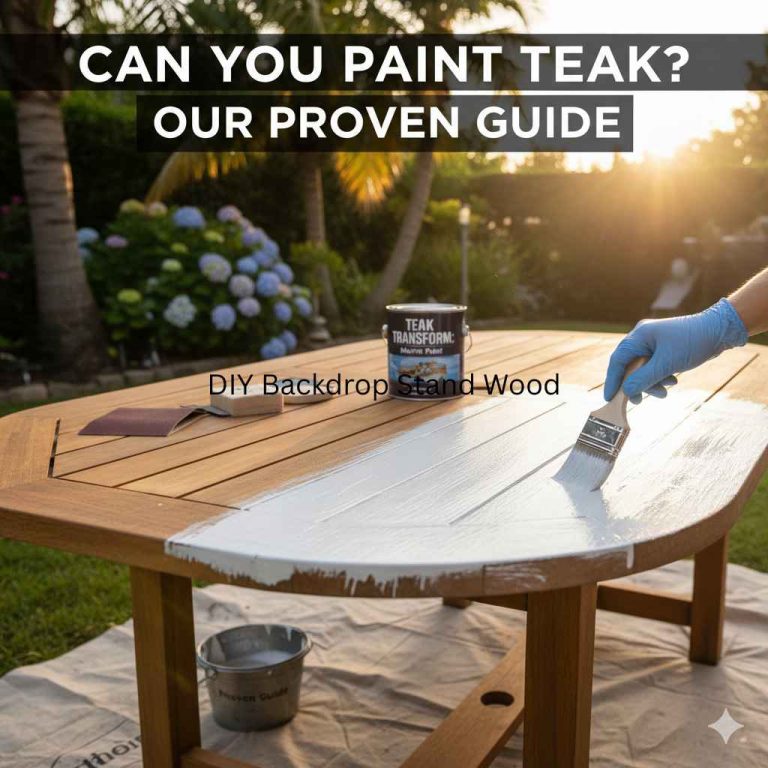
That same oil content is why teak furniture doesn’t need a protective topcoat to survive daily use the way pine or poplar would. Left outdoors and unsealed, teak doesn’t rot — it weathers. UV exposure and rain gradually pull the surface oils out and oxidize the exposed wood fibers, shifting the color from honey-gold to a silvery gray over roughly 6 to 12 months. That color change is purely cosmetic; the wood underneath stays just as dense and structurally sound as the day it was milled. Some owners like the silver-gray look and let it happen on purpose — it’s the same patina you’ll see on old ship decks and marina docks. Others prefer keeping the original gold tone and maintain it with an oil or sealer applied once or twice a year, like the one below.
Best For Maintaining The Golden Look
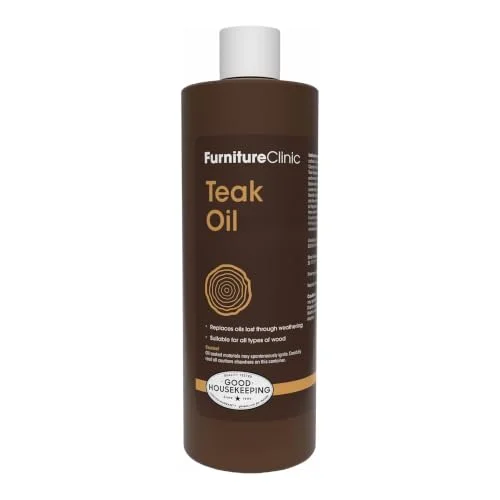 |
Furniture Clinic Teak Oil – $17.95 A tung-and-linseed-oil blend made specifically to replace the natural oils teak furniture loses as it weathers, keeping the honey-gold color instead of letting it fade to gray.
|
Living Room Ideas with Teak Furniture
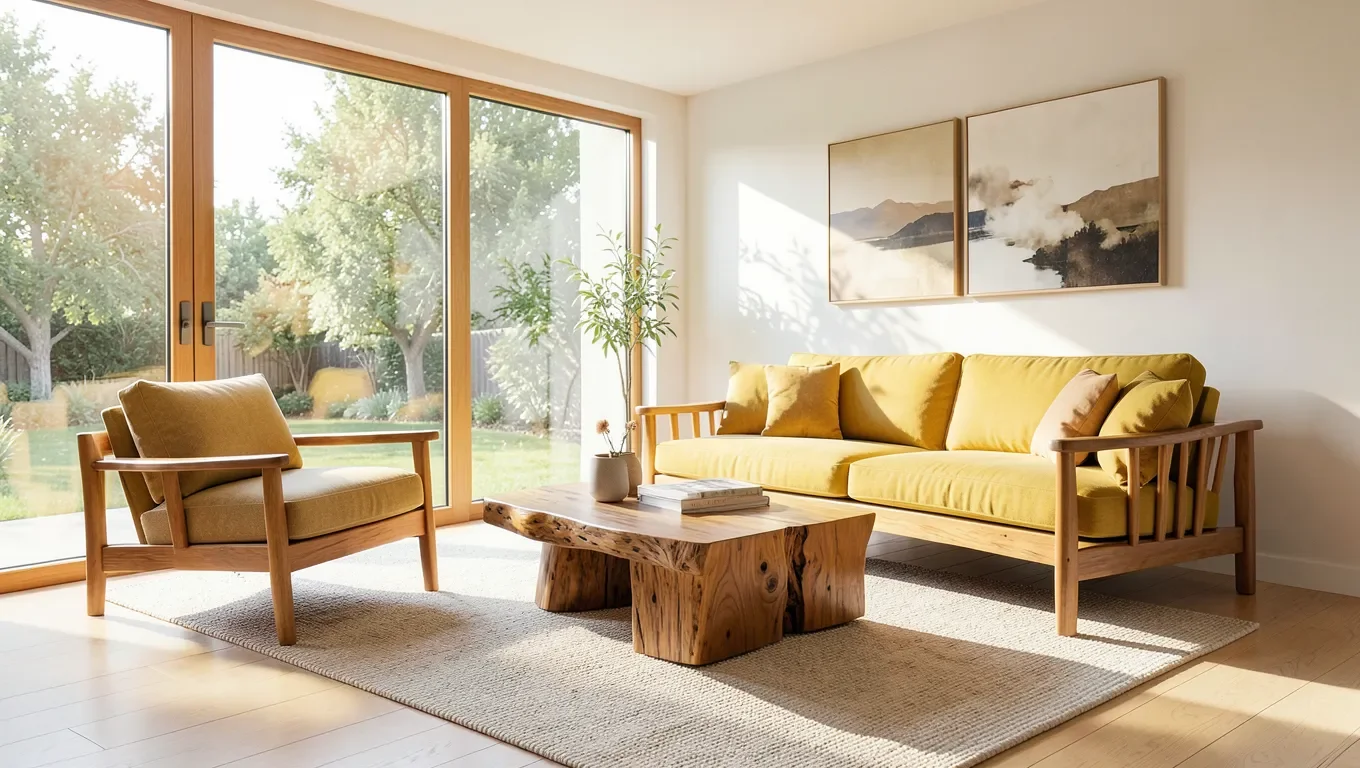
In a living room, teak’s density lets furniture makers slim down legs and frames without the piece looking flimsy — which is why so much mid-century Danish Modern furniture, the style that made teak popular in Western homes through the 1950s and ’60s, used it for low-profile credenzas, tapered-leg coffee tables, and slim-armed lounge chairs. If you’ve inherited a piece from that era or you’re shopping for one secondhand, it’s worth knowing how to tell real vintage Danish teak from a modern look-alike veneer before you pay vintage prices for it.
For a newer build, a teak coffee table or media console pairs well with natural textures that don’t compete with the wood grain — boucle or linen upholstery, a jute or wool rug, and rattan or cane accent chairs all read as “warm” rather than “busy” next to teak’s honey tone. Because the wood doesn’t need refinishing, a teak piece placed away from direct radiator heat or a fireplace will typically hold its look for decades with nothing more than occasional dusting.
Dining Room Ideas with Teak Furniture
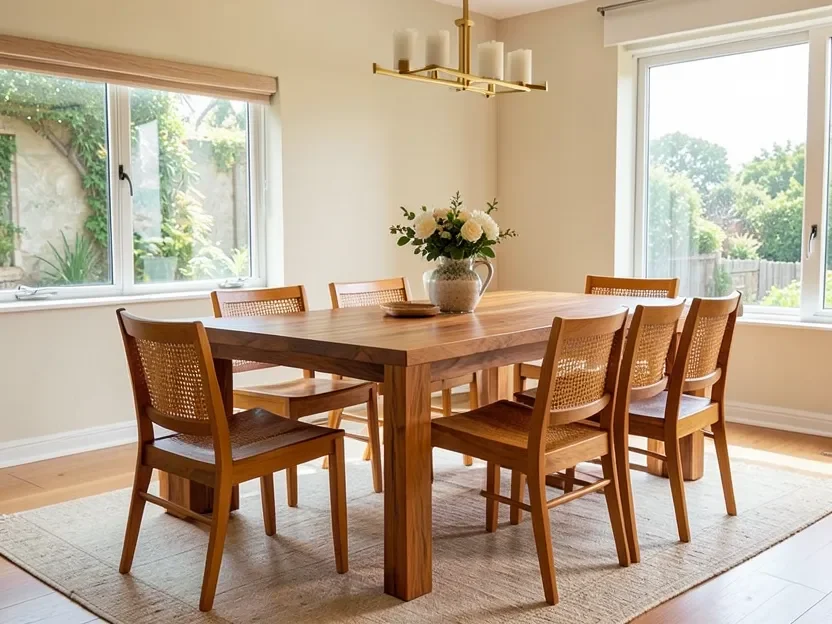
A dining table takes more daily abuse than almost any other piece of furniture in the house — hot dishes, spilled drinks, dragged chairs, kids doing homework on it — and teak’s silica-dense grain genuinely resists dents and scratches better than the pine, rubberwood, or acacia used in most budget dining sets. Solid teak also takes well to extension leaves without warping at the seam the way some softer woods do, which makes it a practical choice if you regularly host larger groups.
Mixing seating styles works especially well with teak because the wood tone is neutral enough to anchor contrast: a teak table with black metal-frame chairs, woven rush seats, or even a mismatched upholstered bench at one end all read as intentional rather than mismatched.
Bedroom Ideas with Teak Furniture
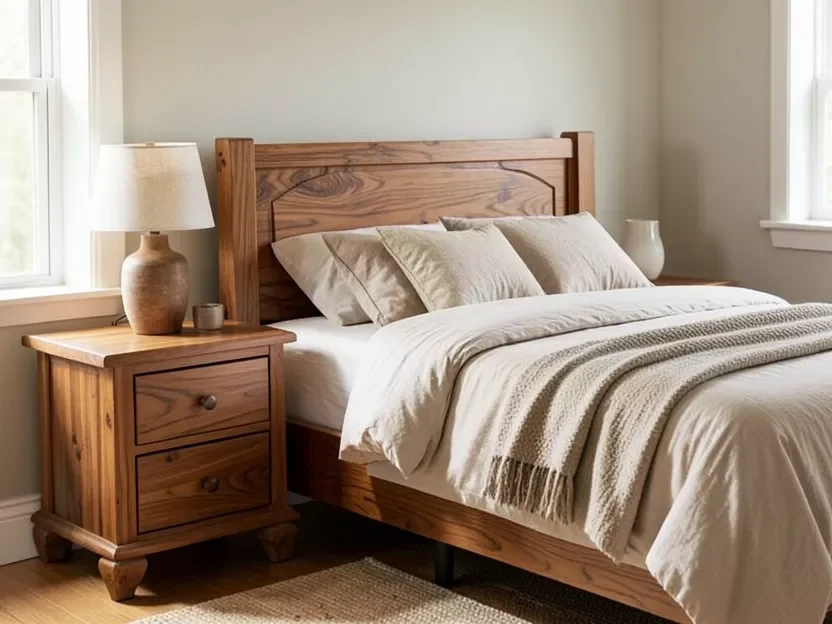
Bedroom pieces like nightstands, dressers, and headboards benefit from teak in a quieter way than a dining table or deck chair does — there’s no heavy moisture exposure to resist, so the main advantage is just that the wood’s natural oil content keeps the grain from drying out, graying, or needing refinishing over years of normal indoor use the way an unfinished pine dresser eventually would. A teak dresser bought today can realistically still look the same in 20 years with nothing more than a wipe-down.
Outdoor and Patio Ideas with Teak Furniture
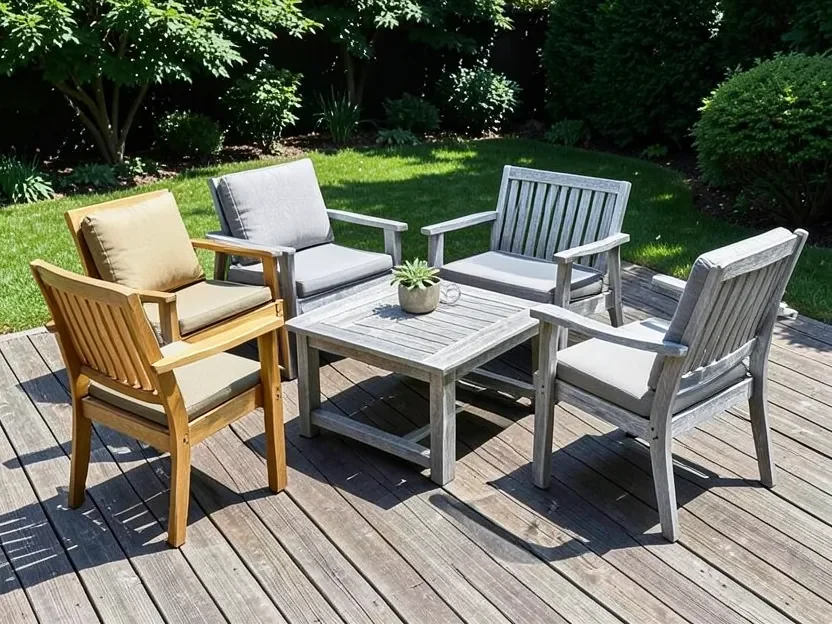
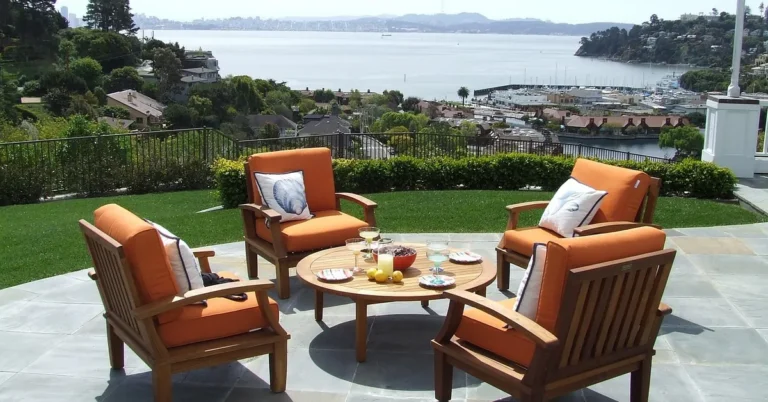
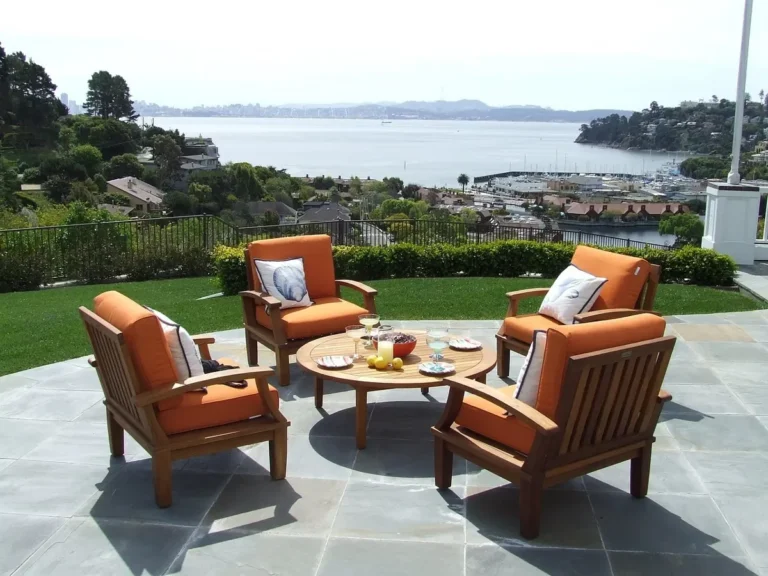
This is really where teak’s oil content pays off most. Cheaper outdoor woods like eucalyptus or acacia need a fresh sealant coat every year or two or they start to rot and check once the factory finish wears through. Teak can go years completely unsealed with nothing worse than the cosmetic gray patina described above — the wood itself isn’t breaking down. Teak also stays noticeably cooler to the touch than metal or dark composite furniture in direct sun, which matters for anything near a pool where bare skin is touching the surface.
If you want teak dining or lounge furniture to keep its gold color outdoors, plan on oiling it once or twice a season, before it visibly grays. If you’d rather skip the maintenance entirely, letting it weather naturally is a completely legitimate choice — many high-end teak furniture makers sell pieces specifically expecting that patina.
Home Office and Entryway Ideas with Teak Furniture
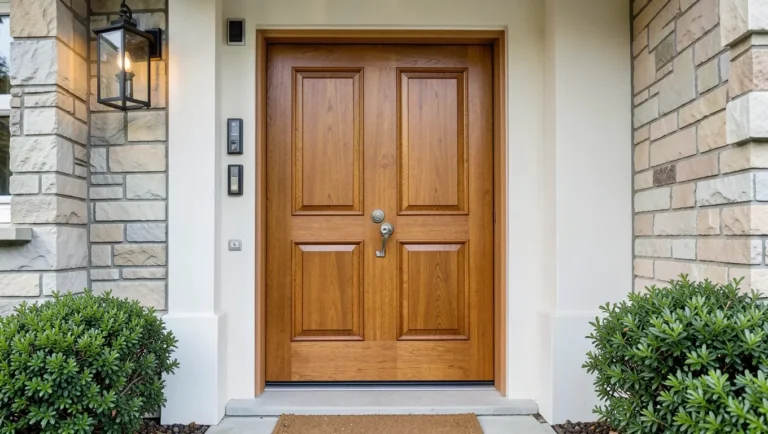
Entryways deal with wet shoes, dripping umbrellas, and dropped keys more than almost any other spot in a house, which makes teak’s water resistance genuinely useful on a bench or console table there rather than just decorative. A teak entry bench with a woven seat or a slim teak console under a mirror handles that daily moisture without the swelling or water-ring staining an unsealed softwood piece would show after a season.
For a home office, a teak desk or shelving unit brings the same low-maintenance benefit indoors — no coasters required for a forgotten coffee mug, and the wood’s natural resistance to warping keeps drawers and shelves running true even in a room with fluctuating humidity.
How to Care for and Maintain Teak Furniture
Teak care really comes down to picking one of two paths and sticking with it, since switching back and forth mid-life on a piece gets patchy results.
- Keep the gold tone: clean with mild soap and water, let it dry fully, then apply a teak oil or sealer once or twice a year (more often outdoors in a sunny climate). Apply before the wood visibly grays, not after — it’s easier to maintain a finish than restore one.
- Let it patina naturally: do nothing beyond an occasional rinse or a dedicated teak cleaner if the graying looks blotchy instead of even. No oil, no sealant — the color change is cosmetic only and doesn’t need to be “fixed.”
One thing to avoid either way: don’t put a film finish like polyurethane or varnish directly over teak. The wood’s own natural oils interfere with how those finishes cure and bond, so a film coat applied over teak tends to peel or flake within a year or two rather than lasting the way it would on a drier hardwood like oak or maple. If you want more background on which finishes actually suit which wood types, our wood care and maintenance guide covers that in more depth.
Teak Furniture FAQ
What’s the difference between oiled teak and weathered teak furniture?
Oiled teak has had its lost natural oils replaced with a teak oil or sealer, which keeps the honey-gold color the wood has when it’s new. Weathered (patina) teak has been left unsealed outdoors, where UV light and rain pull the surface oils out and turn the exposed wood a silver-gray. Both are structurally identical underneath — the color difference is cosmetic, not a sign of damage.
Does teak outdoor furniture need to be covered in winter?
Not for the wood’s sake. Teak’s natural oil content already resists the rot and moisture damage that would ruin most other outdoor woods, so it can be left uncovered through rain, snow, and freezing temperatures without structural harm. A cover is really about keeping cushions, hardware, or a maintained gold finish looking fresh, not about protecting the teak itself.
Is a teak dining table a good choice with kids?
Yes — teak’s higher natural silica content makes the surface more resistant to dents and scratches than softer hardwoods like pine or acacia, and spills wipe off easily since the wood doesn’t absorb water the way untreated softwoods do. It’s one of the more forgiving hardwood options for a high-traffic family table.
How long does teak outdoor furniture actually last?
Well-made solid teak outdoor furniture commonly lasts 25-plus years with only minimal upkeep, and there are documented teak ship decks and garden pieces well over 50 years old still structurally sound. The wood’s own oils are doing most of that work, which is why teak has been the default material for ship decking and high-end outdoor furniture for well over a century.
Sponsored / affiliate links. As an Amazon Associate I earn from qualifying purchases. I may earn additional commission from eligible campaigns.