Iroko Wood vs Teak: Essential Guide
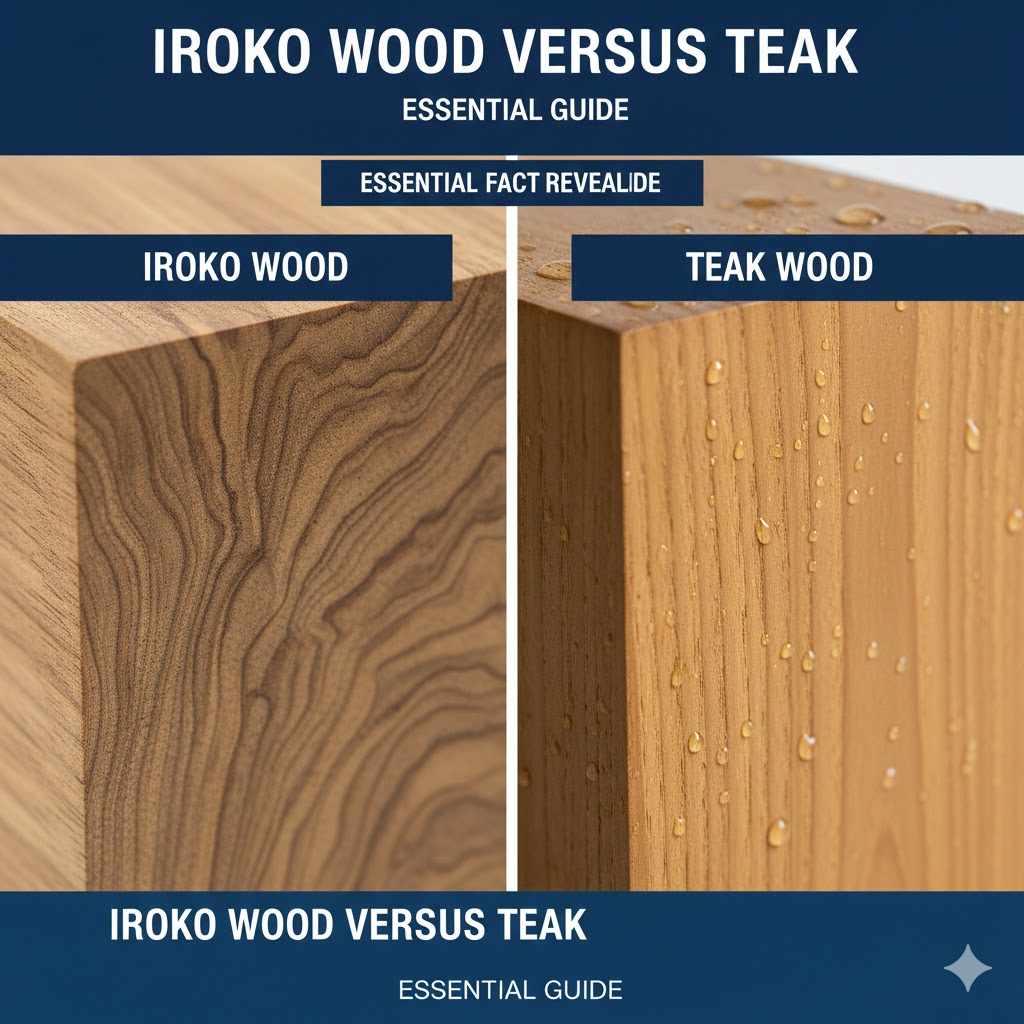
Iroko wood vs Teak: Choosing the right tropical hardwood for outdoor projects can be tough. While Teak is the famous champion known for unmatched durability, Iroko often offers a fantastic, budget-friendlier alternative that still resists rot and weathers beautifully. We’ll compare them side-by-side so you can build with confidence!
Welcome to the workshop! I’m Meraj, and I know that standing at the lumber yard, looking at two gorgeous tropical hardwoods—Iroko and Teak—can feel confusing. Both promise to stand up to rain, sun, and pests, which is exactly what you need for outdoor furniture, decks, or boat accents. But they are priced differently, and they behave slightly differently when you start cutting or finishing them.
Don’t sweat it! We are going to break down the differences simply, focusing on what matters most for your DIY success. By the time we finish, you’ll know exactly which wood deserves a spot in your next build.
Iroko Wood vs Teak: The Big Picture Comparison
When choosing lumber for outdoor projects, we prioritize two things: how long it lasts outside, and how easy (or affordable) it is to work with. Iroko and Teak are both champions in durability because they contain natural oils that repel water and resist bugs. However, their chemical makeup leads to differences in appearance, feel, and price.
Think of Teak (Tectona grandis) as the luxury benchmark—it’s famous for a reason. Iroko (often called African Teak, though botanically different) is the reliable runner-up that gives you 90% of the performance for potentially much less money.
Where Do These Woods Come From?
Knowing the origin can help you understand its reputation and sustainability options.
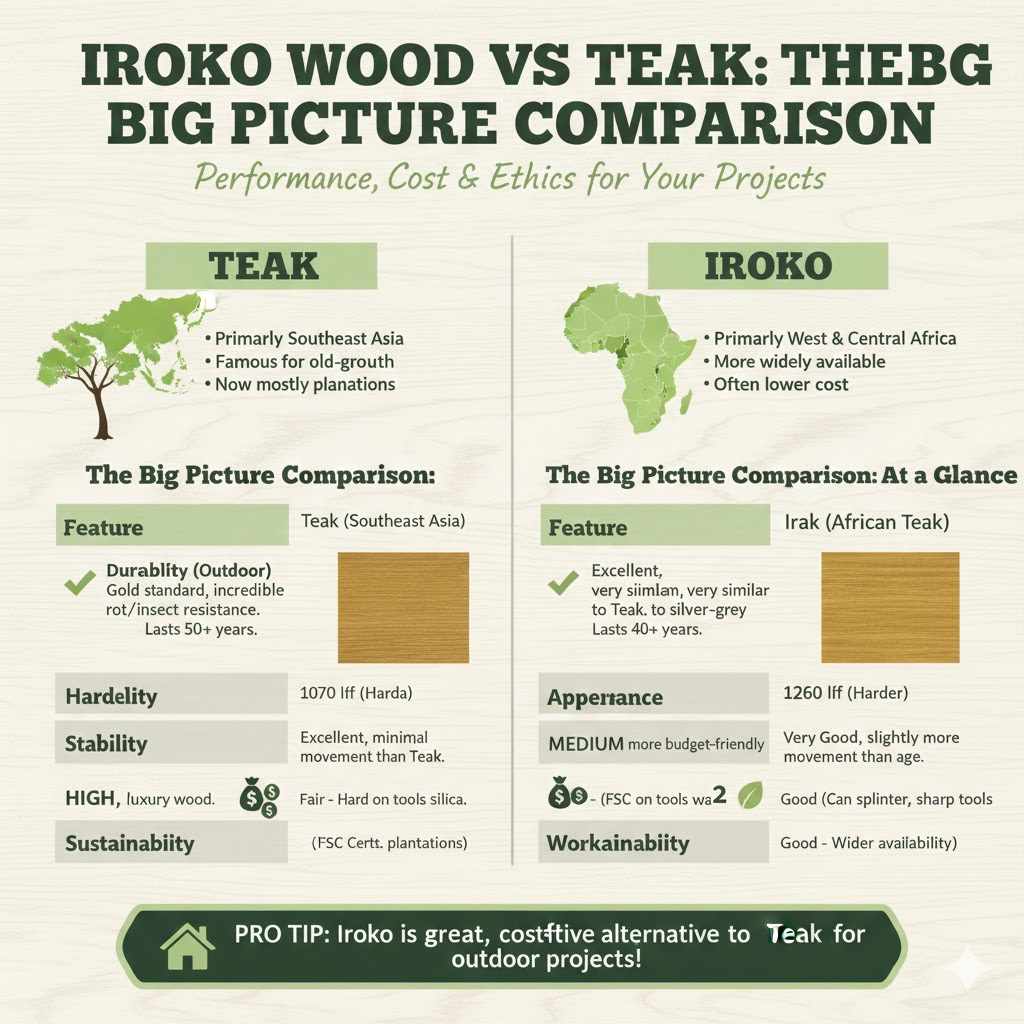
- Teak: Primarily sourced from Southeast Asia (Myanmar, Indonesia, Thailand). Because high-quality, old-growth Teak is getting scarce, much of the market now relies on managed plantations.
- Iroko: Sourced mainly from West and Central Africa. It is generally more widely available than genuine Teak, which often helps keep its cost lower.
Key Differences: What to Look for in the Wood Grain
Let’s get into the specifics. If you put these boards side-by-side, how can you tell them apart? Here’s what separates the two, focusing on appearance and texture.
Color and Grain Structure
The visual difference is often the easiest way to distinguish them, especially when the wood is new.
Teak Color Profile
- Fresh Cut: Teak usually has a beautiful, medium-to-golden-brown color.
- Weathered: If left untreated outdoors, Teak ages to a soft, silvery-gray patina. This is a very sought-after, classic look.
- Grain: The grain is generally straight, often medium in texture, and feels slightly waxy or oily to the touch.
Iroko Color Profile
- Fresh Cut: Iroko tends to be slightly lighter and more yellowish-brown than Teak when first milled.
- Weathered: Like Teak, it turns gray outdoors, though some users note it can sometimes take on a darker, almost charcoal tone faster than Teak.
- Grain: The grain is often slightly coarser or more interlocked than Teak, meaning it can sometimes show slight surface roughness after milling if the tools aren’t razor-sharp.
Natural Oil Content: The Secret to Durability
Both woods have high natural oil content, which is why they shrug off moisture and pests. However, the balance is different.
Teak is legendary for its high, consistent oil content. This high oil level is the reason it resists shrinkage, warping, and splitting even under harsh sun and rain. This incredible stability makes it the top choice for demanding marine applications. According to resources on wood properties, the silica content in Teak is also a factor that helps it repel water effectively.
Iroko also has significant natural oils, making it excellent for exterior use. While some builders argue it may have slightly less uniform oil distribution than premium Teak, it still offers outstanding performance against decay and insects for the vast majority of decking and furniture projects.
Head-to-Head Durability Comparison
Since durability is why we choose these woods, let’s compare their toughness ratings directly. We measure resistance to rot using something called the Janka Hardness Scale (how hard it is to dent) and general decay ratings (how well it resists rot and insects).
| Feature | Teak (Tectona grandis) | Iroko (Milicia excelsa) |
|---|---|---|
| Janka Hardness (Lbs) | About 1070 lbf | About 1290 lbf (Slightly harder/denser) |
| Decay Resistance | Excellent (Highly resistant) | Very Good to Excellent (Highly resistant) |
| Termite Resistance | Excellent | Very Good |
| Stability (Resistance to movement) | Exceptional | Very Good |
| Price Point | Premium / High | Mid-Range / Moderate |
As you can see from the numbers, Iroko is technically denser and slightly harder (higher Janka score!). However, Teak’s reputation is built on decades of proven use, especially in the harshest marine environments. For a beginner building a patio set, both are fantastic choices, but Teak offers unparalleled stability.
Workability: What’s it Like to Build With?
This section is crucial for beginners! A hard-working piece of wood that’s impossible to cut or screw down correctly will quickly become frustrating. How do these two tropical heavyweights perform when you have a saw or a drill in hand?
Working with Teak
Teak is generally considered quite easy to machine, provided you respect its oily nature.
- Cutting & Milling: It cuts cleanly. The oils mean you should always use sharp carbide-tipped blades. Dull blades can burn the wood or lead to tear-out.
- Gluing: Because of the high oil content, standard wood glues often struggle to bond securely. You must thoroughly clean the joint surfaces with acetone or mineral spirits immediately before gluing to remove surface oils.
- Finishing: Teak usually accepts finishes well once properly prepared, though many people prefer to let it gray naturally.
- Fasteners: Screws and nails hold very well, though drilling pilot holes is always a wise step to prevent splitting, especially near edges.
Working with Iroko
Iroko tends to be a bit less forgiving than Teak, often because of its coarser grain structure, but it’s still a good material overall.
- Cutting & Milling: Iroko can be prone to “chatter” or slight tear-out if you don’t feed it through the planer or table saw at a moderate pace. Sharp tooling is absolutely non-negotiable here.
- Gluing: Like Teak, Iroko requires surface preparation. Some woodworkers find Iroko glues up slightly better than Teak after simple surface cleaning, but the acetone wipe-down rule still applies for maximum strength.
- Finishing: Iroko takes stains and sealants readily, often accepting pigments a bit more readily than Teak due to the slightly more open grain structure.
- Fasteners: Pilot holes are essential. Iroko is hard and dense, and driving fasteners without a pre-drilled hole often results in splitting the wood around the screw head.
A Note on Dust Safety
Working with tropical hardwoods always requires extra care regarding dust. Both Iroko and Teak dust are known irritants. When sanding or cutting, always wear high-quality respiratory protection. For safety information regarding wood dust inhalation, always consult resources like the NIOSH guidelines on wood dust exposure.
The Cost Factor: Budgeting Your Build
For most DIYers, budget is a major decision point. When looking at pricing for rough-sawn lumber or pre-milled boards, here is the general relationship:
Teak = 100% (Premium Benchmark Price)
Iroko = 60% to 80% of Teak’s Price (This percentage can vary wildly based on current global supply chains and certifications, but generally, Iroko is the more accessible option.)
If you are building a large structure, like an extensive deck or many uniform pieces of furniture, saving 20% to 40% on material cost using Iroko instead of Teak can translate into hundreds or even thousands of dollars saved. This saved budget can then be reinvested into better-quality tools or hardware!
Finishing Choices: To Seal or Not to Seal?
When building outside, you have two philosophies regarding hardwoods: either maintain the color or let nature take its course. Both Iroko and Teak excel in both scenarios.
Option 1: Embrace the Weathered Gray (Low Maintenance)
This is the easiest route and requires almost no ongoing work.
- Simply clean the surface annually with mild soap and water, perhaps a gentle scrub brush.
- Over time, UV exposure turns the wood that attractive, uniform silver-gray color.
- Great for decking and park benches where perfect color isn’t a priority.
Option 2: Maintain the Golden Brown (Higher Maintenance)
If you love that warm, golden hue, you need regular oiling.
- Use a penetrating exterior wood oil designed for hardwoods (often Teak oil or a Tung oil blend).
- Apply oil generously according to the product directions, typically every 6–12 months.
- This process nourishes the wood and keeps the original color vibrant, enhancing the natural grain patterns.
Beginner Tip: If you choose to oil, pay close attention to the end grain! This area soaks up oil quickly and keeping it saturated helps prevent checking (small splits) as the wood dries out over the season.
When Should I Definitely Choose Teak?
While Iroko is amazing, there are specific, demanding situations where Teak still reigns supreme, and the extra cost is worth the guarantee.
- Marine Applications (Boats): For any wood that will be constantly submerged or exposed to saltwater (like boat decks or trim), Teak’s proven track record for extreme dimensional stability beats everything else.
- High-End Architectural Details: If a project requires absolute perfection in fit and finish over many years with minimal expectation of movement, Teak is the standard setters trust.
- Maximum Longevity Guarantee: If you are installing something you expect to last 50+ years with minimal intervention, Teak offers the most history of success.
When is Iroko the Smarter Choice?
For the everyday DIYer tackling projects around the home, Iroko often represents the best blend of value and performance.
- Budget Constraints: When you need durable exterior wood but the budget just won’t stretch to Teak prices, Iroko delivers similar durability for less cash.
- Patio Furniture: For tables, chairs, and standard backyard sets, Iroko’s durability is more than sufficient to handle seasons of use.
- Decking Alternatives: It makes excellent decking material, providing great slip resistance (due to its grain) and excellent resistance to rot underneath the surface.
Safety and Sustainability: A Quick Look
When buying any imported hardwood, being conscious of where the wood comes from matters. Both woods come with scrutiny because they are slow-growing hardwoods. Always look for:
- Lumber sourced from managed, certified forests.
- FSC (Forest Stewardship Council) certification when possible, ensuring legal and responsible harvesting practices.
Beginner DIY FAQ: Iroko vs. Teak Decisions
Here are the quick answers to the common questions I hear when folks are new to tropical woods.
Q1: Can I use Iroko for indoor furniture if I like the color?
A: Yes, you certainly can! It’s very hard, so be prepared to use sharp tools. Its stability means it won’t warp easily due to indoor humidity changes.
Q2: Will I need special saw blades for either wood?
A: For both, using carbide-tipped blades meant for hardwoods is highly recommended. This prevents overheating, dulling your blades faster, and getting a rough cut (tear-out).
Q3: How long will Iroko last outdoors without any finish?
A: Typically, properly installed Iroko can last 25 years or more outdoors, turning gray over time, depending on your climate severity.
Q4: Does Teak shrink more than Iroko when it dries?
A: Generally, no. Teak is known for exceptional dimensional stability, meaning it holds its size very well as moisture content changes. Iroko is very stable, but Teak usually edges it out slightly in resistance to swelling and shrinking.
Q5: If I use a waterproof outdoor glue, do I still need to clean the surface of the wood?
A: Absolutely! The natural oils (especially on Teak) create a barrier between the glue and the wood fibers. You must wipe the glue-contact surfaces with a solvent like acetone right before applying glue to ensure a strong, long-lasting bond.
Q6: Which wood is easier to sand to a fine finish?
A: Because Teak has a slightly finer, less interlocking grain, it often sands a bit smoother with less surface roughness than Iroko, which sometimes requires an extra pass with a very high grit sandpaper.
Conclusion: Your Final Wood Choice
Choosing between Iroko wood vs Teak really comes down to balancing ultimate performance with your project budget. As your woodworking mentor, I want to see you succeed, and success means finishing a project you are proud of that lasts!
If cost is secondary to absolute, time-tested marine-grade durability and stability, go with Teak. It’s the gold standard for a reason, especially in high-moisture or coastal areas.
If you are looking for an outstanding, extremely durable hardwood that resists rot and looks fantastic for a fraction of the cost, Iroko is your champion. For most decking, pergolas, and patio furniture builds, Iroko offers an unbeatable value proposition. Just remember those key woodworking tips: use sharp tools and always clean your surfaces before gluing!
No matter which you pick, you are working with some of the world’s toughest woods. Grab your safety glasses, measure twice, and start building with the confidence that you have made an excellent material choice. Happy crafting!