Is Boiled Linseed Oil Food Safe? Discover the Truth Here
No, boiled linseed oil is not food safe. It contains chemicals that are harmful if ingested.
Boiled linseed oil is a popular wood finish. It’s often used for furniture, decks, and other wooden items. People wonder if it’s safe for surfaces that touch food. This question is crucial for anyone who cares about health and safety.
The oil dries faster than raw linseed oil, but this comes at a cost. The chemicals added to speed up drying are toxic. Understanding the risks helps make better choices for food-related projects. In this blog, we will explore why boiled linseed oil is not safe for food and what alternatives you can use.

Credit: allflavorworkshop.com
Introduction To Boiled Linseed Oil
Boiled linseed oil is a type of oil. It is made from flax seeds. The oil is heated to make it dry faster. This is why it is called “boiled”. It is popular in woodworking and painting. The oil helps protect wood and makes it look shiny. Boiled linseed oil is different from raw linseed oil. It has chemicals added to make it dry faster.
Boiled linseed oil is used in wood finishing. It protects wood and gives it a nice shine. People also use it in paints and varnishes. The oil makes these products dry faster. It is also used to seal concrete floors. Some use it to protect metal from rust. It is not safe for food surfaces. Do not use it on cutting boards or utensils.
Composition Of Boiled Linseed Oil
Boiled linseed oil is made from flax seeds. It contains many chemicals. One of them is linoleic acid. This acid is good for wood but not for food. There are also other chemicals added. These help the oil dry faster.
Boiled linseed oil dries quickly. This is because of added chemicals. These chemicals can be harmful. The oil also forms a hard layer. It is used to protect wood. But it is not safe to eat. The oil can release harmful fumes. These can make you sick.
Health Concerns
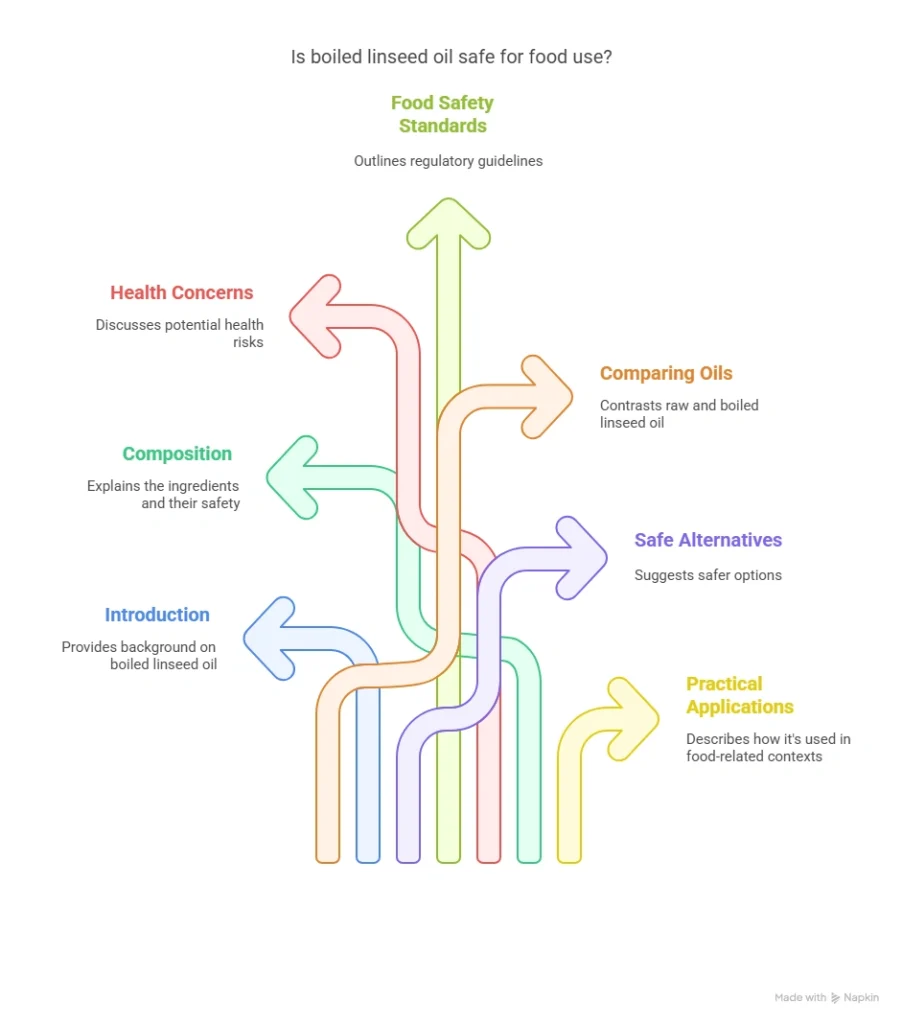
Boiled linseed oil is not food safe. It contains chemicals that can be harmful if ingested. Always use food-grade oils for cooking and food preparation.
Toxicity Levels
Boiled linseed oil is not safe for food. It often has chemicals that make it dry faster. These chemicals can be harmful. They can make you sick. Natural linseed oil is safer, but still not ideal for food.
Potential Allergic Reactions
Some people may be allergic to linseed oil. It can cause skin rashes. It can also cause itching. If you feel bad after touching it, wash your hands. See a doctor if it gets worse.
Food Safety Standards
Boiled linseed oil is not considered safe for food contact. It contains additives that can be harmful if ingested. Always use food-grade oils for kitchen surfaces and utensils.
Fda Guidelines
The FDA has clear rules on food safety. Boiled linseed oil is not approved for food contact surfaces. This oil may have additives that are unsafe for food. These chemicals can be harmful if ingested. Always check labels and product details. Only use oils that are FDA approved for food surfaces.
International Standards
Different countries have their own food safety standards. Some allow boiled linseed oil, while others do not. It is important to know the rules in your country. European and Asian standards may differ from US rules. Always ensure the oil meets local guidelines. Using the wrong oil can be dangerous.
Comparing Raw Vs. Boiled Linseed Oil
Raw linseed oil is natural. It is extracted from flax seeds. This oil is pure and has no additives. It takes a long time to dry. This oil is safe for food use. It is often used on wood items in contact with food.
Boiled linseed oil dries faster. It contains chemicals and driers. These make it dry quickly. It is not safe for food use. The chemicals can be harmful if ingested.
Safe Alternatives
Some oils are safe for food contact. Mineral oil is a great choice. It is tasteless and odorless. Coconut oil is also good. It has a nice smell. Beeswax mixed with oil works well too.
Natural finishes protect wood. Tung oil is a natural option. It is from nuts of the tung tree. Walnut oil is another. It dries hard. Carnauba wax is plant-based. It gives a shiny finish.
Practical Applications
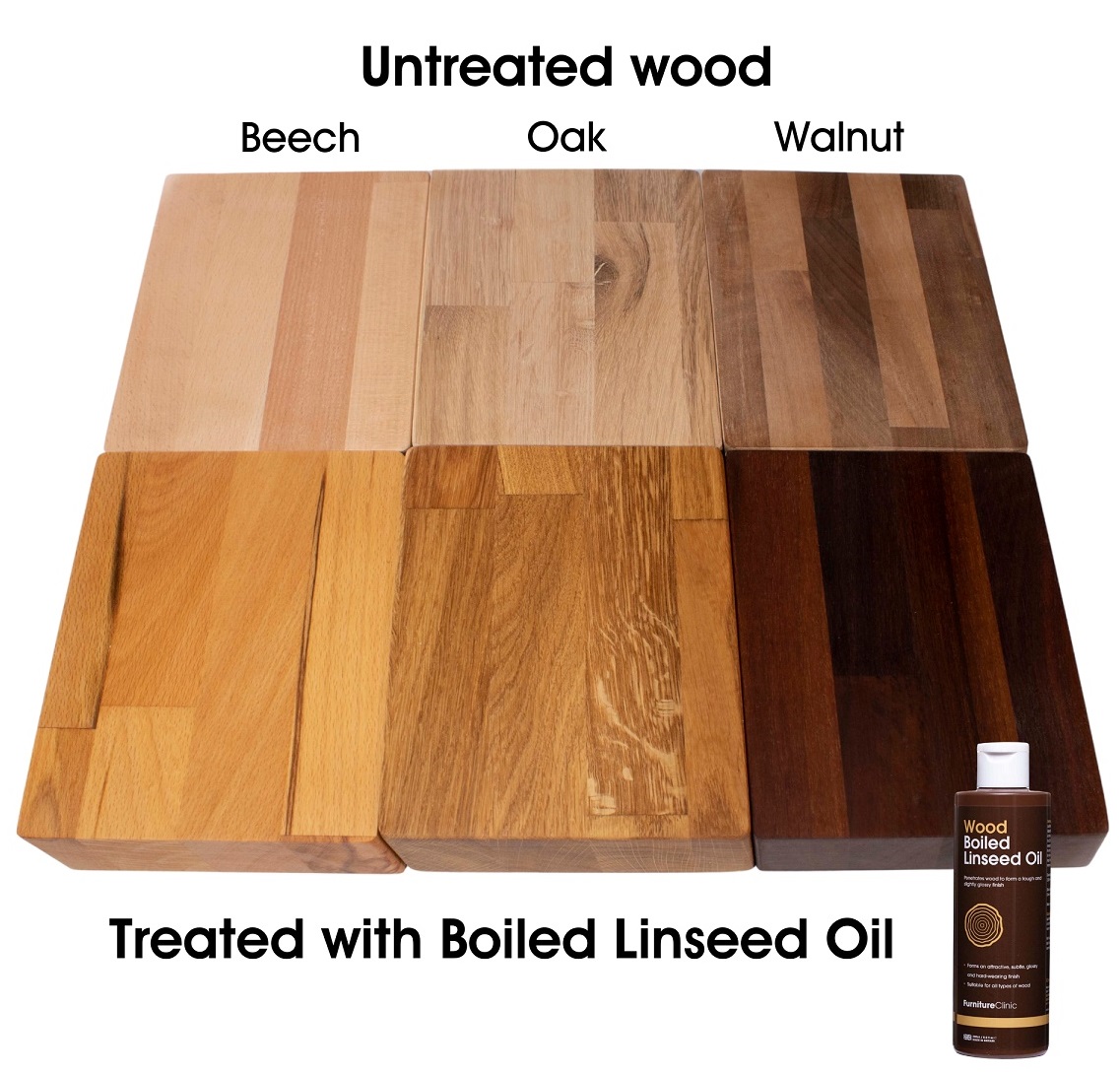
Boiled linseed oil is popular in woodworking. It makes wood look better. Many use it for furniture. It helps protect wood. The oil can make surfaces shiny. Woodworkers love its effects. It dries faster than raw linseed oil. It is easy to apply. But, it is not always food-safe. Some brands add chemicals. Check labels before use. Always choose pure oils. Safety is key.
Boiled linseed oil can be used on kitchenware. It helps protect wooden spoons. It can be used on cutting boards. The oil makes wood last longer. But, it is not always safe for food contact. Some brands add toxic chemicals. Look for food-safe labels. Pure linseed oil is best. Safety is important in the kitchen. Always check before use. Keep your food safe.
Credit: www.furnitureclinic.com

Credit: treeboard.com
Frequently Asked Questions
Can Boiled Linseed Oil Be Food Safe?
Boiled linseed oil is not food safe. It contains chemical additives that can be harmful if ingested. Use food-grade oils for cooking.
Can I Use Boiled Linseed Oil On A Cutting Board?
No, boiled linseed oil is not food-safe. Use mineral oil or beeswax on cutting boards.
What Can I Seal Wood With That Is Food Safe?
You can seal wood with food-safe options like beeswax, shellac, or pure tung oil. These are non-toxic and safe for food contact.
Can I Use Boiled Linseed Oil On A Butcher Block?
No, do not use boiled linseed oil on a butcher block. It contains chemicals harmful to food preparation surfaces. Use food-grade mineral oil instead.
Conclusion
Boiled linseed oil is not food safe. It contains additives and chemicals. These can be harmful if ingested. For food-related projects, use pure linseed oil. Pure oil is safe and non-toxic. Always check labels before purchase. Health safety should be a priority.
Choosing the right oil ensures peace of mind. Use boiled linseed oil for non-food uses. Keep your kitchen and family safe.